Finding the right bed enclosure can make bedtime safer, calmer, and more comfortable at home. The best options balance fall protection, easy access, breathability, and the level of privacy or sensory control a sleeper needs.
This roundup covers a mix of rail-based, enclosed, and comfort-focused designs so you can choose the setup that best matches mobility, behavior, and room layout.
Best 10 Special Needs Bed Enclosure for Home Picks for 2026
Toddler Safety Rail
Foldable Bed Rail for Toddlers

- Reinforced carbon steel frame with extra-wide base
- Fits mattresses 4" to 12" thick
- Breathable, washable mesh cover
Best For: Homes needing a sturdy, tool-free bed rail for young children
Sensory Hideaway Tent

- Black-out fabric helps reduce light and stimulation
- Ventilated windows support indoor comfort
- Sets up in about 8 minutes
Best For: Kids who need a calming, enclosed sensory space at home
Heavy-Duty Folding Rail

- T-shaped base and Y reinforcements add stability
- Dual safety locks help prevent accidental folding
- Breathable, washable 3D fabric
Best For: Restless sleepers needing a sturdy, easy-to-install bed rail
Medical Fall Barrier
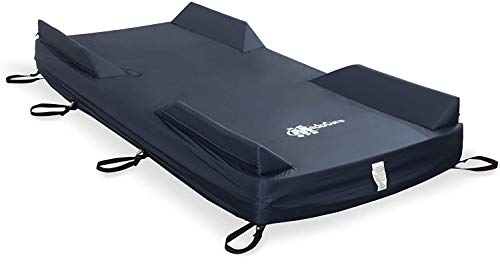
- Mattress-mounted perimeter support for fall prevention
- No assembly; fits like a fitted sheet
- Fluid-resistant nylon cover wipes clean
Best For: Adults or seniors needing a softer fall-prevention bed overlay
Portable Safety Rail
USHMA Inflatable Bed Rails for Travel

- Soft inflatable rails with non-slip flocking.
- Fits many bed sizes, including crib to king.
- Lightweight, foldable design for travel or storage.
Best For: Portable toddler bed safety at home or on the go
Blackout Bed Tent
YAVIL Twin Bed Tent Blackout Canopy

- Creates a private twin-bed sleep space.
- Blocks up to 93% of light for darker rest.
- Three doors and mesh windows improve access and airflow.
Best For: Private, enclosed sleep spaces with light control
Swing-Down Bed Rail
Regalo Swing Down Toddler Bed Guard

- Swing-down rail simplifies access and sheet changes.
- Patented Gap Guard adds a more secure fit.
- Tool-free metal frame fits twin to queen beds.
Best For: Toddler bedside protection with easy access
Portable Privacy Tent
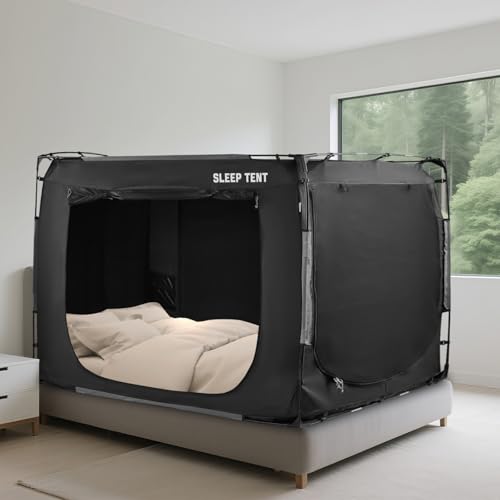
- Stable rectangular frame with inserted fiber poles
- Three doors with mesh and blackout layers
- Folds down with carry bag for storage
Best For: Twin-bed sleepers needing portable privacy and light reduction
Safety Bed Rail
71in Fold-Down Toddler Bed Rail

- Reinforced carbon steel frame with securing straps
- Breathable mesh panel and rounded edges
- Fold-down design with three fit positions
Best For: Toddlers transitioning to larger beds
Sensory Sleep Tent
Alvantor Full Blackout Bed Tent

- Blackout canopy with breathable mesh windows
- Full-coverage zip-up design for a cozy feel
- Portable and folds down into a carry bag
Best For: Full beds and floor mattresses needing a calming enclosed space
Toddler Safety Rail – Foldable Bed Rail for Toddlers
If you’re comparing a special needs bed enclosure for home use and want something that adds a protective barrier without a full tent or heavy medical setup, this foldable toddler bed rail is a practical option. It’s built for standard beds and focuses on stability, gap reduction, and breathable coverage.
Best For: Families who want a tool-free bed rail with reinforced support and a secure, low-hassle setup.
Pros:
- Double-reinforced carbon steel frame and connectors for added stability.
- Extra-wide U-shaped base helps support the rail securely.
- Height-adjustable center bar fits mattresses from 4″ to 12″ thick.
- Breathable cationic Oxford mesh with removable, machine-washable cover.
Cons:
- Works as a rail rather than a fully enclosed enclosure.
- Designed for mattress fit and straps, so installation still depends on correct setup.
Overall, this rail is a solid choice when you want a straightforward safety barrier with reinforced construction and easy maintenance. It won’t create a closed sensory space, but it does address fall prevention and gap protection well for home use.
Sensory Hideaway Tent – Black-Out Bed Tent for Kids
For shoppers looking at a special needs bed enclosure for home, this black-out bed tent offers a more enclosed and calming option than a simple rail. It creates a private sensory space that can help reduce visual stimulation, support relaxation, and add a cozy sleeping area on the bed.
Best For: Kids who benefit from a darker, quieter enclosed space for calming down, reading, or sleeping.
Pros:
- Fully black-out fabric helps block light for sensory-sensitive kids.
- Designed to create a calm, enclosed hideaway for relaxation.
- Ventilated windows provide airflow while keeping the space private.
- Can be placed on the bed for a private sleeping space.
Cons:
- Requires assembly and takes about 8 minutes to set up.
- Best suited for indoor use only.
This tent is a strong fit if your priority is a sensory-friendly enclosure rather than a physical bed barrier. It leans into comfort, privacy, and light control, which makes it especially useful for calming routines at home.
Heavy-Duty Folding Rail – Safety Bed Guard Rail
If you need a special needs bed enclosure for home use that emphasizes stability and rollover protection, this folding bed guard rail is built for that job. Its wider top and T-shaped base are aimed at keeping the rail steady on larger beds while still staying breathable and easy to clean.
Best For: Restless sleepers who need a sturdy, foldable rail with strong mattress contact and quick setup.
Pros:
- Wide T-shaped base and Y-shaped reinforcements for better stability.
- Dual safety locks on both ends help keep the rail securely folded and locked.
- Breathable 3D quilted fabric is soft and removable.
- Tool-free installation can be completed in minutes.
Cons:
- Like other rails, it does not create a fully enclosed sleeping space.
- Best suited to users who need edge protection rather than sensory blackout.
This model stands out for buyers who want a dependable barrier with a larger contact base and foldable convenience. It’s a practical middle ground between basic bed rails and more enclosed home safety options.
Medical Fall Barrier – Foam Bolster Mattress Cover
When the goal is a special needs bed enclosure for home care rather than a standard side rail, this foam bolster mattress cover takes a different approach. It adds defined perimeter support directly to the mattress, which can be helpful for fall risk patients who need comfort, security, and easier transfers.
Best For: Adults or seniors who need a softer mattress-mounted fall-prevention option with no assembly.
Pros:
- Defined perimeter foam cushions help keep the patient safely in bed.
- Fits like a fitted sheet, so there’s no assembly required.
- Additional straps and clips add security.
- Hospital-grade nylon cover wipes clean easily and resists fluids.
Cons:
- Made for standard medical beds, not typical child beds.
- Bulkier mattress overlay may not suit every home setup.
This is the most medical-focused option in the group, especially for fall prevention and easier patient transfer. If you want a softer alternative to rails that stays attached to the mattress, it’s worth a close look.
Portable Safety Rail – USHMA Inflatable Bed Rails for Travel
If you need a special needs bed enclosure for home that is simple to move and easy to set up, this inflatable rail system is worth a look. It is designed to sit under the fitted sheet, uses non-slip flocking fabric for better hold, and works across a wide range of bed sizes, making it a flexible option for families who travel or need a lightweight sleep barrier.
Best For: Families wanting a portable, soft-sided bed safety barrier for travel or home use across different mattress sizes.
Pros:
- Non-slip flocking fabric helps keep the rails firmly in place.
- Inflates and deflates easily for packing and storage.
- Works with twin, queen, king, and crib-sized beds.
- Made from phthalate-, BPA-, and lead-free materials and meets listed safety standards.
Cons:
- Requires inflation before use.
- Not a rigid enclosure or fixed frame.
- Designed for toddlers, not older children or adults.
Overall, this is a practical pick when portability matters most and you want a soft, low-bulk barrier rather than a permanent bed enclosure. The simple setup and compact form make it especially useful for trips, sleepovers, and guest rooms.
Blackout Bed Tent – YAVIL Twin Bed Tent Blackout Canopy
For a special needs bed enclosure for home that creates a private, enclosed sleep space, this twin bed tent offers a more cocoon-like setup than a standard rail. It uses inserted poles for added structure, reduces light by up to 93%, and includes mesh windows and three doors to balance privacy with airflow.
Best For: Kids or adults who benefit from a darker, more private sleep environment with easy access points.
Pros:
- Blackout design reduces light by up to 93%.
- Three doors make entry and exit more flexible.
- Mesh windows provide ventilation when needed.
- Includes a carry bag for storage and portability.
Cons:
- Fits twin-size beds only.
- Mattress is not included.
- Not intended as a floor-based enclosure.
This is a strong choice if the goal is to create a defined sleeping area with more privacy and light control. It is best treated as a bed canopy enclosure rather than a safety rail, so fit and use case should match the twin-size format.
Swing-Down Bed Rail – Regalo Swing Down Toddler Bed Guard
If you want a special needs bed enclosure for home that feels more like a traditional bed safety barrier, this swing-down rail is a practical option. It uses a metal frame with a patented gap guard, installs without tools, and fits twin, full, and queen beds, making it useful for everyday sleep routines and sheet changes.
Best For: Toddlers and young children who need a sturdy bedside safety rail with easier bed access.
Pros:
- Swing-down design makes it easier to get in and out of bed.
- Patented Gap Guard helps reduce space between mattress and rail.
- Tool-free installation with an all-metal frame.
- Fits twin, full, and queen beds with mattress and box spring.
Cons:
- Designed for ages 2-5.
- Requires a mattress and box spring setup.
- Not intended for travel or compact storage.
For families who want a familiar rail-style solution with easier access, this model is the most straightforward of the three. It focuses on stable bedside protection and convenience rather than enclosure coverage or portability.
Portable Privacy Tent – Borna Twin Blackout Bed Tent
If you’re looking for a special needs bed enclosure for home, this twin bed tent is built to create a more private, lower-light sleep space without needing a permanent setup. Its rectangular frame uses inserted 8mm fiber poles for added stability, and the deep black pongee fabric helps reduce light for naps, bedtime, or quiet time.
Best For: Kids, adults, or shared-bedroom sleepers who want a portable, breathable privacy enclosure with easy access.
Pros:
- Rectangular pole design is made to be more stable than pop-up styles.
- Three zippered doors make entry and exit easier from different sides.
- Mesh plus blackout fabric lets you balance airflow and light reduction.
- Folds into a carry bag for storage or travel.
Cons:
- Fits twin beds only, so sizing is limited.
- Hand wash care may be less convenient than wipe-clean options.
- Not waterproof, despite the product listing wording.
Overall, this is a practical option if you want a flexible bed tent that prioritizes privacy, airflow, and easy setup over a fixed enclosure. The three-door layout and stable frame make it more usable day to day than many basic canopy tents.
Safety Bed Rail – 71in Fold-Down Toddler Bed Rail
For families shopping for a special needs bed enclosure for home, this bed rail is a straightforward way to add a safer edge to a child’s bed without covering the whole sleep area. The reinforced carbon steel frame, U-shaped base, and securing straps are designed to improve stability, while the breathable mesh panel helps with visibility and airflow.
Best For: Toddlers and children ages 3-10 who need a guard rail on twin, full, queen, or king beds.
Pros:
- Reinforced steel frame and straps are built for dependable daily use.
- Gap-reducing fit helps limit openings between the rail and mattress.
- Fold-down design makes bedside access easier for parents.
- Works with multiple bed sizes and offers three installation positions.
Cons:
- Only one side is protected, not a full enclosure.
- No adjustable length, so fit depends on mattress and bed structure.
- At 71 inches long, it may be more rail than some smaller beds need.
This is a practical pick if your main goal is preventing roll-offs and adding a visible, breathable barrier. It’s less about enclosure and more about secure bedside protection with easier daily use.
Sensory Sleep Tent – Alvantor Full Blackout Bed Tent
If you need a special needs bed enclosure for home, this full-size bed tent offers a more enclosed, calming sleep space with blackout fabric, mesh windows, and zippered doors. The dome-shaped structure is designed for stability, and the fully covered layout can help create a cocoon-like environment for privacy, sleep, or quiet retreat.
Best For: Full-size beds or floor mattresses for kids, teens, or adults who want a calming enclosed space with light blocking.
Pros:
- Blackout polyester helps block light and add privacy.
- Mesh windows support airflow while maintaining a closed-in feel.
- Full-coverage zip-up design can help prevent rolling off the bed.
- Folds compactly and comes with a carry bag for storage or travel.
Cons:
- Dry-clean-only care is less convenient than washable fabrics.
- Bottomless design means it doesn’t act like a full sealed tent.
- Best suited to full-size beds, so it won’t fit every setup.
Overall, this model stands out for buyers who want both privacy and a sensory-friendly sleep environment. It’s especially appealing when you want a portable enclosure that feels more substantial than a simple canopy.
How We Picked the Best Special Needs Bed Enclosure for Home
For a Special Needs Bed Enclosure for Home, the most important factors are safety, access, stability, and whether the design supports the sleeper’s actual needs. We prioritized products that offer a practical balance of secure containment, easy installation, durable materials, and usable everyday features like visibility, ventilation, and simple entry points.
Quick Comparison
In broad terms, bed rails are best for fall prevention and caregiver access, while tent-style enclosures are better for privacy, sensory regulation, and reducing visual stimulation. Foam bolster overlays sit in a different category: they create a softer perimeter and are often a good fit when the main concern is edge awareness rather than full enclosure.
Key Buying Factors for Special Needs Bed Enclosure for Home
Safety and Exit Access
Look for secure attachment, stable framing, and designs that do not create hazardous gaps. If the sleeper may need quick caregiver access, a swing-down or foldable panel can be more practical than a fixed barrier.
Breathability and Visibility
For enclosed tents, mesh windows, vent panels, and blackout balance matter. A setup should feel calming without becoming overly hot or visually isolating.
Bed Size and Room Fit
Match the product to the mattress dimensions and leave enough clearance for zippers, rails, or tent supports. Full-size and larger beds usually need more structure and floor space than twin setups.
Behavioral and Sensory Needs
If the goal is a calmer sleep environment, privacy and reduced stimulation may matter more than physical containment. If the main issue is rolling out of bed, focus on rail strength and edge coverage instead.
Who Should Buy Which Special Needs Bed Enclosure for Home?
Choose a bed rail if fall prevention is the top priority and the sleeper still needs easy caregiver access. Choose a bed tent or canopy if you want a more enclosed, lower-stimulation sleep space for a child or adult who benefits from privacy and a defined resting area. Choose a foam bolster system if you want softer perimeter support with less of a barrier feel.
For many families, the best Special Needs Bed Enclosure for Home is the one that solves the specific problem first, whether that is safety, calm, supervision, or comfort. Start with the sleeper’s routine, then match the design to the level of containment and accessibility required.