Finding the right oral placement therapy tools can make speech, feeding, and oral-motor practice feel more structured and effective. The best options support specific goals like jaw strength, tongue movement, lip closure, or sensory input.
In this roundup, we focus on tools that are commonly used in therapy and home practice, with an eye on safety, durability, and age-appropriate use.
Best 10 Oral Placement Therapy Tools Picks for 2026
TalkTools Horn Hierarchy Kit
Full Oral Placement Therapy Set

- Full horn hierarchy for step-by-step practice
- Supports lip control and breath support
- Includes instructional booklet for guided use
Best For: Kids and adults needing structured blowing practice for speech and feeding goals
TalkTools Lip Gym
Tongue Depressor Lip Fitness Program
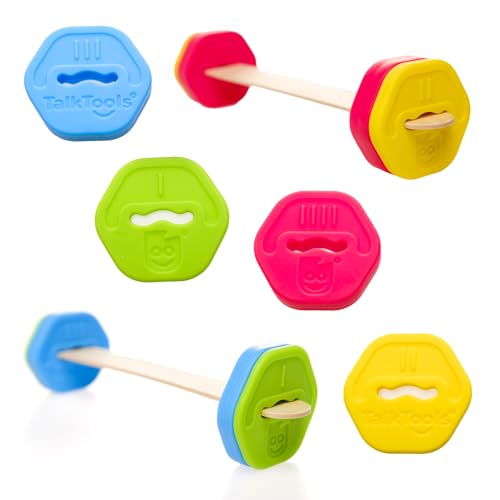
- Turns tongue depressors into lip exercises
- Targets bilabial sounds and /r/ work
- Includes chart, instructions, and 100 depressors
Best For: Speech practice centered on lip closure, bilabial sounds, and drooling support
Gafly Therapen
Vibrating Oral Motor Therapy Tool

- Light vibration for oral sensory awareness
- Three speed settings with multiple tips
- Includes reusable travel storage case
Best For: Children who need sensory-friendly oral stimulation during speech or chew-relax routines
3-Piece Tongue Tip Trainer

- Compact set for tongue movement drills
- Designed for alternating tongue training
- Lightweight and easy to clean
Best For: Portable tongue-control practice for children and adults
TalkTools Guided Chew Set
Oral Placement Therapy Bite Tube Set

- Supports biting, chewing, and jaw strength work
- Designed for oral placement therapy and feeding routines
- Ergonomic handle for kids and adults
Best For: guided oral-motor and feeding practice
ARK Tongue Control Tool
Oro-Navigator Tongue Lateralization Tool

- Targets tongue lateralization and elevation practice
- Medical-grade, made in the USA
- Built for speech, feeding, and sensory therapy
Best For: tongue placement and movement exercises
TalkTools Structured Chew
Bite Tube Red for Jaw Strength
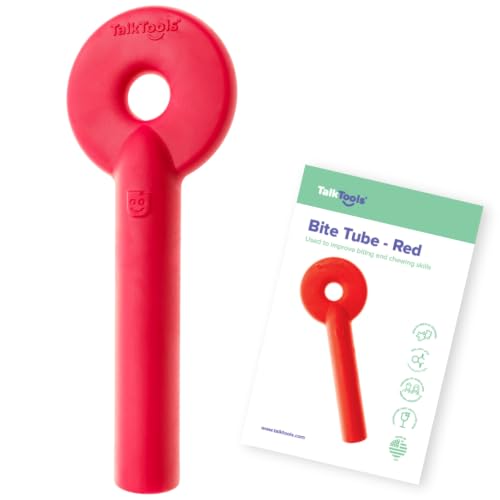
- Supports controlled biting and chewing practice
- Built for graded chew progression in therapy
- Durable, ergonomic handle for repeated supervised use
Best For: structured chewing and jaw-strength training
Oral Awareness Pick
ARK Oral Motor Probe for Targeted Sensory Input

- Textured tip supports oral awareness and tactile cueing
- Made in the USA with medical-grade materials
- Useful for speech, feeding, and sensory integration work
Best For: Kids and adults needing focused oral sensory input
Vibration Starter Set
TalkTools Sensi Oral Motor Therapy Essential

- Therapist-designed vibrating oral tool with textured chewy tip
- Four speed settings with memory recall
- Supports mouth awareness, feeding readiness, and speech work
Best For: Families and therapists wanting adjustable oral stimulation
Jaw Strength Builder
TalkTools Bite Tube for Chewing Practice

- Guides controlled biting and chewing for jaw strength
- Uses a graded chew progression for structured practice
- Durable silicone handle is easy for kids and adults to hold
Best For: Chewing skills, jaw control, and pre-feeding practice
TalkTools Horn Hierarchy Kit – Full Oral Placement Therapy Set
If you want oral placement therapy tools that support structured speech and breathing practice, this TalkTools Horn Kit is built around a full horn hierarchy. It’s designed by SLPs and OTs to help build lip control, breath support, and oral muscle coordination for speech and feeding work, with a step-by-step progression that can fit both home and clinical use.
Best For: Kids and adults working on breath support, lip rounding, articulation, tongue thrust, or drooling with a guided horn hierarchy.
Pros:
- Includes one of each horn in the developmental hierarchy for staged practice
- Designed to strengthen oral muscles tied to speech clarity and breath support
- Used for speech and feeding therapy with articulation, tongue thrust, and drooling goals
- Durable, reusable construction with an included instructional booklet
Cons:
- Requires adult supervision during use
- Works best when used as part of a guided therapy plan
This is a strong pick if you want a more complete oral-motor blowing set rather than a single exercise tool. The hierarchy format and included booklet make it easier to progress through practice in a structured way.
TalkTools Lip Gym – Tongue Depressor Lip Fitness Program
This Lip Gym is a practical option if you’re comparing oral placement therapy tools for lip closure and articulation practice. It turns standard tongue depressors into a lip fitness program, with step-by-step guidance aimed at building awareness, placement, strength, and muscle memory for targeted speech work.
Best For: Therapists and caregivers focusing on bilabial sounds, lip closure, and drooling support with simple, low-cost materials.
Pros:
- Targets /m, b, p/ and supports challenging /r/ and vocalic /r/ production
- Designed to improve lip closure, stability, awareness, and muscle memory
- Includes a quick reference chart and step-by-step instructions
- Dishwasher-safe and made without harmful toxins
Cons:
- Requires compatible standard 5/8-inch tongue depressors
- Focused on lip work, so it is not a full multi-tool oral therapy kit
For users who want a targeted lip-training program, this stands out because it is structured but still easy to add into existing therapy sessions. It’s especially appealing when the goal is better lip control rather than a broader oral-motor routine.
Gafly Therapen – Vibrating Oral Motor Therapy Tool
If you need oral placement therapy tools that add sensory input, this Gafly Therapen focuses on light vibration to stimulate the lips, cheeks, and tongue. It’s a portable oral motor stimulation kit with multiple tips and adjustable speeds, making it a flexible choice for users who benefit from tactile feedback during speech or oral sensory work.
Best For: Kids with sensory needs who may benefit from vibration-based oral stimulation and an easy travel case.
Pros:
- Provides light vibrations to increase sensory awareness in the oral cavity
- Offers 3 speed settings for different therapy needs
- Includes 5 heads with different shapes, colors, and textures
- Comes with a reusable storage case for travel or home use
Cons:
- Requires 1 AAA battery, which may not suit everyone
- More sensory-focused than exercise-focused compared with other oral tools
This is a good fit if your therapy plan calls for oral sensory stimulation instead of purely strength-based drills. The adjustable settings and varied tips give it more flexibility than many basic vibrating tools.
3-Piece Tongue Tip Trainer – Oral Muscle Exercise Set
For buyers looking at oral placement therapy tools that focus on tongue movement, this 3-piece tongue tip exercise set is aimed at alternating tongue training and control. It’s a compact, portable option for home or travel use, with a design intended to support tongue flexibility, strength, and controlled motion across different tongue positions.
Best For: Users who need a small, portable trainer for tongue control, alternating movement, or basic oral muscle practice.
Pros:
- Made from PP and alloy materials that are described as durable and easy to clean
- Suitable for children and adults across a wide age range
- Compact and lightweight for travel or home storage
- Supports alternating tongue training and front-back or side-to-side movement practice
Cons:
- Technique-driven use may take some practice to learn
- Very specialized for tongue training rather than broader oral-motor therapy
This set makes sense if your main goal is tongue exercise and coordination rather than a multi-function therapy system. Its small size and simple format make it easy to keep on hand for repeated practice sessions.
TalkTools Guided Chew Set – Oral Placement Therapy Bite Tube Set
If you’re comparing oral placement therapy tools, the TalkTools Bite Tube Set is built for guided biting, chewing, and jaw-strength work in a structured therapy setting. It’s designed to support oral motor skill development for kids and adults, with a focus on safe bite practice, chewing coordination, and feeding or speech therapy routines.
Best For: Therapists, parents, and educators looking for a professional-grade chew tool for oral motor and feeding skill practice.
Pros:
- Supports chewing, biting, jaw strength, and rotary chew development
- Useful for oral placement therapy, feeding training, speech, and sensory programs
- Improved ergonomic handle is designed to be easy to hold for kids and adults
- Durable silicone construction for repeated home, school, or clinic use
Cons:
- Requires supervised use as part of a therapy plan
- Most appropriate for structured oral-motor work rather than casual chewing
Overall, this is a practical pick if you want a therapy-focused tool that follows a more guided chewing progression. It fits well into professional or home-based oral motor routines where consistency and supervision matter.
ARK Tongue Control Tool – Oro-Navigator Tongue Lateralization Tool
For shoppers focused on oral placement therapy tools, the ARK oro-Navigator is a targeted option for tongue movement work. It’s made to help guide lateral tongue motion and elevation, making it useful in speech, feeding, oral motor therapy, and sensory integration programs.
Best For: SLPs, trained adults, and therapy families working on tongue lateralization and oral motor coordination.
Pros:
- Specifically designed to promote tongue lateralization and tongue elevation concepts
- Made in the USA with medical-grade materials
- Developed by a speech-language pathologist
- Suitable for speech, feeding, oral motor therapy, and sensory integration use
Cons:
- Should be used by a therapist or trained adult with the client or child
- More specialized than general chew tools
This is a good choice when the goal is precise tongue placement work instead of chewing practice. Its focused design makes it especially relevant for structured therapy programs that need a tool for tongue side-to-side movement.
TalkTools Structured Chew – Bite Tube Red for Jaw Strength
If you want oral placement therapy tools that emphasize controlled chewing, the red TalkTools Bite Tube is a straightforward option. It is designed by speech-language pathologists and occupational therapists to support safe biting, chewing skills, jaw strength, and a more mature rotary chew pattern.
Best For: Kids and adults who need supervised chew practice for jaw control and structured feeding or speech therapy.
Pros:
- Guides safe, controlled biting and chewing to build jaw strength
- Supports a graded chew progression used in pre-feeding and oral-placement programs
- Improved handle is easy to hold for small and adult hands
- Durable design for repeated use in clinics, classrooms, or home programs
Cons:
- Requires adult supervision during use
- Single-tool format may not suit users who need tongue-focused work
As a therapy chew, this model is best when you want a more structured progression than a basic chew aid. It’s a solid fit for families and professionals building oral-motor routines around biting, chewing, and jaw control.
Oral Awareness Pick – ARK Oral Motor Probe for Targeted Sensory Input
If you’re comparing oral placement therapy tools, the ARK Oral Motor Probe is a straightforward option for targeted oral input. Its textured tip is designed to help build oral awareness and provide tactile cues to the gums, palate, lips, cheeks, and tongue, making it useful for speech, feeding, and sensory routines.
Best For: Kids and adults who need focused oral sensory input for speech, feeding, or sensory integration work.
Pros:
- Developed by a speech-language pathologist and made in the USA with medical-grade materials
- Textured probe tip offers varied input with bumpy, striated, and smooth surfaces
- Useful for speech therapy, feeding therapy, and sensory integration
- Lightweight handle makes it easy to use at home or in therapy settings
Cons:
- Designed for targeted oral work, so it may not suit buyers looking for a multi-piece kit
- Best used with guidance when supporting oral motor goals
Overall, this is a focused therapy tool rather than a general-purpose sensory toy. If your priority is precise oral stimulation for placement, awareness, and tactile cueing, it fits that role well.
Vibration Starter Set – TalkTools Sensi Oral Motor Therapy Essential
For buyers exploring oral placement therapy tools, the TalkTools Sensi Oral Motor Therapy Essential adds vibration and texture in one entry-level setup. It is designed by speech-language pathologists and occupational therapists to support mouth awareness, feeding readiness, speech development, and home practice, with multiple speeds for adjusting input.
Best For: Families and therapists wanting a beginner-friendly vibrating oral stimulation tool for guided practice.
Pros:
- Designed by therapists for mouth awareness, feeding readiness, and speech development
- Includes a textured chewy tip plus 4 speed settings and memory recall
- Supports lips, tongue, cheeks, and jaw during guided activities
- Comes with a battery, base, and chewy tip for an easy entry-level start
Cons:
- Requires 1 AAA battery
- May be more complex than a simple non-powered oral tool
This is a practical choice if you want adjustable sensory input instead of a basic probe or chew tool. Its therapist-designed structure makes it especially appealing for routine home practice and clinical use.
Jaw Strength Builder – TalkTools Bite Tube for Chewing Practice
Among oral placement therapy tools, the TalkTools Bite Tube is aimed at controlled biting and chewing practice. Designed by speech-language pathologists and occupational therapists, it follows a graded chew progression to help build jaw strength and support a more mature rotary chew pattern.
Best For: Kids and adults working on chewing skills, jaw control, or structured pre-feeding practice.
Pros:
- Supports safe, controlled biting and chewing for jaw strength development
- Uses a graded chew progression for step-by-step skill building
- Ergonomic handle is easy to hold for small and adult hands
- Durable silicone design is BPA-free, dishwasher safe, and made for repeated supervised use
Cons:
- Requires adult supervision during use
- Single-item tool, so it may not cover every oral-motor goal on its own
This tool makes sense when chewing mechanics are the main focus. It is less about general sensory input and more about structured oral-motor practice that can fit into pre-feeding or therapy routines.
How We Picked These Oral Placement Therapy Tools
We selected options based on the therapy purpose they support, material quality, ease of cleaning, and whether they make sense for kids, teens, or adults. We also looked for a balanced mix of tools for chewing, vibration, tongue placement, lip movement, and jaw stability so shoppers can match a tool to a specific need.
Quick Comparison
Some Oral Placement Therapy Tools are best for chewing and jaw work, while others target tongue lateralization, lip strength, or sensory stimulation. If your priority is feeding support, look for tools that emphasize oral control and graded resistance. If speech practice is the goal, choose tools that align with the movements being targeted by a therapist.
Key Buying Factors for Oral Placement Therapy Tools
Therapy Goal
Start with the outcome you want to support. Chewing tools are better for jaw endurance and biting practice, while probes, horn-style tools, and tongue trainers are more useful for placement, coordination, and precision.
Texture, Resistance, and Size
The right firmness matters. Softer tools may suit sensory sensitivity or early practice, while firmer options can provide more feedback and resistance. Size should match the user’s mouth and skill level to keep practice comfortable and controlled.
Safety and Materials
Choose medical-grade or clearly specified safe materials whenever possible, especially for frequent use. Check age recommendations, supervise use as needed, and replace any tool that shows wear.
Cleaning and Portability
Tools used daily should be easy to wash and simple to store. A portable option can be helpful for therapy sessions, school use, or travel practice.
Who Should Buy Which Oral Placement Therapy Tools?
If the user needs chewing support or jaw strengthening, look for bite tubes or chew tools. For tongue movement and oral control, probe-style tools and lateralization aids may be more appropriate. For sensory input or vibration-based stimulation, choose a textured or vibrating option. Families working on speech goals should prioritize tools that match a clinician’s plan rather than selecting by shape alone.
For the best results, use Oral Placement Therapy Tools as part of a consistent routine and, when possible, pair them with guidance from a speech-language pathologist or feeding therapist.