Looking for a proprioceptive activity kit that helps kids move, balance, and build body awareness? The best options make gross-motor play feel fun while supporting sensory needs.
Below, we focus on versatile picks for homes, classrooms, therapy spaces, and indoor obstacle courses—so you can choose the right mix of stepping stones, wobble tools, and balance boards.
Best 10 Proprioceptive Activity Kit Picks for 2026
Indoor/Outdoor Obstacle Starter
National Geographic Kids Stepping Stones & Balance Beams
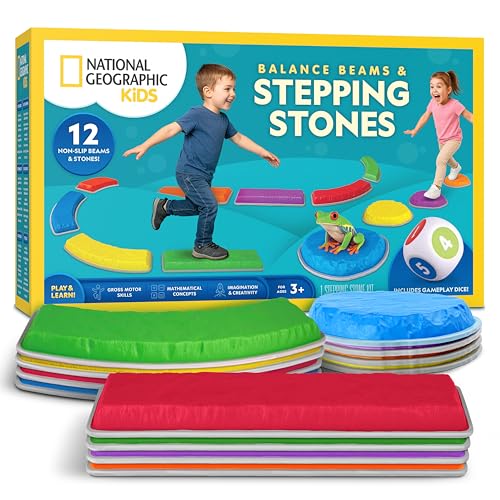
- 12-piece obstacle set with stones and beams
- Non-slip rubber bases for steadier play
- Includes dice and activity cards for game ideas
Best For: Toddlers and preschoolers who need active balance play
Quiet Desk Sensory Tool
Bouncyband Wiggle Feet Dark Blue

- Silent under-desk fidget for seated movement
- Dual-textured surface adds sensory feedback
- Supports focus, coordination, and stabilization
Best For: Kids or adults who need quiet movement at a desk
Hedgehog Balance Pods Set
HEY! PLAY! Balance Pods 6-Pack

- Six half-dome pods for stepping and balance
- Two-sided design changes the challenge level
- PVC build works for kids and adults
Best For: Families or adults wanting flexible balance drills
Maze Wobble Trainer

- Maze board adds focus to balance practice
- One-piece design arrives fully assembled
- Supports up to 350 lbs with anti-slip features
Best For: Older kids and adults wanting a challenge board
Focus & Balance Wiggle Seat
Trideer Wobble Cushion Core Balance Disc

- Adds movement to seated routines
- Supports core, balance, and posture work
- Includes pump and non-slip surface
Best For: kids who need active seating and basic balance practice
Movement Game Dice
Covelico 12-Sided Exercise Dice for Kids

- Makes exercise feel like a game
- Uses simple prompts for obstacle courses
- Supports balance, coordination, and strength
Best For: screen-free group or solo movement activities
Maze Challenge Balance Board
3-Board Proprioceptive Trainer

- Rocker board adds balance input
- Three maze inserts increase replay value
- Non-slip design and 140 lb capacity
Best For: kids who like challenge-based balance and focus training
Rainbow Movement Course
15PCS Rainbow Stepping Balance Beam Stones

- 15 colorful non-slip stones for obstacle-course play
- Spinner and 30 cards add structured game variety
- Indoor and outdoor use for ages 3-5
Best For: Toddlers and preschoolers who enjoy balance games
Wobble Board Trainer
Juoe Balance Board Wobble Board

- Wooden one-piece design arrives fully assembled
- Anti-slip base supports balance and core work
- Rated up to 350 lbs for kids and adults
Best For: Families wanting a sturdy board for training and therapy
Stackable Sensory Course
Wee Wonders Balance Beam Stepping Stones

- 8 beams, 5 stones, cards, spinner, and storage bag
- Textured non-slip design for safer indoor/outdoor play
- Buildable layouts support balance and coordination
Best For: Parents who want a customizable obstacle-course set
Indoor/Outdoor Obstacle Starter – National Geographic Kids Stepping Stones & Balance Beams
This proprioceptive activity kit gives kids a hands-on way to build balance, coordination, and gross motor skills through active play. With stepping stones, straight beams, curved beams, dice, and activity cards, it is a flexible pick for families who want an easy-to-set-up obstacle course for indoor or outdoor use.
Best For: Toddlers and preschoolers who enjoy movement games, obstacle courses, and guided active play.
Pros:
- 12-piece set includes stepping stones and both straight and curved balance beams.
- Non-slip rubber bases help keep pieces stable during play.
- Foam dice and Play & Learn cards add variety and simple game ideas.
- Stackable, lightweight design makes storage and travel easier.
Cons:
- Not recommended for wet surfaces.
- Requires floor space for a full obstacle layout.
- Best suited to younger kids rather than older children.
Overall, this set works well as a structured movement toy that can keep play fresh with different course layouts and activities. It is a practical option if you want a durable, low-prep proprioceptive activity kit for active kids.
Quiet Desk Sensory Tool – Bouncyband Wiggle Feet Dark Blue
This proprioceptive activity kit is built for quiet movement at a desk, offering a subtle outlet for restless feet while supporting focus. The sensory cushion uses dual chamber air flow, deep pressure, and textured surfaces to provide movement without distracting noise, making it a practical choice for school, work, or home.
Best For: Kids and adults who need a silent under-desk fidget to stay focused while seated.
Pros:
- Silent design helps provide movement without drawing attention.
- Dual-textured surfaces offer flexible nubs on one side and bumps on the other.
- Designed to support focus, productivity, and calmer seated behavior.
- Can also support balance, stabilization, and low-impact movement.
Cons:
- Single-item pack only.
- Works best as a seated sensory tool rather than an active play product.
- May be less useful for users who prefer larger movement equipment.
If you want a discreet proprioceptive activity kit for the classroom or desk, this is one of the simplest options here. It focuses on quiet sensory input and steady movement rather than big gross-motor play.
Hedgehog Balance Pods Set – HEY! PLAY! Balance Pods 6-Pack
This proprioceptive activity kit uses half-dome balance pods to turn movement into a simple coordination challenge. The set can be used for stepping, balance drills, exercise, or imaginative play, and the two-sided design lets you vary the difficulty by flipping the pods dome-side up or flat-side up.
Best For: Kids, families, and adults looking for a versatile balance and exercise set.
Pros:
- Set of 6 pods gives multiple stepping points for drills or play.
- Hedgehog-style bumps improve traction on the top surface.
- Flat or dome-side use adds flexibility and progression.
- Heavy-duty PVC construction is designed for kids and adults.
Cons:
- No storage accessories or extra activity materials included.
- Smaller pod format may not suit users wanting a full obstacle course.
- Best for balancing practice rather than seated sensory input.
For buyers who want a compact proprioceptive activity kit with broad age appeal, this pod set is easy to understand and easy to use. It is especially useful when you want balance work that can scale from simple stepping games to more challenging exercises.
Maze Wobble Trainer – Juoe Maze Balance Board
This proprioceptive activity kit combines wobble-board movement with a maze challenge to keep balance practice engaging. The one-piece wooden board is fully assembled, supports up to 350 lbs, and is designed for kids or adults who want coordination training, core engagement, or physical therapy use.
Best For: Older kids and adults who want a balance board with an added coordination challenge.
Pros:
- Maze design adds a concentration challenge to balance training.
- Fully assembled one-piece board is ready to use out of the box.
- Anti-slip surface and protection pads help improve stability and protect floors.
- Supports up to 350 lbs for broader age and use range.
Cons:
- Single-board design offers less variety than multi-piece obstacle sets.
- Maze format may be more challenging for younger children.
- Best suited to controlled indoor-style balance work rather than large play setups.
This is a strong choice if you want a proprioceptive activity kit that feels more like skill training than open-ended play. The maze element adds focus, while the sturdy board makes it practical for both family use and therapy-style workouts.
Focus & Balance Wiggle Seat – Trideer Wobble Cushion Core Balance Disc
If you’re comparing a proprioceptive activity kit for seated movement and balance work, this wobble cushion is a practical pick. It adds gentle instability to a chair, which can help kids stay engaged while also supporting core and balance exercises at home, in the classroom, or during recovery routines.
Best For: Kids who need movement while sitting, plus simple balance and rehab-style exercises.
Pros:
- Can help children stay focused while reading, desk work, or eating.
- Works as a balance disc for core strengthening, coordination, and flexibility.
- Includes an inflation pump so you can adjust the firmness.
- Non-slip surface and 1000 lb weight limit add versatility for exercise and recovery use.
Cons:
- It’s a single cushion, so it won’t replace a full activity set.
- Best suited to seated or standing balance work rather than high-energy play.
This is a straightforward option if your main goal is controlled sensory input and balance training. It’s especially useful when you want one tool that can bridge classroom seating, home exercise, and basic rehabilitation support.
Movement Game Dice – Covelico 12-Sided Exercise Dice for Kids
For a playful proprioceptive activity kit-style tool, this exercise dice turns movement into a game. The 12-sided format keeps kids guessing, and the simple action prompts make it easy to use for obstacle courses, indoor recess, PE warm-ups, or family fitness sessions.
Best For: Young kids who need screen-free movement prompts for play, PE, or group activities.
Pros:
- Turns exercise into play with 12 action sides, including a “pick your own” option.
- Soft PU foam construction makes it easy to handle for indoor games.
- Supports gross motor skills like balance, coordination, and strength.
- Works for group turns or independent play in obstacle courses and warm-ups.
Cons:
- It’s one dice, so activity variety depends on how you use it.
- Best for active play formats rather than quiet sensory input.
This is a simple, flexible choice if you want to make movement more engaging without much setup. It fits especially well when you need a quick way to guide kids through jumping, hopping, skipping, and running tasks.
Maze Challenge Balance Board – 3-Board Proprioceptive Trainer
If you want a proprioceptive activity kit that blends movement with a skill challenge, this maze balance board stands out. The rocker design adds balance work, while the swappable maze inserts give kids something to focus on as they build coordination, stability, and patience.
Best For: Kids ages 3-12 who need balance training, focus practice, or skate/surf prep style movement.
Pros:
- 15° rocker tilt supports motor skills and proprioceptive development.
- Includes 3 replaceable maze boards for varied challenge levels.
- Dual non-slip surfaces help with stability during use.
- CPSC-certified design and 140 lb capacity add confidence for family use.
Cons:
- Bulkier than a simple cushion or dice, so it needs more storage space.
- More structured than open-ended play, which may not suit every child.
This is a strong pick when you want one product that does more than just wobble. The maze element makes balance practice feel like a challenge, which can be especially helpful for kids who benefit from focused movement tasks.
Rainbow Movement Course – 15PCS Rainbow Stepping Balance Beam Stones
If you want a proprioceptive activity kit that turns basic movement into a structured game, this 15-piece stepping stone set is a simple place to start. The colorful, non-slip stones can be arranged indoors or outdoors, and the included spinner plus 30 game cards add easy variety for kids who need more than just a static balance toy.
Best For: Toddlers and preschoolers ages 3-5 who need a fun balance-and-movement obstacle course.
Pros:
- 15 colorful stepping stones support a wide range of stepping and jumping layouts.
- Includes a game spinner and 30 cards to keep play more interactive.
- Non-slip design and sturdy materials are made for active indoor or outdoor use.
- Bright colors and tactile stepping surfaces add sensory appeal.
Cons:
- Best suited to younger kids rather than older children.
- Plastic construction may feel less substantial than wood-based options.
- Focused mainly on balance and movement, not broader physical training.
This set works well if you want a flexible, gift-ready movement game that encourages balance, coordination, and active play without requiring setup beyond arranging the stones.
Wobble Board Trainer – Juoe Balance Board Wobble Board
A balance board is a practical pick when your proprioceptive activity kit needs a single piece that can do more than one job. This wooden wobble board is designed for core engagement, balance training, posture correction, and physical therapy, while the anti-slip base and textured surface help keep it stable on common flooring.
Best For: Kids and adults who want a sturdy wobble board for balance work, posture, and core training.
Pros:
- Supports balance training, posture correction, and core strengthening.
- Non-slip silicone edge and textured surface improve grip on multiple floor types.
- One-piece wooden design comes fully assembled for easy use.
- 350 lb weight limit makes it suitable for both kids and adults.
Cons:
- Offers a single-board experience rather than a full obstacle course.
- Less visually playful than multi-piece sensory play sets.
- Requires balance confidence and supervision for younger users.
If you want a durable board that can support both exercise and parent-child play, this option stands out for its simple design and broad age range.
Stackable Sensory Course – Wee Wonders Balance Beam Stepping Stones
This proprioceptive activity kit is a good choice if you want a more configurable obstacle course with extra sensory variety. The set includes balance beams, textured stepping stones, action cards, a spinner, and a storage bag, so kids can build different paths, follow prompts, and keep the play moving indoors or outdoors.
Best For: Families looking for a stackable obstacle-course set with sensory features and easy storage.
Pros:
- Includes 8 balance beams, 5 textured stones, 30 cards, and a spinner.
- Non-slip textured surfaces and rubber bases help support safer play.
- Stackable pieces and a storage bag make it easier to store and carry.
- Supports balance, coordination, sensory awareness, and social play.
Cons:
- More pieces may mean more setup than a single-board toy.
- Best fit is still centered on younger children ages 3-8.
- ABS construction may not appeal to buyers looking for wood.
For parents who want flexibility, this set offers the most build-your-own play potential while still staying focused on gross motor and sensory development.
How We Picked These Proprioceptive Activity Kit Options
We focused on products that encourage pushing, balancing, stepping, and controlled movement, since those actions can deliver strong proprioceptive input. We also looked for durable materials, age flexibility, weight support, safety features like non-slip surfaces, and value for mixed-use play or classroom settings.
Quick Comparison
Stepping stones and balance beams are best for obstacle-course style play and group activities. Wobble boards and balance discs are better when you want more core engagement, seated movement, or physical-therapy style use. Exercise dice and game-based sets add structure, making it easier to turn movement into repeatable activities.
Key Buying Factors for a Proprioceptive Activity Kit
Age Range and Skill Level
Choose lower, wider stepping options for toddlers and beginners, and stronger balance boards or challenge-based sets for older kids. If the kit will be used by multiple ages, look for adjustable difficulty or a broad age recommendation.
Safety and Stability
Non-slip bases, textured surfaces, rounded edges, and sturdy weight ratings matter. For classroom or therapy use, stable construction is especially important because these items may see frequent movement and heavier use.
Type of Sensory Input
Some children benefit most from standing and stepping, while others need seated movement or wobble-based input. A well-rounded Proprioceptive Activity Kit may include a mix of active and seated tools so you can match the activity to the child’s needs.
Storage and Portability
Stackable pieces, lightweight boards, and compact accessories are easier to store and reset between sessions. This is a big advantage for small spaces, shared playrooms, and school settings.
Who Should Buy Which Proprioceptive Activity Kit?
Families who want open-ended gross motor play should prioritize stepping stones, beams, and obstacle-course sets. Classrooms often benefit from versatile seating tools and structured movement games. If you’re supporting balance, posture, or therapy goals, wobble boards and balance cushions are usually the most targeted choice. For mixed-age groups, a combination set gives the most flexibility and the best chance of long-term use.
The best Proprioceptive Activity Kit is the one that fits the child’s movement style, the space you have, and how you plan to use it day to day.