A sensory scooter board for autism can turn movement into a calming, structured activity that supports balance, coordination, and body awareness.
Below, we focus on practical picks that are safer, easier to use, and better suited for indoor gross-motor play at home, school, or therapy settings.
Best 10 Sensory Scooter Board for Autism Picks for 2026
Quiet, Connected Play Pick
Bear-Shaped Floor Scooter with Safety Handles

- Stable triangular design with 360° smooth movement
- Safety handles and back support improve control
- Connects together for shared play and social skills
Best For: younger kids who need safe rolling play and balance practice
Comfort-First Therapy Option
Foam Tummy Scooter with Padded Support

- Soft foam board feels comfortable for longer use
- Supports tummy gliding and sitting scooting
- Helpful for sensory input, balance, and coordination
Best For: kids who need a softer scooter board for therapy and calming movement
Most Versatile Set
2 Scooter Boards with Rings, Ropes, and Beanbags

- Includes two boards and several activity accessories
- Handles add safety during active play
- Useful for balance, coordination, and reflex games
Best For: group play, classrooms, or families wanting a game-ready set
Durable Indoor Workhorse
Green Indoor Scooter Board with Handles

- Hard plastic build is durable and easy to clean
- Safety handles help with control and finger protection
- Floor-friendly wheels suit indoor gross motor play
Best For: schools, therapy rooms, or homes needing a sturdy indoor scooter
Balance & Sensory Play Pick
Kids Sitting Scooter Board with Universal Wheels
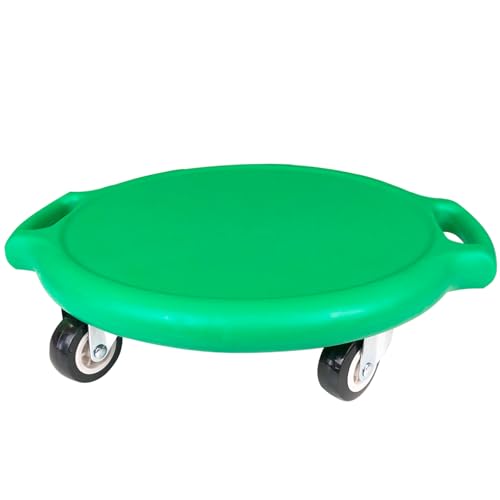
- Quiet 360° swivel wheels
- Supports sitting, kneeling, or lying play
- Lightweight, no-assembly design
Best For: Kids needing calm sensory movement and balance practice
Classroom Movement Pick
Blue Speedway Racer Scooter Board

- Side handles help steering and control
- Durable board wipes clean easily
- Ready to use with no assembly
Best For: PE, therapy, and indoor movement breaks
Heavy-Duty Sensory Choice
Large Scooter Board with Handles and Buckle

- Large deck for sitting, kneeling, or prone use
- 360° non-marring wheels with low noise
- 220 lb capacity with sturdy construction
Best For: Larger kids or busy settings needing a durable scooter board
Red Race Car Scooter Board
hand2mind Speedway Racer Scooter Board

- Race-car themed sit-down scooter board
- Side handles add steering control and safety
- Works best on smooth hard indoor floors
Best For: structured movement breaks, PE circuits, and gross motor play
Yellow Swivel Handle Scooter
GSE Games & Sports Expert Floor Scooter

- 360-degree swivel wheels for smoother turning
- Side handles improve control and finger safety
- Noise-reducing wheels suit hard floors
Best For: smoother seated movement on gym, classroom, or basement floors
Purple Indoor Scooter with Handles
hand2mind Purple Floor Scooter Board

- Safety handles support control and finger safety
- Durable plastic build is easy to clean
- Made for indoor play and OT-style movement
Best For: basic indoor scooting, coordination work, and therapy sessions
Quiet, Connected Play Pick – Bear-Shaped Floor Scooter with Safety Handles
If you’re shopping for a sensory scooter board for autism that encourages movement, balance, and simple social play, this kids scooter board is built for active indoor and outdoor use. The stable triangular design, quiet 360° wheels, and connected-play setup make it a practical option for therapy-style movement and early gross motor activities.
Best For: Kids ages 3 to 6 who need a safe, easy-to-grip scooter board for balance work, sensory movement, and shared play.
Pros:
- Elevated handles help keep hands and fingers away from the wheels.
- Back-supportive contours add extra confidence and help reduce falls backward.
- Quiet universal wheels are designed not to damage floors.
- Can connect with other scooters for group play and social interaction.
Cons:
- Maximum weight recommendation is 60 kilograms, so it’s best suited to younger children.
- Plastic build may feel less cushioned than foam alternatives.
This is a straightforward, movement-focused scooter board that leans toward durability and shared play. If you want a sensory scooter board for autism with safe handles and smooth rolling, it offers a strong balance of function and fun.
Comfort-First Therapy Option – Foam Tummy Scooter with Padded Support
Fun & Function Foam Tummy Scooter - Scooter Board - Padded for Kids PE & Gym - Ages 3+
Check Price On AmazonFor a sensory scooter board for autism that puts comfort first, this foam tummy scooter is designed to support calming movement and core-strengthening play. The padded foam body, tapered seat, and supportive contours make it a good fit for kids who want a softer riding surface for gliding, sitting, or tummy-time style motion.
Best For: Children who benefit from a softer therapy scooter for sensory input, balance work, and motor planning practice.
Pros:
- Soft foam construction adds comfort during longer play sessions.
- Supportive contours and tapered seat help children feel more secure.
- Works for both tummy gliding and sitting-and-scooting play.
- Rated for up to 150 lbs, making it usable for a wide age range.
Cons:
- Heavier at 4.25 lbs than simpler plastic boards.
- Foam build may not roll with the same rigid feel as hard plastic models.
If comfort and sensory support matter most, this is a strong therapy-style choice. It’s especially appealing when you want a scooter board that feels gentler while still supporting balance and coordination.
Most Versatile Set – 2 Scooter Boards with Rings, Ropes, and Beanbags
If you want a sensory scooter board for autism that adds structure and extra game ideas, this two-board set comes with accessories that encourage movement, aiming, and chasing activities. The handles, smooth caster wheels, and included ropes, ring, and beanbags make it easy to turn scooter play into coordinated indoor or outdoor exercise.
Best For: Families, classrooms, or therapy settings that want two scooter boards plus activity accessories for balance and coordination games.
Pros:
- Includes 2 boards, 1 ring, 2 ropes, and 4 beanbags for varied play.
- Handles on both sides help protect hands from the wheels.
- Lightweight boards are suitable for indoor and outdoor use.
- Can support balance, coordination, judgment, and reflex training.
Cons:
- Each board is only 11 inches, so the riding surface is smaller than some options.
- Plastic grip may feel less comfortable than padded alternatives.
This bundle stands out if you want more than a basic scooter board. The extra accessories make it easier to build repeatable games and group activities around movement.
Durable Indoor Workhorse – Green Indoor Scooter Board with Handles
This sensory scooter board for autism is a practical hard-plastic option for indoor gross motor play, recess-style movement, and occupational therapy activities. It’s built to glide on hard surfaces without damaging floors, while the safety handles and ergonomic grip help give kids more control during scooting, rolling, and coordination work.
Best For: Kids who need a durable, easy-to-clean scooter board for indoor movement, PE activities, and gross motor practice.
Pros:
- Durable hard plastic design is easy to clean.
- Safety handles help keep fingers away from the wheels.
- Plastic wheels are designed not to damage floors.
- Supports up to 175 lbs and suits a range of indoor surfaces.
Cons:
- Hard plastic construction is less cushioned than foam models.
- Only one scooter board is included.
If you need a simple, sturdy scooter board for repeated use, this is a reliable pick. It focuses on control, durability, and basic gross motor development rather than extra accessories or padding.
Balance & Sensory Play Pick – Kids Sitting Scooter Board with Universal Wheels
This sensory scooter board for autism is built for active indoor or outdoor movement, with a low, stable platform that supports balance, coordination, and vestibular input. The 360° swivel casters roll quietly and are designed not to mark floors, while the lightweight build makes it easy to carry and store.
Best For: Kids who need a stable, quiet scooter board for sensory play, balance work, and gross motor activity.
Pros:
- 360° swivel wheels with silent, non-marking rolling for indoor use
- Supports sitting, kneeling, or lying play to vary motor input
- Lightweight design with no assembly required
- Rounded edges and a stable base add confidence during use
Cons:
- Load limit is 176 lb, so it’s sized for kids rather than older users
- Best suited to indoor hard floors or other smooth surfaces
If you want a simple, ready-to-use option focused on sensory training and balance development, this board covers the basics well. Its quiet wheels and stable design make it a practical choice for home play and physical education alike.
Classroom Movement Pick – Blue Speedway Racer Scooter Board
This sensory scooter board for autism is shaped like a race car but built for practical gross-motor play, with a sturdy board that helps kids build balance and core strength. It’s designed for smooth indoor floors, and the side handles help keep steering controlled while fingers stay away from the wheel area.
Best For: Teachers, therapists, and families who want a durable scooter board for PE, movement breaks, and active indoor play.
Pros:
- Side handles support safer steering and finger placement
- Durable plastic construction wipes clean quickly
- No assembly required and holds up to 175 lb
- Useful for gym circuits, recess-style play, and OT activities
Cons:
- Works best on hard indoor floors, not most carpets
- Theme and shape may be more appealing to some kids than others
This is a straightforward pick if you need a scooter board that can stand up to repeated use in a classroom or therapy setting. The race-car design is a bonus, but the real value is its stable ride and easy cleanup.
Heavy-Duty Sensory Choice – Large Scooter Board with Handles and Buckle
This sensory scooter board for autism offers a larger platform and a sturdy build for kids who want more room to ride in sitting, kneeling, or prone positions. Its 360° universal wheels are designed for low-noise movement on flat hard floors, and the side handles add extra control during play.
Best For: Families, classrooms, or homeschool setups that want a larger, higher-capacity scooter board for versatile motor play.
Pros:
- Large deck supports multiple riding positions
- 360° swivel wheels are non-marring and low-noise
- Handles improve steering and help keep fingers clear
- High 220 lb capacity and sturdy hard-plastic construction
Cons:
- Larger size may be less convenient for storage than smaller boards
- Best on smooth, flat hard floors rather than soft surfaces
If you want a more substantial scooter board that can handle frequent use, this model stands out for its size and weight capacity. It’s a practical pick for active kids who benefit from strong sensory feedback and flexible movement options.
Red Race Car Scooter Board – hand2mind Speedway Racer Scooter Board
If you need a sensory scooter board for autism that turns movement into structured play, this hand2mind racer board is a practical pick. The low, sit-down design supports scooting, gliding, and core-building activities on hard indoor floors, making it useful for movement breaks, PE circuits, and therapy-style gross motor work.
Best For: Kids who benefit from active, seated movement with simple steering handles and a race-car theme.
Pros:
- Side handles help with steering and keep fingers away from the wheel area.
- Durable plastic board wipes clean quickly after indoor use.
- Rated to hold up to 175 lbs, so it works for a wide age range with supervision.
- Good for coordination, bilateral movement, and partner relay activities.
Cons:
- Rolls best on smooth hard floors; performance may be limited on most carpets.
- Designed for indoor use, so it is less versatile than all-surface ride toys.
Overall, this is a straightforward scooter board for classrooms, therapy rooms, and active home play. The themed design adds appeal, while the handles and sturdy construction make it easy to use in organized movement routines.
Yellow Swivel Handle Scooter – GSE Games & Sports Expert Floor Scooter
If you’re shopping for a sensory scooter board for autism, this GSE floor scooter stands out for its 360-degree swivel wheels and easy-grip side handles. It is built for active scooting on hard floors, and the rolling action can work well for movement-heavy play, indoor exercise, and gross motor activities.
Best For: Kids, teens, or adults who want smoother turning and a stable seated scooter board for hard surfaces.
Pros:
- 360-degree rotating casters allow easier turning and maneuvering.
- Safety handles on both sides help keep fingers away from the wheels.
- PU plastic wheels are designed to reduce noise and help protect floors.
- Supports up to about 176 lbs for broader age use.
Cons:
- Best suited to hard floor surfaces rather than plush carpet.
- No theme or color variety in this listing beyond yellow.
This is a strong all-around choice if rolling smoothness matters more than themed styling. The combination of swivel casters, handles, and a durable plastic build makes it practical for indoor play and movement-based activities.
Purple Indoor Scooter with Handles – hand2mind Purple Floor Scooter Board
For a sensory scooter board for autism that’s simple, durable, and easy to integrate into indoor routines, this hand2mind model is a solid option. It supports scooting, gliding, and coordination work on hard floors, with safety handles that help keep hands clear of the wheels during movement play.
Best For: Classrooms, therapy spaces, and home use where a basic, handle-equipped scooter board is needed.
Pros:
- Safety handles provide steering support and help protect fingers from the rolling wheels.
- Durable hard plastic design is easy to clean after use.
- Plastic wheels are made not to damage floors.
- Suitable for indoor play, PE, recess games, and occupational therapy activities.
Cons:
- Best on smooth hard surfaces, so carpet use is limited.
- Color may vary slightly, which matters if you want a specific look.
This scooter board focuses on the basics: reliable rolling, safety handles, and a simple platform for gross motor play. If you want a no-frills option for structured movement and coordination practice, it fits that job well.
How We Picked the Best Sensory Scooter Board for Autism
We focused on features that matter most for a Sensory Scooter Board for Autism: stable construction, comfortable handles, smooth-rolling casters, and designs that support seated or tummy-down play. We also favored options that are easy to store, simple to clean, and suitable for supervised indoor use.
Quick Comparison
In this roundup, the main differences come down to body position, wheel style, padding, size, and extras. Some boards are built for sitting and steering, while others are better for tummy rides, PE-style movement, or multi-child play. If you want a calmer, more controlled experience, look for handles and a lower, steadier platform. If you want more active movement, a larger board or sport-oriented model may fit better.
Key Buying Factors for a Sensory Scooter Board for Autism
Safety and Stability
Choose a board with rounded edges, reliable wheel hardware, and enough surface area for the child to position themselves securely. Handles can help with starting, stopping, and balance. For younger users, a wider base is usually easier to manage.
Comfort and Sensory Support
Some children prefer a padded tummy scooter board, while others do better sitting upright. Consider how the child responds to pressure, movement speed, and body positioning. A quieter ride and smoother glide can reduce frustration during play.
Size and Weight Capacity
Check the board dimensions and weight limit carefully. A board that is too small can feel unstable, while one that is too large may be hard to control. Matching the board to the child’s size improves both safety and enjoyment.
Indoor Vs. Outdoor Use
Most scooter boards are best on hard indoor floors, though some can be used outdoors on smooth surfaces. If you plan to use it in a classroom or therapy room, prioritize wheels that roll well without leaving marks and a design that can handle repeated use.
Who Should Buy Which Sensory Scooter Board for Autism?
If you want a gentle starter option, pick a handled board with a simple sit-down design. If the user prefers deep pressure or prone movement, a padded tummy scooter may be the better fit. For schools, gym classes, or sibling play, a larger board or accessory kit can offer more versatility. For a child who needs predictable movement and clear boundaries, the best Sensory Scooter Board for Autism is usually the one that balances comfort, control, and durability rather than the one with the most features.