Finding the right handwriting support can make practice feel calmer, clearer, and more successful for autistic learners. The best tools reduce visual overload, improve letter placement, and support consistent motor patterns.
Below, we focus on practical options for tracing, grip training, and guided writing so you can choose the right fit for home, classroom, or therapy use.
Best 10 Handwriting Guide for Autistic Students Picks for 2026
Calm Starter Tracing Set
Handwriting Practice Activity Book For Autistic Kids

- ABC, number, line, and shape tracing
- Clean pages help limit visual overload
- Large 8.5 x 11 format for easy practice
Best For: Young autistic beginners ages 4-8
Grip Support Trio
The Pencil Grip 3-Step Training Kit

- Three-step grip progression included
- Fits pencils, crayons, markers, and more
- Helps with comfort, control, and fatigue
Best For: Learners who need ergonomic pencil support
Structured Tracing Workbook
Letter Tracing Books for Autistic Kids

- Step-by-step pencil control to letter writing
- 170+ pages for extended practice
- Includes coloring pages and a certificate
Best For: Children who need a longer, structured tracing routine
Visual Cue Notebook

- Highlighted midline supports letter placement
- Spacing marks help organize handwriting
- Clean pages suit OT and classroom practice
Best For: All ages needing visual handwriting structure
Posture Support Pick
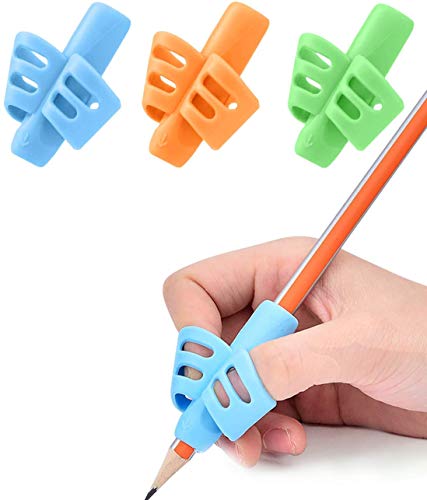
- Helps position pencils correctly for writing
- Wide-top, narrow-bottom shape resists slipping
- Hollow plastic design adds comfort and breathability
Best For: Ages 3-7 needing pencil grip support for writing and coloring
Spacing & Formation Pick
Dysgraphia Writing Support Notebook

- Highlighted dotted midline guides letter placement
- Spacing marks help keep words organized
- Large, clean pages support focused handwriting practice
Best For: Learners needing visual support for handwriting, spacing, and letter formation
Reusable Tracing Pick
Magic Grooved Writing Practice Book

- Grooved pages guide tracing for letters and numbers
- Reusable disappearing ink supports repeated practice
- Includes books for letters, numbers, words, and math
Best For: Young children who learn handwriting through tracing and repetition
OT-Guided Lowercase Starter

- Five-stage lowercase learning progression
- Multisensory cues: tracing, songs, pictures
- OT-created with parent guide included
Best For: Kindergarten and first grade kids ready for lowercase practice
Adaptive Line Notebook
Dysgraphia Writing Practice Notebook

- 3/4-inch ruled pages with dotted middle lines
- Gradient colors and left-margin starter
- Designed for autism, dysgraphia, ADHD, and more
Best For: Preschool and kindergarten practice with strong visual line guides
Alignment Writing Guide

- 9/16-inch window helps keep letters on the line
- Fits standard notebook paper
- OT-designed support for size and spacing
Best For: Kids who need a visual frame for neater handwriting
Calm Starter Tracing Set – Handwriting Practice Activity Book For Autistic Kids
If you want a handwriting guide for autistic students that starts gently, this workbook focuses on ABC tracing, number tracing, line patterns, and basic shapes with clean, low-visual-stimulus pages. It is built to support early pencil control and reduce overwhelm, making it a practical pick for home practice or classroom use.
Best For: Young autistic learners ages 4-8 who need a simple, confidence-building introduction to handwriting.
Pros:
- Includes alphabet tracing, number tracing, lines, and shapes.
- Simple layouts help children follow each step clearly.
- Low-stimulus design is intended to support focus and reduce sensory overload.
- Large 8.5" x 11" format gives plenty of room for practice.
Cons:
- Best suited to beginner-level writing practice rather than advanced handwriting.
- Focuses on tracing and foundational skills instead of open-ended writing.
- Designed for a narrow age range, so older students may outgrow it quickly.
This is a straightforward starter workbook for families and educators who want a calm, structured way to build early writing confidence. The uncluttered pages and step-by-step tracing make it especially approachable for learners who do best with minimal distractions.
Grip Support Trio – The Pencil Grip 3-Step Training Kit
For a handwriting guide for autistic students that supports the physical side of writing, this 3-step grip kit is designed to improve hand positioning, comfort, and control. The set includes a crossover grip, pinch grip, and standard pencil grip, giving learners a simple progression that can be used at home, in classrooms, or in therapeutic settings.
Best For: Kids and adults who need ergonomic pencil support to build better grip and reduce hand fatigue.
Pros:
- Includes three grips for a step-by-step training progression.
- Works on pencils, pens, crayons, markers, and paint brushes.
- Designed to improve comfort, reduce fatigue, and support control.
- Ambidextrous and usable by both righties and lefties.
Cons:
- Does not teach letter formation or writing practice on its own.
- Best results depend on using the grips consistently during writing tasks.
- Some learners may need guidance to move through the three-step process.
This is a useful support tool if the main challenge is grip rather than handwriting content. It pairs well with practice workbooks because it addresses comfort and hand placement while the child works on tracing or writing.
Structured Tracing Workbook – Letter Tracing Books for Autistic Kids
If you need a handwriting guide for autistic students with a bit more practice space, this workbook takes a step-by-step approach to pencil control, alphabet writing, and number tracing. It uses a progressive method and adds coloring pages to help keep children engaged while they build early writing skills.
Best For: Autistic children who benefit from a structured, longer tracing workbook with built-in motivation.
Pros:
- Progresses from pencil control to alphabet and number tracing.
- Offers 170+ pages for extended practice.
- Includes pictures to color for added engagement.
- Ends with a certificate to help build confidence.
Cons:
- Heavier page count may be more than some families need for a starter book.
- Still centered on tracing rather than freehand writing.
- Coloring elements may distract learners who need ultra-minimal pages.
This workbook is a good fit for families wanting more repetition and a clear learning path. The extra pages and confidence-building certificate make it feel more like a full practice program than a short introductory booklet.
Visual Cue Notebook – Dysgraphia Writing Notebook
For students who need a handwriting guide for autistic students with more visual structure, this notebook uses a highlighted dotted midline and spacing marks to support letter placement and word spacing. The clean, distraction-free pages are meant to help learners stay organized and write with more consistency in home, therapy, tutoring, or classroom settings.
Best For: Writers of all ages who benefit from visual cues for spacing, alignment, and handwriting confidence.
Pros:
- Highlighted dotted midline helps with letter formation.
- Spacing marks support clearer word and letter placement.
- Large 8.5 by 11 format provides comfortable writing space.
- Clean layout is designed to support focus and confidence.
Cons:
- Does not provide alphabet tracing or early letter instruction.
- More useful for guided handwriting practice than first-time learning.
- Written with a strong focus on dysgraphia support rather than general tracing.
This notebook is a strong option when the issue is neatness, spacing, or letter placement rather than basic tracing. Its visual guides make it a practical reinforcement tool for learners who need a calmer, more structured handwriting page.
Posture Support Pick – Pencil Grips for Kids
If you’re looking for a handwriting guide for autistic students that helps with grip and pencil control, these pencil grips offer a simple hands-on starting point. They’re designed to help small hands position a pencil correctly, with a non-slip shape and hollow design that can make writing practice feel more comfortable.
Best For: Young children ages 3-7 who need help holding pencils properly during writing, coloring, or special needs training.
Pros:
- Helps position and hold pencils correctly for writing.
- Wide-top, narrow-bottom design helps prevent slipping.
- Hollow plastic design is made for comfort and breathability.
- Easy to use by rotating the pen into place with one hand.
Cons:
- Made for small hands, so it’s not a fit for older students.
- Focuses on grip support rather than letter formation.
- Plastic construction may feel basic compared with softer grips.
For learners who need a straightforward grip aid, this is a practical low-tech option that supports hand positioning without adding visual clutter. It’s best viewed as a writing comfort tool rather than a full handwriting curriculum.
Spacing & Formation Pick – Dysgraphia Writing Support Notebook
This handwriting guide for autistic students is built around clear visual structure, making it easier to practice letter placement, spacing, and alignment. The notebook uses a highlighted dotted midline and spacing marks to give writers simple cues that support steadier, more organized handwriting practice.
Best For: Children, teens, and adults who need visual handwriting support for dysgraphia, occupational therapy, or special needs learning.
Pros:
- Highlighted dotted midline helps show where letters should sit.
- Spacing marks support consistent letter and word placement.
- Clean, distraction-free layout is easier to focus on.
- Large 8.5 x 11 size gives plenty of room for practice.
Cons:
- Designed for guided practice, not for teaching letter shapes from scratch.
- Print-only notebook may not suit learners who prefer reusable tools.
- No hands-on grip aid or pen included.
For learners who need visual reminders more than physical tracing, this notebook offers a clear and structured practice space. It’s a strong choice when the goal is improving consistency, spacing, and confidence on the page.
Reusable Tracing Pick – Magic Grooved Writing Practice Book
If you want a handwriting guide for autistic students that relies on tracing and repetition, this grooved practice set gives young learners a structured way to build writing habits. The raised grooves help guide pencil movement for letters, numbers, and simple words, while the reusable pages make repeated practice easy.
Best For: Preschool and kindergarten children ages 3-8 who benefit from traced, repetitive handwriting practice and simple early learning activities.
Pros:
- Grooved pages guide tracing for letters, numbers, and lines.
- Reusable disappearing ink supports repeat practice without wasting paper.
- Includes multiple books covering letters, numbers, words, and math.
- Top-spiral binding helps pages lay flat for easier writing.
Cons:
- Best suited to very young children, not older students.
- Ink fade time can vary with temperature and humidity.
- Focuses on tracing practice rather than independent handwriting composition.
This is a good pick for learners who do best with tactile tracing and repetitive practice. It’s especially useful when you want an easy, reusable format that supports early writing memory and pencil control.
OT-Guided Lowercase Starter – Lowercase At Last Handwriting
If you’re looking for a handwriting guide for autistic students in the early elementary years, this workbook is built to make lowercase practice more structured and less frustrating. It uses finger tracing, go-dots, gray boxes, and verbal cues to help children move step by step from tracing to independent writing while building fine motor and visual-motor skills.
Best For: Kindergarten and first grade learners ages 5–7 who are ready to focus on lowercase letters with multisensory support.
Pros:
- Teaches lowercase formation through a five-stage progression: trace, start, apply, show, and recall.
- Uses multisensory supports like finger tracing, songs, and picture cues to reinforce learning.
- Created by a pediatric occupational therapist with a parent guide included.
- Groups letters by movement patterns instead of ABC order for easier practice.
Cons:
- Focused on lowercase success, so it is not a full handwriting curriculum.
- Best suited to younger children who are already ready for lowercase practice.
This is a practical choice if you want handwriting practice that emphasizes structure, repetition, and motor learning. It is especially appealing for learners who benefit from clear visual cues and a slower, step-by-step approach.
Adaptive Line Notebook – Dysgraphia Writing Practice Notebook
This handwriting guide for autistic students is a simple practice notebook designed to make early writing easier to see and control. The 3/4-inch ruled pages, dotted middle lines, gradient coloring, and left-margin starter all work together to help young children place letters within the lines and build confidence during print practice.
Best For: Preschool and kindergarten learners who need more visual structure for handwriting practice at home, school, or therapy.
Pros:
- Gradient colors and dotted middle lines provide clear visual placement cues.
- Left margin starter helps children know where to begin writing.
- Made for kids with dysgraphia, ADHD, autism, dyslexia, Irlen, and motor challenges.
- Includes 72 pages of ruled practice space on standard letter-size paper.
Cons:
- It is a notebook, so it does not provide letter-by-letter instruction.
- The 3/4-inch ruling may be too large or too small depending on the child’s needs.
Choose this if your priority is a supportive writing surface rather than a full lesson program. The design is practical for repeated practice when a child benefits from strong visual boundaries and roomy lines.
Alignment Writing Guide – T-Frame Handwriting Tool
If you want a handwriting guide for autistic students that focuses on alignment rather than worksheets, this T-frame tool offers a very direct solution. It uses a 9/16-inch writing window to help children keep letters on the line, control size, and improve spacing on standard notebook paper at school, home, or in occupational therapy.
Best For: Students who need a visual writing frame to improve neatness, size, and line placement.
Pros:
- Helps prevent floating and oversized letters by reinforcing line alignment.
- Fits standard notebook paper for easy classroom and home use.
- Designed by an occupational therapist to support handwriting and fine motor skills.
- Simple visual guide can build confidence in everyday schoolwork.
Cons:
- Does not teach letter formation or provide practice content.
- Works best as a support tool alongside writing instruction.
This is a good pick if a child already knows some letter forms but needs help with placement and neatness. It is especially useful when the main challenge is keeping writing organized on the page.
How We Picked the Best Handwriting Guide for Autistic Students
For this Handwriting Guide for Autistic Students, we prioritized tools that support real skill-building without adding unnecessary complexity. The best options should help with visual structure, pencil control, spacing, and repeatable practice. We also looked for formats that are easy for parents, teachers, and occupational therapists to use consistently.
We favored products that serve different needs: tracing workbooks, adaptive notebooks, grip trainers, and alignment tools. That matters because no single product works for every learner.
Quick Comparison: What Each Type Does Best
Trace-and-trace books are best for students who need strong visual cues and predictable repetition. Grip aids are better for children who struggle with finger placement, fatigue, or pressure control. Highlighted or dotted midline notebooks support letter sizing and baseline awareness. Alignment tools help students keep words organized on the page.
If you are comparing options for a Handwriting Guide for Autistic Students, start with the skill that is currently most difficult: letter formation, grip, spacing, or endurance.
Key Buying Factors
Visual Clarity
Many autistic students do best with simple layouts, strong contrast, and clean page design. Look for guides with clear baselines, dotted midlines, or guided spacing if visual organization is a challenge.
Motor Support
If pencil grasp is the issue, a grip trainer or ergonomic writing aid may be more useful than another workbook. The right support should encourage a stable, comfortable hold without forcing an unnatural position.
Skill Level and Age
Match the tool to the student’s current ability, not just age. Younger children may benefit from tracing and grooved writing, while older students often need supports for consistency, neatness, and writing endurance.
Practice Format
Some learners respond well to reusable practice because it lowers pressure and encourages repetition. Others need paper-based worksheets they can complete independently. Choose the format that fits attention span and tolerance for repetition.
Who Should Buy Which Handwriting Guide for Autistic Students?
Choose tracing books and grooved workbooks for beginners who need step-by-step letter practice. Choose a pencil grip kit if the main concern is posture, control, or hand fatigue. Choose dysgraphia-style notebooks or letter-size alignment tools if spacing, sizing, and organization are the biggest challenges.
For many families, the best Handwriting Guide for Autistic Students is a combination approach: one tool for motor control, one for letter formation, and one for page alignment. That combination often creates faster progress than relying on a single product alone.