The best color sorting toys turn color matching, counting, and categorizing into hands-on learning for toddlers and preschoolers. This roundup compares 10 engaging options, from play-food sets and animal counters to sensory toys and busy books.
Use the guide below to match each style with your child’s age, developmental goals, supervision needs, and preferred way to play.
Best 10 Color Sorting Toys Picks for 2026
Best Pretend-Play Pick
Farmer’s Market Color Sorting Set

- Five baskets and 25 colorful play-food pieces
- Builds color, counting, and food-recognition skills
- Suitable from 18 months and designed to grow with play
Best For: Toddlers who enjoy pretend kitchens and hands-on sorting
Best Dinosaur Math Set
Counting Dinosaurs Color Sorting Toy

- Dinosaur-themed counting and sorting activities
- Includes six bowls and two fine-motor tweezers
- Supports color matching, grouping, and early math
Best For: Dinosaur-loving preschoolers ages 3 and up
Best Wooden Learning Set
Montessori Color & Shape Blocks

- 50 wooden blocks in five colors and five shapes
- Includes 14 guided activity cards
- Supports sorting, stacking, matching, and shape recognition
Best For: Toddlers ready for durable, multi-stage learning play
Best Large Food Set
JOYIN Play Food Color Sorting Set

- 69 food pieces with five color-coded baskets
- Adds fruit, vegetable, and meat categorization
- Includes cutting accessories and a storage basket
Best For: Preschoolers who enjoy expansive pretend-kitchen play
Best All-Around Set
Counting Animal Color Sorting Toys

- 36 animals with six rainbow sorting bowls
- Builds counting, grouping, and color-matching skills
- Includes tweezers and a storage bucket
Best For: Preschoolers who enjoy open-ended animal sorting and early math play
Best for On-the-Go Calm
4-Piece Sensory Color Sorting Toys

- Four soft bead-pushing shapes for small hands
- Quiet design for travel and calm-down play
- Practices color matching and fine motor skills
Best For: Toddlers needing a portable, tactile activity
Best Busy Book
Montessori Color Matching Activity

- Matches 48-plus cartoon pieces across 12 colors
- Adds vocabulary and pre-reading practice
- Compact hook-and-loop format for guided play
Best For: Toddlers who enjoy structured indoor matching activities
Hands-On Animal Learning
Counting Animal Color Sorting Set

- 36 colorful animal counters with six bowls
- Includes tweezers for grasp and coordination practice
- Supports counting, sorting, and color recognition
Best For: Preschool math and fine motor activities
Compact Montessori Practice
Rainbow Balls and Sorting Cups
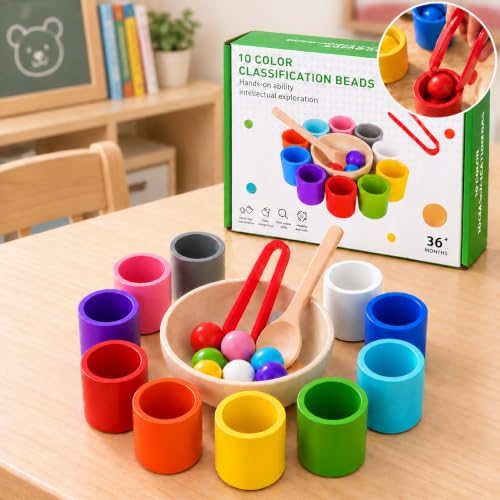
- 10 wooden balls and 10 matching cups
- Includes a spoon, tongs, and storage box
- Designed for tabletop, screen-free color matching
Best For: Compact preschool sorting practice
Calming Tactile Play
Squeeze Color Sorting Sensory Toy

- Combines color sorting with squeeze-based sensory play
- Supports fine motor skills, focus, and self-regulation
- Portable mini design for travel or classroom use
Best For: Portable sensory and focus activities
Best Pretend-Play Pick – Farmer’s Market Color Sorting Set
For toddlers who learn through hands-on play, this color sorting toys set combines five color-coded baskets with realistic fruits and vegetables. It supports color recognition, counting, food identification, and imaginative farmers-market play in one durable package.
Best For: Toddlers 18 months and up who enjoy pretend food and need a versatile introduction to sorting and counting.
Pros:
- Includes 25 play-food pieces and five sorting baskets in five colors.
- Supports color matching, counting, and food recognition.
- Soft, durable rubber-like plastic is sized for little hands.
- Can grow from a sorting activity into farmers-market pretend play.
Cons:
- The 31-piece set may require a dedicated storage spot.
- Its pretend-food focus may be less appealing to children uninterested in kitchen play.
This is a strong all-around choice when you want color sorting toys that remain useful beyond the earliest matching stage. The realistic food pieces add imaginative-play value while keeping the learning activities simple and accessible.
Best Dinosaur Math Set – Counting Dinosaurs Color Sorting Toy
These color sorting toys add a dinosaur theme to early math practice. Children can sort six dinosaur types and colors, count pieces, match colors to bowls, and use tweezers for an extra fine-motor challenge.
Best For: Children ages 3 and up who are motivated by dinosaurs and are ready to practice counting, grouping, and color matching.
Pros:
- Includes multicolored dinosaurs, six rainbow bowls, and two tweezers.
- Supports counting, color recognition, grouping, shapes, and early geometry.
- Tweezer activities encourage hand control and coordination.
- Comes in a transparent bucket for storage and carrying.
Cons:
- The small pieces are intended for ages 3 and up.
- The dinosaur theme may be narrower than a general-purpose sorting set.
Choose this set when a child’s interests can make repetition more engaging. It works well for home, preschool, or classroom activities, especially when you want color sorting toys that also introduce early math and fine-motor practice.
Best Wooden Learning Set – Montessori Color & Shape Blocks
This wooden set gives younger children several ways to explore color sorting toys, shape matching, and stacking. It includes 50 blocks in five colors and five shapes, plus activity cards that add progressively more structured challenges.
Best For: Toddlers and preschoolers ages 1 to 3 who benefit from a durable, open-ended sorting and matching activity.
Pros:
- Includes 50 solid wood blocks in five bright colors and five common shapes.
- Activity cards provide 14 guided patterns and sorting options.
- Smooth, sanded edges and a sturdy wooden construction support repeated play.
- Offers activities ranging from basic color matching to more advanced patterns.
Cons:
- Younger toddlers may need adult help with the cards.
- Wooden pieces are heavier and less flexible than plastic alternatives.
This is a practical pick for families seeking color sorting toys with a longer learning path. The combination of open-ended blocks and answer cards makes it suitable for both free play and guided practice as children develop.
Best Large Food Set – JOYIN Play Food Color Sorting Set
For children who enjoy kitchen role-play, this large set combines color sorting toys with food categorization and cutting activities. Five color-coded baskets organize 69 play-food pieces, while the included cutting board and utensils add fine-motor practice.
Best For: Children ages 3 to 6 who want a broad pretend-kitchen set with sorting, categorization, and cutting play.
Pros:
- Includes 69 food pieces, five baskets, cutlery, and a cutting board.
- Uses color-coded baskets and tags to support sorting and recognition.
- Separates play food into fruits, vegetables, and meats.
- Includes a storage basket to help organize the set after play.
Cons:
- The large number of pieces may take time to sort and clean up.
- Recommended for ages 36 months to 6 years, so it is not intended for younger toddlers.
- Its cutting-play accessories may be more than needed for basic color matching.
This option makes the most sense when sorting is just one part of a child’s preferred play. It offers a fuller pretend-kitchen experience than many color sorting toys, with categorization and cutting activities to extend engagement.
Best All-Around Set – Counting Animal Color Sorting Toys
This 36-piece animal set is a versatile choice for families searching for color sorting toys that also introduce counting and grouping. Children can match animals to six rainbow bowls, practice early math, and use the included tweezers for added hands-on play.
Best For: Preschoolers ages 3 and up who enjoy animal-themed activities, counting practice, and hands-on color matching at home or in a classroom.
Pros:
- Includes 36 animals, six sorting bowls, and two tweezers.
- Supports color matching, counting, animal sorting, and grouping.
- Includes a storage bucket for cleanup and portability.
- Washable, non-toxic material and no batteries required.
Cons:
- The set is recommended for children ages 3 and up, so it may not suit younger toddlers.
- Small animal pieces require age-appropriate supervision.
Choose this set if you want one activity to cover several early-learning skills. Its loose pieces offer more open-ended play than a compact matching toy, while the bucket helps keep everything together.
Best for On-the-Go Calm – 4-Piece Sensory Color Sorting Toys
These four compact color sorting toys combine bead-pushing with sensory play. Children can move colorful beads into matching positions while practicing color recognition, counting, hand-eye coordination, and fine motor control.
Best For: Toddlers ages 3 and up, travel, quiet classroom areas, and children who benefit from a portable, tactile activity.
Pros:
- Four shapes—dinosaurs, flowers, stars, and bear paws—offer varied grasping options.
- Silent bead movement supports quiet play during travel or waiting periods.
- Small, washable designs are easy to store and clean.
- Supports color matching, counting, classification, and fine motor practice.
Cons:
- The set focuses on bead-pushing rather than loose-piece sorting.
- Its compact format may provide less variety for extended tabletop activities.
This is a practical pick when portability and quiet engagement matter most. The four tactile designs make it easier to offer a focused activity in a car, restaurant, classroom quiet corner, or other waiting situation.
Best Busy Book – Montessori Color Matching Activity
This compact busy book offers a screen-free alternative for shoppers comparing color sorting toys for toddlers. Children match more than 48 hook-and-loop cartoon stickers across 12 colors, with labeled images that also encourage vocabulary and early pre-reading practice.
Best For: Toddlers ages 2 to 4 who prefer guided matching activities, shared parent-child play, and a lightweight indoor learning book.
Pros:
- Introduces 12 colors through more than 48 reusable-style hook-and-loop pieces.
- Combines color matching with vocabulary and pre-reading exposure.
- Supports fine motor skills, concentration, problem-solving, and hand-eye coordination.
- Compact, battery-free design is convenient for indoor use.
Cons:
- Paper and cardboard construction is less suited to water or outdoor play.
- It offers guided matching rather than open-ended loose-object sorting.
Consider this book when you want a contained activity with clear steps and minimal cleanup. The labeled illustrations add language practice, while the hook-and-loop format makes matching accessible for young toddlers.
Hands-On Animal Learning – Counting Animal Color Sorting Set
This robust set is a versatile choice among color sorting toys for preschoolers. It combines colorful animal counters with bowls and tweezers, giving children practical ways to practice color recognition, counting, sorting, comparison, and fine motor movements.
Best For: Ages 3–5, preschool classrooms, homeschool activities, daycare, and children who benefit from hands-on sensory and sorting practice.
Pros:
- Includes 36 colored animal counters, six sorting bowls, and two large tweezers.
- Supports color identification, counting, sorting, hand-eye coordination, and grasp control.
- Washable rubber animals are softer than traditional plastic counters.
- Comes in a storage box for easier organization.
Cons:
- The set is designed for indoor, manual play rather than electronic activities.
- Its many pieces may require adult organization after play.
Choose this set when you want one purchase to cover both early math practice and fine motor development. The animal theme and generous counter quantity also support varied sorting and counting games.
Compact Montessori Practice – Rainbow Balls and Sorting Cups
This compact option keeps color sorting toys simple and tabletop-friendly. Children match 10 wooden balls to 10 coordinating cups while using the included spoon and tongs to build color recognition, grasp control, hand-eye coordination, and focus.
Best For: Children ages 3 and up who need a small, screen-free color-matching activity for home, classroom, or travel storage.
Pros:
- Includes 10 wooden balls, 10 matching cups, a spoon, tongs, and a storage box.
- Combines color matching with transferring and sorting practice.
- Small cups are sized for tabletop activities and organized storage.
- Manual, screen-free play supports focused hands-on learning.
Cons:
- The cups are specifically described as small, so they may not suit children needing larger manipulatives.
- With 10 balls, it offers fewer counters than larger sorting sets.
This is a sensible pick for buyers who prioritize a neat, compact activity over a large collection of pieces. The spoon and tongs add useful variations beyond basic color matching.
Calming Tactile Play – Squeeze Color Sorting Sensory Toy
This portable sensory option takes color sorting toys in a more tactile direction. Its squeeze-and-place activities are intended to support color recognition, sorting, counting, fine motor practice, focus, and calming sensory play without requiring multiple loose pieces.
Best For: Children ages 3 and up, classrooms, travel, and users seeking a compact tactile activity for focus or emotional regulation.
Pros:
- Supports color recognition along with sorting, counting, and sequencing concepts.
- Squeezing, pressing, and placing beads encourages fine motor and hand-eye coordination practice.
- Compact 7.87-by-5.91-inch design weighs about 0.19 pounds for portable use.
- Soft tactile play may help support focus and self-regulation.
Cons:
- It is a single mini activity rather than a larger set with bowls or separate counters.
- The notes identify the material as plastic, so buyers seeking wood-based toys may prefer another option.
Consider this toy when portability and sensory feedback matter more than a traditional sorting-station setup. It can fit easily into a car, classroom, airplane, restaurant, or desk-based activity routine.
How We Picked the Best Color Sorting Toys
We focused on toys that make sorting easy to understand while adding useful early-learning practice. The selection includes color-matching sets, counting manipulatives, stacking toys, play-food activities, busy books, and sensory options. We considered age range, the number and variety of pieces, opportunities for open-ended play, fine-motor demands, portability, and suitability for home or classroom use.
Because children develop at different rates, age labels are a starting point rather than a guarantee. Always check the manufacturer’s guidance, especially when a set includes small pieces.
Quick Comparison
| Toy style | Best for | What it practices |
|---|---|---|
| Farm-market or play-food sets | Pretend-play learners | Color recognition, language, classification |
| Animal and dinosaur counters | Early math practice | Counting, sorting, one-to-one correspondence |
| Stacking and matching sets | Younger toddlers | Grip control, visual matching, sequencing |
| Busy books | Travel and quiet play | Matching, focus, independent practice |
| Sensory and squeeze toys | Hands-on sensory seekers | Fine-motor control, tactile exploration, calming play |
Key Buying Factors for Color Sorting Toys
Age and Piece Size
Choose larger, easy-to-grip pieces for younger toddlers and more detailed sets for preschoolers ready to count or follow rules. Small components require close supervision and may not be appropriate for children who still mouth toys.
Learning Depth
For a simple introduction, look for clear color pairs and a limited number of categories. Older preschoolers can benefit from sets that combine sorting with counting, patterns, comparisons, or pretend-play prompts.
Motor-Skill Demands
Stacking, squeezing, transferring, and placing pieces into bowls exercise different skills. Select activities that offer a manageable challenge without making the child rely on adult help for every step.
Storage and Cleanup
Bowls, trays, attached pages, or a storage bag can keep pieces organized. If the toy will travel between rooms or classrooms, portability may matter as much as the activity itself.
Safety and Durability
Prioritize smooth, sturdy pieces and washable surfaces. Inspect toys regularly for cracks, loose parts, or damaged sensory components, and follow cleaning instructions.
Who Should Buy Which Color Sorting Toys?
Choose a farm-market or play-food set for children who learn best through pretend kitchens and storytelling. Animal or dinosaur counters are a strong fit for families introducing counting alongside color sorting. Stacking and matching toys suit younger toddlers who need straightforward, repeatable activities.
A busy book is practical for travel, waiting rooms, or quiet independent practice. Sensory and squeeze toys are better for children who enjoy tactile input or need a calming fine-motor activity, although they should complement—not replace—interactive play and supervision.
For classrooms, consider sets with many durable pieces and several possible activities. At home, the best choice is usually the format your child will voluntarily revisit: repetition is what turns a short sorting game into lasting learning.