The best sorting toys for classrooms turn early math concepts into active, repeatable practice. Children can classify colors, count objects, compare groups, and strengthen fine-motor control while working independently or in small groups.
This roundup compares 10 options, from durable counters and sorting bowls to themed matching sets and tweezer-based activities, so educators can choose materials that fit their learners, lesson plans, and storage needs.
Best 10 Sorting Toys for Classrooms Picks for 2026
Best Pretend-Play Pick
Farmer’s Market Color Sorting Set

- 25 colorful fruit and vegetable pieces
- Five sturdy sorting baskets
- Combines sorting with pretend play
Best For: Early color, counting, and food-identification activities
Best Animal-Themed Set
Counting & Sorting Animals Set
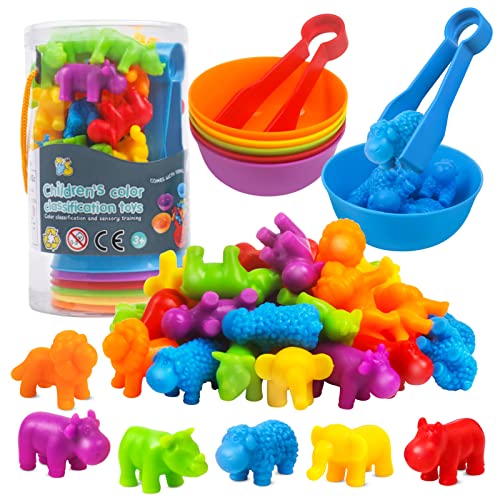
- 36 colorful animals with six bowls
- Includes tweezers for fine-motor work
- Supports early math and patterning
Best For: Preschool counting, grouping, and color-sorting stations
Best Classroom Bowl Set
Three Bear Family Sorting Bowls

- Six rainbow-colored plastic bowls
- Six-inch size suits classroom manipulatives
- Useful for sorting and counting stations
Best For: Reusable color-coded organization with existing counters
Best Fine-Motor Kit
Tweezer Tongs Color Sorting Set

- 50 beads with cups and test tubes
- Includes tweezers and pencil-grip tool
- 20 challenge cards add structure
Best For: Fine-motor, color-sorting, and early math stations
Best Classroom Staple

- 102 counters in six vivid colors
- Supports counting, sorting, and color recognition
- Includes activity guide and storage bucket
Best For: Pre-K math centers and foundational counting activities
Best Multi-Theme Set

- Eight categories with 48 themed objects
- Includes eight guided activity cards
- Supports classification and fine motor practice
Best For: Preschool themed learning stations and sorting lessons
Best for Color Matching

- 36 animals with six matching color bowls
- Includes two clips for fine motor practice
- Storage box supports quick cleanup
Best For: Preschool color-sorting and counting centers
Best All-Around Animal Set
Forest Animal Color Sorting Kit

- 36 animals, six bowls, and two tweezers
- Supports sorting, counting, matching, and stacking
- Includes a storage bucket for classroom organization
Best For: Preschool activity centers and multi-skill learning stations
Best Transportation Theme
Construction Vehicle Sorting Game

- Uses construction vehicles to teach sorting and matching
- Includes cups and tweezers for fine motor practice
- Works in classrooms, sensory bins, and sensory tables
Best For: Transportation-themed preschool learning stations
Best Washable Animal Set

- Includes 36 animals, six bowls, and two tweezers
- Supports early math and fine motor activities
- Description highlights washable, softer rubber pieces
Best For: Preschool and daycare stations needing tactile, washable manipulatives
Best Pretend-Play Pick – Farmer’s Market Color Sorting Set
The Learning Resources Farmer’s Market set brings color matching, counting, and food identification into hands-on pretend play. For classrooms looking for sorting toys for classrooms, its 25 food pieces and five color-coded baskets provide a flexible activity for early learners.
Best For: Toddlers and preschoolers practicing color sorting, counting, and food recognition through pretend play.
Pros:
- Includes 25 realistic fruit and vegetable pieces in five colors.
- Five sturdy baskets support sorting and classroom organization.
- Soft, durable rubber-like plastic is sized for little hands.
- Supports color recognition, counting, and food identification.
Cons:
- The set is larger and less focused on fine-motor tools than tweezer-based kits.
- The pretend-food theme may be less suitable for lessons unrelated to food or color sorting.
This is a strong choice when you want one engaging set to bridge structured sorting practice and imaginative play. Its 18-month-and-up recommendation also makes it suitable for younger classroom groups.
Best Animal-Themed Set – Counting & Sorting Animals Set
This animal-themed kit combines sorting, counting, matching, and fine-motor practice in one classroom-ready set. Among sorting toys for classrooms, it stands out for its 36 animals, six rainbow bowls, tweezers, and storage bucket.
Best For: Preschool and kindergarten activities involving color recognition, counting, grouping, patterning, and hand control.
Pros:
- Includes 36 animals, six color bowls, two tweezers, and a storage bucket.
- Supports counting, grouping, patterning, comparing, and simple operations.
- Children can sort with hands or tweezers to practice fine-motor control.
- Washable silicone animals are sized for preschoolers to grasp.
Cons:
- The manufacturer recommends the set for ages 3–6, so it is not designed for younger toddlers.
- The small animal pieces require organized storage and supervision during classroom use.
This set offers broad activity potential for daycare and preschool settings. The bucket helps with cleanup, while the animal theme can make repeated counting and sorting exercises more engaging.
Best Classroom Bowl Set – Three Bear Family Sorting Bowls
The Three Bear Family Sorting Bowls are a straightforward option for classrooms that already have counters or manipulatives. These sorting toys for classrooms provide six 6-inch bowls in rainbow colors for organizing, color matching, and counting activities.
Best For: Pre-K and early elementary classrooms needing reusable color-coded bowls for sorting and counting stations.
Pros:
- Six bowls come in red, yellow, orange, blue, green, and purple.
- Six-inch diameter provides room for counting counters and other manipulatives.
- Supports classroom organization, color matching, sorting, and counting.
- Works with the Three Bear Family Counters Rainbow Set.
Cons:
- This is a bowl set, so counters or other sorting objects may need to be purchased separately.
- The supplied details list a recommended age of 5–10 years, limiting its fit for very young toddlers.
Choose this set when your priority is flexible classroom organization rather than an all-in-one activity. Its simple design makes it easy to adapt to different counters, math lessons, and sorting challenges.
Best Fine-Motor Kit – Tweezer Tongs Color Sorting Set
The Aizweb kit adds tweezer work, counting tubes, flash cards, and sorting cups to basic color activities. For classrooms comparing sorting toys for classrooms, it is especially useful when color matching needs to reinforce pencil-grip and hand-eye coordination practice.
Best For: Children ages 3 and up working on color sorting, counting, sequencing, grasp strength, and early writing-related fine-motor skills.
Pros:
- Includes 50 beads, five cups, five test tubes, a base, spoon, pencil-grip tool, and 20 challenge cards.
- Ergonomic tweezers encourage pinch strength and pencil-grip practice.
- Supports color matching, counting, sequencing, and hand-eye coordination.
- Compact dimensions make it suitable for an individual activity station.
Cons:
- The small beads and tools may require close supervision and careful storage.
- It is listed for one player, making it less suited to simultaneous group play without duplicate sets.
This is a focused choice for teachers who want sorting practice paired with fine-motor development. The included challenge cards and multiple containers also provide more structured options than a basic bowl-and-counter set.
Best Classroom Staple – Baby Bear Counters
For classrooms seeking dependable sorting toys for classrooms, these bear counters provide a straightforward way to practice counting, color recognition, and early math skills. The 102-piece set includes six vivid colors, an activity guide, and a storage bucket.
Best For: Pre-K and early elementary counting, sorting, color-recognition, and hands-on math activities.
Pros:
- Includes 102 counters in six vivid colors for group or repeated practice.
- Supports counting, sorting, color recognition, and measurement activities.
- Comes with an activity guide and storage bucket for easier classroom organization.
- Recommended for ages 3 and up, with each bear measuring about 1 inch tall.
Cons:
- The set focuses on one counter design rather than multiple themes or object types.
- At 1 inch tall, the pieces may require supervision around younger children.
This is a practical choice when you want a large quantity of consistent manipulatives for foundational math lessons. Its simple design makes it easy to incorporate into sorting trays, counting centers, and teacher-led activities.
Best Multi-Theme Set – Coogam Sorting Toy
For teachers wanting sorting toys for classrooms with broad thematic variety, this Coogam set combines animals, dinosaurs, fruits, vehicles, foods, fish, and balls with activity cards. It is designed to help preschoolers classify objects while practicing fine motor and early cognitive skills.
Best For: Preschool classification lessons, vocabulary-building activities, fine motor practice, and themed learning stations.
Pros:
- Offers eight categories, including animals, dinosaurs, fruits, vehicles, foods, fish, and balls.
- Includes 48 themed objects plus eight activity cards for guided sorting.
- Activity cards encourage classification by different attributes and support problem-solving.
- Comes with a storage bag for transport and cleanup.
Cons:
- The large mix of themes may require more setup and organization than a single-category set.
- It is listed for ages 3 and up, so younger children may need supervision.
This set is a strong fit for classrooms that rotate themes or want sorting activities connected to everyday objects. The activity cards add structure, while the varied pieces give teachers flexibility for matching, classification, and discussion.
Best for Color Matching – TSYAN Animal Counting Set
This TSYAN animal set is a useful option for sorting toys for classrooms centered on color matching, counting, and fine motor practice. It includes 36 animals, six color-matched bowls, two clips, and a storage box for organized classroom activities.
Best For: Preschool color-classification centers, counting games, grasping practice, and small-group activities.
Pros:
- Pairs 36 animal counters with six colored bowls for matching and sorting.
- Includes two clips for additional hand-eye coordination and fine motor practice.
- Supports counting, color cognition, spatial logic, and hands-on early learning.
- Storage box makes cleanup and classroom organization convenient.
Cons:
- The product notes state that it is not suitable for children in the oral stage to use alone.
- The newly opened set may have an odor that requires cleaning and ventilation.
- The animal-and-color format offers less category variety than a multi-theme sorting set.
Choose this set when color classification is the main teaching goal and you want bowls and manipulatives that are easy to use in a group setting. The clips add another hands-on element, while the container supports quick storage between activities.
Best All-Around Animal Set – Forest Animal Color Sorting Kit
For classrooms seeking sorting toys for classrooms that support several preschool skills, this forest-animal set combines color sorting, counting, matching, stacking, and tweezer play. The 36 animals, six bowls, and two tweezers offer multiple ways to structure small-group or independent activities for children ages 3 and up.
Best For: Preschool classrooms, activity centers, and special education settings that need a versatile animal-themed sorting activity.
Pros:
- Includes 36 colorful forest animals, six sorting bowls, and two tweezers.
- Supports color recognition, counting, matching, comparing, and introductory addition or subtraction.
- Tweezer activities encourage grasping, hand-eye coordination, and fine motor practice.
- Comes with a storable plastic bucket for organization.
Cons:
- The set is intended for indoor use and manual play.
- Designed for one player, so teachers may need multiple sets for larger groups.
Its broad activity range makes it a practical classroom choice when one compact set needs to support both math readiness and fine motor stations.
Best Transportation Theme – Construction Vehicle Sorting Game
This construction-vehicle set gives sorting toys for classrooms a transportation-focused theme that can make color, counting, and matching activities more engaging. Easy-grip tools and included tweezers support hands-on play for children ages 3 and up in preschool, sensory-table, or homeschool settings.
Best For: Preschool classrooms and sensory tables where construction vehicles can add thematic variety to fine motor and early math activities.
Pros:
- Combines construction-vehicle play with color sorting, matching, counting, and pattern recognition.
- Includes sorting cups and tweezers for hands-on grasping practice.
- Suitable for sensory bins, sensory tables, classrooms, or homeschooling.
- Supports hand-eye coordination, dexterity, sorting skills, and early logic.
Cons:
- The supplied notes do not specify the exact number of vehicle pieces.
- Recommended for children ages 3 to 6, limiting use with younger learners.
The vehicle theme is the main differentiator, making this a useful option for teachers who want a familiar pretend-play context around foundational sorting and motor tasks.
Best Washable Animal Set – Soft Counting Animal Bowls
For teachers comparing sorting toys for classrooms, this animal set pairs bright colors with a softer, washable rubber material. Its 36 animals, six bowls, and two tweezers support structured lessons in color identification, counting, comparing, and fine motor control for preschoolers ages 3 to 5.
Best For: Kindergarten, daycare, homeschool, and special learning environments that value washable materials and tactile animal-themed activities.
Pros:
- Includes 36 colored animals, six sorting bowls, two tweezers, and a storage box.
- Supports sorting, counting, color identification, comparison, and early math development.
- Washable rubber material is described as softer and more durable than traditional plastic.
- Can be used for fine motor, hand-eye coordination, sensory, and Montessori-inspired activities.
Cons:
- The product details list plastic as the material, while the description identifies the animals as rubber.
- The set is described for one player, which may require turn-taking in group lessons.
- The notes identify the theme color as dinosaurs despite describing forest animals, so buyers should verify the assortment.
This set stands out for its washable animal pieces and broad early-learning applications, though teachers should confirm the exact material and character assortment before purchasing.
How We Picked the Best Sorting Toys for Classrooms
We focused on sets that support core preschool and early-elementary skills: color recognition, counting, matching, classification, patterning, and fine-motor development. We also considered classroom practicality, including the number and variety of pieces, whether bowls or tools are included, age guidance, versatility, and how easily teachers can adapt each set for centers, small-group instruction, or independent work.
Because product contents and packaging can vary, check the current listing for exact piece counts, recommended ages, materials, and cleaning instructions before purchasing.
Quick Comparison
- For flexible classroom use: Choose a large counter set with multiple colors or object types.
- For color lessons: Look for coordinated objects and matching bowls that make classification intuitive.
- For fine-motor practice: Sets with tweezers, tongs, or small manipulatives add a useful challenge.
- For themed engagement: Animal, vehicle, food, or farm pieces can connect sorting activities to classroom units.
- For small-group centers: Favor sets with enough pieces for several children to participate without constant turn-taking.
Key Buying Factors for Sorting Toys for Classrooms
Piece Size and Safety
Review the manufacturer’s age recommendation and supervise children who may mouth objects. Smaller counters are useful for precision work but may be unsuitable for younger learners. Smooth, durable pieces are generally easier to handle and clean.
Skill Progression
The most useful sets support more than one activity. Start with simple color matching, then progress to counting, comparing quantities, creating patterns, sorting by two attributes, and describing why an object belongs in a group.
Included Accessories
Bowls help define categories, while tongs or tweezers add hand-strength and coordination practice. If a set includes activity cards or multiple container types, it may offer more structured lesson options.
Storage and Cleanup
Classroom manipulatives are handled frequently, so a resealable container or dedicated bin can save time. Count pieces when introducing and packing away the set, especially if it includes many small components.
Who Should Buy Which Sorting Toys for Classrooms?
Preschool teachers may prefer colorful, oversized counters and simple bowls for first sorting and counting activities. Pre-K and kindergarten classrooms can benefit from larger sets that support differentiated tasks, including patterning and one-to-one correspondence. Special education and intervention settings may benefit from tactile, themed pieces and tools that allow teachers to adjust difficulty gradually. Homeschool and therapy buyers should prioritize compact sets with several activities and clear age guidance. For a busy classroom, the best choice is usually the set that balances durability, enough pieces for the group, and the specific skills you plan to teach most often.