The best matching games for children turn memory practice, vocabulary building, and early learning into an activity kids want to repeat. This roundup includes playful character themes, durable toddler sets, educational card games, and compact options for travel.
Use the guide below to compare age fit, card design, learning goals, durability, and family play value before choosing a set.
Best 10 Matching Games for Children Picks for 2026
Bluey Memory Pick

- 72 picture tiles with familiar Bluey characters
- Simple 15-minute gameplay for ages 3+
- Supports memory, focus, and pattern recognition
Best For: Bluey fans and quick preschool matching play
Classic Card Game Bundle

- Four decks include Memory Match, Go Fish, Old Maid, and Slap Jack
- Colorful themes support recognition and concentration
- Portable, individually boxed decks include instructions
Best For: Families, classrooms, travel, and group card-game play
Animal Pairing Starter

- 52 thick cardboard tiles create 26 animal pairs
- Designed for children ages 3 and up
- Builds recall, visual recognition, and concentration
Best For: Preschool animal lovers and early memory practice
Wooden Montessori Choice

- 36 wooden cards form 18 colorful animal pairs
- Durable, water-resistant design includes a carry pouch
- Supports memory, concentration, and verbal skills
Best For: Hands-on Montessori-inspired play and durable toddler use
Disney Princess Pick

- 72 picture tiles for classic matching play
- Builds focus, memory, and matching skills
- Suitable for solo or group play from age 3
Best For: Preschoolers who enjoy Disney Princess characters
Farm Learning Choice

- 27 farm-themed matching pairs
- Adjustable play for one to four players
- Portable cards support early learning practice
Best For: Preschoolers practicing vocabulary and visual memory
Alphabet Learning Pick

- Matches uppercase and lowercase letters
- Builds memory, focus, and letter recognition
- Portable cardboard game for ages 3 and up
Best For: Preschoolers starting alphabet practice
Best for Early Spelling
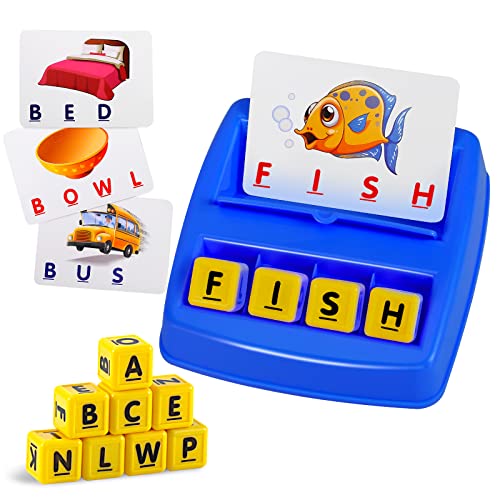
- Builds three- and four-letter words
- Includes 60 word cards and eight letter cubes
- Supports memory, vocabulary, and turn-taking
Best For: Preschool and kindergarten literacy practice
Best for Travel Play
Portable Memory Matching Board

- Offers 12 themes on six double-sided cards
- Supports solo memory and concentration practice
- No assembly and convenient for trips
Best For: Screen-free airplane, car, and camping activities
Best for Everyday Vocabulary
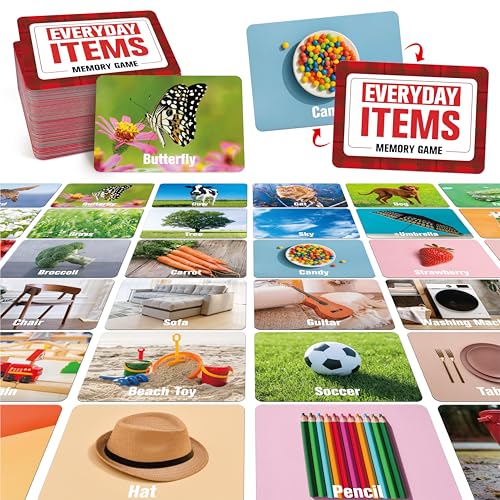
- Includes 40 pairs across 80 object cards
- Builds memory, concentration, and pattern recognition
- Useful for home, classroom, and therapy play
Best For: Picture-based object recognition and memory practice
Bluey Memory Pick – Bluey Matching Game
For families seeking matching games for children, this Bluey-themed set combines familiar characters with quick, screen-free memory play. Its simple rules and 15-minute format make it practical for preschool activities, recess, or family game time.
Best For: Bluey fans ages 3 and up, preschoolers, and short family or independent play sessions.
Pros:
- Includes 72 picture tiles featuring Bluey, Bingo, Bandit, and Chilli.
- Quick, easy-to-learn gameplay supports memory, focus, and pattern recognition.
- Suitable for solo play, family time, homeschool activities, and indoor recess.
Cons:
- Cardboard tiles may be less durable than wooden alternatives.
- The cartoon theme may be less appealing to children who are not Bluey fans.
This is a straightforward choice when recognizable characters and fast setup matter. It offers classic matching play with an especially strong appeal for young Bluey fans.
Classic Card Game Bundle – Four Kids’ Matching Games
This four-deck bundle gives families several matching games for children in one portable package. Along with Memory Match, it includes Go Fish, Old Maid, and Slap Jack, providing variety for family nights, travel, classrooms, and parties.
Best For: Children ages 3 and up, families wanting multiple classic card games, and portable group entertainment.
Pros:
- Includes four themed decks covering Memory Match and three additional classic games.
- Colorful illustrations support number, color, animal, and career recognition.
- Each deck is individually boxed and includes instructions for convenient storage and use.
- Designed for group play with two or more players.
Cons:
- The package focuses on card games rather than a dedicated tile-matching format.
- Multiple decks may require more sorting and storage after play.
Choose this set if variety is more important than a single focused memory game. Its four themes and classic rules can keep different ages engaged across repeated family or travel sessions.
Animal Pairing Starter – Baby Animals Memory Game
For younger children, this baby-animal set is one of the more approachable matching games for children. The 52 thick cardboard tiles form 26 pairs, while the simple animal theme helps make early memory practice inviting and easy to understand.
Best For: Preschoolers ages 3 and up, animal-loving children, and solo or small-group learning play.
Pros:
- Includes 26 matching pairs featuring cute baby animals.
- Supports recall, visual recognition, focus, and concentration.
- Thick cardboard tiles are designed for repeated play at home, school, or daycare.
- Can be played independently or with friends and family.
Cons:
- The supplied details list four players but do not specify a broader player range.
- Paper-based tiles may not offer the same feel as wooden pieces.
This is a friendly first memory game for children who enjoy animal themes. Its manageable format and replayable pair-matching activity suit early learning without complicated rules.
Wooden Montessori Choice – Wooden Animal Matching Game
Families comparing matching games for children may prefer this wooden option for its sturdy construction and Montessori-inspired design. The 36 round cards feature 18 animal pairs and can also support first-word practice, making the set useful beyond standard memory play.
Best For: Toddlers and preschoolers ages 3 and up who need durable, hands-on matching play with flexible difficulty.
Pros:
- Made with 36 solid basswood cards featuring 18 animal pairs.
- Thick, 2.2-inch round cards are designed for small hands and repeated use.
- Color-coded backgrounds can support recall, while animal pictures encourage verbal practice.
- Includes a drawstring carry pouch and offers short, approximately 10-minute play.
Cons:
- Contains fewer matching pairs than the 72-tile Bluey set.
- Its recommended age begins at 3, despite the product title referencing ages 2–4.
This set stands out when durability, portability, and adaptable play are priorities. Parents can begin with naming pictures and progress to a more challenging memory game as the child develops.
Disney Princess Pick – Princess Picture Matching
For families seeking matching games for children, this Disney Princess-themed picture matching game offers a familiar, screen-free way to practice memory and focus. It is designed for children ages 3 and up, supports solo or group play, and takes about 15 minutes per session.
Best For: Preschoolers who enjoy Disney Princess characters and short family game sessions.
Pros:
- Includes 72 picture tiles featuring Disney Princess characters.
- Supports focus, memory, and matching skills.
- Can be played by one or more players with no batteries required.
- Simple, compact boxed format for indoor play.
Cons:
- The cardboard tiles may require careful handling by young children.
- The character and packaging details may vary from the listed presentation.
This is a straightforward choice for children who are motivated by Disney Princess imagery. Its brief play time and classic matching format make it easy to add to preschool routines or family game nights.
Farm Learning Choice – Memory Match Farm Cards
This School Zone deck is a practical option among matching games for children, combining farm-themed pictures with early learning practice. It includes 27 matching pairs, and families can use some or all of the cards to adjust the challenge for one to four players.
Best For: Preschool and kindergarten children learning animal vocabulary, counting, concentration, and visual memory.
Pros:
- Includes 54 game cards, two parent cards, and 27 matching pairs.
- Large cards have rounded corners for easier sorting and handling.
- Adjustable difficulty works for solo or multiplayer play.
- Portable carrying case supports travel, classroom, or home use.
Cons:
- The farm theme may be less appealing to children who prefer characters or letters.
- It is a card deck rather than a board-style game.
With flexible card selection and parent guidance cards, this game can grow with a child’s developing skills. It is especially useful when you want matching play to reinforce farm vocabulary and visual memory.
Alphabet Learning Pick – Uppercase and Lowercase Match
For parents comparing matching games for children, this alphabet version adds letter recognition to familiar memory-game play. Children ages 3 and up match uppercase and lowercase letters using sturdy cardboard tiles, making it suitable for home, classroom, or travel activities.
Best For: Preschoolers beginning to recognize letters and connect uppercase forms with lowercase forms.
Pros:
- Pairs uppercase and lowercase letters for focused alphabet practice.
- Supports memory, concentration, and letter recognition.
- Sturdy cardboard tiles are designed for little hands.
- Portable format works for solo, group, and travel play.
Cons:
- The educational focus may be less engaging for children not yet interested in letters.
- The supplied details list a four-player capacity, so larger groups may need turns.
This is a strong fit when the goal is to pair screen-free play with early alphabet learning. Its replayable format gives children repeated practice matching letter cases while building concentration.
Best for Early Spelling – Letter Matching Word Game
This letter-based option is one of the more language-focused matching games for children. Kids use picture cards and letter cubes to build three- and four-letter words, making it a practical choice for preschool and kindergarten learning at home.
Best For: Preschool and kindergarten children ages 3-8 who are developing letter recognition, spelling, vocabulary, and memory skills.
Pros:
- Includes a tray, eight letter cubes, and 30 cards with 60 word prompts.
- Supports spelling, word building, vocabulary recognition, memory, and hand-eye coordination.
- Encourages parent-child interaction, turn-taking, sharing, and cooperative play.
- Requires no batteries and supports two or more players.
Cons:
- Small parts create a choking hazard and make this unsuitable for children under 3 or children who mouth objects.
- Its strongest educational focus is spelling and language, so it may be less versatile than a general picture-matching game.
Choose this game when early literacy is the priority. The picture clues can make word building more approachable, while multiplayer play gives adults an easy way to guide learning.
Best for Travel Play – Portable Memory Matching Board
For families seeking matching games for children that can travel, this handheld wooden board combines picture matching with memory practice. Its double-sided cards offer 12 themes, giving toddlers and preschoolers a screen-free activity for trips or quiet time.
Best For: Children ages 3 and up who need a portable activity for airplanes, road trips, camping, or independent play.
Pros:
- Includes one wooden game board and six double-sided cards covering 12 themes.
- Encourages observation, concentration, logic, problem-solving, matching, and memory.
- Requires no assembly and is designed for convenient storage and carrying.
- Made from wood and plastic with smooth surfaces, rounded corners, and non-toxic paint.
Cons:
- The listed setup is designed for one player, so it is less suited to traditional group play.
- The board is relatively large for a handheld travel toy, measuring 10.4 by 8.3 inches.
This is a practical pick when portability and simple solo play matter most. The variety of themes can help maintain interest, while the sturdy board is suited to repeated handling away from home.
Best for Everyday Vocabulary – Daily Items Memory Cards
This picture-card set is a straightforward choice among matching games for children, with everyday objects that connect play to familiar surroundings. Children flip cards to find pairs while practicing memory, concentration, pattern recognition, and object vocabulary.
Best For: Preschool learning, classroom centers, therapy activities, and family play for children ages 3 and up.
Pros:
- Includes 80 cards forming 40 pairs of familiar items such as cars, umbrellas, pencils, apples, books, and lamps.
- Combines picture matching with a memory challenge that encourages focus and logical thinking.
- Supports object recognition, language development, verbal expression, and social play.
- Cards have smooth surfaces, rounded corners, and smooth edges for regular handling.
Cons:
- The set contains cards only, so it does not include a board or storage game structure.
- With 80 cards, the full set may be more suitable for guided play or smaller selections with younger children.
- The supplied details list differing age information, so caregivers should confirm suitability before purchase.
This set works well when you want broad object vocabulary and flexible matching practice. The 40 pairs allow adults to adjust the number of cards in play, making the challenge easier or more demanding.
How We Picked These Matching Games for Children
We focused on Matching Games for Children that offer a clear learning or play benefit, age-appropriate challenge, and practical value for families. The selection spans toddler sets for ages 2 and up, preschool memory games, alphabet and spelling activities, themed character cards, classic multi-game packs, and larger picture-matching collections.
We also considered card quantity, portability, ease of handling, visual appeal, and whether the game supports independent play or works best with an adult or sibling. Always check the manufacturer’s recommended age, especially when a set contains small cards or pieces.
Quick Comparison
| Best For | Look For | Recommended Type |
|---|---|---|
| Toddlers | Large, durable cards and simple pictures | Wooden or baby-animal matching sets |
| Preschool learning | Letters, vocabulary, counting, and familiar objects | Alphabet, farm, or daily-items games |
| Character fans | Recognizable artwork and simple rules | Bluey or Disney Princess sets |
| Family game nights | Multiple play modes and broad age appeal | Multi-deck card-game packs |
| Travel | Compact packaging and manageable card count | Portable memory games for ages 3–5 |
Key Buying Factors
Age and Difficulty
Start with the child’s developmental stage rather than the biggest card count. Younger children usually do better with fewer pairs, bold images, and thick cards. Older preschoolers may enjoy alphabet, spelling, vocabulary, or larger sets that require more concentration.
Learning Objective
Picture cards can reinforce recognition and vocabulary, while letter and word games add early literacy practice. Farm animals and daily objects are useful for naming and categorizing familiar items. If the main goal is memory, choose a straightforward pair-matching game without too many extra rules.
Materials and Storage
Look for sturdy, scratch-resistant cards or wooden pieces if the game will receive frequent toddler use. A carrying bag or compact box helps keep pairs together and makes travel easier. Rounded corners and easy-to-grip pieces are practical advantages for small hands.
Theme and Replay Value
Favorite characters can motivate reluctant players, while open-ended picture sets may stay useful across more learning activities. For families with multiple children, a game with several play modes or a wider age range can provide better long-term value.
Who Should Buy Which Matching Games for Children?
Choose a simple animal, wooden, or travel memory set for a young toddler who is learning to identify pictures and take turns. Pick a farm, daily-items, alphabet, or spelling-focused game when preschool learning is the priority. Character-themed games are a strong choice for children who engage more readily with familiar shows and movies.
For families wanting variety, a multi-game card pack offers more than traditional matching. If siblings or adults will play together, select a set with enough pairs and flexible rules to adjust the difficulty. No matter which option you choose, begin with a small number of cards, then add pairs as the child’s confidence and memory improve.