Activity cubes can turn simple classroom time into hands-on learning, whether you need math practice, sensory support, or a fast brain break.
This roundup focuses on versatile, teacher-friendly options that work well for small groups, centers, intervention time, and early learners.
Best 10 Activity Cubes for Classrooms Picks for 2026
Math Skill Builder
Learning Resources MathLink Cubes

- Covers counting, patterns, addition, and subtraction
- Snaps together on all sides for hands-on practice
- Supports fine motor and STEM skill development
Best For: Kindergarten and early elementary math centers
Calm-Down Fidget Set
Learning Resources Cool Down Cubes

- Quiet tactile cubes for sensory play and focus
- Each cube has a different feel or action
- Works well in calm-down corners and travel bags
Best For: Sensory breaks and quiet classroom regulation
Budget Math Kit

- 100 cubes in 10 vibrant colors
- Covers counting, sorting, and early STEM skills
- Also works for simple building and creativity
Best For: Preschool and kindergarten math centers
Large Classroom Builder
Learning Resources Mathlink Cubes Big Builders

- 200 cubes support larger classroom activities
- Combines math practice with creative building
- Sturdy plastic designed for repeated use
Best For: Classrooms and homeschoolers needing a bigger cube set
Large Classroom Pack
1000-Piece Math Linking Cubes for STEM Activities

- 1000 cubes in 10 colors for group math work
- Supports counting, patterns, and 3D building
- Lightweight plastic with kid-friendly edges
Best For: Teachers and homeschoolers needing a big classroom-ready cube supply
Guided Math Set
MathLink Cubes Elementary Activity Kit

- Includes 15 double-sided activity cards
- Covers addition through geometry and fractions
- 100 cubes in 10 colors for hands-on practice
Best For: Elementary classrooms and homeschoolers wanting guided math lessons
Compact Classroom Kit
100 Count Math Linking Cubes for Ages 4-8

- 100 multicolor cubes for early math skills
- Includes storage bag for quick cleanup
- BPA-free plastic with smooth, kid-friendly edges
Best For: Preschool and early elementary classrooms needing a compact cube set
Hands-On Early Math Center
MathLink Cubes Early Math Activity Set
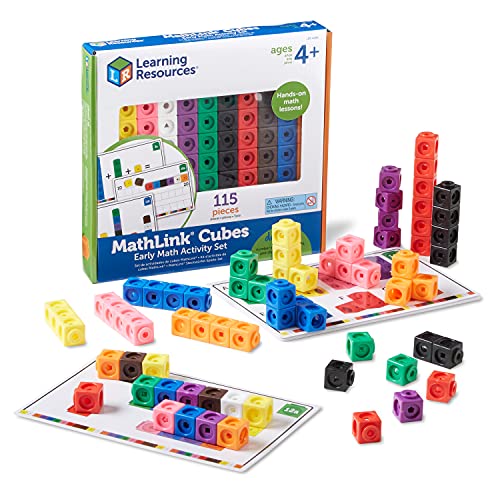
- 115-piece set with 100 cubes and 15 activity cards
- Supports counting, sequencing, addition, and subtraction
- Good for centers, small groups, and guided lessons
Best For: Preschool and early elementary math practice
Large-Count Building Set

- Includes 200 colorful linking cubes for counting and building
- Lightweight plastic with easy-to-connect sides
- Sized for little hands and durable classroom use
Best For: Preschool counting practice and open-ended building
Social Learning Conversation Cubes

- 6 soft foam cubes with 36 conversation prompts
- Supports SEL, icebreakers, and communication practice
- Useful for classrooms, therapy, and small groups
Best For: Social-emotional learning and conversation starters
Math Skill Builder – Learning Resources MathLink Cubes
For classrooms looking for activity cubes for classrooms that support early math, these MathLink Cubes offer a hands-on way to practice counting, patterns, comparison, addition, subtraction, and more. They also bring in shape and color identification, making them useful for both structured lessons and independent practice.
Best For: Kindergarten and early elementary math centers, homeschool math practice, and STEM skill-building.
Pros:
- Supports a wide range of math skills, including counting to 100, skip counting, making 10, and graphing.
- Snaps together on all sides for patterning and building activities.
- Includes geometric shape cutouts for visual and tactile learning.
- Helps develop fine motor skills, eye-hand coordination, and motor planning.
Cons:
- Only 100 cubes included, which may be limiting for larger group builds.
- Focuses on early math concepts rather than advanced classroom math use.
These cubes are a practical fit for teachers who want a simple manipulative that can flex between math drills and creative pattern work. They are especially useful when you need one set to cover multiple early learning goals.
Calm-Down Fidget Set – Learning Resources Cool Down Cubes
If you want activity cubes for classrooms that also support calming routines, these Cool Down Cubes are designed for tactile, quiet play. Each cube offers a different sensory interaction, giving kids a simple way to fidget, refocus, and stay engaged without loose pieces.
Best For: Calming corners, quiet classroom breaks, and sensory-focused fidget use.
Pros:
- Quiet tactile play makes them a good fit for classrooms and calm-down spaces.
- Each cube offers a different feel, movement, or action for sensory exploration.
- Easy-grip size works well for toddlers and kids.
- No batteries or loose parts to manage.
Cons:
- Not intended for math learning or traditional block-style building.
- Single-count set may be less versatile for group use.
This set makes sense if your main goal is quiet regulation rather than academic manipulation. It’s a dependable classroom tool for transitions, waiting time, and sensory breaks.
Budget Math Kit – SpriteGru Math Linking Cubes
For shoppers comparing activity cubes for classrooms, this 100-piece set gives you a colorful, low-cost way to teach early math and simple construction. The cubes can help children practice counting, sorting, color recognition, place value, and basic operations while also encouraging creative builds.
Best For: Preschool and kindergarten math lessons, classroom centers, and homeschool practice.
Pros:
- Includes 100 cubes in 10 colors for sorting and counting activities.
- Supports early STEM skills such as comparison, addition, subtraction, and critical thinking.
- Lightweight, durable plastic with a smooth surface for small hands.
- Can be used for both math learning and imaginative building.
Cons:
- Smaller size may not suit older children or complex builds.
- Manual-use design is basic compared with more feature-rich classroom sets.
This set is a practical choice when you need affordable manipulatives that still cover a broad range of early learning tasks. It’s especially useful in centers where math practice and open-ended building both matter.
Large Classroom Builder – Learning Resources Mathlink Cubes Big Builders
When you need activity cubes for classrooms that can handle both math and building, this 200-piece set gives kids room to count, sort, pattern, and create. The cubes connect on all sides, making them useful for hands-on lessons that also stretch into animal, vehicle, and structure builds.
Best For: Classrooms, homeschool families, and kids who need a bigger cube set for math and construction.
Pros:
- Large 200-piece set supports group work and bigger builds.
- Helps teach counting, sorting, patterning, and basic operations.
- Encourages creativity, spatial reasoning, problem-solving, and engineering skills.
- Made from sturdy plastic for classroom use.
Cons:
- More expensive and larger than smaller starter sets.
- Best suited to kids ages 5+ rather than toddlers.
This is the most flexible option in the group if you want a set that can grow with students and support more ambitious builds. It works especially well where durability and volume matter.
Large Classroom Pack – 1000-Piece Math Linking Cubes for STEM Activities
For activity cubes for classrooms, this 1000-piece linking cube set is built for repeated hands-on math practice, open-ended building, and small-group STEM work. The 10-color assortment makes it easy to teach counting, patterns, addition, subtraction, and 3D structure building with one versatile manipulative set.
Best For: Teachers, daycare centers, and homeschoolers who need a large, durable cube set for classroom math centers and group activities.
Pros:
- Large 1000-piece count supports classroom use, centers, and group projects.
- 10 colors make patterning, sorting, and basic math lessons easier to run.
- Lightweight plastic cubes are sized for small hands and designed without sharp edges.
- Can be used for counting, spatial skills, and creative building like robots or windmills.
Cons:
- No activity cards or lesson guide are included.
- Bulk quantity may be more than needed for very small learning setups.
This set is a strong fit if you want activity cubes for classrooms that prioritize quantity, flexibility, and simple hands-on math learning. It is less structured than guided activity kits, but it gives teachers far more room for open-ended use.
Guided Math Set – MathLink Cubes Elementary Activity Kit
If you want activity cubes for classrooms with built-in structure, this MathLink Cubes set is designed around guided elementary math practice. The 100 cubes and 15 double-sided activity cards help students work through addition, subtraction, multiplication, division, place value, fractions, geometry, and patterning.
Best For: Elementary classrooms, math centers, and homeschool lessons that benefit from ready-made activities and skill-based practice.
Pros:
- Includes 15 double-sided write-and-wipe activity cards for structured learning.
- Covers a wide range of elementary math topics, including fractions and geometry.
- 100 colorful cubes are enough for hands-on practice without excess bulk.
- Suitable for classroom manipulatives, homeschool use, and STEM activities.
Cons:
- Only 100 cubes, so it is not ideal for larger group building projects.
- Recommended for ages 7+, so it may not suit younger preschool learners.
This kit stands out when the goal is instruction, not just play. Compared with larger open-ended cube sets, it gives teachers more direction and makes it easier to connect manipulatives to specific math skills.
Compact Classroom Kit – 100 Count Math Linking Cubes for Ages 4-8
For activity cubes for classrooms that need a smaller, easy-to-store set, these 100 linking cubes cover core early math skills with simple hands-on use. The multicolor design supports counting, addition, subtraction, patterns, sorting, and creative building for preschool and early elementary learners.
Best For: Preschool classrooms, homeschool families, and teachers who want a compact cube set for early math practice and open-ended building.
Pros:
- 100 cubes in 10 colors support counting, sequencing, and comparison.
- Compact size makes it easier to store, pack, and organize with the included storage bag.
- BPA-free plastic with smooth edges is designed for ages 3+.
- Works for both math practice and creative builds like animals and castles.
Cons:
- Smaller cube count is less suited to large classroom groups.
- No cards or structured lesson materials are included.
This set is a practical choice when you need classroom-ready activity cubes without a large footprint. It offers solid versatility for early learners, but teachers seeking guided lessons or bigger group work may want a larger set.
Hands-On Early Math Center – MathLink Cubes Early Math Activity Set
If you’re looking for activity cubes for classrooms that support early math practice, this MathLink Cubes set offers a simple, hands-on way for kids to explore counting, sequencing, addition, and subtraction. The 115-piece kit combines colorful linking cubes with double-sided activity cards, making it useful for guided lessons, learning centers, and independent practice.
Best For: Preschool and early elementary classrooms needing a flexible math manipulative set for teacher-led activities and small-group work.
Pros:
- Supports counting, sequencing, addition, and subtraction through hands-on play
- Includes 100 cubes plus 15 double-sided activity cards
- Works well for classroom activities, learning centers, and small groups
- Durable and easy for kids to manipulate
Cons:
- Focused on early math skills rather than advanced concepts
- Only 1 set of activity cards is included
This is a practical classroom manipulative if you want structure and open-ended building in one set. It is especially useful when you need activity cubes for classrooms that can move between lesson time, practice time, and free building.
Large-Count Building Set – 200 Pieces Linking Cubes
For classrooms that need plenty of activity cubes for classrooms, this 200-piece linking cube set gives kids a large supply of colorful manipulatives for counting and simple construction. Each cube is lightweight, easy to connect, and sized for little hands, so it can work well for open-ended math play and preschool learning activities.
Best For: Preschool teachers and parents who want a simple, high-piece-count counting cube set for math practice and creative building.
Pros:
- Large 200-piece pack supports unlimited building and practice
- Lightweight plastic design is made to be durable and safe
- Easy-to-connect cubes encourage construction and creativity
- Vibrant colors help support color recognition
Cons:
- No activity cards or structured lesson guide included
- Primarily a basic manipulative set rather than a specialized curriculum tool
This set is a strong pick when quantity matters most and you want a versatile classroom supply. It works best as a straightforward counting and building resource rather than a guided activity kit.
Social Learning Conversation Cubes – Let's Talk Cubes
These activity cubes for classrooms take a different approach by focusing on conversation, social situations, and emotions instead of math. The set includes 6 soft foam cubes with 36 prompts, making it a useful classroom resource for icebreakers, communication practice, and social-emotional learning activities.
Best For: Teachers, therapists, and small groups looking for a safe, conversation-based cube set that supports communication and SEL skills.
Pros:
- 36 prompts help start conversations naturally through game play
- Supports social-emotional learning and communication skills
- Soft foam construction is durable and classroom-friendly
- Useful for school, therapy, or family discussion time
Cons:
- Not designed for math or counting practice
- Small 6-cube set offers less hands-on quantity than bulk manipulatives
This is a good choice if your classroom needs more than academic manipulatives and you want a tool for interaction and confidence-building. It fits best where discussion, therapy, or SEL goals are the priority.
How We Picked These Activity Cubes for Classrooms
We looked for classroom-ready sets that balance durability, age fit, value, and learning purpose. The best options offer enough pieces for group use, clear educational value, and flexible activities teachers can reuse across centers or interventions.
For Activity Cubes for Classrooms, the most useful sets are usually the ones that do more than one job: counting, patterning, building, sorting, sensory regulation, or communication support.
Quick Comparison: Which Type Works Best?
Not every cube set serves the same need. Basic linking cubes are best for math practice and STEM building. Larger bulk packs are better for shared classroom use. Sensory-style cubes are a stronger fit for calm-down corners, speech rooms, and students who need fidget-friendly tools.
Best for Math Centers
Choose linking cube sets with strong snap connections, bright colors, and enough pieces for counting, ten-frames, patterns, and simple equations.
Best for Sensory and Regulation Spaces
Look for quieter, easier-to-handle products that support focus without creating distractions.
Key Buying Factors for Activity Cubes for Classrooms
Quantity and Class Size
Small sets can work for one-on-one instruction, but larger packs are better if students will build independently or if several groups use the materials at once.
Age and Skill Level
Preschool and early elementary learners benefit from simple linking cubes with clear color contrast. Older students may need sets that support more advanced patterning, measurement, or STEM construction.
Connection Quality
Snug, consistent connections matter. Cubes that are too loose frustrate students, while overly tight ones can be hard for small hands to manipulate.
Storage and Cleanup
Classroom use is easier when cubes come in manageable counts or stack neatly into bins, bags, or trays. Bulk packs should still be easy to sort and store.
Learning Flexibility
The strongest sets support multiple activities, such as counting, sequencing, building structures, and fine motor practice. That versatility helps a single purchase stretch farther across the year.
Who Should Buy Which Activity Cubes for Classrooms?
Teachers running math centers should prioritize linking cube sets with strong piece counts and reliable connections. Special education and intervention rooms may want a mix of math and sensory options. Preschool and kindergarten classrooms often do best with colorful, simple-to-use cubes that build early numeracy and fine motor skills. Speech, OT, and calm-down spaces may benefit more from sensory or social-emotional cube sets than from pure math manipulatives.
If you need one versatile purchase, choose a mid- to large-size linking cube set. If you need support for behavior, focus, or transitions, a sensory-oriented option may be the better fit.