Finding the right scissors can make classroom projects, crafts, and daily tasks more manageable for teens with limited hand strength, coordination, or mobility. This roundup compares adaptive designs that reduce the effort needed to open, position, and control the blades.
We included loop-handle, spring-assisted, and tabletop-mounted options, plus choices for right- or left-handed users. Use the guide below to match the design, size, and safety features to the user’s needs.
Best 10 Adaptive Scissors for Teens Picks for 2026
Colorful Loop Set
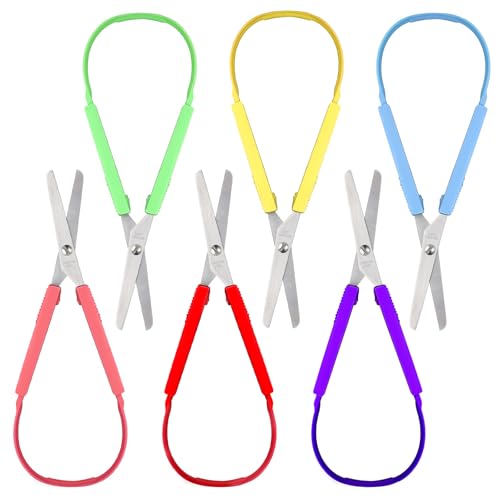
- Six colorful self-opening scissors
- Ambidextrous, lightweight loop handles
- Round-tip stainless steel blades
Best For: Classrooms, families, and craft activities
Classic Self-Opening Pick
American Educational P-124 Scissor

- Spring-assisted automatic reopening
- Round-ended 45 mm stainless steel blade
- Includes a blade guard
Best For: Right-handed users needing conventional styling
Mounted Classroom Option
Fun & Function Table Top Scissors

- Fixed tabletop-mounted format
- Ambidextrous design for shared use
- Plastic construction with green base
Best For: Classrooms and users needing a stable cutting setup
Comfort-Grip Choice
Remedic Spring-Assisted Arthritis Scissors

- Self-opening spring reduces hand effort
- Oversized soft-grip handles
- Ambidextrous with safety lock
Best For: Users with weak grip or hand fatigue
Best Guarded Loop Option
Loop Scissors with Safety Shield

- Spring-return handles assist opening
- Ambidextrous design for either hand
- Blade guard and rounded tips add safety
Best For: Young users and teens needing assisted, beginner-friendly cutting
Best Tabletop Adaptive Design
HARAC Mounted Adaptive Scissors
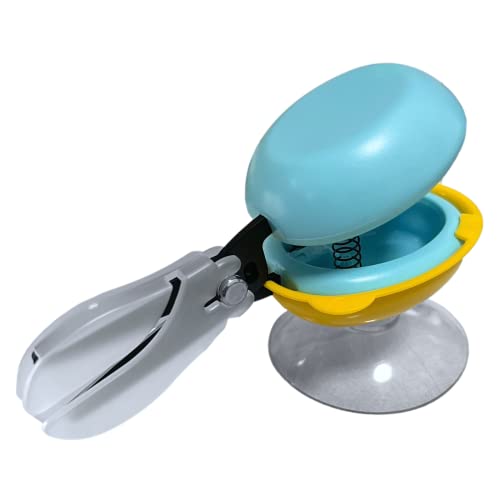
- Spring-loaded handle needs no finger rings
- Suction base enables stable tabletop use
- Non-stick blade handles sticky materials
Best For: Teens needing hands-free or low-grip cutting support
Best Multi-Pack Value

- Three colorful scissors per pack
- Ambidextrous loop handles reduce finger tension
- Lightweight design suits weaker hand strength
Best For: Shared classrooms, homes, and craft areas needing multiple pairs
Premium Tabletop Pick
HARAC Spring-Loaded Safety Scissors
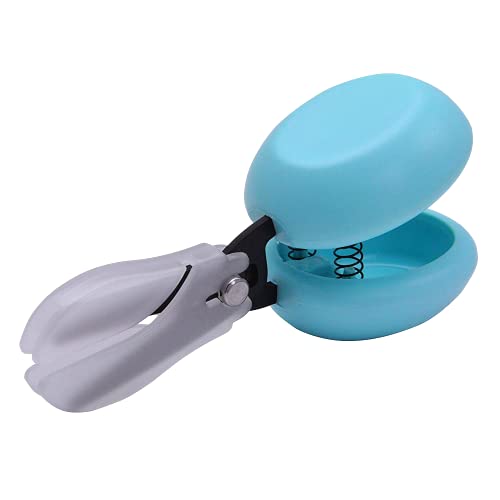
- Tabletop cutting with palm, wrist, or elbow
- Spring-loaded and ambidextrous handle
- Rounded, covered non-stick blade
Best For: Users with limited grip strength or hand mobility
Best Heavy-Duty Pick

- Six colorful pairs for sharing
- Self-opening loop handles
- Ambidextrous rounded-tip design
Best For: Classrooms, families, and group craft activities
Best Compact Craft Set
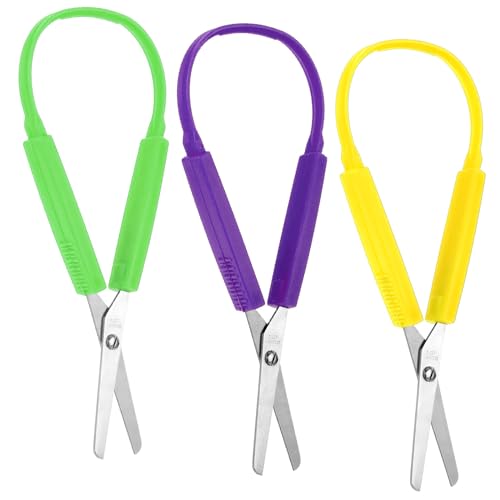
- Three colorful compact scissors
- Automatic rebound loop handles
- Designed for simple paper crafts
Best For: Left-handed users with smaller or slender hands
Colorful Loop Set – Mudder 6-Pack Loop Scissors
For families, classrooms, or therapy settings comparing adaptive scissors for teens, this six-pack offers self-opening loop handles, multiple colors, and an ambidextrous design. The approximately 8-inch scissors are sized for children or users with slender hands and support basic paper crafts.
Best For: Teens and children who benefit from spring-assisted opening and a lightweight, easy-grip design.
Pros:
- Six scissors in assorted colors for sharing or classroom use.
- Self-opening loop handles support grasp-and-release coordination.
- Round-tip stainless steel blades are designed for simple craft work.
- Ambidextrous design suits most left- and right-handed users.
Cons:
- The set is intended for paper cutting and simple crafts rather than heavy materials.
- Adult supervision is recommended because the blades are pointed enough to cut effectively.
This is a practical multipack when several students need accessible scissors at once. Its colorful handles and automatic reopening may be especially helpful for users developing hand coordination.
Classic Self-Opening Pick – American Educational P-124 Scissor
American Educational Products P-124 Self Opening Scissor, Right Hand, 45 mm, Round Ended Blade
Check Price On AmazonThis single right-handed model is a straightforward choice for shoppers seeking adaptive scissors for teens with a familiar conventional shape. Its spring automatically reopens the blades after pressure is released, while the round-ended stainless steel blade and included guard add practical safety features.
Best For: Right-handed users who want a conventional-looking scissor with spring-assisted reopening.
Pros:
- Spring mechanism automatically reopens the scissor after each cut.
- Round-ended 45 mm stainless steel blade is designed with safety in mind.
- Wide finger-contact area provides a comfortable grip.
- Blade guard is supplied for storage when not in use.
Cons:
- This version is specified for right-hand use rather than ambidextrous use.
- It is sold as a single scissor, not a multipack.
The P-124 suits users who prefer the appearance and handling of standard scissors but need automatic reopening. Confirm the right-hand orientation before ordering.
Mounted Classroom Option – Fun & Function Table Top Scissors
For users who find handheld cutting difficult, these adaptive scissors for teens use a mounted tabletop format with a plastic base. The ambidextrous design and green construction are suited to classroom or special-needs environments where a stable cutting station can be useful.
Best For: Classroom and special-needs settings where tabletop-mounted scissors may provide added stability.
Pros:
- Mounted tabletop design keeps the cutting tool in a fixed location.
- Plastic base and components are suitable for a classroom-oriented setup.
- Ambidextrous format accommodates left- and right-handed users.
- Designed specifically for kids and special-needs use.
Cons:
- The supplied details identify plastic blades, so this may be intended primarily for lighter cutting tasks.
- It is a single-unit purchase rather than a set for multiple users.
This option stands apart from handheld loop scissors by prioritizing a stable tabletop arrangement. It may be a better fit when positioning and consistency matter more than portability.
Comfort-Grip Choice – Remedic Spring-Assisted Arthritis Scissors
These adaptive scissors for teens are built around reduced hand effort, making them worth considering for users with weak grip strength or hand fatigue. A self-opening spring, oversized soft-grip handles, ambidextrous use, and a safety lock support everyday paper, packaging, fabric, and craft tasks.
Best For: Teens or adults with reduced grip strength who need comfortable, repeated cutting at home, school, or during therapy.
Pros:
- Spring-assisted blades reopen after each cut to reduce repeated squeezing.
- Large soft-grip handles help reduce pressure on fingers and joints.
- Sharp stainless steel blades handle paper, cardboard, packaging, fabric, and ribbon.
- Ambidextrous design includes a safety lock for storage.
Cons:
- This is a single pair rather than a classroom multipack.
- The ergonomic handle is oversized, which may not suit users who prefer a compact scissor.
The Remedic is the strongest fit here for ongoing cutting comfort and reduced grip demand. Its broader household-task range also makes it more versatile than scissors intended mainly for paper crafts.
Best Guarded Loop Option – Loop Scissors with Safety Shield
These loop scissors are a practical choice when comparing adaptive scissors for teens who may have limited hand strength or are still building cutting skills. The spring-return handles reopen after each squeeze, while the blade guard and rounded tips add a safety-focused design.
Best For: Young users, classroom settings, and teens who benefit from simple, ambidextrous loop handles and assisted opening.
Pros:
- Spring-action loop handles return the blades to the open position after squeezing.
- Ambidextrous design works for both right- and left-handed users.
- Blade guard helps cover the cutting edges when the scissors are not in use.
- Compact 5.25-inch size and blunt, rounded tips suit beginner-focused use.
Cons:
- The small dimensions may feel less comfortable for larger teen hands.
- Designed primarily for paper and beginner cutting rather than heavy-duty materials.
- Adult supervision is still recommended.
Choose this model when assisted reopening and a blade shield matter more than a full-size grip. Its straightforward loop design can make everyday classroom or craft cutting less demanding.
Best Tabletop Adaptive Design – HARAC Mounted Adaptive Scissors
For adaptive scissors for teens who cannot comfortably use finger rings, the HARAC tabletop model offers a different approach. Its spring-loaded handle can be pressed or gripped, and the removable suction base supports stable, hands-free cutting on a table or wall.
Best For: Teens with limited hand mobility, weak grip strength, or temporary hand injuries who can use a palm, elbow, or forearm to activate the scissors.
Pros:
- Spring-loaded, ambidextrous handle requires no finger rings.
- Removable suction base supports stable tabletop or wall-mounted use.
- Japanese stainless steel blade has a non-stick coating for tape, adhesives, and other sticky materials.
- Safety blade cover can remain attached during use or be removed as preferred.
Cons:
- Short 1.37-inch blade may be slower for larger cutting tasks.
- Tabletop mounting may be less convenient for users who need portable scissors.
- Its specialized design may take practice to position comfortably.
This is the strongest fit when stability and alternative activation methods are priorities. The base and coated blade make it especially practical for therapy spaces, classrooms, and home workstations.
Best Multi-Pack Value – Sokoweii Loop Scissors
Sokoweii Loop Scissors, 5 Inch Adaptive Design, Right and Lefty Support, Easy-Open Squeeze Handles
Check Price On AmazonThe Sokoweii three-pack is worth considering when shopping for adaptive scissors for teens across a classroom, therapy setting, or shared craft area. Its squeeze-to-open loop design reduces finger tension and works for both right- and left-handed users.
Best For: Homes, schools, and art spaces that need multiple ambidextrous scissors for users with weak hand strength or developing fine-motor skills.
Pros:
- Three-piece pack includes green, pink, and yellow scissors.
- Loop handles support right- and left-handed use while reducing finger tension.
- Lightweight design is intended for users with weak hand strength.
- Rounded tips and stainless steel blades provide a safety-conscious cutting design.
Cons:
- Adult supervision is recommended because the blades are intended for precision cutting.
- The listed blade length is relatively short at about 3.5 centimeters.
- Color selection may not suit users seeking a single, neutral-colored pair.
This pack makes the most sense when quantity and easy-open handling are important. It provides consistent loop-style tools for shared use, though users should still supervise cutting and match the size to the teen’s hand.
Premium Tabletop Pick – HARAC Spring-Loaded Safety Scissors
For teens who need extra support with grip strength, coordination, or hand mobility, these adaptive scissors for teens offer a stable tabletop design. The spring-loaded, ambidextrous handle lets users cut by pressing with the palm, wrist, or elbow instead of relying on finger strength.
Best For: Teens and older users with limited grip strength, hand injuries, rehabilitation needs, or special needs.
Pros:
- Tabletop design supports palm-, wrist-, or elbow-activated cutting.
- Spring-loaded handle automatically reopens the blades after each cut.
- Ambidextrous design works for both left- and right-handed users.
- Rounded blade edge, removable safety cover, and non-stick stainless-steel blade.
Cons:
- Its tabletop format may feel less familiar than standard handheld scissors.
- The 1.37-inch blade is intended for smaller, controlled cutting tasks.
This is the most supportive option in the group, particularly when conventional handles are difficult to squeeze. Its Japanese construction and safety features add confidence for supervised craft, school, or rehabilitation activities.
Best Heavy-Duty Pick – 6-Pack Mini Loop Scissors
This six-pack is a practical choice for classrooms, shared craft spaces, or families looking for colorful adaptive scissors for teens. Each pair has a self-opening loop handle, a rounded-tip stainless-steel blade, and an ambidextrous design.
Best For: School groups, families, and supervised paper-cutting activities where multiple pairs are useful.
Pros:
- Six scissors in different colors support sharing and group activities.
- Self-opening plastic loop handle helps reduce repeated opening effort.
- Ambidextrous design accommodates left- and right-handed users.
- Rounded tips and stainless-steel blades are suited to paper and simple crafts.
Cons:
- Adult supervision is still required during use.
- The compact 5.5-inch size may not suit users who prefer full-size scissors.
Choose this set when quantity and easy sharing matter most. The loop mechanism can make basic cutting more manageable, while the colorful assortment works well for classrooms and craft projects.
Best Compact Craft Set – 3-Piece Loop Safety Scissors
For simple school projects and DIY crafts, this three-piece set provides compact adaptive scissors for teens with colorful loop handles and an automatic rebound design. The approximately 5.5-inch size is intended for children or users with slender hands.
Best For: Supervised paper cutting, classroom crafts, and users who prefer a smaller scissor size.
Pros:
- Three colorful scissors offer variety for school or home use.
- Automatic rebound design helps the scissors reopen after squeezing.
- Compact size can be easier to hold for smaller or slender hands.
- Stainless-steel construction is suited to simple paper and craft work.
Cons:
- The listed hand orientation is left-handed, limiting its versatility.
- Designed for simple paper cutting rather than heavier materials.
- Adult supervision is recommended for safe use.
This set is a straightforward option for left-handed users who want compact, self-opening scissors for creative activities. Its three-color format also makes it convenient for siblings, classmates, or rotating craft stations.
How We Picked These Adaptive Scissors for Teens
We focused on scissors that address common barriers to cutting, including weak grip, limited finger isolation, reduced range of motion, and difficulty reopening standard handles. The selection includes self-opening loop scissors, spring-assisted models, and mounted tabletop designs so shoppers can compare different levels of support.
We also considered handle accessibility, ambidextrous use, blade safety, portability, cleaning, and whether each option is practical for school, crafts, therapy, or home activities. Because hand abilities vary widely, adult supervision and an occupational therapist’s recommendations may be appropriate for users who need significant assistance.
Quick Comparison
| Design | Best For | Main Advantage | Potential Limitation |
|---|---|---|---|
| Loop scissors | Users who can guide the blades | Self-opening action and simple grip | May still require accurate positioning |
| Spring-assisted scissors | Weak or fatigued hands | Reduces reopening effort | Requires enough control to complete the cut |
| Tabletop-mounted scissors | Very limited hand strength or one-handed use | Stable base and reduced need to hold scissors | Less portable than handheld models |
| Safety-shielded scissors | Classrooms and supervised practice | Added protection around the blades | May cut fewer materials than standard blades |
Key Buying Factors for Adaptive Scissors for Teens
Handle and Opening Action
Loop and self-opening handles can be easier than conventional finger holes, particularly when a user struggles to separate the blades after each cut. Spring-assisted models are useful when the closing motion is possible but reopening is tiring. Check whether the handles feel comfortable and whether the resistance is manageable.
Handedness and Positioning
Some scissors are designed for right-handed users, while ambidextrous models can work for either hand. Left-handed teens should confirm blade orientation, visibility, and handle comfort rather than assuming a product labeled “universal” will provide the same cutting experience in both hands.
Stability and Safety
Mounted scissors can be a better fit when the user needs the table to provide stability. Look for a broad, secure base and a placement that keeps fingers clear of the blades. Rounded tips, safety shields, and supervised use may be especially helpful in classrooms or therapy settings.
Size, Materials, and Maintenance
Choose a blade length and handle size that match the user’s hand and intended materials. Shorter blades can be easier to control for paper crafts, while larger models may suit thicker materials. Consider whether the scissors are lightweight, easy to clean, and durable enough for repeated classroom use.
Who Should Buy Which Adaptive Scissors for Teens?
Choose loop scissors for teens who need an easier opening motion but can still guide handheld scissors through paper. Select spring-assisted scissors for users with weak, painful, or easily fatigued hands. A tabletop-mounted model is often the most practical option when two-handed stabilization or sustained gripping is difficult.
For shared classrooms, multipacks can provide several accessible tools for group activities, while safety-shielded designs may offer added reassurance during supervised practice. When uncertain, prioritize the simplest design that supports independent cutting without causing strain, and consult an occupational therapist for more complex motor or positioning needs.