Building a calm space is easier when you choose sensory tools that are quiet, durable, and genuinely helpful for emotional regulation. The right mix can support transitions, reduce overwhelm, and give kids a simple routine to reset.
Below, we focus on the best calm down corner sensory tools for 2026, with picks that work well for classrooms, therapy spaces, and home use.
Best 10 Calm Down Corner Sensory Tools Picks for 2026
Therapist-Developed Regulation Set
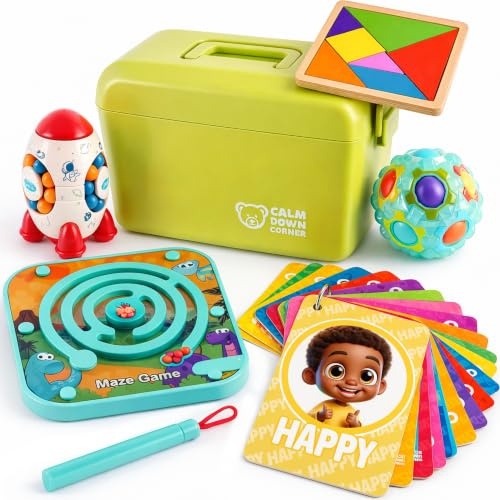
- 26 feeling cards plus 100+ calming activities
- Mixes breathing, sensory play, and quiet focus
- Portable box for home, classroom, or therapy use
Best For: A complete regulation kit for kids with sensory or emotional needs
Textured Desk Fidgets

- 48 stickers with 12 themes and 2 texture types
- Waterproof, reusable, and residue-free
- Easy to place on desks, notebooks, phones, and more
Best For: Discreet tactile fidgets for students, teens, and adults
Quiet Threading Activity

- Includes 2 boards, 2 pens, and 8 laces
- Quiet tactile play for classrooms or therapy
- Supports finger dexterity and pincer grip
Best For: Kids who benefit from hands-on, low-noise sensory practice
Portable SEL Toolkit

- Includes charts, a spin wheel, and two fidgets
- Portable format for home or classroom use
- Supports emotion identification and calming practice
Best For: A compact kit for teaching calming strategies and emotion skills
Pocket Textures
Soft Worry Stones for Quiet Fidgeting

- Quiet, one-handed fidget stones
- Textured, colorful sensory variety
- Soft, durable, washable rubber
Best For: Kids who need silent tactile calmers on the go
Rain Sound Calmers
Sealed Sensory Tubes for Calm Time

- Three rain sounds: Drizzle, Shower, Storm
- Battery-free and hand-powered
- Supports focus, breathing, and regulation
Best For: Kids who like soothing sound and visual sensory input
Complete Calm Corner
Sensory Kit with Posters and Tools

- Includes posters, cards, tools, and toys
- Supports emotional awareness and problem-solving
- Good for home, classroom, and therapy
Best For: Families or teachers building a full calming area
Emotion-Focused Sensory Bottles
Express Your Feelings Sensory Bottles

- Shows Happy, Angry, Scared, and Sad visually
- Quiet, sealed bottles for mess-free sensory play
- Good for SEL lessons, counseling, and calm-down corners
Best For: Emotion recognition and calming practice
Quiet Tactile Fidgets
Cool Down Cubes Sensory Fidget Toys

- Different textures and actions in each cube
- Quiet, screen-free fidgeting for focus and reset
- Easy-grip design with no loose pieces
Best For: Tactile fidget play in calm-down spaces
Colorful Visual Fidget Tubes

- Four colorful tubes for visual and tactile play
- Supports quiet time, stress relief, and self-soothing
- Useful for anger management and focus
Best For: Kids who like colorful calming fidgets
Therapist-Developed Regulation Set – Original Calm Down Corner Kit
If you’re building a calm down corner sensory tools setup, this therapist-developed kit is a strong all-in-one option. It combines feeling cards, breathing support, quiet activities, and fidget tools so kids can move from big emotions to a calmer state without screens or guesswork.
Best For: Parents, teachers, counselors, and therapists who want a complete emotional regulation system for kids ages 3–16.
Pros:
- Includes 26 laminated feeling cards and 100+ structured calming activities.
- Offers a mix of sensory fidgets, breathing strategies, yoga poses, and hands-on play.
- Portable storage box makes it easy to use at home, in classrooms, or therapy spaces.
- Designed for children with ADHD, autism, or sensory processing needs.
Cons:
- More of a structured kit than a single grab-and-go fidget.
- May be more than you need if you’re only looking for one simple calming item.
For buyers who want a full calm corner system instead of a basic fidget, this kit offers the most complete setup in the group. It is built to support repeated use and multiple settings, which makes it especially practical for home and school routines.
Textured Desk Fidgets – Unique Sensory Sticker Set
These calm down corner sensory tools take a different approach by turning surfaces into fidget zones. The sticker set adds tactile input to desks, notebooks, phones, and other items, making it easy to keep a quiet sensory option close by during class, work, or travel.
Best For: Students, adults, and teens who want subtle tactile fidgets that can stick to everyday items.
Pros:
- 48 pieces with 12 different themes and two textured surface patterns.
- Waterproof, tear-resistant, stretch-resistant, reusable, and residue-free.
- Can be applied to phones, computers, notebooks, cups, steering wheels, and desks.
- Comes with a storage box for easy carrying and organization.
Cons:
- Works best for tactile stimulation rather than full activity-based regulation.
- Adhesive format may not suit buyers who want a handheld fidget.
This is a practical pick if you want sensory input that stays out of the way while still being accessible. It is especially useful for people who like quiet, discreet fidgeting throughout the day.
Quiet Threading Activity – Calm Down Threading Boards
For calm down corner sensory tools that keep hands busy and minds focused, these threading boards offer a simple manual activity. The set is designed for quiet sensory play, making it a good fit for classrooms, therapy spaces, or any spot where a low-noise fidget is needed.
Best For: Young children who need a quiet, hands-on sensory activity for focus and fine motor practice.
Pros:
- Includes 2 boards, 2 threading pens, and 8 laces.
- Quiet activity supports focus during lessons or calm corner time.
- Helps build finger dexterity and pincer grip skills.
- Durable design keeps the holes gripping the laces during use.
Cons:
- Best for threading play, so it is less versatile than multi-tool kits.
- Requires fine-motor engagement, which may not suit every child in the moment.
This set makes sense when your goal is focused sensory play rather than a broad emotion-regulation system. It is a straightforward, repeatable activity that can slot neatly into a quiet corner or therapy routine.
Portable SEL Toolkit – Calm Down Corner Tool Kit
If you want calm down corner sensory tools that double as social-emotional learning aids, this portable kit covers the basics well. It combines visual supports and hands-on manipulatives to help kids practice identifying emotions, calming down, and using simple regulation strategies.
Best For: Teachers and parents who want a compact kit for emotion identification and calming practice.
Pros:
- Includes a spin wheel, two fidget toys, a reference sticker, and six double-sided charts.
- Supports emotion management, meditation, and calming strategies.
- Portable format makes it easy to move between spaces.
- Good fit for repeated practice in classrooms or at home.
Cons:
- Contains fewer tactile tools than larger regulation kits.
- Best suited to guided learning rather than open-ended sensory play.
This kit is a practical middle-ground option if you want structured calming support without a large setup. It works especially well when you want visual reminders paired with simple manipulatives children can use right away.
Pocket Textures – Soft Worry Stones for Quiet Fidgeting
If you’re building a calm down corner sensory tools setup, these textured worry stones are a simple, low-noise option for kids who need something to hold, rub, and keep in one hand. The compact size, soft rubber feel, and varied textures make them easy to use during class, therapy, travel, or quiet time at home.
Best For: Kids who benefit from silent, pocket-sized fidgets for stress relief, focus, and calming routines.
Pros:
- Quiet, one-handed design that’s easy to keep in a pocket or backpack
- Textured, colorful stones offer tactile variety for sensory seeking kids
- Soft, durable, washable rubber with smooth rounded edges
- Useful for classrooms, calming corners, cars, restaurants, and travel
Cons:
- Very small size may be easy to misplace
- Best for tactile fidgeting rather than active or movement-based play
Overall, this 6-pack is a practical pick when you want quiet sensory support that’s easy to carry and simple to use anywhere.
Rain Sound Calmers – Sealed Sensory Tubes for Calm Time
For a calm down corner sensory tools setup that blends sound and movement, these rain tubes offer a soothing option kids can listen to and watch. Each tube creates a different rain pattern, making it easy to support breathing, focus, and quiet sensory play without batteries or complicated setup.
Best For: Children who respond well to gentle sound, visual tracking, and mindfulness-based calming routines.
Pros:
- Three distinct rain sounds: Drizzle, Shower, and Storm
- Supports listening, breathing, focus, and emotional regulation
- Hand-powered and battery-free for simple classroom or home use
- Sealed tubes with easy grip surfaces designed for small hands
Cons:
- Only three pieces in the set
- Sound-based fidgets may not suit children who prefer tactile-only tools
This set is a strong choice if your calming space needs an engaging, quiet sensory tool that encourages mindfulness through sound and visual movement.
Complete Calm Corner – Sensory Kit with Posters and Tools
If you want a ready-made calm down corner sensory tools bundle, this kit gives you a fuller setup instead of a single fidget. It includes posters, sensory tools, calming toys, and mindful-play pieces that can help kids relax, reflect, and practice emotional awareness at home, in classrooms, or during therapy.
Best For: Building a complete calming space with visual supports, sensory activities, and emotional learning tools.
Pros:
- Includes posters, emotion cards, sensory tools, and calming toys
- Designed to support emotional awareness, reflection, and problem-solving
- Includes mindful-play items like a marble maze and sensory mats
- Works for classrooms, home use, and therapy sessions
Cons:
- Bulkier and less portable than single fidget tools
- May include more components than some buyers need for a simple setup
As a larger calm-down corner kit, this is the most complete option here for creating a structured, supportive space with both sensory and visual guidance.
Emotion-Focused Sensory Bottles – Express Your Feelings Sensory Bottles
For a calm down corner sensory tools setup that helps kids name what they feel, these sensory bottles offer a quiet, hands-on option. The four bottles pair emotions with color, facial expression, and movement, making them useful for SEL lessons, counseling, mindful breaks, or a simple reset at home or in the classroom.
Best For: Kids who need a mess-free way to practice emotion recognition and calming strategies.
Pros:
- Teaches Happy, Angry, Scared, and Sad with visible emotion cues.
- Quiet, sealed design supports distraction-free sensory play.
- Easy-grip bottles work well for independent use and small hands.
- Useful for classrooms, play therapy, homeschool, and cozy corners.
Cons:
- Focused on emotion recognition, so it is less of a general-purpose fidget.
- Best suited to indoor use.
Overall, this set is a practical pick when your goal is regulation plus emotional learning. It gives kids a clear visual anchor for feelings while keeping the sensory experience calm and contained.
Quiet Tactile Fidgets – Cool Down Cubes Sensory Fidget Toys
If you want calm down corner sensory tools that keep little hands busy without adding noise, these tactile cubes are a straightforward choice. Each cube offers a different feel, movement, or action, so kids can squeeze, twist, and explore during transitions, travel, or quiet time at home or school.
Best For: Toddlers and kids who benefit from simple, screen-free tactile fidgets.
Pros:
- Each cube has a unique sensory action or texture.
- Quiet design works well in classrooms and calm-down corners.
- Easy-grip size is made for small hands.
- No loose pieces and no batteries required.
Cons:
- More focused on tactile play than visual sensory effects.
- Single set format may feel basic if you want variety across multiple users.
This set makes sense if you need durable, low-distraction fidgets for everyday use. It is especially useful as a simple regulation tool during breaks, travel, or classroom reset time.
Colorful Visual Fidget Tubes – JOYIN 4-Pack Fidget Tubes
These fidget tubes fit well into calm down corner sensory tools collections because they combine visual stimulation with tactile play. The four tubes are designed for quiet time, stress relief, and self-soothing, giving kids a simple option for handling frustration at home, in speech therapy, or in the classroom.
Best For: Children who respond well to colorful, hands-on calming tools.
Pros:
- Combines visual stimulation with tactile interaction.
- Supports quiet time, stress relief, and self-soothing.
- Helpful for focus, fine motor coordination, and emotional regulation.
- Four-pack gives you multiple pieces for home or classroom use.
Cons:
- Smaller format may be easier to misplace than larger calm-down tools.
- Best for simple sensory support rather than complex learning activities.
As a budget-friendly style of sensory support, this set is aimed at everyday regulation moments. It works best when you want something colorful, portable, and easy for kids to pick up during stressful or overstimulating times.
How We Picked These Calm Down Corner Sensory Tools
We prioritized tools that support self-regulation without adding noise or visual clutter. The strongest options combine tactile input, clear emotional learning support, and classroom-friendly durability. We also looked for products that are easy to sanitize, simple to explain, and flexible enough for different age groups.
For Calm Down Corner Sensory Tools, the best choices are usually those that invite a child to engage independently: squeeze, spin, trace, sort, match, or watch. That matters more than novelty alone.
Quick Comparison: What Each Type Does Best
Fidget strips and stones are best for discreet hand movement. Sensory bottles, tubes, and rain-style tools are ideal for visual calming and slower breathing. Emotion charts, feeling cards, and calming corner kits help children name emotions and follow a routine. Threading boards and cubes add fine-motor engagement for kids who calm best through focused, hands-on tasks.
If you need one tool to start with, choose the format that matches the child’s regulation style: tactile, visual, or structured emotional support.
Key Buying Factors for Calm Down Corner Sensory Tools
Noise Level
Quiet use is essential in classrooms and shared spaces. Look for tools that do not rattle loudly, flash, or create distractions for nearby students.
Age and Skill Fit
Some kids need simple sensory feedback, while others benefit from activities that require matching, threading, or sorting. Choose tools that match attention span and fine-motor ability.
Visual and Emotional Supports
Many Calm Down Corner Sensory Tools work best when they include feelings visuals, breathing prompts, or step-by-step coping cues. These supports turn a fidget into a true regulation system.
Durability and Cleanability
Since these tools may be used daily, sturdy materials and wipe-clean surfaces are important. For classrooms, storage matters too, so components stay organized and easy to rotate.
Who Should Buy Which Calm Down Corner Sensory Tools?
Teachers and special education teams should look for all-in-one kits that combine sensory tools with emotion-learning visuals. Therapists may prefer focused tools such as threading boards, sensory bottles, or textured fidgets that can be matched to specific goals. Parents setting up a home calm corner often do best with a smaller mix: one tactile item, one visual calming tool, and one feelings-based resource.
For children with autism, ADHD, or anxiety, the best choice depends on how they self-soothe. Some need movement in their hands, while others need slower visual input or a structured routine. Start simple, observe what helps most, and build from there.