Cause-and-effect play helps children connect an action with a result, building confidence, attention, and early problem-solving skills. The right toy can make those learning moments feel fun, rewarding, and repeatable.
Below, we’ve selected 10 of the best options for different ages and needs, from simple pop-ups and ball towers to sensory fidgets and busy boards designed for hands-on developmental practice.
Best 10 Cause and Effect Toys for Developmental Delay Picks for 2026
Cause-and-Effect Button Toy
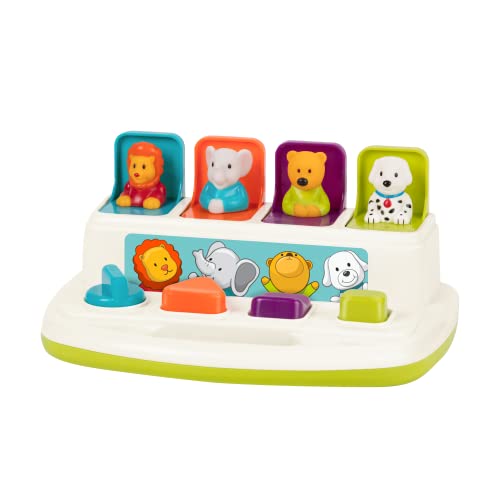
- Press, flip, turn, and slide actions
- Animals pop up for instant feedback
- Portable handle for easy carry
Best For: toddlers 18 months+ needing simple tactile cause-and-effect play
Sensory Fidget Tubes
Learning Resources Sensory Trio

- Glitter, sand, and bead motion tubes
- Supports visual and tactile sensory play
- Compact and durable for travel
Best For: kids 3+ who need calming sensory input and portable fidgets
Light-Up Musical Spinner

- Pressing activates spin, glow, and music
- Made for babies 6 months+
- No assembly required
Best For: infants who respond well to lights, music, and immediate feedback
Montessori Sensory Activity Cube
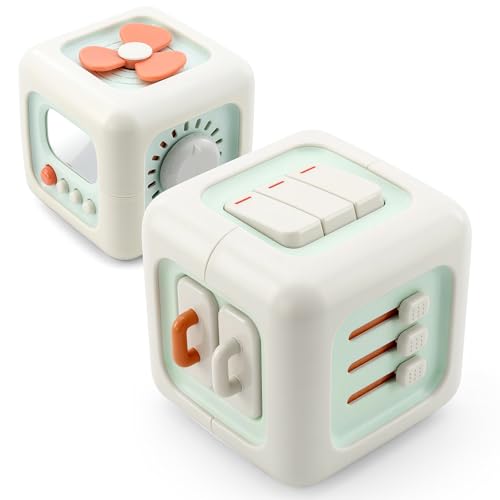
- Six sides with switches, sliders, and buttons
- Supports fine motor and cause-effect learning
- Compact, BPA-free, and travel-friendly
Best For: toddlers 12+ months needing multi-step sensory and motor play
Pop-Up Cause-and-Effect Toy
B. toys Pop-Up Buddies for Toddlers

- Five pop-up activities for repeated play
- Easy buttons for tiny hands
- Manual toy with no batteries required
Best For: Toddlers 18 months+ needing simple cause-and-effect and fine motor practice
Ball Drop Cause-and-Effect Toy
Infantino Bop & Drop Ball Tower

- Bop the ball to trigger a drop and ramp race
- Builds hand-eye coordination and fine motor skills
- Includes balls, hammer, and multiple tracks
Best For: Babies 12 months+ who enjoy aiming, tapping, and ball-drop repetition
Interactive Pop-Up Learning Toy
Fisher-Price Busy Buddies Pop-Up

- Press, flip, spin, and slide for pop-up reveals
- Squeaks, chimes, and clicks add sensory feedback
- Helps strengthen fine motor skills for babies 9+ months
Best For: Infants who benefit from simple manual cause-and-effect play with sound feedback
Active Ball Cause-and-Effect Play
Bright Starts Poppin' Ball Frog
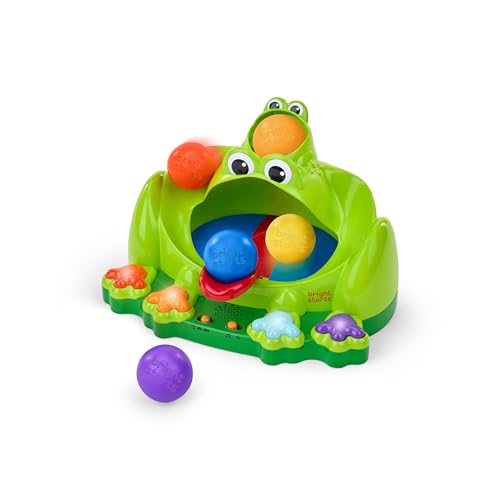
- 4 ways to play with balls, buttons, and ramps
- Lights and 50+ melodies/sounds add sensory feedback
- Helps build cause-and-effect skills, motor skills, and crawling
Best For: 6+ month babies and toddlers who like active, multi-step play
Simple Pop-Up Learning Toy

- Press, turn, flip, and slide actions trigger pop-up animals
- No batteries required for easy manual play
- Teaches cause-and-effect, animals, colors, and shapes
Best For: 18-month+ toddlers who need a simple, repeatable pop-up activity
Drop-and-Watch Motor Toy
Fisher-Price Drop Through Rock-a-Stack

- 5 rings drop through the maze for clear visual feedback
- Wobbly base adds movement and engagement
- Helps build fine motor skills, hand-eye coordination, and cause-and-effect understanding
Best For: 9+ month infants who are learning to drop, place, and track moving objects
Cause-and-Effect Button Toy – Battat Pop-Up Pals
If you’re comparing cause and effect toys for developmental delay, Battat Pop-Up Pals is a straightforward option that makes the learning cycle easy to understand. Toddlers press, flip, turn, or slide the buttons, then watch friendly animals pop up, which supports hands-on exploration of actions and outcomes while also introducing colors, shapes, and animals.
Best For: Toddlers 18 months and up who benefit from simple, tactile cause-and-effect play.
Pros:
- Multiple button actions keep play varied with press, flip, turn, and slide interactions.
- Animals popping up give immediate feedback for cause-and-effect learning.
- Includes color and shape discovery along with animal recognition.
- Built with a carry handle for easy portability.
Cons:
- Requires manual play, so it does not offer electronic features beyond the pop-up action.
- Recommended for ages 18 months and up, so it may be less suitable for younger babies.
Overall, this is a practical developmental toy for early learners who need clear, repeatable cause-and-effect feedback. Its simple mechanics and portable design make it easy to use at home or on the go.
Sensory Fidget Tubes – Learning Resources Sensory Trio
For families looking at cause and effect toys for developmental delay, these sensory fidget tubes offer a calm, visually engaging way to explore motion and attention. Each tube has a different effect—glitter, flowing sand, or cascading beads—so children can watch actions unfold and use the tubes as a quiet sensory tool during transitions, travel, or down time.
Best For: Children ages 3 and up who benefit from soothing visual sensory play and easy portable fidgets.
Pros:
- Three distinct motion effects keep the sensory experience varied.
- Supports visual and tactile play for hands-on engagement.
- Durable construction is made for frequent use.
- Compact size makes it easy to pack for travel or classroom use.
Cons:
- Minimum age is 3 years, so it is not intended for infants or younger toddlers.
- Focuses more on calming sensory input than on active button-push play.
This is a strong pick if you want a quieter developmental tool that can help hold attention and support self-regulation. It works especially well when the goal is calming sensory feedback rather than more active mechanical interaction.
Light-Up Musical Spinner – Bright Starts Press & Glow
Bright Starts Press & Glow Spinner Cause and Effect Musical Baby Toy, Age 6 Months+
Check Price On AmazonBright Starts Press & Glow Spinner is a simple cause and effect toy for developmental delay that gives babies immediate feedback when they press it. Each push makes the star spin and glow while songs play along with the lights, making it a useful choice for early motor practice and early understanding that actions can create a response.
Best For: Babies 6 months and up who enjoy light, music, and immediate sensory feedback.
Pros:
- Pressing triggers spinning, glowing, and music for clear cause-and-effect learning.
- Designed for infants starting at 6 months.
- Light and sound features can keep very young babies engaged.
- No assembly required.
Cons:
- Requires 3 AA batteries.
- Battery-powered toys may not be ideal if you want a fully manual option.
This toy is a good fit for early-stage learning because the response is immediate and easy to understand. It is especially appealing for families who want an interactive infant toy with both visual and musical stimulation.
Montessori Sensory Activity Cube – SmartMotion Cube
If you want cause and effect toys for developmental delay in a compact format, the SmartMotion Cube offers several hands-on activities in one small travel-friendly toy. With switches, dials, sliders, and buttons inspired by everyday objects, it supports fine motor skills, hand-eye coordination, concentration, and cause-and-effect learning through repeated manual play.
Best For: Toddlers 12 months and up who need a portable sensory toy with multiple hands-on actions.
Pros:
- Six sides of play provide a range of switches, knobs, sliders, and buttons.
- Supports fine motor skills, problem solving, and cause-and-effect learning.
- Compact, lightweight, and easy to bring on trips.
- Made from BPA-free materials and tested to ASTM and CPSIA standards.
Cons:
- Manual-only design may feel less exciting for kids who prefer lights or sounds.
- Small size may not suit children who want larger tabletop toys.
This is a solid all-around sensory choice for families who want a structured, screen-free activity toy. Its multiple movement-based features make it useful for repeated practice and focused play.
Pop-Up Cause-and-Effect Toy – B. toys Pop-Up Buddies for Toddlers
If you’re looking for cause and effect toys for developmental delay, this B. toys pop-up activity is a simple, hands-on option for toddlers 18 months and up. Pressing, turning, and toggling each control makes a different surprise appear, which can help keep play focused on the connection between action and outcome. It also gives little hands plenty of practice with easy-to-use buttons and moving parts.
Best For: Toddlers who need a colorful, manual toy for early cause-and-effect practice and fine motor play.
Pros:
- Five popp’in activities offer repeated cause-and-effect play.
- Easy-to-reach buttons are designed for tiny hands.
- Supports fine motor skill development while keeping play simple.
- No batteries required; fully manual operation.
Cons:
- Recommended for 18 months+, so it may be too advanced for younger babies.
- Single-child play only.
This is a straightforward developmental toy with a clear reward for each action, making it a good fit when you want a low-frustration introduction to cause-and-effect learning. The nature-themed design and colorful features keep it engaging without adding extra complexity.
Ball Drop Cause-and-Effect Toy – Infantino Bop & Drop Ball Tower
For families comparing cause and effect toys for developmental delay, this ball tower offers a very direct reward: bop the ball, and it drops through the ramp. The setup encourages repeated action, helping little ones practice aiming, gripping, and coordinated play. With two slides, two peek-a-boo tunnels, and color-matching ball rings, it stays engaging while remaining easy to understand.
Best For: Babies and toddlers who benefit from a simple ball-drop activity that supports hand-eye coordination and fine motor play.
Pros:
- Clear cause-and-effect action: bop the ball and watch it race down.
- Supports hand-eye coordination and aiming practice.
- Includes 4 balls, 1 hammer, and 4 ball slots for hands-on play.
- Two slides and two tunnels add variety without making it complicated.
Cons:
- Requires active supervision for hammer-and-ball play.
- Best suited to children who are ready to aim and tap, not passive play.
This is a strong choice if you want a toy that clearly connects action to result and encourages repetition. The ball-drop design can be especially useful for children who respond well to predictable, physically engaging play.
Interactive Pop-Up Learning Toy – Fisher-Price Busy Buddies Pop-Up
This Fisher-Price pop-up toy is a practical pick for cause and effect toys for developmental delay because every press, flip, spin, and slide triggers a surprising character reveal. The simple motions and sensory feedback from squeaks, chimes, and clicks can make it easier for babies to connect their action with what happens next. It also gives developing hands and senses a lot to explore in one compact toy.
Best For: Babies 9 months and older who need an engaging, manual pop-up toy with sensory feedback and fine motor practice.
Pros:
- Multiple activations: press, flip, spin, and slide.
- Sounds and clicks add auditory feedback to the surprise reveal.
- Helps strengthen fine motor skills.
- No batteries required and easy manual use.
Cons:
- Exclusive availability may limit where you can buy it.
- Compact size may feel small for children who prefer larger toys.
Because each control produces a clear result, this toy is well suited to early learning play that emphasizes repetition and sensory engagement. It’s a solid option when you want a battery-free toy that keeps the cause-and-effect pattern easy to see and hear.
Active Ball Cause-and-Effect Play – Bright Starts Poppin' Ball Frog
If you want cause and effect toys for developmental delay that also keep little ones moving, this Bright Starts frog offers several ways to explore. Babies can drop balls into the mouth, launch them with the tongue, roll them down side ramps, and press the feet for lights and sounds, making it a hands-on choice for early motor play and crawling motivation.
Best For: Babies and toddlers 6 months and up who enjoy active ball play with lights, sounds, and simple cause-and-effect interactions.
Pros:
- Four play modes keep the activity varied: drop, launch, roll, and press.
- Feet activate lights and 50+ melodies/sounds for extra engagement.
- Built-in trampoline-style mouth action adds a fun bounce effect.
- Designed to encourage cause-and-effect learning, motor skills, and crawling.
Cons:
- Requires 4 AA batteries.
- Best suited to children who can interact with balls and buttons safely.
This is a strong pick if you want a busy, multi-sensory toy that supports early development without adding setup complexity. The variety of actions helps it stay interesting while still keeping the play pattern easy to understand.
Simple Pop-Up Learning Toy – Pop-Up Animal Button Toy
For cause and effect toys for developmental delay, this pop-up animal toy keeps the action simple and easy to repeat. Kids can press, turn, flip, and slide different buttons to make animals pop up, while also exploring colors, shapes, and basic animal recognition through manual play.
Best For: Toddlers and young babies 18 months and up who need a straightforward, no-battery activity for button pressing and pop-up surprises.
Pros:
- Multiple button actions: turn, press, flip, and push left or right.
- Pop-up animal reveal gives clear cause-and-effect feedback.
- No batteries required, so it is always ready for play.
- Supports learning colors, shapes, and animals alongside dexterity.
Cons:
- Only includes one toy, so there are no extra pieces or modes.
- Manual play may feel simple for children who want more motion or sound.
This is a practical choice when you want a compact developmental toy with easy repetition and clear feedback. It focuses on simple hand actions, making it a good fit for early learning sessions and quiet play.
Drop-and-Watch Motor Toy – Fisher-Price Drop Through Rock-a-Stack
If you are comparing cause and effect toys for developmental delay, this Fisher-Price version of Rock-a-Stack keeps the learning very direct. Babies drop rings through the top or side of the maze, watch them roll around the wobbly base, and see them exit the bottom, which makes the relationship between action and result easy to understand.
Best For: Infants 9 months and older who are building fine motor skills and hand-eye coordination through simple drop-through play.
Pros:
- 5 colorful rings create repeated drop-and-watch play.
- Wobbly base rocks side to side for added movement.
- Supports fine motor skills, hand-eye coordination, and cause-and-effect learning.
- Rings store on the back of the maze for convenience.
Cons:
- No batteries or sounds, so it is a quieter toy than some alternatives.
- Best for children ready to place and drop rings rather than more advanced interactive play.
This toy works well if you want a familiar developmental shape-sort style activity with a clear visual payoff. It is a straightforward, low-fuss option for early problem-solving and motor practice.
How We Picked the Best Cause and Effect Toys for Developmental Delay
We focused on Cause and Effect Toys for Developmental Delay that encourage clear feedback, repeated interaction, and age-appropriate challenge. Priority went to toys that support fine-motor practice, sensory exploration, and easy independent play, while staying approachable for toddlers and babies at different stages.
We also looked for toys with durable construction, simple setup, and play patterns that can be repeated many times without frustration.
Quick Comparison
For younger babies, lights, sounds, popping motion, and ball-drop play usually work well because the result is immediate and obvious. For toddlers, buttons, sliders, dials, and sorting features can add more learning value while still keeping the cause-and-effect connection easy to understand. Quiet travel toys and sensory fidgets are useful when you want lower stimulation and fewer small pieces.
Key Buying Factors for Cause and Effect Toys for Developmental Delay
1. Clarity of Feedback
The best toy makes the result easy to see, hear, or feel. A clear reaction helps children connect their action to the outcome, which is the core of cause-and-effect learning.
2. Fine-Motor Accessibility
Look for large buttons, easy-turn dials, smooth sliders, or simple drop actions. If the movement is too stiff or complicated, the toy may create frustration instead of practice.
3. Sensory Load
Some children benefit from bright lights and music, while others do better with quiet, tactile play. Match the toy’s stimulation level to the child’s attention span and sensory preferences.
4. Age and Skill Range
Check the manufacturer’s age guidance, but also consider developmental readiness. The best Cause and Effect Toys for Developmental Delay are flexible enough to support progress as a child grows.
Who Should Buy Which Cause and Effect Toys for Developmental Delay?
Choose pop-up toys and musical light-up toys for infants and early sitters who need a simple, rewarding reaction. Pick ball towers, drop-through toys, and stacking activity toys for toddlers who are ready to practice hand-eye coordination and object permanence.
If the child prefers quiet, repeatable play or needs support during travel, sensory tubes and switch-based cubes may be the better fit. For children who enjoy active movement, launching and rolling toys can encourage crawling, chasing, and gross-motor engagement.
In short, the best choice depends on how much stimulation, physical effort, and repetition the child can handle right now.