Communication buttons can give children a simple, repeatable way to express needs, make choices, and participate in everyday routines. The options in this roundup range from classroom-style recordable buzzers to portable AAC devices with preset and customizable messages.
Use the guide below to compare recording flexibility, button layout, portability, durability, and age suitability before choosing a tool that fits the child’s communication goals and support plan.
Best 10 Communication Buttons for Children Picks for 2026
Most Versatile AAC Tablet

- 37 preset picture and color talking buttons
- Eight programmable buttons for custom messages
- Adjustable volume and male/female voices
Best For: Nonverbal children needing a portable, customizable AAC aid
Best Set for Group Activities
Learning Resources Recordable Buzzers

- Four brightly colored independent buzzers
- Seven-second customizable recordings
- Large buttons for classroom participation
Best For: Classrooms, learning centers, and group games
Best Beginner AAC Option
MibbyTalk Communication Device

- 32 preset phrases in four color-coded zones
- 11 buttons record messages up to 15 seconds
- Tactile buttons and anti-drop silicone case
Best For: Children starting with screen-free AAC communication
Best for Simple Custom Recordings

- Four colorful record-and-playback buttons
- Up to 30 seconds per recording
- Compact option for games and home activities
Best For: Older children needing simple custom message buttons
Best for Personalized Everyday Needs

- 20 color-coded buttons for common needs
- Six recordable buttons for familiar voices
- Lightweight, portable design with adjustable volume
Best For: Young children needing simple communication support at home, school, or on outings
Best Portable Multi-Pack
4-Pack AAC Voice Recording Buttons
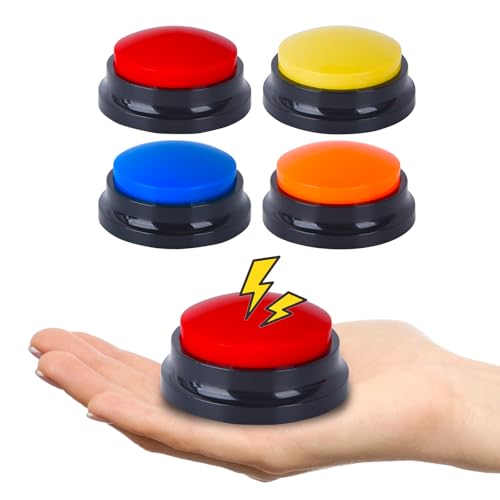
- Four individual communication buttons
- Records custom messages up to 30 seconds
- Compact design for home, school, or therapy
Best For: Classrooms, families, and therapists needing multiple customizable buttons
Best for Structured Phrase Learning
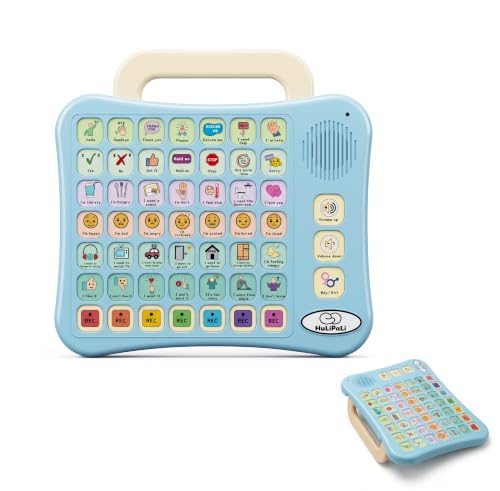
- 42 phrases arranged across seven color zones
- Seven recordable buttons for personalized voices
- Handheld design converts to a desktop stand
Best For: Children needing organized phrase practice for outings or speech therapy
Most Versatile Choice
Brightway 60-Button AAC Device

- 60 total buttons support more everyday phrases
- 10 recordable buttons allow personalized messages
- Large buttons and adjustable volume aid daily use
Best For: Families wanting extensive phrase coverage and customization
Best Visual Cue Design
Color-Coded 23-Button AAC Device
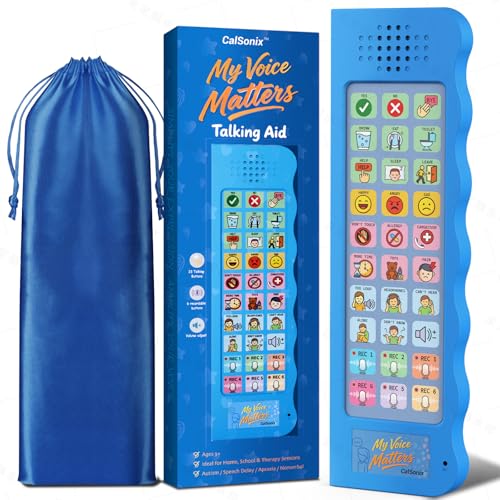
- 23 preset phrases use clear pictures and text
- Six buttons can be recorded with custom messages
- Four volume levels and a storage bag support portability
Best For: Users who benefit from color-coded visual communication cues
Best Compact Everyday Option

- 24 preset buttons cover common daily needs
- Five custom voice buttons add familiar messages
- Lightweight design includes adjustable volume
Best For: Users needing core phrases in a portable, simple layout
Most Versatile AAC Tablet – Joyreal Communication Device
For families comparing communication buttons for children, the Joyreal AAC device offers a broad selection of ready-to-use picture and color prompts. It includes preset messages for everyday needs, plus programmable buttons for personalized recordings.
Best For: Nonverbal children and others who need a portable AAC aid with many preset messages and customizable voice options.
Pros:
- Includes 37 picture-based talking buttons for common needs and feelings.
- Eight programmable buttons support personalized recordings.
- Offers adjustable volume and male/female voice switching.
- Includes a storage bag and is designed for portable use.
Cons:
- Requires three AAA batteries.
- Its larger number of features may be more than needed for very basic communication routines.
With preset phrases, custom recording options, and adjustable volume, this is a flexible choice for home, therapy, travel, and busy environments.
Best Set for Group Activities – Learning Resources Recordable Buzzers
These recordable buzzers provide a simple way to add communication buttons for children to classroom games, learning centers, and family activities. Each of the four brightly colored buttons can hold a short custom recording.
Best For: Classrooms, learning centers, family game nights, and children who benefit from large, easy-to-press participation buttons.
Pros:
- Four independently operating buzzers support group activities.
- Each button allows recordings of up to seven seconds.
- Large buttons are designed for accessible pressing.
- Useful for quizzes, instructions, feedback, and personalized messages.
Cons:
- Each recording is limited to seven seconds.
- Requires two AAA batteries.
- Designed primarily for indoor educational and game use.
This set is a practical pick when several children need individual buttons for participation rather than a complete phrase-based AAC system.
Best Beginner AAC Option – MibbyTalk Communication Device
MibbyTalk is a screen-free starter option for families seeking communication buttons for children with speech delays or limited verbal communication. Its color-coded layout combines preset everyday phrases with recordable buttons for familiar, personalized messages.
Best For: Young children beginning AAC, families transitioning from PECS, or users needing a lightweight backup to a tablet-based system.
Pros:
- Provides 32 preset phrases organized into four color-coded zones.
- Eleven buttons record messages of up to 15 seconds each.
- Raised, light-pressure buttons offer tactile feedback.
- Includes a textured anti-drop silicone case and five-level volume control.
Cons:
- It is intended as an educational communication aid, not a replacement for a professional AAC system.
- Requires AAA batteries.
- The supplied notes do not specify the exact battery quantity.
The combination of simple navigation, familiar recordings, tactile buttons, and protective casing makes MibbyTalk especially approachable for early AAC use across home, school, and outings.
Best for Simple Custom Recordings – Artist Unknown Voice Buttons
For simple communication buttons for children, this four-pack offers individual record-and-playback buttons in different colors. Each button can store a short spoken message, sound effect, or activity prompt for interactive use at home.
Best For: Older children, supervised home activities, simple message practice, and playful communication exercises.
Pros:
- Four color-coded buttons are included.
- Each button supports up to 30 seconds of recording.
- Recording and playback use a straightforward press-and-hold process.
- Compact design is portable for outings and group games.
Cons:
- Not recommended for children under 12.
- Batteries are not included.
- It does not provide preset AAC phrases or picture-based navigation.
This pack works best as a basic, flexible recording tool rather than a structured AAC device, particularly when longer custom messages or playful interaction are the priority.
Best for Personalized Everyday Needs – KidBloom AAC Device
For families comparing communication buttons for children, the KidBloom AAC Device combines 20 color-coded phrases with six recordable buttons. It is designed to help children express common needs and feelings while offering familiar voices for more personal interactions.
Best For: Young children who need simple, portable support for everyday communication at home, school, therapy, or on family outings.
Pros:
- 20 color-coded buttons cover common needs such as hunger, toys, and comfort.
- Six recordable buttons allow parents or caregivers to add familiar voices and phrases.
- Two volume settings support quieter and noisier environments.
- Lightweight design includes a soft pouch for carrying in a backpack.
Cons:
- Requires three AA batteries, which are not included.
- Its listed communication content is geared toward younger children and basic everyday requests.
This is a practical choice when portability and personalized recordings matter most. The preset buttons can support quick requests, while the custom buttons add emotional familiarity during daily routines.
Best Portable Multi-Pack – 4-Pack AAC Voice Recording Buttons
This four-pack is a flexible option for communication buttons for children who benefit from recorded, single-message prompts. Each button can store a custom recording of up to 30 seconds, making it useful across home, school, therapy, and community settings.
Best For: Families, classrooms, and therapy providers that want several portable recording buttons for different locations or messages.
Pros:
- Four separate buttons provide multiple communication tools in one pack.
- Each button records a custom message for up to 30 seconds.
- Built-in speakers provide clear voice output.
- Compact and lightweight for use in different settings.
Cons:
- Each button requires two AAA batteries, which are not included.
- Unlike products with preset phrase systems, messages must be recorded by the user.
The main advantage is flexibility: caregivers can place different buttons in useful locations or assign each one a separate message. It is a straightforward choice for users who need customizable voice output rather than a larger phrase-based board.
Best for Structured Phrase Learning – 2-in-1 Color-Coded AAC Device
For shoppers seeking communication buttons for children with a more structured learning system, this AAC device organizes 42 preset phrases into seven color-coded zones. Its handheld format and foldable desktop stand make it suitable for both mobile communication and focused practice.
Best For: Children who benefit from organized phrase categories, portable use, and a device that can support speech therapy sessions.
Pros:
- 42 pre-installed phrases are organized by seven visual color categories.
- Seven recordable buttons can include a parent’s voice or other personalized messages.
- 2-in-1 handheld and desktop design supports outings and table-based learning.
- Includes adjustable volume, a carry-stand design, and a storage bag.
Cons:
- Requires three AAA batteries, which are not included.
- The larger number of phrases and categories may require caregiver guidance for new users.
- It is made from plastic, so long-term durability depends on handling.
This model stands out for buyers who want more than isolated voice buttons. The color system, preset phrases, and desktop stand create a structured option for building communication routines while retaining portability.
Most Versatile Choice – Brightway 60-Button AAC Device
For shoppers comparing communication buttons for children, the Brightway AAC device stands out for its broad selection of preloaded phrases and customizable controls. It is designed for nonverbal users and people with speech difficulties, with large buttons, adjustable volume, and portable construction for use at home, school, therapy, or while traveling.
Best For: Families and caregivers who want a higher-button-count device with personalized recording options.
Pros:
- Offers 60 total buttons with preloaded everyday words and phrases.
- Includes 10 programmable buttons for personalized messages in a familiar voice.
- Large, responsive buttons require minimal pressure.
- Provides adjustable volume and male/female voice options.
Cons:
- Its larger number of buttons may take more time to learn than a simpler starter board.
- The supplied notes do not specify battery type or battery life.
Brightway is a practical choice when communication needs extend beyond a few basic requests. Its combination of 60 buttons and 10 recordings gives caregivers room to personalize everyday communication as needs evolve.
Best Visual Cue Design – Color-Coded 23-Button AAC Device
This AAC device is a straightforward option for shoppers seeking communication buttons for children with clear visual prompts. It combines 23 pre-programmed phrases with color-coded icons, six recordable buttons, adjustable volume, and a storage bag for school, therapy, and travel.
Best For: Users who benefit from picture-and-text cues and caregivers who need a lightweight device with custom recordings.
Pros:
- Color-coded icons, pictures, and text support quick choices.
- Includes useful preloaded phrases such as Yes/No, Help, Water, and Bathroom.
- Six recordable buttons accommodate names, routines, and personal requests.
- Four volume levels and an included storage bag support portable use.
Cons:
- With 23 pre-programmed buttons, it offers fewer preset choices than larger AAC devices.
- It requires three AAA batteries.
The visual layout makes this model especially approachable for users who rely on recognizable icons and simple selections. Its recordable buttons add flexibility without making the device overly complex.
Best Compact Everyday Option – 24-Button AAC Talking Aid
For families comparing communication buttons for children, this compact AAC talking aid focuses on essential daily phrases and familiar recorded voices. It provides 24 preloaded buttons, five programmable buttons, three volume levels, and battery-powered portability for home, school, therapy, or travel.
Best For: Nonverbal or minimally verbal users who need core daily requests and a small set of personalized messages.
Pros:
- Includes 24 preloaded buttons with vivid icons and practical phrases.
- Five programmable buttons can use recordings from parents or therapists.
- Three volume levels help adapt output to different settings.
- Lightweight design is suitable for school, therapy, and travel.
Cons:
- It has fewer programmable buttons than the other listed devices.
- It requires three AAA batteries.
This model keeps the focus on essential communication without an extensive button layout. The five custom voice buttons are useful for adding familiar phrases alongside its preset daily needs.
How We Picked the Best Communication Buttons for Children
We focused on products that provide a clear physical action and an audible response, since immediate feedback can make communication practice easier to understand and repeat. The selection includes dedicated AAC devices, multi-button communication boards, portable units, and recordable buzzers that can be adapted for home, school, therapy, or supported routines.
We also considered the number of buttons, message-recording options, color coding, portability, likely durability, and how easily caregivers can update messages. Because communication needs vary widely, these products should be viewed as tools to support an individualized communication approach—not as a replacement for guidance from a speech-language pathologist or other qualified professional.
Quick Comparison
| Type | Best for | What to look for |
|---|---|---|
| Single or four-button recordable buzzers | Choices, games, prompts, and simple routines | Recording length, volume, reset process, and button size |
| Preset AAC devices | Frequent requests and familiar everyday messages | Message variety, layout clarity, and ease of activation |
| Recordable AAC boards | Personalized phrases and changing communication needs | Number of customizable buttons and recording access |
| Portable multi-pack devices | Using communication tools in multiple locations | Size, battery convenience, labeling, and storage |
Key Buying Factors for Communication Buttons for Children
Message Flexibility
Preset messages can be useful immediately, while recordable buttons let caregivers add names, favorite activities, classroom phrases, or individualized prompts. Check whether recordings can be replaced easily and whether the available message count matches the child’s needs.
Layout and Accessibility
Look for large, distinct buttons with strong color contrast and enough spacing to reduce accidental presses. A simple layout may work best for early learning, while older children or more experienced users may benefit from additional buttons and a broader vocabulary.
Sound and Feedback
Audible playback should be clear enough for the intended environment without being unnecessarily loud. Confirm whether volume is adjustable and whether the device provides useful feedback when a button is pressed.
Portability and Durability
For school, therapy, and community use, choose a lightweight device that fits in a backpack and is easy to activate on a table or lap. Consider battery requirements, exposed recording controls, and whether the housing can tolerate frequent handling.
Support and Personalization
Communication buttons work best when adults consistently model the messages and respond to every intentional attempt. Choose a system that can reflect the child’s routines, preferred words, languages, and communication partners.
Who Should Buy Which Communication Buttons for Children?
Choose recordable buzzers for simple choices, classroom participation, games, and early cause-and-effect practice. They are often the easiest starting point when only a few messages are needed.
Choose a preset AAC device when the child needs quick access to common requests such as help, food, activities, or breaks. These can reduce setup time, especially when the available vocabulary matches daily routines.
Choose a customizable multi-button board for families, educators, or therapists who need to personalize phrases and expand communication over time. Prioritize clear labeling and a layout the child can reliably reach.
Choose portable or multi-pack options when the same communication approach is needed at home, school, therapy, or during outings. Before buying, confirm battery details, recording instructions, and the device’s dimensions so it fits the intended routine.