A tactile wall activity board can turn empty wall space into a hands-on learning zone. These panels give kids a place to touch, explore, and practice fine motor skills without screens.
Below, we’ve rounded up 10 options that fit a range of ages, spaces, and sensory needs, from home playrooms to classrooms and calm-down corners.
Best 10 Tactile Wall Activity Board Picks for 2026
Group Play Train Panel
11-in-1 Wooden Sensory Train Wall Panel
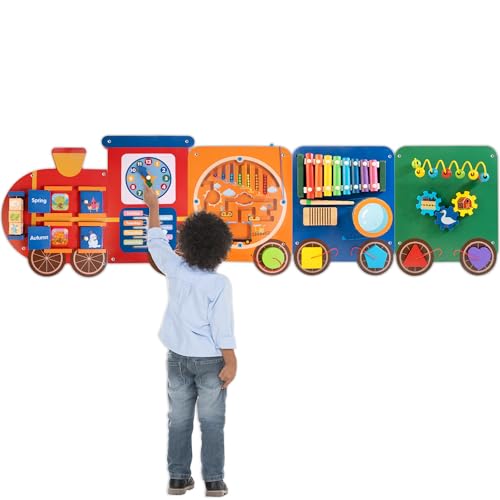
- 11 activities in a 57-inch train layout
- Supports group play for 1-5 kids
- Solid wood with non-toxic paint
Best For: Playrooms, nurseries, and daycare spaces
Calm-Down Sensory Panel
Caterpillar Tactile Texture Wall Board
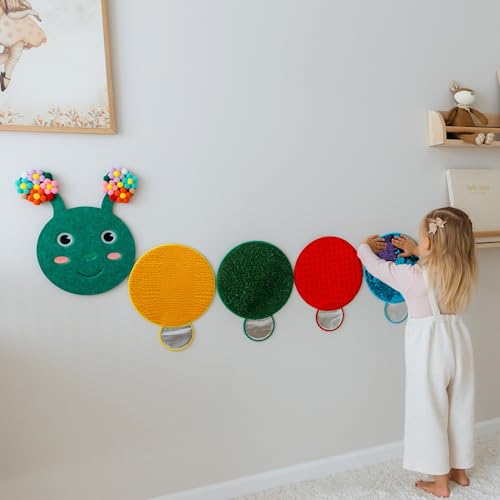
- Multi-texture design for tactile exploration
- Supports fine motor and coordination skills
- Nano-adhesive backing for smooth walls
Best For: Calm-down corners and sensory classrooms
Large Train Montessori Board
12-in-1 Wooden Train Wall Activity Center

- 12 hands-on activities in one train board
- Large wall display for shared spaces
- Wood build with ASTM/CPSC safety testing
Best For: Daycares, nurseries, and classroom walls
Modular Texture Wall Set
24-Piece Hexagon Sensory Wall System

- 24-piece modular layout with replaceable pads
- Seven textures for tactile exploration
- Rounded corners and hidden wall loops
Best For: Flexible sensory walls at home or school
Spring Train Magic
ROBUD 12-in-1 Wooden Sensory Wall Panel
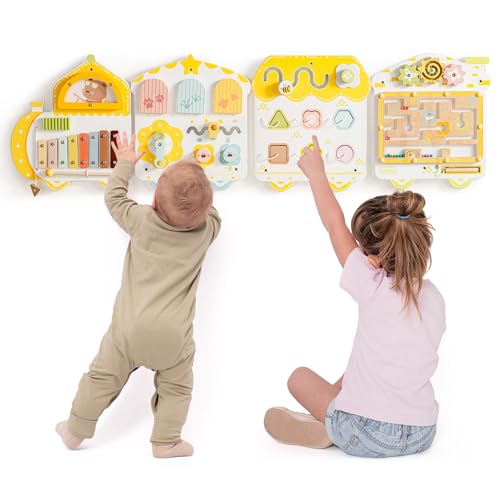
- 12-in-1 train-themed activity board
- Durable wood with rounded toddler-safe edges
- Wall-mount or floor placement
Best For: Toddlers needing a compact, multi-activity sensory wall panel
Dinosaur Texture Play
Sensory Wall Panel with 7 Touch Surfaces

- 7 texture-focused touch surfaces
- Safe, skin-friendly multi-fabric construction
- Dinosaur design doubles as wall decor
Best For: Children ages 3+ who need calming texture-based sensory play
Detachable Montessori Play
ComfyBumpy Detachable Sensory Wall Panel

- Three detachable wooden activity panels
- Memory game, color maze, and music board
- CPC certified with rounded edges
Best For: Kids 3+ who need portable, screen-free Montessori play
Color-Learning Pencil Panel

- Six textured surfaces for tactile play
- Adhesive dots allow wall mounting
- Supports color recognition and fine motor skills
Best For: Quiet indoor sensory learning spaces
Wall-Mounted Focus Board
Monz Montessori Sensory Wall Busy Board

- Velcro-backed wall mounting with no drilling
- Packed with gears, zippers, switches, and sliders
- Built to support motor skills and problem-solving
Best For: Toddlers who need quiet independent sensory play
Animal Texture Wall Pick

- Animal-shaped panel with varied textures
- One-step setup using nano tape
- Supports sensory development and fine motor skills
Best For: Large indoor sensory spaces and texture play
Group Play Train Panel – 11-in-1 Wooden Sensory Train Wall Panel
If you want a tactile wall activity board that doubles as colorful room decor, this 57-inch wooden train panel set is built for active toddler engagement. It combines multiple Montessori-inspired tasks in one wall-mounted layout, making it a practical pick for playrooms, daycares, nurseries, and waiting areas where several children may play together.
Best For: Shared spaces that need a decorative, indoor-only wall activity center for 1-5 toddlers.
Pros:
- 11 built-in activities support color, shape, number, clock, and animal learning.
- Large train design is suited to solo play or small groups.
- Made from solid wood with non-toxic paint for durable indoor use.
- Pre-drilled panels are designed for assembly in about 30 minutes.
Cons:
- Indoor use only, so it is not meant for outdoor play areas.
- Requires wall installation, which may not suit every home setup.
This is a strong option if you want a tactile wall activity board that offers both play value and wall appeal. Its biggest advantage is the mix of educational activities and group-friendly size, though it works best in a dedicated indoor space.
Calm-Down Sensory Panel – Caterpillar Tactile Texture Wall Board
This tactile wall activity board is designed for quiet, screen-free sensory play in calm-down corners, classrooms, therapy rooms, and playrooms. The caterpillar-style panel focuses on touch-based exploration with a range of textures that encourage repeated interaction and steady, independent use.
Best For: Calm-down corners, classrooms, and sensory spaces for kids age 3+.
Pros:
- Multi-texture surface supports tactile exploration and sensory feedback.
- Helps build fine motor skills, hand-eye coordination, and bilateral coordination.
- Includes nano-adhesive backing for smooth, clean wall surfaces.
- Made with durable, skin-friendly materials and CPC-compliant construction.
Cons:
- Works best on flat, dust-free, smooth surfaces.
- Smaller than larger wall-panel systems, so it offers a more focused experience.
If your goal is a simple tactile wall activity board for sensory regulation rather than lots of mechanical play features, this is a thoughtful choice. It is especially appealing for settings that need structured, low-distraction engagement.
Large Train Montessori Board – 12-in-1 Wooden Train Wall Activity Center
For buyers comparing a tactile wall activity board with more built-in play features, this train-shaped wooden center adds a wide mix of hands-on activities. It is designed for toddlers in playrooms, nurseries, kindergartens, and daycare settings, where a larger wall-mounted toy can keep children busy while encouraging learning through play.
Best For: Daycare and nursery walls that need a larger, feature-rich Montessori activity center.
Pros:
- 12 activities include gears, bead maze, xylophone, clock, and more.
- Larger-than-average train shape gives it a strong wall presence.
- Built from wood with non-toxic paint and safety testing to ASTM/CPSC standards.
- Installation is described as quick, around 15 minutes with the included instructions.
Cons:
- Indoor use only, so it is not suited for outdoor installation.
- Assembly is required, even though it is designed to be straightforward.
This model stands out if you want a tactile wall activity board with a bigger footprint and more variety than a basic panel. It is best suited to shared child spaces where the extra activity count can really be used.
Modular Texture Wall Set – 24-Piece Hexagon Sensory Wall System
This tactile wall activity board is built for variety, with a modular hexagon layout and replaceable texture pads that let children create different sensory arrangements. It is a good fit for home learning areas, classrooms, daycare centers, waiting areas, and sensory rooms where hands-on tactile exploration is the priority.
Best For: Flexible sensory walls that need rearrangeable texture play for classrooms or home learning.
Pros:
- 24-piece modular system supports countless layout options.
- Includes seven fabric textures for touch-based comparison and exploration.
- Designed to encourage grasping, pressing, tracing, and hand coordination.
- Wall-mount-ready with hidden rear hanging loops and rounded corners.
Cons:
- Surface clean only, so it needs gentler care than washable soft goods.
- No batteries or electronic features for families wanting lights or sound.
If you want a tactile wall activity board that feels more modular than mechanical, this set offers strong flexibility. Its biggest draw is the ability to change the sensory layout over time while keeping the focus on texture and motor development.
Spring Train Magic – ROBUD 12-in-1 Wooden Sensory Wall Panel
This tactile wall activity board blends a spring-train theme with 12 hands-on activities, so toddlers can slide, twist, listen, match, and explore in one compact setup. It’s a practical pick for families who want screen-free play that supports fine motor skills, hand-eye coordination, and sensory discovery without feeling overly instructional.
Best For: Toddlers, playrooms, nurseries, and Montessori spaces that need a durable, wall-mountable sensory panel.
Pros:
- 12-in-1 design includes gears, a magnetic maze, sliding blocks, shape matching, xylophone, drum, and tactile elements.
- Made from durable wood with smooth rounded edges and toddler-safe materials.
- Can be wall-mounted or placed on the floor for flexible play.
- Designed to support focus, problem-solving, and hand-eye coordination.
Cons:
- At 12 inches wide, the activity area is relatively compact.
- Assembly is not required, but the unit is still meant for indoor use only.
- Best suited to children who enjoy hands-on manipulation rather than larger active play.
Overall, this board stands out as a well-rounded tactile wall activity board for families who want a sturdy, multi-activity option with a warm, playful look. Its mix of sensory features and flexible placement makes it easy to fit into everyday routines.
Dinosaur Texture Play – Sensory Wall Panel with 7 Touch Surfaces
If you’re comparing a tactile wall activity board for texture play, this dinosaur-themed panel focuses on touch, color, and calm sensory exploration. With seven different surfaces and soft, skin-friendly materials, it’s designed to give kids a hands-on way to explore textures while adding playful wall decor to a room or classroom.
Best For: Kids ages 3+ who benefit from texture-based sensory play and a soothing wall-mounted activity.
Pros:
- Offers 7 inspiring touch surfaces for varied tactile exploration.
- Made from safe, premium materials that are gentle on kids’ skin.
- Works as both sensory play and decorative wall decor for rooms or classrooms.
- Includes nano tape for installation support.
Cons:
- Focuses more on textures than on mechanical busy-board activities.
- Designed for indoor use only.
- Best for children who enjoy sensory touch experiences rather than interactive levers or puzzles.
This is a straightforward choice if your priority is tactile variety over complex moving parts. It’s especially appealing for settings that want a calming sensory wall panel with a fun dinosaur look.
Detachable Montessori Play – ComfyBumpy Detachable Sensory Wall Panel
This tactile wall activity board is built around calm, screen-free exploration, with detachable wooden panels that let kids move the play from wall to floor or couch. Its memory game, color maze, and music board create a simple but purposeful setup for independent play at home, daycare, or in a classroom.
Best For: Ages 3+ who need portable, Montessori-inspired sensory play with flexible placement.
Pros:
- Three detachable wooden panels support portable play outside the wall mount.
- Includes a memory game, color maze, and music board for varied activities.
- CPC certified with natural wood, smooth rounded edges, and child-safe coating.
- Designed for independent, open-ended, screen-free play.
Cons:
- Only three activity panels, so it’s less feature-dense than larger boards.
- Made for ages 3 and up, so it is not aimed at younger toddlers.
- Indoor-oriented design may not suit outdoor use.
For families who want a flexible sensory wall panel that feels more portable than fixed, this one is especially practical. The detachable layout and Montessori-style activities make it a strong pick for everyday independent play.
Color-Learning Pencil Panel – Pencil Sensory Wall Panel
This tactile wall activity board is shaped like a pencil and turns color recognition into a hands-on sensory experience. With six different textures and a compact, stackable design, it fits well in classrooms, playrooms, and calm-down corners where quiet engagement matters.
Best For: Teachers, parents, and therapists looking for a wall-mounted sensory panel that supports color learning and tactile exploration.
Pros:
- Six textured surfaces, including felt, mesh, ridged, fluffy, bumpy, and fuzzy
- Adhesive dots let it work as a sensory wall panel
- Compact pieces are easy for little hands to grip and store
- Supports fine motor skills, hand-eye coordination, and tactile focus
Cons:
- Requires assembly
- Designed for indoor use only
- More of a simple sensory panel than a full activity board with moving parts
This is a practical pick if you want a quiet tactile wall activity board that doubles as a color-learning tool. It stands out for its texture variety and simple setup, especially in organized learning spaces.
Wall-Mounted Focus Board – Monz Montessori Sensory Wall Busy Board
This tactile wall activity board is built for hands-on play that keeps toddlers engaged without taking over the floor. The felt surface, wall-mounted layout, and mix of gears, switches, zippers, and other manipulatives make it a useful choice for daily sensory and motor-skill practice.
Best For: Toddlers ages 2-5 who need a mounted sensory board for independent play and developmental learning.
Pros:
- Tool-free installation with strong Velcro backing
- Includes gears, switches, zippers, locks, latches, beads, and sliders
- Supports fine motor skills, problem-solving, and hand-eye coordination
- Helps reduce floor clutter in bedrooms, daycares, and classrooms
Cons:
- Designed for one child at a time
- Indoor use only
- Requires assembly
If you want a more interactive tactile wall activity board with moving parts, this one offers a strong mix of sensory features and practical wall-mounted convenience. The soft felt build also makes it a gentle option for younger children.
Animal Texture Wall Pick – ODOXIA Sensory Wall Panel
For shoppers seeking a tactile wall activity board with strong visual appeal, this ODOXIA panel focuses on texture-rich sensory play in large animal shapes. It uses a simple wall setup with nano tape and combines different materials, making it a good fit for kids who like touch-based exploration.
Best For: Daycares, sensory rooms, and families wanting a large, easy-to-mount wall panel with animal-themed textures.
Pros:
- Available in animal designs like caterpillar, dinosaur, and butterfly
- Multiple tactile materials, including faux grass, faux crocodile leather, pom poms, and corduroy
- One-step setup with included nano tape
- Designed for sensory development and fine motor skill play
Cons:
- Only one panel is included per set
- Indoor use only
- Less focused on learning controls or latches than some busy boards
This panel is a strong choice if texture variety and easy wall installation matter most. Its large format and themed shapes make it more decorative and sensory-focused than a traditional activity board.
How We Picked These Tactile Wall Activity Boards
We focused on wall-mounted sensory boards that offer meaningful hands-on play, durable construction, and age-appropriate features. Priority went to products with varied textures, secure mounting, and designs suited for home, daycare, classroom, or therapy use.
We also looked for boards that balance engagement with practicality: easy-to-clean materials, space-saving formats, and features that encourage independent exploration.
Quick Comparison
In this roundup, the main differences come down to size, texture variety, mounting style, and intended use. Some Tactile Wall Activity Board options are built around multiple learning stations, while others emphasize soothing sensory input or compact wall coverage for smaller rooms.
If you want broad developmental play, choose a multi-feature panel. If your goal is calming sensory support, texture-focused boards and quieter materials may be the better fit.
Key Buying Factors for a Tactile Wall Activity Board
Age Range and Skill Level
Match the board to the child’s developmental stage. Toddlers benefit from simple cause-and-effect elements and large tactile pieces, while older kids may get more from multi-step activities and finer manipulation tasks.
Texture and Sensory Variety
The best Tactile Wall Activity Board offers more than one surface or interaction. Look for combinations of smooth, rough, soft, bumpy, rotating, sliding, or visual sensory elements to keep interest high and support different sensory preferences.
Safety and Mounting
Because these boards attach to walls, stable installation matters. Check for solid hardware, smooth edges, and materials that suit the environment. In classrooms or shared spaces, secure mounting and easy inspection are especially important.
Room Type and Footprint
Consider where it will live. A larger panel can become a focal point in a playroom or daycare, while modular or compact designs work better in narrow hallways, bedrooms, or sensory corners.
Cleaning and Durability
Busy hands mean frequent cleaning. Choose materials that can handle regular wiping and repeated use. For public or group settings, durable finishes and replaceable parts can extend the life of the board.
Who Should Buy Which Tactile Wall Activity Board?
Families building a screen-free play zone may want a versatile board with multiple activities. Teachers and daycare providers often benefit from larger, sturdier panels that can handle group traffic. For sensory rooms or calm-down corners, texture-rich or visually soothing options may be the best match.
If you’re buying for children with sensory processing differences or autism support, focus on predictable interactions, safe textures, and a layout that encourages calm exploration rather than overstimulation.
In short, the right Tactile Wall Activity Board depends on your space, the child’s age, and the kind of sensory engagement you want to encourage.