Two handed fine motor toys help kids build the hand strength, coordination, and focus they need for everyday tasks like dressing, feeding, and writing prep.
Below, we’ve rounded up practical 2026 picks that encourage bilateral play, pincer grasp practice, and child-led learning without feeling like a chore.
Best 10 Two Handed Fine Motor Toys Picks for 2026
Counting & Feeding Play
Learning Resources Fine Motor Feeding Friends

- Tweezers help build grip and hand control.
- Food pieces support counting, matching, and sorting.
- Includes 39 sturdy pieces for repeat play.
Best For: Ages 3+ who need tweezers practice and simple pretend feeding play.
Magnetic Bird Catching
TOP BRIGHT Woodpecker Worm Toy

- Magnetic catching builds hand-eye coordination and finger control.
- Two play modes keep the activity varied.
- Supports color recognition, counting, and patience.
Best For: Ages 2 to 4 who like magnetic, screen-free toddler play.
Grabbers & Sorting Games
hand2mind Grab That Monster Set

- Grabbers build pincer grasp, hand strength, and dexterity.
- Sorting and matching reinforce color skills.
- Spinner cards add multiple game options.
Best For: Ages 3 to 4 needing grasp practice and classroom-style fine motor activities.
Stacking & Matching Play
Learning Resources Spike The Fine Motor Hedgehog

- Chunky quills build hand strength and coordination.
- Textured pieces support sensory play and focus.
- Numbered holes encourage counting and color matching.
Best For: Ages 18 months+ starting with simple stacking and inserting play.
Fruit Threading Set
Wooden Lacing Toys for Toddlers

- 4 wooden fruit lacing pieces
- Promotes concentration and hands-on play
- Compact, durable travel-friendly design
Best For: Quiet threading practice for ages 3+
Helping Hands Set
Fine Motor Tool Set for Sensory Play
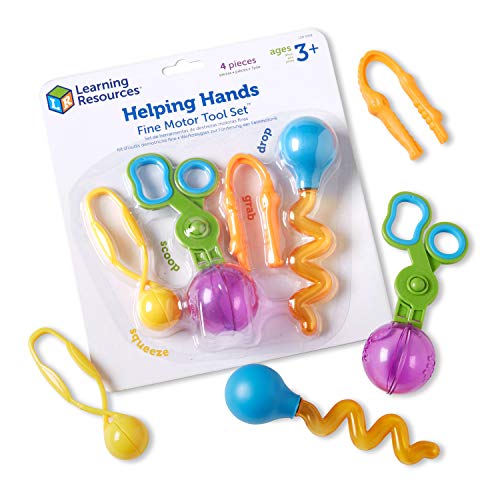
- 4 chunky tools for hand strength and dexterity
- Works with rice, beans, pompoms, or water beads
- Includes a scooper for early scissor practice
Best For: Sensory bin fine motor practice and pre-writing skills
Counting Dinosaur Set

- 48 dinosaurs with 6 sorting bowls
- Builds grip, counting, and sorting skills
- Includes two tweezers and storage bucket
Best For: Preschool color sorting and tweezer practice
Steggy Picks
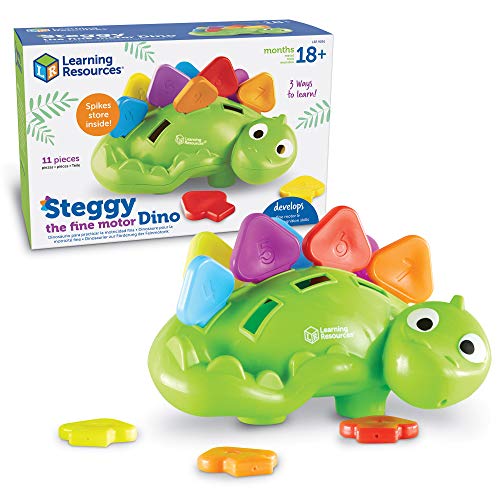
- 10 pinchable, pullable scales
- Builds pincer grasp and hand strength
- Scales store inside for cleanup
Best For: Toddlers 18 months+ learning fine motor basics
Bird Feed Games
Magnetic Fine Motor Toy for 2-Year-Olds

- Magnetic worm-catching feeding game
- Builds hand-eye coordination and control
- Tree stump storage keeps pieces organized
Best For: 2-year-olds who like animal-themed hands-on play
Sorting Skills Set

- Three lids add variety to fine motor play
- Builds grip strength and hand-eye coordination
- Compact with canvas bag for travel
Best For: Ages 3 to 5 practicing sorting and inserting
Counting & Feeding Play – Learning Resources Fine Motor Feeding Friends
For families shopping for two handed fine motor toys, this Feeding Friends set adds a practical twist: kids use tweezers to move pieces, which helps build grip, control, and hand coordination. It also folds in sorting, matching, and counting, so the play stays skill-focused without feeling like a worksheet.
Best For: Toddlers ages 3+ who benefit from tweezer practice, simple pretend play, and early counting activities.
Pros:
- Tweezer feeding play supports fine motor control and hand coordination.
- Colorful food pieces encourage counting, matching, and sorting.
- Animal bowls add imaginative pretend-play appeal.
- Includes 39 sturdy pieces for repeat use at home or in classrooms.
Cons:
- Best suited to children old enough to handle tweezers safely.
- The play pattern is simple, so older kids may outgrow it quickly.
This is a solid choice if you want a hands-on activity that mixes coordination work with early math practice. It’s also easy to use for either solo play or small-group activities.
Magnetic Bird Catching – TOP BRIGHT Woodpecker Worm Toy
This two handed fine motor toys pick is built around a magnetic catching game that keeps toddlers busy while they practice hand-eye coordination and finger control. The woodpecker can pull worms from the tree in two play modes, giving kids a little more variety while still focusing on skill building.
Best For: Toddlers ages 2 to 4 who enjoy magnetic play, color recognition, and simple hands-on learning.
Pros:
- Magnetic worm catching supports dexterity and wrist movement.
- Two play modes add variety to the feeding-style game.
- Helps with color recognition, counting, and patience.
- Non-toxic paint and rounded edges support toddler-friendly play.
Cons:
- The core activity is focused on one primary skill pattern.
- Smaller worm pieces require adult attention during play and cleanup.
If you want a tactile, screen-free toy for early coordination practice, this one is easy to understand and engaging right away. It also works well as a simple Montessori-style activity for home or classroom use.
Grabbers & Sorting Games – hand2mind Grab That Monster Set
For shoppers comparing two handed fine motor toys, this monster set focuses on open-and-close grabber play that strengthens grasp, extension, and the tripod grip used for writing. The included pieces also support color sorting and simple game play, making it a flexible option for preschool practice.
Best For: Toddlers and preschoolers ages 3 to 4 who need pincer grasp practice, sorting activities, and classroom-friendly play.
Pros:
- Grabbers encourage pincer grasp, hand strength, and dexterity.
- Color sorting and matching add a structured learning layer.
- Includes multiple games plus spinner cards for variety.
- Durable, easy-clean parts suit home, therapy, and classroom use.
Cons:
- Works best with guided play or simple activity setup.
- Contains many small components that need organized storage.
This set stands out if you want a more activity-based fine motor toy with clear skill goals. It has enough pieces to support repeated play without becoming complicated to explain.
Stacking & Matching Play – Learning Resources Spike The Fine Motor Hedgehog
Among two handed fine motor toys, Spike the Fine Motor Hedgehog is a straightforward choice for kids who need practice inserting and removing chunky pieces. The textured quills keep little hands engaged while the numbered holes naturally support counting, color matching, and early pattern work.
Best For: Toddlers 18 months and up who are just starting with stacking, matching, and sensory play.
Pros:
- Chunky quills help strengthen hand muscles and coordination.
- Easy-grip texture supports sensory exploration and focus.
- Numbered holes add counting and matching practice.
- Built-in storage compartment makes cleanup simple.
Cons:
- Learning curve is limited if your child already knows basic matching games.
- Best suited to solo or very simple guided play.
This is a practical starter toy for younger toddlers who need something easy to manipulate. It combines motor practice and early learning in a format that is simple to store and bring along.
Fruit Threading Set – Wooden Lacing Toys for Toddlers
If you want two handed fine motor toys that keep toddlers busy with a simple, repeatable task, this wooden fruit lacing set is a practical pick. Children thread the caterpillar-style lacing tool through the holes in each fruit, which supports concentration, hands-on play, and fine motor practice in a quiet format that works well at home or while traveling.
Best For: Quiet threading practice for toddlers ages 3+ who need a small, portable fine motor activity.
Pros:
- Includes 4 wooden fruits: apple, watermelon, pineapple, and pear.
- Supports concentration, observation, and hands-on ability.
- Lightweight, durable wood design with no sharp edges.
- Compact size makes it easy to pack for travel or waiting rooms.
Cons:
- Single-player activity only.
- Best suited to children who can manage threading with supervision if needed.
This is a straightforward lacing toy set for families who want simple two handed fine motor toys without a lot of setup. Its strength is the easy-to-understand threading motion and sturdy wooden construction, making it useful for repeated practice and quiet play.
Helping Hands Set – Fine Motor Tool Set for Sensory Play
For families looking for two handed fine motor toys that build real hand control, this fine motor tool set offers a useful mix of chunky, kid-sized tools. The set is designed for sensory bin activities with water, rice, beans, pompoms, or water beads, giving children repeated practice with gripping, scooping, and tool use that supports dexterity and pre-writing skills.
Best For: Sensory play that builds hand strength, dexterity, and early scissor motion practice.
Pros:
- Includes 4 uniquely designed tools for different fine motor movements.
- Works with many sensory materials, including rice, beans, and water beads.
- Chunky handles are sized for small hands and easy gripping.
- Green scooper helps teach early scissor grip and motion.
Cons:
- Assembly is required.
- Plastic construction may feel less substantial than wood for some buyers.
This set is a strong choice when the goal is structured practice rather than open-ended pretend play. It stands out for versatility and skill progression, making it useful for toddlers, preschoolers, and older children who need repeated fine motor reinforcement.
Counting Dinosaur Set – Sorting Tweezers Activity Toy
This counting and sorting set is a good fit if you want two handed fine motor toys that blend learning with hands-on play. Kids use the tweezers to move the dinosaurs into color sorting bowls, which supports grip, finger strength, hand-eye coordination, and early math skills like counting and sorting.
Best For: Preschoolers who enjoy color sorting, counting practice, and tweezer-based hand work.
Pros:
- Includes 48 dinosaurs, 6 sorting bowls, and 2 tweezers.
- Supports counting, sorting, color recognition, and hand-eye coordination.
- Made from smooth, burr-free, odorless rubber.
- Portable bucket helps with storage and cleanup.
Cons:
- Designed for ages 3+ or adult supervision.
- Single-player format may be less engaging for group play.
Compared with simpler fine motor toys, this set adds more learning layers through sorting and basic math practice. The included tweezers make it especially useful for children building grip strength while working on early preschool skills.
Steggy Picks – Fine Motor Dino for Toddlers
If you’re shopping for two handed fine motor toys, Steggy the Fine Motor Dino is a simple, hands-on option for toddlers who are ready to pinch, pull, and sort. The 10 removable scales encourage repeated grasping practice while the included storage built into the dinosaur keeps cleanup easy after play.
Best For: Toddlers 18 months and up who need a playful way to build pincer grasp and hand strength.
Pros:
- 10 pinchable, pullable scales support pincer grasp and hand strength.
- Helps build fine motor skills with repeated hands-on play.
- Includes color and number recognition for added learning.
- Scales store inside Steggy for easier cleanup.
Cons:
- Tweezers are sold separately if you want an added challenge.
- Designed for one player, so it’s not a group activity.
Steggy is a practical pick if you want a compact, manual toy that keeps little hands busy without batteries or assembly. It blends sensory play with early learning in a format that’s easy to use at home.
Bird Feed Games – Magnetic Fine Motor Toy for 2-Year-Olds
For parents looking at two handed fine motor toys, this magnetic bird feeding game turns hand-eye practice into a simple feeding activity. Toddlers use the magnetic pieces to catch worms and feed the baby bird, which makes the motion practice feel like a game instead of a task.
Best For: 2-year-olds who enjoy magnetic play and need practice with hand-eye coordination.
Pros:
- Magnetic feeding game encourages catching and placing motions.
- Supports fine motor skills, hand-eye coordination, and control.
- Soft rubber beak and rounded design are made for small hands.
- Tree stump storage helps keep all accessories organized.
Cons:
- Designed for one player, so it’s not ideal for shared play.
- Best suited to indoor or supervised play where pieces can be kept together.
This is a good choice if you want a toddler-friendly Montessori-style toy that feels purposeful and tidy. The wooden build and manual operation make it a straightforward option for everyday skill practice.
Sorting Skills Set – 3-in-1 Wooden Montessori Toy
If you want two handed fine motor toys that offer more than one way to play, this 3-in-1 wooden Montessori sorter gives toddlers several lid styles to try. Each opening asks for a slightly different hand motion, so kids can practice gripping, inserting, and problem-solving in a compact screen-free format.
Best For: Ages 3 to 5 who are building grip strength and enjoy sorting and inserting activities.
Pros:
- Includes three different lids for varied fine motor practice.
- Supports grip strength, hand-eye coordination, and directional awareness.
- Encourages open-ended, self-paced play.
- Compact size and canvas bag make it travel-friendly.
Cons:
- Small size may feel limited if you want a larger activity toy.
- Designed for manual, single-player use.
This is a smart pick for families who want a quiet toy that keeps the focus on hands-on learning. The multiple lid options make it more versatile than a single-action sorter while still staying simple and portable.
How We Picked These Two Handed Fine Motor Toys
We focused on toys that encourage both hands to work together, since that type of play supports coordination, dexterity, and midline crossing. We also favored open-ended activities that offer repeat play, age-appropriate challenges, and enough tactile variety to keep toddlers engaged.
Materials, safety, durability, and ease of use mattered too. The best options for Two Handed Fine Motor Toys should feel sturdy, simple to set up, and useful across different stages of development.
Quick Comparison
In general, sorting and feeding toys are best for younger toddlers, while threading, tool-based play, and matching sets work well as kids gain better control. Magnetic activities can be especially motivating for children who like cause-and-effect play, while Montessori-style kits are a strong fit for hands-on learners.
Key Buying Factors for Two Handed Fine Motor Toys
Skill Level and Age Fit
Look for a toy that matches your child’s current abilities, not just their age. A good fit should be challenging enough to build skills, but not so hard that it causes frustration.
Grasp Type and Hand Coordination
Choose toys that encourage pinching, squeezing, placing, threading, scooping, or tool use. These motions help develop the small muscles and coordination used in self-feeding, buttoning, and handwriting readiness.
Type of Play
Sorting toys, lacing cards, magnetic feeders, and tool sets all build different fine motor skills. If your child loses interest quickly, a toy with multiple play modes may deliver better long-term value.
Safety and Practicality
For toddlers, check for non-toxic finishes, smooth edges, and pieces that are sized appropriately for the age range. Easy cleanup is also a plus, especially for sensory bins or tabletop activities.
Who Should Buy Which Two Handed Fine Motor Toys?
If you want a simple starter option, choose a sorting or feeding toy that uses large, easy-to-handle pieces. For children ready for more challenge, threading sets and tool-based activities are strong next steps. Kids who enjoy animals, colors, or pretend play may stay engaged longer with themed Two Handed Fine Motor Toys that blend learning with fun.
For mixed-age homes or classrooms, it helps to pick one toy that builds basic manipulation skills and another that adds a harder action like lacing, matching, or magnetic placement. That way, the toys can grow with the child instead of being outgrown too quickly.