Choosing a handheld communication aid for special needs can make everyday interactions easier, faster, and less stressful. The right option depends on the user’s age, communication level, and where it will be used most.
In this roundup, we focus on practical, accessible tools for home, school, therapy, and travel so you can find a device that supports real communication needs.
Best 10 Handheld Communication Aid for Special Needs Picks for 2026
Quick Start AAC Pick
Talker Buddy Communication Device
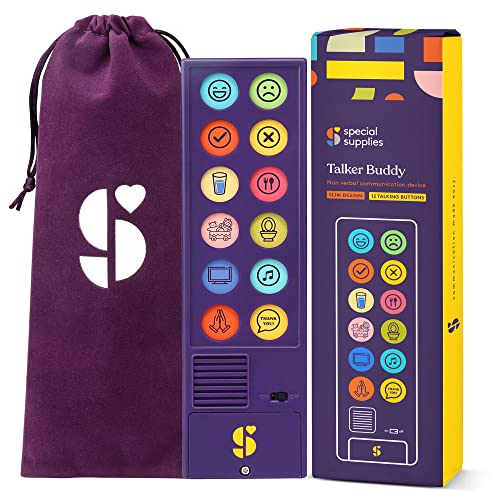
- Soft-touch layout keeps setup simple
- Preloaded phrases support basic communication
- Includes travel bag for on-the-go use
Best For: Non-verbal kids, adults, and caregivers wanting an easy starter AAC device
Custom Message Multi-Pack
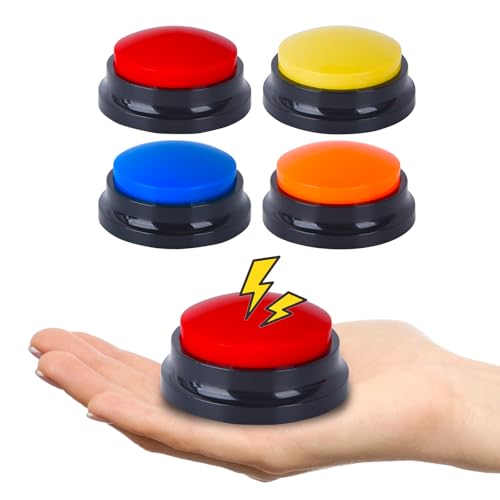
- Four buttons support shared or multi-use setups
- Records custom audio up to 30 seconds
- Compact design works well at school or home
Best For: Users who want portable, customizable voice buttons for different settings
Visual Choice Card Set

- Double-sided picture cards show daily needs and feelings
- Ring binder format keeps cards easy to use
- Portable low-tech option with no batteries
Best For: Users who prefer a visual AAC tool for basic everyday communication
Starter AAC Device

- 32 preset buttons cover common phrases
- 11 recordable buttons add custom messages
- Silicone case improves grip and durability
Best For: Beginners who want a portable AAC device with both preset and recordable options
Talker Buddy

- 37 picture-based talking buttons
- 8 programmable buttons for custom messages
- Lightweight with adjustable volume and storage bag
Best For: Nonverbal users needing a portable AAC device with simple daily phrases
Portable Learning Hub
AAC Device for Autism & Nonverbal Kids

- 42 phrases with a 7-color visual system
- 2-in-1 handheld and desktop design
- 7 recordable buttons plus boy/girl voices
Best For: Kids who need a structured AAC tool for home, school, and therapy
Grab-and-Go Communicator

- 20 common voice commands
- 4-key recording for custom messages
- Compact body with raised buttons and lanyard option
Best For: People who want a small, portable AAC device for home, school, or rehab
Quick-Start AAC Board
Joyreal AAC Device for Autism, Non Verbal Communication Tools

- 40 pre-installed picture phrases
- 5 programmable personal-record buttons
- 4 communication modules with adjustable volume
Best For: Children and users who need a simple handheld AAC starter device
Expanded Phrase Talker
Joyreal AAC Device for Autism, Non Verbal Communication Tools

- 24 pre-installed talking buttons
- 6 programmable voice-record buttons
- Adjustable volume with storage bag
Best For: People who want a lightweight AAC device with more built-in phrases
Voice-Switch AAC Talker
AAC Device for Autism, Joyreal Non Verbal Communication Tools

- 23 pre-installed talking buttons
- Male/female voice switch plus 6 custom buttons
- Adjustable volume and travel storage bag
Best For: Users who want customizable voices in a simple handheld AAC device
Quick Start AAC Pick – Talker Buddy Communication Device
If you want a handheld communication aid for special needs that is simple to start using right away, the Talker Buddy is built around preprogrammed phrases and a soft-touch button layout. It is designed for non-verbal kids and adults, and it can also be useful for speech therapy, school, travel, or everyday home use.
Best For: Families and caregivers who want a lightweight starter AAC device with basic preloaded phrases.
Pros:
- Soft-touch button layout helps reduce the learning curve
- Comes with preinstalled vocabulary for common phrases and sentences
- Lightweight design includes a travel bag for portability
- Works for a wide range of users, including autism, stroke, and other speech challenges
Cons:
- Requires 2 AAA batteries, though they are included
- Preprogrammed setup may be limiting for users needing deep customization
Overall, the Talker Buddy is a practical entry-level option when you need a straightforward communication tool that can move easily between home, school, therapy, and travel. Its simplicity is the main advantage, especially for users who benefit from ready-made phrases rather than a complex setup.
Custom Message Multi-Pack – 4 Pack Portable AAC Buttons
This handheld communication aid for special needs is a flexible option if you want multiple recordable buttons for different settings or users. Each portable AAC button can hold custom recordings, making it useful for schools, home routines, therapy courses, or other everyday communication needs.
Best For: Buyers who need a customizable set of portable record-and-play buttons for multiple environments.
Pros:
- Four-pack format is useful for shared use or different prompts
- Each button records up to 30 seconds of custom audio
- Built-in speakers provide clear voice output
- Compact, lightweight design is easy to carry
Cons:
- Batteries are not included
- Custom recording setup adds a bit more work than preset devices
For users who need personalized messages instead of fixed phrases, these recording buttons offer a practical middle ground. The multi-pack design makes them especially handy when communication needs vary by room, activity, or caregiver.
Visual Choice Card Set – 60 Basic Communication Cards
For a low-tech handheld communication aid for special needs, this card set offers a simple visual way to express daily needs and feelings. The double-sided picture cards are arranged in a ring binder, making them easy to flip through at home, in school, or in other everyday situations.
Best For: People who need a compact visual communication system rather than a voice-based device.
Pros:
- Includes 60 picture words across 30 double-sided cards
- Ring binder format keeps cards organized and easy to access
- Portable size is convenient for on-the-go communication
- Useful for speech impairments, autism, toddlers, and seniors
Cons:
- Does not provide voice output
- Best for basic communication rather than complex conversations
This is a straightforward visual support tool for users who benefit from pictures and simple prompts. It is especially practical when you want a durable, easy-to-carry communication option without batteries or programming.
Starter AAC Device – MibbyTalk Communication Tool
MibbyTalk is a beginner-friendly handheld communication aid for special needs that combines preset phrases with recordable buttons in one compact device. It is aimed at autistic nonverbal children and adults, and it can also support users with stroke or dementia who need a simple way to express needs and daily messages.
Best For: Families starting an AAC journey who want a simple, portable device with preset and customizable buttons.
Pros:
- 32 preset buttons cover common everyday phrases
- 11 recordable buttons allow personalized messages
- Raised tactile buttons are designed for easy pressing
- Includes a silicone case for grip and drop protection
Cons:
- Requires 2 AAA batteries, which are included but still need replacement later
- Limited to a starter-style layout rather than a full high-tech AAC system
MibbyTalk stands out as a practical bridge between simple and customizable communication support. Its color-coded zones, tactile buttons, and portability make it a solid choice for home, school, therapy, and community use.
Talker Buddy – Joyreal AAC Device for Autism
This handheld communication aid for special needs is built for simple daily messaging, with 37 pre-installed picture-based talking buttons, adjustable volume, and a lightweight body that comes with a storage bag. It’s a practical choice when you want a portable AAC device that can help with speech therapy, autism support, or stroke rehab without adding complexity.
Best For: Nonverbal users who need an easy-to-carry AAC device with many ready-made phrases and some personal recording options.
Pros:
- 37 pre-installed talking buttons cover essential needs like yes, no, thirsty, sleepy, and “it’s too loud.”
- 8 programmable buttons let you record custom instructions in your own voice.
- Male/female voice switch adds flexibility for different communication preferences.
- Lightweight design and storage bag make it easier to bring along when traveling.
Cons:
- Requires 3 AAA batteries, which are not included.
- Focused on simple phrases rather than deeper sentence-building.
Overall, this model is a solid fit if you want a straightforward AAC tool that prioritizes clear everyday communication. Its mix of pre-set phrases and voice recording makes it useful in home, therapy, and travel settings.
Portable Learning Hub – AAC Device for Autism & Nonverbal Kids
This handheld communication aid for special needs combines 42 pre-installed phrases with a 7-color visual learning system, making it easier to organize basic requests, emotions, and social ideas. Its true 2-in-1 design also lets you use it handheld or on a desktop stand, which is helpful for speech therapy sessions, car rides, and everyday practice.
Best For: Kids who benefit from a structured, color-coded AAC device that works both on the go and at a desk.
Pros:
- 42 phrases are grouped with a 7-color visual system to reduce cognitive overload.
- True 2-in-1 form factor supports handheld use and stable desktop learning.
- 7 recordable buttons let caregivers add a parent’s voice for more personal communication.
- Includes boy and girl voice options plus adjustable volume for flexible use.
Cons:
- Battery-powered design requires AAA batteries, which are not included.
- More structured setup may feel less simple than very basic communication aids.
As a portable AAC option, this one stands out for its organized color system and dual-use design. It’s a thoughtful pick if you want a communication tool that can support both learning and real-world interaction.
Grab-and-Go Communicator – Subao AAC Device for Autism
If you want a handheld communication aid for special needs that’s easy to carry and simple to grip, this compact AAC device is designed for everyday use at home, school, speech therapy, or stroke rehab. It includes 20 commonly used voice commands, 4-key recording for custom messages, raised buttons, and a lanyard setup that helps keep it accessible.
Best For: Users who need a compact, easy-to-hold communication tool with quick-access commands and simple carry options.
Pros:
- 20 built-in voice commands cover common communication needs.
- 4-key recording allows personalized custom messages.
- Compact, phone-sized body is easy to hold and store in a bag or backpack.
- Raised buttons, textured sides, and adjustable volume add usability.
Cons:
- Offers fewer built-in commands than some larger AAC devices.
- May be less suited to users who want a larger phrase library.
This is a practical pick for families who value portability and quick access over a larger phrase set. The lanyard-friendly design and tactile buttons make it especially convenient for on-the-go communication.
Quick-Start AAC Board – Joyreal AAC Device for Autism, Non Verbal Communication Tools
If you’re comparing a handheld communication aid for special needs, this Joyreal AAC device is built around simple, picture-based phrases and quick self-initiated responses. It combines pre-installed messages, voice personalization, and adjustable volume to support everyday communication at home, in therapy, or on the go.
Best For: Children and other users who need a straightforward handheld AAC device with basic phrase categories and a few custom voice buttons.
Pros:
- Includes 40 pre-installed picture- and color-based phrases for common needs.
- Offers 5 programmable buttons for personalized recorded messages.
- Has 4 communication modules covering basic expressions, feelings, personal needs, and “I want.”
- Includes adjustable volume plus male/female voice options.
Cons:
- Designed around simple starter communication rather than advanced language output.
- Requires learning the icon guide and matching placemats for best use.
This is a practical option if you want a compact AAC tool that supports foundational communication and can grow with a user’s needs. Its focus on essential phrases and custom recordings makes it especially useful for daily routines and basic expression.
Expanded Phrase Talker – Joyreal AAC Device for Autism, Non Verbal Communication Tools
This handheld communication aid for special needs leans into practical daily use with a larger set of pre-installed talking buttons and customizable voice recordings. It’s aimed at helping non-verbal users communicate essential needs clearly, whether at home, in therapy, or while traveling.
Best For: Users who want more built-in phrases and a lightweight AAC device that’s easy to carry.
Pros:
- Includes 24 pre-installed picture-and-color talking buttons for common needs.
- Has 6 programmable buttons for personalized voice recordings.
- Offers adjustable volume for different environments.
- Comes with a storage bag for portability.
Cons:
- Uses 3 AAA batteries, so it needs ongoing battery replacements.
- Focuses on essential instructions rather than broad language complexity.
For shoppers who want a straightforward AAC tool with a bit more built-in content, this model is easy to understand and tailor. The extra preset buttons may make it a better fit for everyday communication needs without adding complexity.
Voice-Switch AAC Talker – AAC Device for Autism, Joyreal Non Verbal Communication Tools
If you need a handheld communication aid for special needs that can be personalized, this Joyreal AAC device adds both male/female voice switching and programmable message buttons. Its pre-installed phrases are presented in picture-and-color format, making it a practical choice for essential communication support.
Best For: Users who want a handheld AAC device with both voice switching and customizable recordings.
Pros:
- Includes 23 pre-installed talking buttons for essential instructions.
- Features a male/female voice switch for flexible voice output.
- Provides 6 programmable buttons for custom recorded messages.
- Has adjustable volume and comes with a storage bag for travel.
Cons:
- Requires 3 AAA batteries.
- Built for basic communication support rather than advanced conversation.
This model stands out for users who want a little more control over how messages sound, while still keeping the device simple to use. The mix of preset buttons, voice switching, and custom recordings makes it a solid day-to-day communication aid.
How We Picked the Best Handheld Communication Aid for Special Needs
We focused on devices and tools that are easy to use, portable, and suitable for common communication support needs. Priority went to options with clear voice output, preset phrases, programmable buttons, simple layouts, and durable designs that work well for speech therapy, autism support, and related special needs use cases.
Quick Comparison: Which Type Works Best?
Not every Handheld Communication Aid for Special Needs serves the same purpose. Simple card sets are best for low-tech, visual communication. AAC talkers with preset phrases are useful for users who need quick, repeatable requests. Programmable devices offer more flexibility for custom messages, while tablet-style tools may be better for users who need a broader vocabulary or structured therapy support.
Key Buying Factors for a Handheld Communication Aid for Special Needs
Ease of Use
Look for large buttons, clear icons, and an interface that matches the user’s current communication ability. Simpler is often better for beginners or younger users.
Portability and Durability
If the device will move between home, school, therapy, or community settings, size and build quality matter. Lightweight designs are easier to carry, while sturdy construction helps the device stand up to daily handling.
Voice Output and Vocabulary
Check whether the device uses preset phrases, recordable buttons, or programmed speech output. The best choice depends on whether the goal is quick requesting, expanding vocabulary, or supporting structured language practice.
Customization
Custom voices, programmable buttons, and editable phrase sets can make a device more useful over time. This is especially important for growing children and users with changing needs.
Use Case Fit
Some tools are better for speech therapy, while others are designed for everyday communication at home or in school. Choose based on the main environment and the level of support needed.
Who Should Buy Which Handheld Communication Aid for Special Needs?
Choose low-tech communication cards if you want a simple, low-maintenance starting point. Choose a preset AAC talker if you need fast communication with minimal setup. Choose a programmable device if flexibility and personalization matter most. For users who need broader therapy support, a tablet-style option may offer the best long-term value.
For most shoppers, the best Handheld Communication Aid for Special Needs is the one that matches current ability first and leaves room to grow later.