Finding the right AAC tool can make daily communication faster, calmer, and more consistent. The best recordable communication buttons for autism give users a simple way to express needs, choices, and feelings with less frustration.
This roundup focuses on easy-to-use options for home, school, speech therapy, and travel, with attention to voice recording, layout, durability, and age-appropriate design.
Best 10 Recordable Communication Buttons for Autism Picks for 2026
Starter AAC Pick
MibbyTalk AAC Device with 32 Presets and 11 Records

- 32 preset phrases with color-coded zones
- 11 recordable buttons for custom messages
- Silicone case and adjustable volume for portability
Best For: Beginners who need a simple AAC starter device
Routine Learning Set
Visual routine chart with 4 recordable speech buttons

- Visual charts for daily routines
- 4 recordable buzzers with custom prompts
- Supports home, school, and therapy use
Best For: Kids who need predictable routine cues and simple speech prompts
Expanded AAC Option
Brightway AAC device with 60 buttons and 10 records

- 60 total buttons for broader phrase coverage
- 10 programmable buttons for custom recordings
- Large buttons with adjustable volume
Best For: Users needing more built-in phrases in a simple AAC device
Portable Starter AAC
MibbyTalk green AAC device with 11 recordables

- 32 preset phrases with color-coded zones
- 11 recordable buttons with DIY stickers
- Portable design with silicone case and volume control
Best For: Families wanting a simple portable AAC starter
Starter Choice

- 24 pre-installed picture prompts
- 6 buttons for custom voice recording
- Adjustable volume and portable bag
Best For: Simple everyday communication support for nonverbal kids and adults
Structured Pick
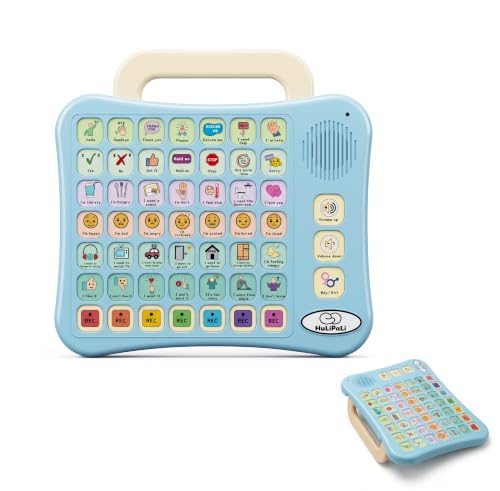
- 42 phrases organized by 7 colors
- 7 recordable buttons for custom voices
- Handheld or desktop 2-in-1 design
Best For: Speech therapy and structured communication practice for nonverbal kids
Flexible Option
6-Record Button AAC with Voice Choice

- 24 preset phrases for daily needs
- 6 programmable buttons for custom recordings
- Switchable male and female voices
Best For: Users who want a customizable AAC device for home, school, and therapy
Quick-Start AAC Board
23 Preset + 6 Recordable Buttons
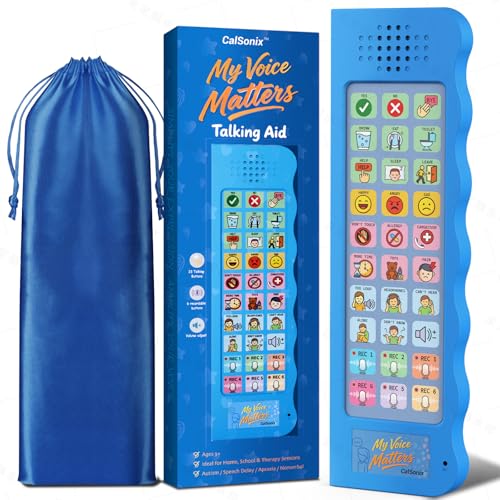
- 23 preset phrases for immediate use
- 6 buttons can be recorded with custom voice messages
- Portable with adjustable 4-level volume
Best For: Nonverbal users needing an easy starter AAC device with personalization
Dual-Voice AAC Option

- 21 everyday phrases ready to use
- 6 recordable buttons for custom messages
- Male/female/off voice switch with 4 volume levels
Best For: Users who want simple AAC communication with easy voice options
Expanded AAC Board
37 Phrases + 8 Recordable Keys

- 37 preloaded phrases for immediate communication
- 8 recordable keys for personalized messages
- Male/female voices with 4-level volume control
Best For: Users needing a larger AAC board with more built-in and custom phrases
Starter AAC Pick – MibbyTalk AAC Device with 32 Presets and 11 Records
If you’re comparing recordable communication buttons for autism, MibbyTalk is a beginner-friendly place to start. It combines 32 preset phrases with 11 recordable buttons, so users can cover common daily needs while also adding personalized messages for home, school, or speech therapy.
Best For: Families starting an AAC journey, transitioning from PECS, or needing a simple backup communication tool.
Pros:
- 32 preset buttons are grouped into color-coded zones for faster learning.
- 11 programmable buttons let caregivers record custom routines and familiar phrases.
- Raised tactile buttons are designed for light pressure and easier use.
- Silicone case and adjustable volume support portable everyday use.
Cons:
- It is a basic starter device, not a high-tech AAC system.
- Requires AAA batteries, so ongoing battery replacement is part of ownership.
MibbyTalk is a practical option when you want something simple, portable, and easy to personalize without a complicated setup. It focuses on foundational communication and can work well as a first device or a backup to a tablet-based AAC system.
Routine Learning Set – Visual routine chart with 4 recordable speech buttons
For buyers focused on recordable communication buttons for autism, this routine chart set adds an extra layer of structure to daily tasks. The visual charts paired with 4 recordable speech buttons give children clear cues for routine activities like brushing teeth, bathing, toileting, and handwashing.
Best For: Parents and teachers building predictable home or classroom routines for young children.
Pros:
- Includes visual routine charts for common daily activities.
- Four recordable buttons can be customized with spoken prompts.
- Combines visual, auditory, and touch-based learning cues.
- Useful for home planning, school routines, and therapy sessions.
Cons:
- Focuses on routine support rather than broad AAC phrase communication.
- Designed more for young children than older users.
This set makes the most sense when the goal is helping a child anticipate transitions and follow daily steps with less stress. It is less of a standalone communication device and more of an organized routine-learning tool with speech feedback.
Expanded AAC Option – Brightway AAC device with 60 buttons and 10 records
Brightway is a strong choice if you want recordable communication buttons for autism with more built-in vocabulary. With 60 total buttons and 10 programmable recording buttons, it gives users a wider set of everyday phrases while still allowing custom messages in a familiar voice.
Best For: Users who want a more phrase-rich AAC device without moving to a complex system.
Pros:
- 60 total buttons provide more preloaded communication options.
- 10 recordable buttons add room for personalized messages.
- Male/female voice switch offers simple voice flexibility.
- Large buttons, adjustable volume, and portability support daily use.
Cons:
- Larger size may be less compact than smaller starter devices.
- Still a manual AAC aid, not a tablet-based system.
Brightway stands out when you want a balance of simplicity and broader communication coverage. It is a practical fit for home, school, or therapy use where a larger set of ready-made phrases can help reduce frustration.
Portable Starter AAC – MibbyTalk green AAC device with 11 recordables
This MibbyTalk version is another practical pick for recordable communication buttons for autism, with the same beginner-focused layout in a different color. It includes 32 preset buttons for everyday phrases plus 11 recordable buttons for customized routines and personal messages.
Best For: Families wanting a lightweight starter AAC device with simple personalization options.
Pros:
- 32 preset buttons are organized into color-coded communication zones.
- 11 recordable buttons can be labeled with printed or blank stickers.
- Tactile raised buttons are made for light, easy pressing.
- Silicone case, included batteries, and adjustable volume improve convenience.
Cons:
- Best suited to basic communication needs rather than advanced AAC use.
- Function is similar to the blue MibbyTalk version, so it may not add new features for some buyers.
The Green MibbyTalk is a straightforward, portable communication aid that keeps setup easy and customization manageable. It is especially useful if you want a simple device that can move between home, school, therapy, and outings.
Starter Choice – Joyreal 24-Button Talking Aid
If you’re comparing recordable communication buttons for autism, this Joyreal AAC device is built for simple, immediate use. It combines 24 pre-installed picture-based prompts with 6 programmable buttons, giving nonverbal users a straightforward way to request needs, share feelings, and add personalized messages.
Best For: Kids and adults who need a lightweight, portable communication aid with both ready-made phrases and custom voice recording.
Pros:
- 24 pre-installed talking buttons cover core daily needs like yes, no, thirsty, sleepy, and too loud.
- 6 programmable buttons let you record tailored instructions in your own voice.
- Adjustable volume and lightweight design make it practical for travel and busy settings.
- Works as an alternative to communication cards and boards for nonverbal users.
Cons:
- Requires 3 AAA batteries.
- Fewer customizable buttons than some larger AAC devices.
This is a solid pick if you want a simple, no-fuss communication tool that still leaves room for personalization. The mix of preset phrases and recordable buttons makes it especially useful for everyday routines and speech support.
Structured Pick – 7-Color Portable AAC Talker
For shoppers focused on recordable communication buttons for autism, this AAC device stands out for its structured 7-color visual system and 2-in-1 design. It pairs 42 pre-installed phrases with 7 recordable buttons, aiming to make communication more organized, portable, and reassuring for nonverbal kids during therapy or everyday routines.
Best For: Families who want a more structured AAC tool for speech therapy, with both handheld portability and desktop use.
Pros:
- 42 pre-installed phrases are grouped into a 7-color visual learning system for clearer organization.
- 7 recordable buttons let you add a parent’s voice for a more personal touch.
- 2-in-1 handheld and desktop setup supports travel and therapy sessions.
- Includes boy and girl voice options and adjustable volume.
Cons:
- Runs on AAA batteries, which are not included.
- The organized layout may still feel like a step up in complexity for absolute beginners.
Overall, this model is a strong fit if you want visual structure along with recording flexibility. The color system and stand make it especially useful for guided learning, while the voice options add a more engaging communication experience.
Flexible Option – 6-Record Button AAC with Voice Choice
This option is a practical choice if you want recordable communication buttons for autism with a little more voice flexibility. It includes 24 pre-installed phrases, 6 programmable buttons, and switchable male/female voice output, making it useful for home, school, and broader speech-support needs.
Best For: Nonverbal kids, adults, and seniors who need a customizable communication aid with preset phrases and selectable voice output.
Pros:
- 24 pre-installed phrases cover basic responses, needs, and sensory messages.
- 6 programmable buttons support personalized recordings for routines and requests.
- Male and female voice options help match user preference and comfort.
- Designed for autism, apraxia, aphasia, stroke recovery, and other speech difficulties.
Cons:
- The notes do not mention a stand or desktop mode.
- Battery-powered design means ongoing battery replacement is required.
As an all-around communication aid, this model focuses on flexibility and familiar voice output. It is a good fit when you want a device that can handle daily communication needs while still allowing personalized recordings.
Quick-Start AAC Board – 23 Preset + 6 Recordable Buttons
If you’re comparing recordable communication buttons for autism, this AAC device is built for fast everyday use. It combines 23 pre-programmed message buttons with 6 custom recordable buttons, so users can start with core phrases and then add personal messages in their own voice. The color-coded icons, clear text, and adjustable volume make it practical for home, school, therapy, and travel.
Best For: Nonverbal kids and adults who need a simple, screen-free AAC board with both preset phrases and custom voice recordings.
Pros:
- 23 pre-programmed buttons cover common needs like yes/no, help, water, and bathroom.
- 6 recordable buttons let caregivers add custom phrases and routines.
- 4-level volume control helps in quiet rooms or louder settings.
- Portable design includes a storage bag for easy carrying.
Cons:
- Runs on 3 AAA batteries, so replacements will be needed over time.
- Best for basic communication rather than advanced language building.
This is a straightforward choice for families and therapists who want a communication tool that is easy to introduce and personalize. Its mix of preset and recordable buttons makes it especially useful when consistency matters but individual phrasing still helps the user feel understood.
Dual-Voice AAC Option – 21 Presets + 6 Custom Keys
This AAC device for autism is designed for users who want simple communication plus a little more flexibility. It comes with 21 preset buttons for common phrases and 6 recordable buttons for personal messages, making it a practical option for speech therapy, home routines, or everyday support. The large speaker, 4-volume levels, and male/female voice switch add useful control without complicated menus.
Best For: Kids and adults who need a lightweight AAC device with preset phrases, custom recordings, and easy voice-mode switching.
Pros:
- 21 preset buttons cover everyday expressions like yes/no and feelings.
- 6 programmable buttons can be recorded in your own voice.
- 3-position switch lets you choose male voice, female voice, or off.
- Includes a storage bag and is powered by AAA batteries for portability.
Cons:
- Preset set is smaller than some larger AAC boards.
- Focused on basic communication rather than more advanced language features.
For families and therapists who want a practical, easy-to-carry communication aid, this model keeps setup simple while still allowing meaningful personalization. The dual voice modes are a nice touch for different preferences and situations, especially when clear, flexible playback matters.
Expanded AAC Board – 37 Phrases + 8 Recordable Keys
If you want more built-in options in recordable communication buttons for autism, this AAC board offers a larger starting set. It includes 37 preloaded phrases and 8 recordable keys, giving users more ways to express needs right away while still customizing messages for real-life routines. The loud speaker, male/female voice choices, and 4-level volume control make it a strong fit for home, school, therapy, and special education settings.
Best For: Nonverbal kids, adults, and seniors who need a larger phrase set plus more custom recording slots.
Pros:
- 37 preloaded buttons provide a broad set of everyday phrases.
- 8 recordable keys allow more personalized communication.
- Male and female voice output options help match user preference.
- 4-level volume control supports different environments.
Cons:
- Larger button set may be more than some beginners need.
- Screen-free format may be less flexible than digital AAC devices.
This model stands out when you want a more complete communication board without jumping to a complex device. The extra preloaded phrases and additional recordable keys make it especially practical for users who need both quick access and familiar, personalized messages throughout the day.
How We Picked These Recordable Communication Buttons for Autism
We looked for devices that balance simplicity with customization. Priority went to clear button layouts, easy recording steps, reliable playback, and features that support real-world use in classrooms, therapy sessions, and at home. We also considered whether each option could grow with a user’s communication needs.
Quick Comparison
When comparing Recordable Communication Buttons for Autism, the biggest differences usually come down to how many messages are built in, how many buttons can be recorded, and whether the device supports preloaded phrases, color coding, or voice switching. Some are best for first-time AAC users, while others offer more flexibility for expanding language practice.
Key Buying Factors for Recordable Communication Buttons for Autism
Button Count and Layout
More buttons can mean more communication choices, but only if the layout stays easy to understand. For younger users or beginners, a simpler board may be less overwhelming. For more advanced users, more programmed or recordable keys can support a wider range of phrases.
Recording Quality and Ease of Use
Look for clear playback and a setup process that caregivers, teachers, or therapists can manage quickly. If multiple people will program the device, straightforward recording controls matter as much as the number of available messages.
Durability and Everyday Portability
Since these devices are often used in active settings, sturdy construction is important. A foldable stand, protective case, or compact size can make the device easier to carry and use consistently across environments.
Support Features
Some Recordable Communication Buttons for Autism include voice gender options, preset phrases, stickers, or visual cues. These extras can help with engagement and make the device feel more personal, but they should not get in the way of simple operation.
Who Should Buy Which Recordable Communication Buttons for Autism?
If you want a beginner-friendly option for a young child, choose a smaller, simpler layout with fewer steps. If you need something for school or therapy, look for a device with more preset phrases and enough recordable buttons to practice daily routines. For users who need broader communication support, a larger board with more programmable keys may offer the best long-term value. Adults, stroke survivors, and older AAC users may benefit most from models with clearer speech output, stronger build quality, and a more flexible message library.
In short, the best choice depends on how much communication support is needed now and how much the device may need to grow later. Focus on ease of use first, then compare customization, portability, and durability to find the best fit.