Choosing a portable AAC communication device can make everyday communication more accessible at home, in school, in care settings, and on the go. The best options balance ease of use, clear audio, and enough customization for different communication needs.
Below, we focus on practical picks that support children, adults, and caregivers looking for reliable speech therapy tools, autism communication support, and simple assistive devices that are easy to carry and use daily.
Best 10 Portable AAC Communication Device Picks for 2026
Talker Buddy Starter Pick
Special Supplies Talker Buddy AAC Device
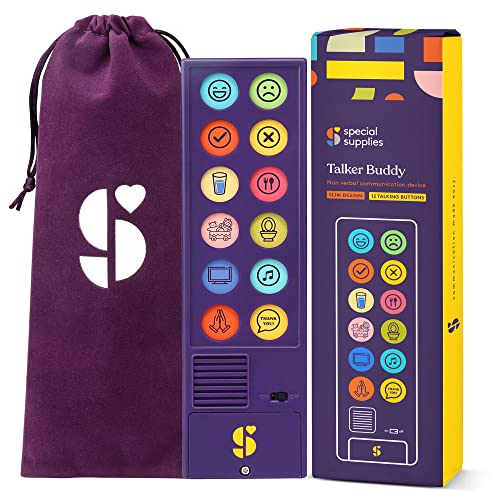
- Soft-touch layout is easy to learn
- Preprogrammed phrases cover basics
- Lightweight with travel bag included
Best For: Non-verbal kids and adults needing a simple portable starter device
Custom Voice Pick
Joyreal AAC Device with 37 Buttons

- 37 preset buttons cover daily phrases
- 8 recordable buttons for custom speech
- Adjustable volume and travel bag included
Best For: Users who want more preset phrases plus some voice customization
Beginner Friendly Pick
MibbyTalk AAC Device with Silicone Case

- 32 color-coded preset buttons
- 11 recordable buttons with stickers
- Silicone case improves grip and durability
Best For: Families starting AAC or needing a backup communication aid
Compact Value Pick
Joyreal AAC Device with 24 Buttons

- 24 preset buttons cover basics
- 6 recordable buttons add customization
- Lightweight with adjustable volume
Best For: Kids and adults wanting a compact customizable AAC device
Instant Phrase Plus
AAC Device for Autism and Non Verbal Kids & Adults

- 24 pre-installed phrases for common daily communication
- 6 programmable buttons for custom voice recordings
- Switchable male and female voice options
Best For: nonverbal kids and adults needing quick setup and personalization
Lightweight Everyday Talker
AAC Device for Autism & Speech Therapy

- 14 preset talking buttons for core phrases
- 2 programmable buttons for custom messages
- Small, lightweight, and durable for travel
Best For: families wanting a compact everyday communication aid
Clinical Bedside Communicator
Talker Buddy AAC Communication Device

- 27 preset phrases for medical and daily needs
- 3 custom record buttons plus male/female voices
- Includes a carrying bag for portability
Best For: patients and caregivers needing bedside communication in clinical settings
Everyday Starter with Extra Phrases
60-Button Communication Helper

- 60 total buttons with preloaded everyday phrases
- 10 programmable buttons for custom recordings
- Lightweight design with adjustable volume
Best For: People who want a simple AAC device with more built-in phrases
Most Portable Carry-Friendly Pick
Portable Lanyard Communication Aid

- Phone-sized body with lanyard carry option
- 20 common voice commands and 4 recording keys
- Five volume levels for different settings
Best For: People who want a compact AAC device that is easy to carry
Balanced Pick for Daily Use

- 24 pre-loaded buttons for core daily phrases
- 5 programmable voice buttons for personal messages
- Portable, lightweight build with 3 volume levels
Best For: People who want a compact AAC device with preset and custom options
Talker Buddy Starter Pick – Special Supplies Talker Buddy AAC Device
If you want a portable AAC communication device that is simple to pick up and use right away, this Talker Buddy model is built around ease and portability. The soft-touch button layout and preprogrammed phrases make it a practical option for home, school, therapy, or travel.
Best For: Non-verbal kids and adults who need a lightweight, easy-to-use communication aid for everyday settings.
Pros:
- Soft-touch button layout helps keep the learning curve low.
- Includes preprogrammed vocabulary with common phrases, words, and sentences.
- Lightweight design comes with a travel bag for easier transport.
- Works for a wide range of needs, including autism, stroke, and speech difficulty.
Cons:
- Relies on pre-installed commands for basic communication.
- Uses AAA batteries, so replacement power is something to keep in mind.
Overall, this is a straightforward starter option for families and caregivers who want a portable button-based communicator without a complicated setup.
Custom Voice Pick – Joyreal AAC Device with 37 Buttons
This portable AAC communication device is designed for users who want more built-in phrases plus a few ways to personalize the experience. With 37 talking buttons, voice switching, and programmable slots, it offers a practical balance of ready-made and customizable communication.
Best For: Users who want a lightweight AAC option with more preset phrases and some voice customization.
Pros:
- 37 pre-installed talking buttons cover many everyday needs.
- 8 programmable buttons let you record tailored messages.
- Male/female voice switch adds flexibility.
- Adjustable volume and storage bag support travel and busy environments.
Cons:
- Needs 3 AAA batteries.
- Still depends on button-based communication rather than a touchscreen or app.
For families looking for a practical speech support tool with more room to personalize, this Joyreal model stands out as a flexible mid-range choice.
Beginner Friendly Pick – MibbyTalk AAC Device with Silicone Case
If you’re shopping for a portable AAC communication device that feels approachable for beginners, MibbyTalk is built for simple daily use. It combines preset phrases, recordable buttons, and tactile controls in a compact design that works well at home, school, or on the go.
Best For: Families starting an AAC journey or looking for a backup communication tool with easy customization.
Pros:
- 32 preset buttons are grouped into color-coded zones for easier learning.
- 11 recordable buttons and DIY stickers help personalize messages.
- Raised tactile buttons are designed for light pressure and easier pressing.
- Silicone case adds grip and extra protection for travel and daily handling.
Cons:
- Designed as an educational aid and not a replacement for professional AAC systems.
- Requires AAA batteries, which adds ongoing maintenance.
This is a thoughtful starter device for users who need a simpler, more durable communication aid with just enough customization to fit daily routines.
Compact Value Pick – Joyreal AAC Device with 24 Buttons
This portable AAC communication device keeps things compact while still offering a solid set of everyday phrases. With 24 pre-installed talking buttons, 6 programmable slots, and adjustable volume, it suits users who want a smaller button-based communicator for regular use.
Best For: Kids and adults who want a compact AAC device with customizable messages and easy portability.
Pros:
- 24 pre-installed talking buttons cover key daily needs.
- 6 programmable buttons allow voice recording for custom messages.
- Adjustable volume helps in quieter or busier settings.
- Lightweight design includes a storage bag for travel.
Cons:
- Offers fewer preset buttons than some larger alternatives.
- Requires 3 AAA batteries.
For users who don’t need the highest button count, this Joyreal model is a practical, portable choice that focuses on the basics plus a little personalization.
Instant Phrase Plus – AAC Device for Autism and Non Verbal Kids & Adults
This portable AAC communication device is built for immediate use, with 24 pre-installed phrases and clear picture buttons that help users start communicating without a complicated setup. It also adds 6 programmable buttons, so caregivers can personalize messages with a familiar voice for daily routines, school, or home use.
Best For: Nonverbal kids and adults who need a ready-to-use communication aid with extra custom recording options.
Pros:
- 24 pre-installed phrases cover common needs, feelings, and responses.
- 6 programmable buttons let you record custom messages in your own or a caregiver’s voice.
- Switchable male and female voice options add flexibility for different users.
- Designed to support communication at home, school, and in therapy settings.
Cons:
- Requires recording setup for the programmable buttons if you want custom phrases.
- May be more feature-rich than needed for users who only want a very simple phrase board.
Overall, this AAC device is a strong pick if you want a straightforward communication tool that still leaves room for personalization. The built-in phrase set makes it useful right away, while the recording features help it grow with the user’s needs.
Lightweight Everyday Talker – AAC Device for Autism & Speech Therapy
This portable AAC communication device is a simple choice for users who need a compact talking aid they can take anywhere. It includes 14 pre-installed picture-and-color buttons plus 2 programmable buttons, making it useful for everyday needs, speech support, and on-the-go communication.
Best For: Kids and adults who want a small, lightweight AAC device for everyday carry and basic customization.
Pros:
- 14 pre-installed talking buttons cover basic communication needs.
- 2 programmable buttons allow personalized recordings in your own voice.
- Small, lightweight, and durable for convenient use on the go.
- Suitable for autism, speech difficulties, stroke recovery, and other special needs.
Cons:
- Fewer preset and programmable buttons than some larger alternatives.
- Designed for basic communication rather than a more expansive phrase library.
As a portable AAC communication device, this model focuses on simplicity and mobility. It is a practical option if you want a compact communication aid that’s easy to carry without giving up the ability to add a couple of custom messages.
Clinical Bedside Communicator – Talker Buddy AAC Communication Device
This portable AAC communication device is designed with hospital and clinical use in mind, making it a practical bedside aid for patients who cannot speak due to surgery, illness, or injury. It includes 27 preset phrases, 3 custom record buttons, and male/female voice options, giving caregivers and patients several ways to communicate clearly in medical settings.
Best For: Hospital patients, rehab users, and families needing a bedside communication aid with recording features.
Pros:
- Hospital-focused design suits bedside communication and clinical environments.
- 27 preset phrases help users express pain, needs, emotions, and choices.
- 3 custom record buttons support personalized voice messages.
- Includes a carrying bag for portable use across hospital, rehab, home, and school settings.
Cons:
- Its clinical focus may be more than casual users need for everyday home use.
- Best fit is tied to medical and recovery scenarios rather than general communication only.
This is a strong choice when the priority is reliable communication in medical or recovery settings. The larger preset set and portable carry bag make it especially useful for bedside care, therapy visits, and transitions between locations.
Everyday Starter with Extra Phrases – 60-Button Communication Helper
If you want a portable AAC communication device for everyday use, Brightway focuses on straightforward expression without a complicated setup. It comes with 60 total buttons, preloaded core phrases, and a simple layout that can help nonverbal kids, adults, and people in speech therapy communicate needs and feelings at home, school, or on the go.
Best For: Users who want more built-in phrases and a simple, easy-to-learn device for daily communication.
Pros:
- 60 total buttons provide more preset phrases than many starter devices.
- 10 programmable buttons let you record personalized messages in a familiar voice.
- Large, responsive buttons are designed for easy pressing and quick learning.
- Adjustable volume and lightweight build support use across home, school, therapy, and travel.
Cons:
- It is still a button-based device, so users need to learn its layout.
- Package size and weight suggest it is portable, but not pocket-sized.
Brightway is a practical pick if you want a simple AAC option with a wider range of preloaded phrases and the flexibility to add custom recordings. Its mix of clear voice output, volume control, and easy-press buttons makes it well suited to routine communication needs.
Most Portable Carry-Friendly Pick – Portable Lanyard Communication Aid
For shoppers prioritizing portability in a portable AAC communication device, Subao keeps things compact and easy to carry. It offers 20 commonly used voice commands, four recording keys, and a phone-sized body with a lanyard option, making it convenient for communication at home, school, therapy, or rehab sessions.
Best For: Users who need a small, easy-to-carry communication tool with basic customization.
Pros:
- Compact, phone-sized design fits easily in small bags or backpacks.
- Lanyard hole and spring lanyard help keep the device accessible.
- 20 voice commands cover common communication needs.
- Four-key recording and five volume levels add useful personalization.
Cons:
- It includes fewer preloaded commands than larger AAC devices.
- The smaller layout may feel limited for users who want more phrase options.
Subao is a sensible choice if portability is the top priority and you want a device that is easy to grab, carry, and attach to gear. Its compact build and simple recording options make it a practical daily communication aid for kids and adults.
Balanced Pick for Daily Use – 24-Button Voice Board
This portable AAC communication device is built for users who want a balance of everyday phrases and customization. It includes 24 pre-loaded talking buttons, five programmable voice buttons, and adjustable volume, giving nonverbal kids, adults, and speech therapy users a straightforward way to communicate at home, school, or in public.
Best For: Users who want a compact AAC option with a good mix of preset and custom messages.
Pros:
- 24 pre-loaded buttons cover core needs like yes/no and basic requests.
- Five programmable buttons let caregivers record familiar voices and personal phrases.
- Three adjustable volume levels help adapt to quiet or noisy settings.
- Lighter-than-a-smartphone design supports travel, therapy, and school use.
Cons:
- Battery-powered operation requires 3 AAA batteries.
- It offers fewer programmable buttons than some larger AAC devices.
BrightTalk stands out as a practical middle-ground option for families who want more customization than a basic board without a bulky setup. Its mix of core phrases, custom voice buttons, and portable design makes it a useful everyday communication aid.
How We Picked These Portable AAC Communication Device Options
We looked for devices that are straightforward to set up, easy to activate, and practical for everyday communication. Priority went to models with clear recorded or preset voice output, sensible button layouts, portability, and features that suit both beginners and users who need more personalization.
We also favored products that can work across multiple settings, including home, classroom, therapy, travel, and bedside care. For a Portable AAC Communication Device, consistency matters: it should be simple enough for spontaneous use while still offering enough flexibility for different communication goals.
Quick Comparison
The main differences across these picks usually come down to the number of messages, whether voices are preset or programmable, how easy the interface is to learn, and whether the device is better for kids, adults, or mixed-age use. More buttons and more customization can be helpful, but simplicity often matters more for first-time users or people who need fast communication support.
Key Buying Factors for a Portable AAC Communication Device
Message Access and Layout
Look for a layout that matches the user’s communication level. Some people need only a few high-frequency phrases, while others benefit from a larger set of options or programmable buttons. Fewer, well-labeled controls can be easier for beginners.
Voice Quality and Recording Options
Clear playback is essential. If the device allows recording custom phrases, that can make it far more useful for personal needs, routines, and emergency communication. Pre-installed voices may be convenient, but programmable messages often offer better long-term value.
Portability and Durability
A Portable AAC Communication Device should be lightweight enough to carry and sturdy enough for daily handling. Think about battery needs, case quality, and whether the device will be used in school bags, therapy rooms, hospital settings, or during travel.
Use Environment
Different settings call for different priorities. In classrooms, simplicity and speed may matter most. For home or therapy, customization may be more important. In medical or caregiver environments, clear urgent phrases and easy access can be especially valuable.
Who Should Buy Which Portable AAC Communication Device?
Beginners and younger users usually do best with simpler devices that have a limited number of clear, easy-to-press buttons. Users who want more independence may prefer programmable options with more personalization. Caregivers and therapists should look for models that are easy to teach, easy to repeat, and adaptable across routines.
If you want a Portable AAC Communication Device for daily support rather than complex speech generation, focus on ease of use first. The right choice is the one the user can reach, understand, and use confidently every day.