Choosing the right AAC setup at home can make everyday communication easier, calmer, and more independent. The best options are simple to use, easy to program, and built for the way families actually communicate.
Below, we focus on practical devices for speech therapy, autism support, stroke recovery, and nonverbal communication at home.
Best 10 Augmentative Communication Device for Home Picks for 2026
Home Starter AAC
Talker Buddy for Nonverbal Kids & Adults
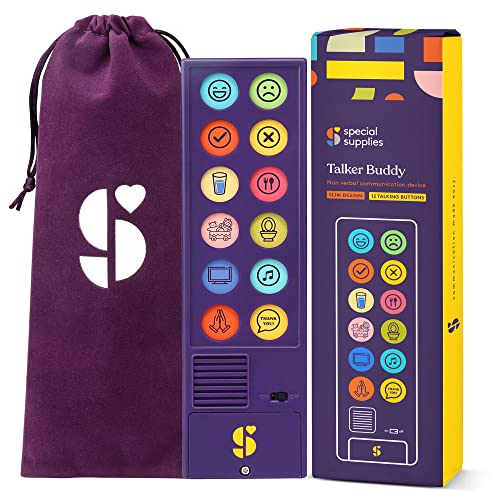
- Soft-touch layout for easy use
- Preinstalled common phrases and words
- Lightweight with travel bag included
Best For: Families needing a simple starter AAC device for home use
Compact Four-Button AAC
AbleNet iTalk4 Portable Speech Device

- Four customizable message buttons
- Built-in speaker for clear output
- Compact design for easy portability
Best For: People who need a small AAC device with a few personalized messages
Bilingual Home AAC

- 23 preset buttons in picture/color format
- 6 programmable buttons for custom messages
- English/Spanish voice switching
Best For: Bilingual households wanting more preset phrases and some customization
Multi-Pack Voice Buttons
4-Pack Portable AAC Communication Set
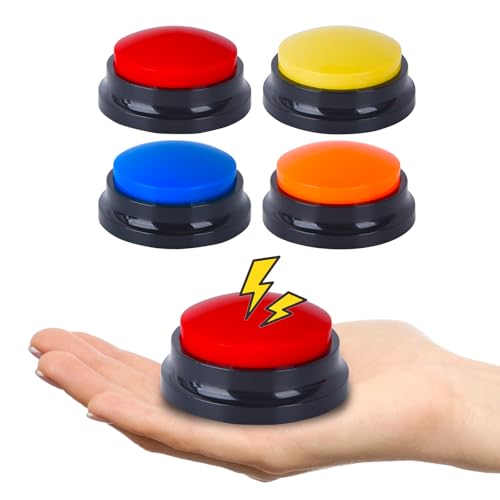
- Four customizable voice-recording buttons
- Up to 30 seconds per recording
- Portable for home, school, or therapy
Best For: Homes or classrooms needing multiple simple recordable communication buttons
Single-Message Communicator
AbleNet LITTLEmack for Simple Daily Requests

- Records one message up to 2 minutes long
- Includes picture-symbol snap cover and colored tops
- Portable AAC device with mounting plate support
Best For: simple home communication, requests, and early AAC practice
Custom Tablet AAC
TalkingTiles for Flexible Home Communication

- 10.1-inch tablet with customizable pages and voice recordings
- Includes 3,436+ pre-configured communication images
- About 8 hours of battery life for daily use
Best For: custom home routines, speech therapy, and nonverbal users needing more page options
Multi-Message Speech Device
AbleNet QuickTalker 23 for Everyday Use

- 103 messages across 5 recording levels
- FeatherTouch needs 70% less force to activate
- Durable design with carrying handle and clear sound
Best For: multi-message home communication and structured daily routines
Home AAC Starter Pick

- 37 preset picture buttons for daily needs
- 8 programmable buttons for custom messages
- Lightweight with adjustable volume and carry bag
Best For: Home use for non-verbal children and adults who need simple, flexible communication
Single-Button Communicator

- Large button makes one-press communication easy
- Records personalized messages up to two minutes
- Rugged build with mounting plate for flexible placement
Best For: Simple home communication when one reliable recorded message is enough
Bedside-to-Home Choice
Talker Buddy AAC Communication Device

- 27 preset phrases plus 3 custom record buttons
- Lightweight with soft-touch buttons and adjustable volume
- Portable carry bag for home, rehab, or school
Best For: Portable AAC support for home care, recovery, and clinical transitions
Home Starter AAC – Talker Buddy for Nonverbal Kids & Adults
If you want an augmentative communication device for home that is simple enough for daily family use, the Talker Buddy is built around an easy soft-touch layout and common preprogrammed phrases. It’s a practical pick for parents and caregivers who need a straightforward way to support communication at home, during travel, or on the way to therapy.
Best For: Families, caregivers, and speech therapy users who want a lightweight starter AAC device for home communication.
Pros:
- Soft-touch button layout is designed to be easy to understand.
- Includes pre-installed vocabulary with common words, phrases, and sentences.
- Lightweight design comes with a travel bag for school, car, or therapy visits.
- Suitable for non-verbal kids and adults, including users with autism or stroke.
Cons:
- Preprogrammed command set is geared toward basic communication.
- Requires 2 AAA batteries, which are included.
Overall, this is a simple, portable AAC option that prioritizes ease of use over advanced customization. For home settings where quick communication matters, it offers a clear and accessible starting point.
Compact Four-Button AAC – AbleNet iTalk4 Portable Speech Device
The AbleNet iTalk4 is a portable augmentative communication device for home and other everyday settings when you only need a few highly usable messages. Its four-message-button setup and built-in speaker make it a focused choice for users who want to record and replay clear, personalized statements.
Best For: Users who need a compact, easy-to-carry AAC device with just a few customizable message buttons.
Pros:
- Four message buttons keep the device simple and focused.
- Built-in speaker provides clear and audible voice output.
- Messages can be recorded and personalized on each button.
- Compact, lightweight design supports use at home, school, or therapy.
Cons:
- Limited to four buttons, so it suits basic communication needs.
- Requires 4 AA batteries.
This is a practical AAC option for users who benefit from a small number of repeatable messages rather than a larger vocabulary board. It fits well as a home communication aid when portability and message clarity matter most.
Bilingual Home AAC – Joyreal 23-Button Speech Aid
For a more feature-rich augmentative communication device for home, the Joyreal AAC device adds a larger set of preset messages plus programmable buttons. It’s designed for users who want simple daily phrases, adjustable volume, and the flexibility of English/Spanish voice switching in one portable unit.
Best For: Families and therapy users who want a bilingual AAC device with more preset phrases and a few custom messages.
Pros:
- Includes 23 pre-installed talking buttons with picture and color format.
- Six programmable buttons allow custom voice recordings.
- English/Spanish voice switch supports bilingual households and settings.
- Adjustable volume and storage bag make it practical for travel and daily use.
Cons:
- Requires 3 AAA batteries.
- More buttons may be more than needed for users who want very basic communication.
This model stands out if you want more built-in vocabulary without giving up portability. It offers a good balance of preset communication, customization, and bilingual support for home use.
Multi-Pack Voice Buttons – 4-Pack Portable AAC Communication Set
If you need an augmentative communication device for home use across different rooms or learning situations, this 4-pack gives you multiple portable voice recording buttons. Each button can be customized, making it useful for communication practice, simple prompts, and repeated messages in a home or school environment.
Best For: Households, classrooms, or therapy settings that need several customizable voice-recording buttons.
Pros:
- Includes four portable AAC buttons in one pack.
- Each button can record custom sound or voice messages up to 30 seconds.
- Built-in speakers provide clear voice output.
- Compact design works for home, school, therapy, and community use.
Cons:
- Batteries are not included and each button requires 2 AAA batteries.
- Voice-recording buttons are better for simple messages than full communication boards.
This set makes sense when you want multiple simple AAC tools instead of one shared device. For home communication support, the flexibility of four separate buttons can be especially useful for routines, practice, and repeated cues.
Single-Message Communicator – AbleNet LITTLEmack for Simple Daily Requests
If you want an augmentative communication device for home use that keeps communication simple, the AbleNet LITTLEmack is built around one clear recorded message. Press the colored top to play a message up to 2 minutes long, which makes it a practical fit for basic requests, shared routines, and guided communication practice.
Best For: Users who need a straightforward single-message AAC device for home routines, requests, and early therapy practice.
Pros:
- Records and plays one message up to 2 minutes long.
- Includes colored tops and a clear snap cover for picture symbols.
- Compact, portable build with a soft-touch coating.
- Works with switch-controlled toys or appliances and includes a mounting plate.
Cons:
- Only supports a single stored message at a time.
- Battery is required but not included.
For home environments where the goal is to teach one reliable message at a time, the LITTLEmack keeps the setup uncomplicated and durable. Its focus on one-touch communication makes it especially useful for requests, participation, and simple AAC practice.
Custom Tablet AAC – TalkingTiles for Flexible Home Communication
As an augmentative communication device for home use, TalkingTiles is designed for users who need a customizable way to express daily needs and routines. Its 10.1-inch touchscreen, unlimited pages, and pre-configured communication images make it a flexible option for building a more organized AAC setup.
Best For: Families and caregivers who want a customizable tablet-based AAC system for home routines, speech therapy, and nonverbal communication.
Pros:
- Fully customizable with images and voice recordings.
- Offers unlimited pages and up to 56 tiles per page.
- Includes over 3,436 pre-configured communication images.
- Large 10.1-inch touchscreen and about 8 hours of battery life.
Cons:
- More complex than a simple single-message communicator.
- At 1 pound, it may be less lightweight than smaller AAC devices.
TalkingTiles stands out when you need more structure than a basic talker and want the freedom to tailor pages around home routines. The combination of customization, built-in images, and all-day battery life makes it a versatile pick for consistent everyday use.
Multi-Message Speech Device – AbleNet QuickTalker 23 for Everyday Use
The AbleNet QuickTalker FT 23 is a practical augmentative communication device for home use when you need more than one message available without moving to a full tablet system. It offers 103 messages across 5 recording levels, so it can support stories, lessons, and family communication with a durable, easy-to-use design.
Best For: Users who need a durable multi-message AAC device for home communication, reading time, and structured practice.
Pros:
- Stores 103 messages across 5 recording levels.
- FeatherTouch membrane requires 70% less force to activate.
- Crystal clear sound and durable construction.
- Built-in carrying handle makes it easy to move around.
Cons:
- No mounting connection included.
- Requires 4 AA batteries.
- Battery life is listed at about 18 minutes in the supplied details.
For households that want a dependable step up from a single-message device, the QuickTalker 23 offers more communication choices while staying straightforward to use. Its lower-force activation and multiple levels make it well suited to repeat practice and everyday family interaction.
Home AAC Starter Pick – Joyreal AAC Device for Autism
If you want an augmentative communication device for home use that balances simplicity with flexibility, this Joyreal AAC device is a practical option. It offers 37 pre-installed picture-based talking buttons for everyday needs, plus 8 programmable buttons so you can record personalized messages for family routines, therapy, or specific household requests.
Best For: Non-verbal children and adults who need a lightweight home communication aid with preset phrases and a few custom recordings.
Pros:
- 37 pre-installed talking buttons cover common daily needs like yes, no, thirsty, and sleepy.
- 8 programmable buttons let you record your own tailored instructions.
- Male/female voice switch adds some flexibility for different preferences.
- Lightweight design with a storage bag makes it easy to move around the house or travel with.
Cons:
- Requires 3 AAA batteries, so it is not rechargeable.
- Best suited to simple communication rather than complex sentence building.
This is a strong home-friendly choice if you want a straightforward AAC tool that can reduce frustration and support daily communication. It leans more toward practical, essential phrases than advanced customization, which may be ideal for many households.
Single-Button Communicator – AbleNet BIGmack AAC Device
The AbleNet BIGmack is a straightforward augmentative communication device for home settings where a single, repeatable message is enough. Its large colorful button, simple layout, and up to two minutes of recorded speech make it easy to use for basic requests, participation, and daily routines.
Best For: Users who need a durable, single-message AAC tool for simple home communication and routine interactions.
Pros:
- Large single button keeps operation simple and accessible.
- Can record and store a personalized message for up to two minutes.
- Rugged construction is designed for daily use.
- Built-in mounting plate adds placement flexibility on tables, wheelchairs, or other surfaces.
Cons:
- Only supports one message at a time, so it is not ideal for varied conversations.
- Less versatile than multi-button AAC devices for broader home communication needs.
If you need a dependable, low-complexity communication aid at home, the BIGmack is easy to understand and hard to overcomplicate. It is best when the goal is one clear recorded message rather than a full communication system.
Bedside-to-Home Choice – Talker Buddy AAC Communication Device
The Talker Buddy is an augmentative communication device for home that also fits clinical and bedside use, making it a versatile pick for families managing recovery or ongoing speech needs. It includes 27 preset phrases, 3 custom record buttons, adjustable volume, and male/female voice options to support everyday communication in different settings.
Best For: Non-verbal patients, recovering adults, and families who want a portable AAC device that works at home and beyond.
Pros:
- 27 preset phrases help cover common communication needs right away.
- 3 custom record buttons allow personalized messages with a caregiver’s or the user’s voice.
- Soft-touch buttons and a lightweight build are suited to limited mobility.
- Included carrying bag makes it easy to move between home, school, rehab, and hospital settings.
Cons:
- Designed with hospital and clinical use in mind, so some features may be more than a basic home user needs.
- Not as simple as a single-button communicator if you only need one repeated phrase.
This model stands out if you want one AAC device that can follow a user from home care to therapy or medical appointments. Its mix of preset phrases, custom recording, and portability makes it a practical all-around option.
How We Picked the Best Augmentative Communication Device for Home
For an Augmentative Communication Device for Home, we prioritized ease of setup, clarity of playback, message capacity, portability, durability, and suitability for different communication needs. We also looked for devices that can be used in real household routines, not just in therapy sessions.
Quick Comparison
Single-message devices are best for simple, repeated phrases and first-time AAC users. Multi-message devices offer more flexibility for back-and-forth communication, while tablet-style or higher-capacity options suit users who need a broader vocabulary at home. Portable models are helpful for moving between rooms, bedside use, or travel.
Key Buying Factors for an Augmentative Communication Device for Home
Message Capacity
Think about how many phrases the user needs daily. A single-button device works well for greetings, requests, or yes/no-style communication, while multi-message models are better for fuller conversation.
Ease of Programming
Look for devices that are simple for parents, caregivers, or therapists to record and update. At home, a device is only useful if messages can be changed quickly as needs evolve.
Volume and Sound Quality
Clear audio matters in kitchens, living rooms, and shared spaces. Adjustable volume and strong playback help the message be understood without repeating.
Size, Portability, and Mounting
Consider whether the device will stay on a table, move room to room, or be used in a wheelchair or bedside setting. Lighter devices are easier to reposition, while sturdier ones may be better for everyday wear and tear.
User Independence
The best home device should match the user’s motor skills and attention span. Large buttons, responsive activation, and simple layouts can reduce frustration and support more confident use.
Who Should Buy Which Augmentative Communication Device for Home?
If you need a starter option for a child or adult learning AAC, a single-message or small multi-message device is often the easiest path. If communication needs are broader, choose a model with more recorded messages and clear category support. Families managing autism, speech delay, or stroke recovery at home may benefit from a device that balances simplicity with room to grow. For users who communicate across multiple settings, portability should be a top priority.
In short, the best Augmentative Communication Device for Home is the one that fits the user’s current abilities while leaving room for progress. Match the device to daily routines, not just features on paper.