Finding the right mobility support for a growing child means balancing comfort, support, maneuverability, and long-term fit. The best options should make daily outings easier without feeling overly bulky or hard to manage.
This roundup of the best special needs stroller for older child choices in 2026 focuses on practical designs for larger kids, teens, and families who need dependable transport support.
Best 10 Special Needs Stroller for Older Child Picks for 2026
Compact XL Pick
Coche XL Special Needs Stroller for Older Child

- Supports up to 110 lbs and 48 inches tall
- Lightweight aluminum frame with umbrella folding
- 5-point harness and adjustable footplate
Best For: Families wanting a lighter, roomy stroller for older kids
Terrain Control Choice
Baby Jogger Freedom Mobility Stroller

- Supports up to 200 lb for children and adults
- 16-inch wheels handle bumpy terrain
- Handbrake and rear parking brakes add control
Best For: Larger riders who need terrain handling and braking control
Ultra-Light Transport Pick
Portable Special Needs Transport Wheelchair

- Weighs just 13.66 lbs and folds in 3 seconds
- Swivel front wheels and handbrake improve control
- Includes safety belt and adjustable strap
Best For: Shoppers prioritizing an ultra-light transport option
Accessory Bundle Pick
Maclaren Major Elite Special Needs Stroller Bundle

- Supports up to 110 lbs and 48 inches tall
- Includes supports, basket, hood, and raincover
- Lightweight umbrella-fold aluminum frame
Best For: Families wanting a bundled stroller with support accessories
Multi-Use Mobility Pick
PediCruiser 2-in-1 Trailer Stroller
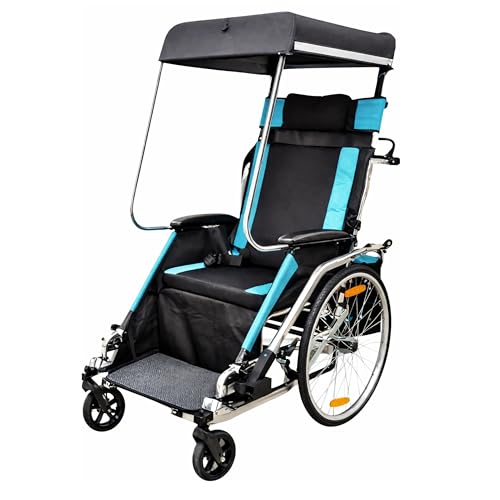
- 2-in-1 bike trailer and stroller-style setup
- Comfort seat with backrest, head rest, and armrests
- Weather shield, sunshade, and foldable frame
Best For: Older riders needing a cushioned outdoor transport option
Adaptive Stroller Pick
Maclaren Major Elite for Older Children

- Up to 110 lb / 48 in capacity for bigger kids
- Lightweight 16.5 lb aluminum frame
- Umbrella fold with 5-point harness and brakes
Best For: Older children needing a lightweight, high-capacity adaptive stroller
Gait Trainer Option
Klip Posterior Rollator for Kids
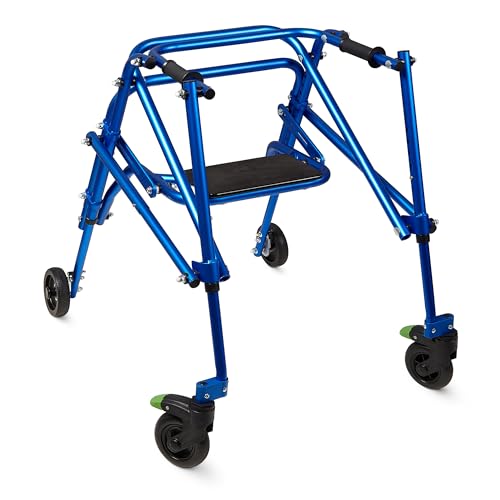
- Adjustable posterior/anterior gait trainer design
- Flip-up seat for rests during walking
- Swivel front wheels and directional rear wheels
Best For: Kids and teens needing walking support with a rest seat
Heavy-Duty Adaptive Pick

- 250 lb capacity with alloy steel frame
- 17-inch anatomic-shaped seat plus headrest
- Folds compactly and sets up in seconds
Best For: Teens and young adults needing a sturdy foldable adaptive stroller
Rehab Gait Trainer Choice
Klip Posterior Rollator Walker

- Four-wheel foldable walker with swivel front wheels
- Posterior setup supports upright walking posture
- Optional support accessories available
Best For: Older children and young adults who need gait training support
Most Adjustable Big-Kid Pick
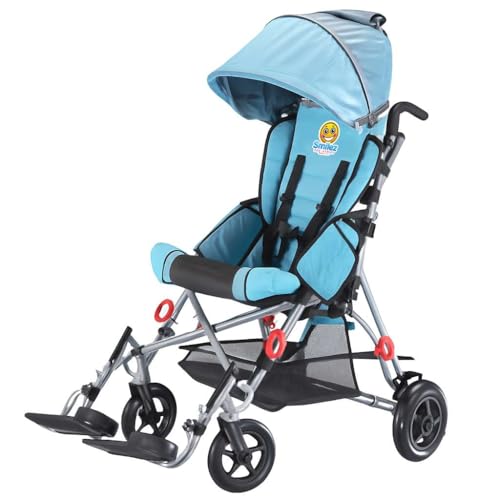
- Seat widths from 12" to 18"
- 5-point harness with reclining seat
- 250 lb capacity with locks, canopy, and basket
Best For: Big kids needing a customizable supportive stroller
Compact XL Pick – Coche XL Special Needs Stroller for Older Child
If you need a special needs stroller for older child use that stays easy to lift and fold, the Coche XL is built around a lightweight aluminum frame and a compact umbrella-style design. It gives older kids more room than a standard stroller, while still keeping the setup simple for day-to-day outings.
Best For: Families who want a lighter adaptive stroller with a roomy seat and simple folding for everyday trips.
Pros:
- Supports up to 110 lbs and children up to 48 inches tall
- 15-inch wide seat with a lightweight aluminum frame
- 5-point adjustable harness and 3-position footplate for positioning
- Front swivel wheels and puncture-free tires for easier handling
Cons:
- Not car-seat compatible
- Designed for one rider only
- Best suited to smooth everyday transport rather than heavy-duty terrain
The Coche XL focuses on practicality: it is compact, light, and sized for older children who still need stroller support. For families prioritizing easier folding and maneuverability over extra accessories, it is a straightforward option.
Terrain Control Choice – Baby Jogger Freedom Mobility Stroller
The Baby Jogger Advance Mobility Freedom Stroller is a strong pick if you want a special needs stroller for older child use with more terrain capability. Its large 16-inch wheels, handbrake, and supportive seat make it better suited to uneven paths, longer outings, and users who need added control.
Best For: Older children or larger riders who need an adaptive stroller that handles rougher ground and offers more braking control.
Pros:
- Supports children and adults up to 200 lb
- 16-inch rear wheels and fixed front wheel for all-terrain use
- Reclining padded seat and large footplate with individual straps
- Rear parking brakes plus handbrake for added control
Cons:
- Heavier than compact stroller-style options at 35.3 lbs
- Large folded size takes up more storage space
- Less travel-friendly than lighter umbrella-fold models
This model is built for function first, especially when stability and terrain handling matter more than portability. If your priority is control and long-term support, it stands out among larger adaptive strollers.
Ultra-Light Transport Pick – Portable Special Needs Transport Wheelchair
While this is a wheelchair rather than a stroller, it can still make sense for families comparing a special needs stroller for older child mobility support. The standout feature is portability: it is very lightweight, folds quickly, and includes basic safety and maneuverability features for daily transport.
Best For: Families looking for an ultra-light, foldable transport option for special needs mobility support.
Pros:
- Very light at 13.66 lbs for easier carrying and loading
- Folds in 3 seconds for quick transport
- 360-degree swivel front wheels for maneuverability
- Handbrake and adjustable safety strap for security
Cons:
- Wheelchair format may not suit families specifically seeking stroller-style seating
- Seat depth listed at 33.86 inches, so fit should be checked carefully
- Less cushioned and specialized than dedicated adaptive stroller models
If your main concern is ease of transport and minimal lifting, this is the most portable option in the group. It is best viewed as a lightweight mobility alternative rather than a traditional stroller replacement.
Accessory Bundle Pick – Maclaren Major Elite Special Needs Stroller Bundle
The Maclaren Major Elite is a practical special needs stroller for older child use when you want a lightweight frame plus useful extras in one package. It is designed for bigger kids up to 110 lbs, and the included supports, basket, hood, and raincover make it more complete out of the box.
Best For: Families who want a compact umbrella-fold stroller bundle with added support accessories.
Pros:
- Supports children up to 110 lbs and 48 inches tall
- Lightweight 16.5 lb aluminum frame
- Includes lateral supports, chest pad, seat liner, basket, hood, and raincover
- 5-point harness, rear wheel brakes, and adjustable footrest
Cons:
- Footrest must be removed before folding
- Not car-seat compatible
- Smaller 7-inch wheels are less suited to rough terrain
For families who want a ready-to-use package, this bundle adds value through the included accessories. It balances portability, positioning support, and everyday convenience in a straightforward stroller form.
Multi-Use Mobility Pick – PediCruiser 2-in-1 Trailer Stroller
The PediCruiser is not a traditional special needs stroller for older child use, but it does offer a seated, belted ride in a spacious 2-in-1 trailer and stroller-style setup. With a 200 lb maximum weight recommendation, weather shield, sunshade, and cushioned seating, it may appeal to families who need a versatile outdoor mobility and transport option for an older rider.
Best For: Older riders who need a covered, cushioned 2-in-1 trailer and stroller-style ride.
Pros:
- 2-in-1 design can be used as a bike trailer or front-wheel stroller.
- Comfort features include seat cushion, backrest, head rest, and armrests.
- Weather shield, sunshade, and reflectors add all-around utility.
- Foldable aluminum frame supports easier transport and storage.
Cons:
- Designed for one rider only.
- Lap belt is simpler than a full medical harness.
This option stands out for versatility more than medical-style positioning support. If you want an outdoor ride solution with strong comfort features and a higher weight limit, the PediCruiser has a lot to offer.
Adaptive Stroller Pick – Maclaren Major Elite for Older Children
If you’re shopping for a special needs stroller for older child use, the Maclaren Major Elite is built for bigger kids who have outgrown standard strollers but still need a secure, lightweight ride. Its 110 lb capacity, 48-inch height limit, and compact umbrella fold make it practical for school runs, shops, sidewalks, and travel.
Best For: Older children who need a lightweight adaptive stroller with higher weight capacity and easy folding.
Pros:
- Supports children up to 110 lbs and 48 inches tall.
- Lightweight 16.5 lb aluminum frame is easier to lift and maneuver.
- 5-point harness and independent rear wheel brakes add security.
- Adjustable detachable footrest helps match growing leg length.
Cons:
- Footrest must be removed before folding.
- Not compatible with a car seat.
This is a strong choice when portability matters as much as support. The compact fold, swivel front wheels, and easy-clean upholstery make it a practical everyday adaptive stroller for bigger kids.
Gait Trainer Option – Klip Posterior Rollator for Kids
For families looking for a special needs stroller for older child support that leans toward mobility training, the Klip Posterior Rollator Walker/Gait Trainer offers a lightweight, adjustable frame with a flip-up seat. It’s designed for toddlers through teens and young adults with cerebral palsy or similar neurological needs, with options that support upright posture and controlled movement.
Best For: Children and teens who need a posterior gait trainer with adjustable support and a rest seat.
Pros:
- Height-adjustable design helps it grow with the user.
- Flip-up seat provides a quick place to rest.
- Front swivel wheels and directional rear wheels support control.
- Posterior or anterior configuration adds versatility.
Cons:
- Seat is for resting, not stroller-style full seated transport.
- Some support accessories are optional extras.
This is best viewed as a rehab mobility tool rather than a traditional stroller. If your priority is walking support, posture, and adjustable assistance, the Klip gives you a flexible, well-equipped setup.
Heavy-Duty Adaptive Pick – Sylvan Urban Rider Stroller
If you need a special needs stroller for older child use, the Sylvan Adaptive Urban Rider is built like a portable mobility chair with a heavy-duty alloy steel frame, a 17-inch anatomic-shaped seat, and a 250 lb capacity. It is designed to be ready in seconds with an installation-free pull-up frame, making it a practical option for everyday outings and transport.
Best For: Teens and young adults who need a sturdy, foldable adaptive stroller with supportive positioning.
Pros:
- 250 lb capacity and heavy-duty alloy steel frame for larger riders
- 17-inch anatomic-shaped seat with included headrest for added support
- Adjustable height foot support and rear wheel brakes for control on uneven terrain
- Folds to a compact size for easier storage and transport
Cons:
- Harness type is listed as unrestrained, so it may not suit users needing a built-in harness
- Not car seat compatible
- Only includes the stroller and one headrest, so extra accessories would need to be added separately
This is a strong pick if your priority is portability without giving up durability or basic positioning support. It fits the niche of a special needs stroller for older child users who have outgrown smaller pediatric models and need a more substantial ride.
Rehab Gait Trainer Choice – Klip Posterior Rollator Walker
The Klip Posterior Rollator Walker is less of a stroller and more of a mobility support tool, but it can still be worth considering if you are comparing options for a special needs stroller for older child use. Its posterior or anterior configuration, adjustable height, and directional rear wheels are aimed at helping users practice safer, more upright walking.
Best For: Older children, teens, and young adults who need gait training and walking support rather than seated transport.
Pros:
- Four-wheel foldable design with swivel front wheels for easier turning
- Posterior positioning can promote upright posture and freedom of leg movement
- Adjustable height and latex-free grips for comfort as the user grows
- Optional accessories available, including forearm platforms and pelvic stabilizer
Cons:
- Not a stroller, so it does not provide seated transport
- Accessory support features are optional, not included by default
- Age range is listed as adult, so fit should be checked carefully for younger users
If the goal is walking assistance rather than a ride, this model offers a thoughtful rehab-focused setup. For families shopping the broader special needs stroller for older child category, it is best viewed as a mobility-training alternative instead of a direct stroller replacement.
Most Adjustable Big-Kid Pick – Smilez Adaptive Stroller
The Smilez Adaptive Stroller is a purpose-built special needs stroller for older child riders who need a larger seat, secure harnessing, and adjustable positioning. With seat width options from 12 to 18 inches, a 5-point harness, reclining seat, and a 250 lb weight limit, it is designed for children and bigger riders who need supportive daily transport.
Best For: Big kids with autism, disabilities, or mobility challenges who need a customizable supportive stroller.
Pros:
- Choose from 12″, 14″, 16″, or 18″ seat widths
- Adjustable 5-point harness and reclining seat for posture and safety
- Height-adjustable, swing-away, removable footrests improve fit and access
- 10″ rear wheels, wheel locks, anti-tippers, canopy, and storage basket add convenience
Cons:
- Customization means you need to choose the right seat width before buying
- Accessories like tray and head rest pillow are sold separately
- Umbrella-style frame is lightweight, which may not feel as substantial as heavier-duty options
This model stands out for adjustability and a broad fit range, making it one of the most adaptable options in this category. If you want a special needs stroller for older child use with more sizing flexibility, this is the most configurable pick here.
How We Picked the Best Special Needs Stroller for Older Child
We looked for mobility solutions that better suit older children and larger riders, with an emphasis on weight capacity, seat size, support positioning, folding convenience, portability, and everyday usability. We also considered whether each option makes sense for families who need a Special Needs Stroller for Older Child in real life, not just on paper.
Quick Comparison
Start by matching the product type to the primary use case. Pushchairs and adaptive strollers are best for frequent outings and seated support. Rollator or gait-trainer style options suit users who need more active assistance and posture support. Wheelchair-style products are better when transfer, transit, or independent mobility is the priority.
Key Buying Factors for a Special Needs Stroller for Older Child
Size and Weight Capacity
Check both the manufacturer’s weight rating and the usable seat dimensions. Older children often need more width, deeper seating, and higher back support than standard pediatric strollers provide.
Support and Positioning
Look for harnesses, adjustable footrests, recline options, lateral support, and stable frame design. The right features depend on posture needs, endurance, and how much trunk support is required.
Portability and Folding
If you travel often, prioritize easier folding, manageable overall weight, and compact storage. A lighter frame can make a major difference when loading into a vehicle or navigating tight spaces.
Terrain and Daily Use
Think about sidewalks, school drop-offs, indoor maneuvering, parks, and curb transitions. Larger wheels and sturdier frames can improve confidence on rougher surfaces.
Comfort Over Time
For longer outings, padded seating, breathable materials, and a stable fit matter more than flashy extras. A well-fitting ride reduces fatigue for both the rider and caregiver.
Who Should Buy Which Special Needs Stroller for Older Child?
Choose a pushchair-style model if you need everyday transport support with easy handling. Pick a heavier-duty or high-capacity option if your child is bigger, older, or likely to outgrow standard pediatric equipment quickly. Consider a wheelchair or transit-oriented design if portability and vehicle use are the top priorities. For children who need active posture assistance, a gait trainer or posterior support product may be the better fit than a traditional stroller.
In short, the best choice is the one that matches your child’s body size, support needs, and your family’s routine. That’s what makes a Special Needs Stroller for Older Child truly useful over time.