A good routine tool can make daily transitions feel more predictable and less stressful for children who benefit from visual support. The right board or planner can help with mornings, bedtime, chores, and school prep.
Below, we focus on practical options that are easy to see, simple to update, and built for everyday use at home or in the classroom.
Best 10 Weekly Routine Planner for Autistic Child Picks for 2026
Double-Sided Visual Routine Board
Double-Sided Weekly Planner Board with 109 Cards

- 109 picture-and-word cards for daily routines
- Double-sided felt board with more space for customization
- Hangs on the wall or stands on a table
Best For: Kids who need a visual, picture-based routine board for home or classroom
Magnetic Weekly Independence Planner
Writable Magnetic Weekly Planner with 194 Magnets
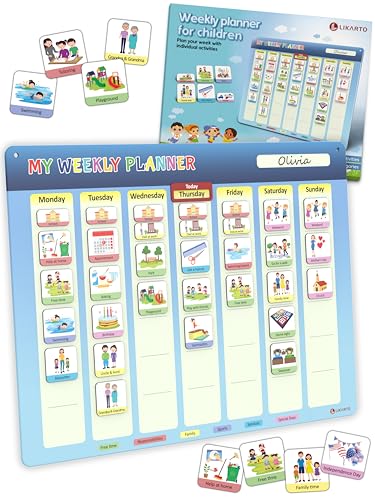
- 194 magnets include activities, blanks, and two Today markers
- Writable and wipeable board for repeated planning
- Durable magnetic setup designed to teach weekly routines
Best For: Families wanting a customizable magnetic planner that builds independence
Durable PCS Visual Calendar
A3 Weekly Visual Schedule with PCS Symbols

- One-column-per-day weekly layout keeps things simple
- 24 genuine PCS symbols support visual communication
- Waterproof plastic build is easy to clean and durable
Best For: Autistic children and classrooms that need a simple, durable visual calendar
Sliding Dry-Erase Task Board
Dry Erase Routine Chart with 10 Sliders

- 10 sliding buttons make task tracking interactive
- Reusable dry erase surface for chores and routines
- Mounts on wall or fridge for flexible placement
Best For: Kids who need a compact reusable checklist for daily routines
Wooden Visual Routine Board
Wooden Weekly Calendar for Kids

- 192 illustrated cards for daily and weekly planning
- Velcro-backed tiles let kids update the schedule themselves
- Durable wooden board with a child-safe finish
Best For: Families wanting a sturdy visual weekly board for young kids
Interactive Magnetic Routine Chart

- Covers both morning and bedtime routines
- Sliding buttons make completion easy to see
- Magnetic, durable design stays tidy for daily use
Best For: Families wanting a simple daily routine board kids can manage themselves
Fabric Pocket Weekly Planner
Kids Daily Planner with 259 Cards

- 259 cards for daily, weekly, monthly, and yearly routines
- Pocket chart format works with picture cards or reminders
- Sturdy fabric build can hang on walls or sit on tabletops
Best For: Families or classrooms wanting a flexible multi-range visual planner
2-in-1 Visual Routine Helper
LIKARTO 2-in-1 Weekly + Daily Schedule

- Weekly and daily magnetic layout
- 188 magnets with extra habit pieces
- Color symbols support non-readers
Best For: Families needing one board for weekly plans and daily routines
Fridge Weekly Planning Board
POPRUN Magnetic Weekly Planner

- Hourly schedule from 8am to 8pm
- Magnetic board with pens and eraser
- Extra space for notes and to-do lists
Best For: Families wanting a fridge-mounted weekly schedule with time slots
Felt Picture Routine Board
ALSLEA Visual Schedule for Kids

- 124 cards for routines and chores
- Foldable board hangs or stands upright
- Storage bag helps keep cards organized
Best For: Kids who need a flexible picture-based routine system
Double-Sided Visual Routine Board – Double-Sided Weekly Planner Board with 109 Cards
If you want a weekly routine planner for autistic child use that feels clear and hands-on, this double-sided felt board is built for visual scheduling at home or in the classroom. It includes 109 picture-and-word cards, weekly cards, and arrow cards, so kids can see what comes next and move through the day with less confusion.
Best For: Toddlers, preschoolers, and kids with autism or ADHD who benefit from a picture-based routine board that can hang on the wall or stand on a table.
Pros:
- Double-sided felt board gives extra room for custom routine use.
- 109 schedule cards cover chores, outings, school, meals, and more.
- Picture-plus-word cards help support readers and nonreaders.
- Can be used as a hanging chart or a tabletop teaching board.
Cons:
- Uses fixed cards, so changes are not as quick as a dry-erase board.
- Best suited to users who respond well to visual icons and Velcro placement.
This is a practical choice if you want a portable visual system with plenty of cards and flexible setup. The added weekly and pointing arrow pieces make it especially useful for building predictable routines and smoother transitions.
Magnetic Weekly Independence Planner – Writable Magnetic Weekly Planner with 194 Magnets
This weekly planner is a strong pick if you’re looking for a weekly routine planner for autistic child support that feels interactive and easy to update. The magnetic board is fully writable and wipeable, and the set includes 194 magnets, including activity magnets, blank magnets, and two “Today” magnets to make planning more concrete.
Best For: Children who do well with magnetic, customizable planning tools that make weekly routines easy to see and adjust.
Pros:
- Includes 194 magnets for flexible routine building and custom activities.
- Fully writable and wipeable surface supports repeated use.
- Strong board and magnets are designed for durability.
- Helps children understand the week and build independence.
Cons:
- Wall-mounted format may be less portable than smaller routine boards.
- Magnetic planning works best for families who want a more structured display.
Overall, this planner offers a polished, durable way to teach weekly structure while leaving room for personalization. It’s especially appealing if you want a child-friendly board that supports independence without feeling cluttered.
Durable PCS Visual Calendar – A3 Weekly Visual Schedule with PCS Symbols
For a weekly routine planner for autistic child use that prioritizes clarity and durability, this A3 visual calendar keeps the week easy to understand at a glance. It uses one column per day and includes 24 genuine Picture Communication Symbols, making it a practical fit for children who already use PCS or PECS-style supports.
Best For: Autistic children, ASD/ADHD learners, and special education settings that need a simple, durable weekly visual calendar.
Pros:
- Simple one-column-per-day layout avoids overwhelming the user.
- 24 genuine PCS symbols are familiar to many therapy and school programs.
- Premium plastic construction is waterproof, durable, and easy to clean.
- Compatible with PECS cards and designed for visual learners.
Cons:
- Includes a limited set of pre-printed symbols compared with larger card systems.
- More structured than customizable boards with lots of blank space.
This is a dependable option if you want a low-maintenance weekly display that can hold up in an autism household or classroom. Its sturdy build and familiar symbol style make it a straightforward way to support routine and reduce uncertainty.
Sliding Dry-Erase Task Board – Dry Erase Routine Chart with 10 Sliders
If you need a weekly routine planner for autistic child use that is simple, reusable, and easy for kids to interact with, this dry erase task board is a practical choice. It uses 10 sliding buttons on smooth tracks, so children can mark completed chores and routines without dealing with loose cards or complicated setup.
Best For: Kids who respond well to a compact, reusable checklist for chores, morning routines, and bedtime habits.
Pros:
- 10 sliding buttons make task tracking interactive and easy to understand.
- Dry erase surface is reusable for changing routines and to-do lists.
- CPC-certified and designed with a larger writing area.
- Can be mounted on the wall or attached to a fridge with magnets.
Cons:
- Smaller format may not suit families needing a full weekly visual system.
- Less picture-based than symbol-heavy autism schedule boards.
For families who want a compact routine board with quick updates, this option keeps things practical and easy to maintain. It works well for habit-building and everyday task checking, especially when you want something that feels more like a reusable checklist than a full calendar.
Wooden Visual Routine Board – Wooden Weekly Calendar for Kids
If you want a weekly routine planner for autistic child support that feels hands-on and easy to understand, this wooden weekly calendar is built around visual scheduling and simple tile changes. It helps kids see what is coming next, practice independence, and build time awareness through a structured daily and weekly setup.
Best For: Families, teachers, or caregivers who want a durable visual routine board for young children age 3+.
Pros:
- Includes 192 cards total, with activity, holiday, month, blank, and Today tiles.
- Velcro-backed tiles make it easy for kids to move and update their schedule.
- Durable wooden build with a smooth, child-safe finish for home or classroom use.
- Designed to support routine-building, responsibility, and visual recognition.
Cons:
- Best suited to families who want a physical, hands-on system rather than a digital planner.
- Primarily focused on weekly scheduling, not a detailed minute-by-minute plan.
This is a strong pick if you want a simple, sturdy board that makes routines visible and manageable for younger kids. The large format and illustrated cards can make daily planning feel more concrete and less overwhelming.
Interactive Magnetic Routine Chart – 2-in-1 Morning/Bedtime Chart
This weekly routine planner for autistic child use is especially useful if your main goal is to simplify mornings and evenings with a clear, repeatable checklist. The sliding task design gives children a visible way to mark progress, which can make daily routines feel more predictable and rewarding.
Best For: Parents looking for a durable morning and bedtime visual schedule that kids can update on their own.
Pros:
- 2-in-1 chart covers both morning and bedtime routines in one board.
- Easy-to-slide buttons make it simple for little hands to mark tasks done.
- Magnetic, movable design stays neat and avoids torn paper charts.
- Sticker customization helps the chart adapt as routines change.
Cons:
- It is more focused on daily routines than full-week planning.
- Plastic construction may feel less premium than wood-based alternatives.
If you want a routine tool that encourages independence with minimal setup, this chart is a practical option. Its interactive format is built to keep children engaged while helping families maintain consistent morning and bedtime habits.
Fabric Pocket Weekly Planner – Kids Daily Planner with 259 Cards
For shoppers comparing a weekly routine planner for autistic child support with room to grow, this fabric pocket chart offers a flexible visual organization system. It includes cards for daily, weekly, monthly, and yearly routines, making it a useful pick for families who want one chart that can handle more than just today’s schedule.
Best For: Families, classrooms, or caregivers who want a larger pocket-style planner with lots of card options.
Pros:
- Includes 259 cards for daily, weekly, monthly, and yearly planning.
- Pocket chart design helps kids place picture cards or written reminders easily.
- Sturdy fabric construction and reinforced binding support long-term use.
- Works on walls or tabletops, giving you flexible placement options.
Cons:
- The larger card set may take more time to organize at the start.
- Less compact than smaller routine boards designed only for morning or bedtime use.
This is a good choice if you want a broad planning system rather than a simple check-off chart. The mix of pockets, cards, and larger scheduling range makes it well suited to families who like a highly visual routine setup.
2-in-1 Visual Routine Helper – LIKARTO 2-in-1 Weekly + Daily Schedule
If you want a weekly routine planner for autistic child support that also handles daily habits, the LIKARTO board is built for both structure and flexibility. It combines weekly planning with morning and evening sections, and the visual magnets help kids follow routines without needing strong reading skills.
Best For: Families who want one magnetic board for weekly planning, daily habits, and visual routine support.
Pros:
- 2-in-1 weekly plus daily layout adds more structure across the whole day.
- Includes 188 magnets with extra daily habit pieces for morning and evening routines.
- Colorful symbols make the schedule easier to follow for kids who are not yet reading confidently.
- Designed to support independence, organization, and routine-building in a Montessori-inspired format.
Cons:
- Works best for families who want a magnetic system rather than a simple paper planner.
- The 6 x 9 inch format may feel compact if you want a larger wall display.
Overall, this is a strong choice if you want a routine board that covers both the week and the daily rhythm in one place. The extra magnets and habit sections make it especially practical for repeatable routines at home.
Fridge Weekly Planning Board – POPRUN Magnetic Weekly Planner
This weekly routine planner for autistic child use is a practical fridge-mounted option when you want a clear, time-based layout. The POPRUN board gives you hourly planning from 8am to 8pm, plus task boxes, color-coded keys, and space for notes or lists.
Best For: Families who want a magnetic whiteboard with hourly scheduling and easy fridge access.
Pros:
- Hourly time slots and 13 lines per day make weekly planning more detailed.
- Includes color-coded keys to help separate responsibilities or priorities.
- Strong magnetic attachment keeps the board and accessories secured on iron surfaces.
- Extra note, to-do, and shopping list columns add flexibility for busy family planning.
Cons:
- Best suited to iron surfaces unless you use the included tape for other setups.
- Requires dry erase pens, so it is not a tactile picture-card system.
For families that prefer a clear written schedule over picture-based routines, this board offers a very organized weekly view. It is especially useful when you want planning, reminders, and task tracking all in one place.
Felt Picture Routine Board – ALSLEA Visual Schedule for Kids
For a weekly routine planner for autistic child routines that leans heavily on visuals, the ALSLEA board offers a simple, hands-on setup. It uses 124 cards and a foldable hangable board to help organize morning, evening, school, and home tasks in a way that is easy to see and move around.
Best For: Kids who respond well to picture cards and need a flexible visual routine board for home or classroom use.
Pros:
- 124 included cards cover daily activities, chores, school, and behavior routines.
- Foldable board with grommets can hang horizontally or vertically, or stand upright.
- Flannel and nylon backing are made to resist tearing and wrinkling.
- Detachable storage bag helps keep cards organized and less likely to get lost.
Cons:
- More focused on daily routine building than on a structured weekly calendar layout.
- Card-based systems require setup and sorting before use.
This is a solid pick if your child benefits from a visual, card-driven routine rather than a written planner. The flexibility to hang or stand the board also makes it easy to use in different parts of the home.
How We Picked the Best Weekly Routine Planner for Autistic Child
For this roundup, we prioritized visual clarity, ease of use, durability, and flexibility. A strong Weekly Routine Planner for Autistic Child should make expectations obvious at a glance, support consistent repetition, and be simple enough for caregivers to keep updated without hassle.
We also looked for formats that work in real life: magnetic boards for fast changes, dry erase surfaces for quick edits, pocket charts for multiple cards, and compact boards that fit on a fridge or wall.
Quick Comparison
Some planners are better for highly structured weekly overviews, while others are better for morning and bedtime routines or for combining daily and weekly tasks. Magnetic systems usually offer the fastest adjustments. Pocket charts and card-based boards can be more visual and easier for children who benefit from matching tasks to pictures. Dry erase boards are usually the simplest for families who want a straightforward checklist.
Key Buying Factors for a Weekly Routine Planner for Autistic Child
Visual Simplicity
Choose a layout that is easy to scan. Large icons, clear labels, and limited clutter can reduce overwhelm and make the plan easier to follow.
Adjustability
Routines often change, so look for boards with movable magnets, reusable cards, or wipeable surfaces. This makes it easier to swap activities without starting over.
Durability and Safety
Thicker boards, laminated cards, and sturdy magnets are ideal for daily handling. If the planner will be used by younger children, check for smooth edges and age-appropriate pieces.
Size and Placement
Think about where the planner will live. A fridge-mounted board works well for family access, while a wall chart may be better for a bedroom or classroom. The best placement is the one adults will update consistently.
Routine Scope
Some families need a full weekly system; others only need morning, bedtime, or homework support. Select a planner that matches the child’s actual routine so it stays useful instead of feeling too complex.
Who Should Buy Which Weekly Routine Planner for Autistic Child?
Families who want a simple, fast-updated system should look at magnetic whiteboards or dry erase planners. If the child benefits from highly visual matching and step-by-step structure, card-based and pocket-chart designs are often a better fit. For classrooms or therapy spaces, larger visual schedules can support shared routines and group transitions. If you want one tool for both everyday structure and flexibility, a weekly planner with added daily routine cards is often the most practical choice.
In short, the best Weekly Routine Planner for Autistic Child is the one that matches your child’s communication style, your household setup, and how often your routine changes. Start with the simplest system that can be used consistently, then add complexity only if it truly helps.