A good reward chart can make daily routines feel clearer, calmer, and more predictable for an autistic child. The right system turns expectations into visual steps and makes progress easy to see.
Below, we focus on practical options that support consistency, motivation, and simple use for parents, caregivers, and teachers.
Best 10 Reward Chart for Autistic Child Picks for 2026
Visual Routine Support
Large Double-Sided Weekly Planner

- 109 picture cards plus blank cards for custom routines
- Double-sided felt board with wall or tabletop use
- Useful for autism, ADHD, homeschool, and special education
Best For: Kids who need a visual routine board with flexible daily scheduling
Simple Token Motivation
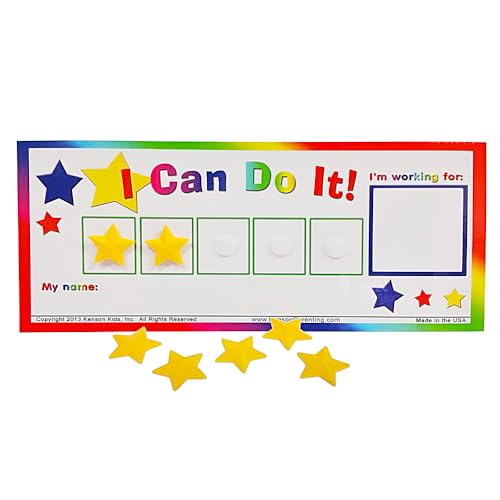
- Custom goal box with five star reward spaces
- Magnetic, reusable stars for repeated use
- Compatible with many Autism picture programs
Best For: Kids ages 3-10 who need a simple one-goal token board
Durable Picture-Based Rewards

- Waterproof plastic board for long-term use
- 12 reward symbols and 5 stars included
- Uses PCS icons and works with PECS cards
Best For: Families and classrooms wanting a sturdy, reusable visual reward chart
Flexible Behavior Tracking
Caterpillar Magnetic Star Chart

- Dry-erase board with a customizable goal box
- Includes 8 reusable magnetic stars
- Works with many Autism picture programs
Best For: One-goal behavior tracking at home, school, or on the go
Visual Routine Board

- Large felt board for daily routines
- 124 included cards for customization
- Hangs on wall or stands on a desk
Best For: Families needing a reusable autism-friendly routine board
Sticker Reward Pad
Learn & Climb Behavior Chart System

- 26 perforated charts for flexible use
- 2,800 stickers plus motivational stickers
- Works on wall or fridge with magnet
Best For: Sticker-based motivation and simple behavior tracking
Visual magnetic routine board
Wooden Magnetic Responsibility Chart

- 89 magnets for chores, goals, and rewards
- Dry-erase boards support custom routines
- Built-in storage keeps pieces organized
Best For: Families wanting a reusable visual responsibility chart
Visual routine card system
Autism Visual Schedule Card Set

- 95 magnetic cards for routines and tasks
- Large fonts and colorful topics aid sorting
- Built for visual schedules and special needs
Best For: Children who need a clear visual routine system
Sticker-based motivation chart
Magnetized Sticker Reward Chart Pad
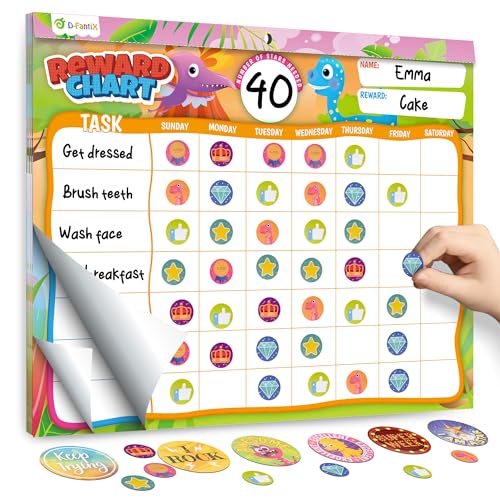
- 27 perforated sheets for flexible tracking
- 2,280 reward stickers plus 48 large stickers
- Magnetic stripe for fridge or wall placement
Best For: Families who want a simple sticker reward system
Visual Routine Support – Large Double-Sided Weekly Planner
If you’re shopping for a reward chart for autistic child use, this large visual schedule is built more like a daily routine board than a simple sticker chart. It gives kids a clear, picture-based way to follow chores, bedtime, school, and other activities, which can help reduce transition confusion and support independence.
Best For: Kids who do better with a bigger visual schedule, picture cues, and flexible home or classroom routine support.
Pros:
- Double-sided felt board gives more room for custom daily use.
- Includes 109 schedule cards, plus blank cards for personalization.
- Can stand on a table or hang on a wall for flexible setup.
- Helpful for nonverbal kids, autism, ADHD, homeschool, and special education settings.
Cons:
- More of a visual schedule than a simple token-only reward chart.
- May feel larger and more complex than a basic star board.
This is a strong choice when the goal is not just rewards, but structure and communication. If your child needs help seeing the day ahead and moving between activities, this board offers more support than a basic incentive chart.
Simple Token Motivation – Colorful Magnetic Star Board
For families looking for a reward chart for autistic child routines, this token board keeps the system straightforward: set one goal, add stars, and let your child see progress quickly. Its magnetic, customizable format makes it useful for focused behavior goals at home or in therapy settings.
Best For: Children ages 3-10 who need a small, easy-to-manage token system for one specific goal.
Pros:
- Customizable goal box makes it easy to target one behavior at a time.
- Includes reusable plastic stars and a magnetic format.
- Works with most Autism picture programs.
- Fully compatible with dry erase markers for labeling goals and names.
Cons:
- Only five reward boxes, so it suits short goals better than long tracking.
- Smaller size may be less useful for children who need a larger visual display.
This board is best when you want a clean, focused reward setup without extra clutter. It’s a practical pick if you’re reinforcing one behavior, habit, or task and want the chart to stay easy for both parent and child to follow.
Durable Picture-Based Rewards – Reusable Autism Sticker Chart
This reward chart for autistic child use is designed for families who want a sturdy, easy-clean option with familiar picture symbols. With PCS icons, reward stars, and a reusable plastic board, it works well when you need a visual system that can hold up to daily use at home, school, or therapy.
Best For: Autistic children, preschoolers, and therapy or classroom settings that need a durable picture-symbol reward system.
Pros:
- Made from premium plastic that is waterproof and easy to clean.
- Includes 12 reward symbols and 5 stars for simple behavior tracking.
- Uses genuine Picture Communication Symbols, familiar to many children in therapy or school.
- Compatible with PECS cards and built for repeated use.
Cons:
- Assembly is required.
- The reward structure is simple, so it may not replace a full routine board.
Compared with paper or cardstock charts, this one is built for durability and consistency. It’s a good fit if you want a visual reward system that can withstand everyday handling and still feel familiar to a child already using PCS or PECS-style supports.
Flexible Behavior Tracking – Caterpillar Magnetic Star Chart
If you want a reward chart for autistic child behavior goals, this caterpillar token board offers a simple dry-erase and magnetic setup that can be tailored to one specific task. It’s designed for positive reinforcement, making it a practical choice when you want kids to see exactly how they’re progressing toward a reward.
Best For: Families or classrooms that want a customizable magnetic star chart for one behavior, routine, or skill.
Pros:
- Customizable with dry erase markers for names and goals.
- Includes 8 reusable plastic stars with hook-and-loop fasteners.
- Works with many Autism picture programs.
- Suitable for both home and classroom use.
Cons:
- Best suited to short, specific goals rather than broad daily scheduling.
- Small board size may not work for every visual learner.
This chart is a solid middle-ground option if you want a motivating token system without moving into a full visual schedule. It keeps the focus on one measurable behavior at a time, which can make reinforcement clearer and easier to manage.
Visual Routine Board – ALSLEA Autism Daily Planner
If you want a reward chart for autistic child support that leans more toward routine-building than sticker counting, this ALSLEA visual schedule is a practical pick. The large felt board and included activity cards make it easy to map out morning, evening, or classroom routines in a way that is clear and easy to follow.
Best For: Families and teachers who want a reusable visual schedule for autism-friendly routines.
Pros:
- Large 27″ x 9.5″ board made from flannel with nylon backing for durability.
- Includes 124 cards with activities, title cards, arrows, blanks, and stars for customization.
- Can be hung on a wall or door, or used upright on a desk or in a playroom.
- Storage bag helps keep cards organized and easier to protect from loss or damage.
Cons:
- It is a visual routine board rather than a true sticker-based reward chart.
- Needs time to sort and set up the cards for your preferred schedule.
Overall, this board is a strong choice if your goal is to support predictability, self-discipline, and daily habit formation. It works well as a visual aid for children who respond better to pictures and structured routines.
Sticker Reward Pad – Learn & Climb Behavior Chart System
This behavior reward chart system is a straightforward option for parents who want a reward chart for autistic child motivation, responsibility, and good habits. With a pad of perforated charts and a huge sticker supply, it is built for simple daily reinforcement at home or school.
Best For: Kids who respond well to sticker-based encouragement and clear task tracking.
Pros:
- Includes 26 perforated chart pages, so you can use one chart at a time or assign one per child.
- Comes with 2,800 stickers plus 35 motivational stickers for rewards and progress tracking.
- Includes a chores and prize suggestion sheet to help customize goals and rewards.
- Can be hung on a wall or attached to a fridge with the included magnet.
Cons:
- Paper-based format may not be as durable as a reusable board system.
- Best suited to sticker tracking, not visual scheduling or picture-based routines.
As a reward-focused chart, this pad is best when you want a simple, low-friction way to reinforce tasks and celebrate completion. The large sticker count makes it a practical option for repeated use across multiple chores or children.
All-in-One Visual Planner – HANUSTARS Autism Routine Chart
If you’re looking for a reward chart for autistic child routines that also covers daily planning, this HANUSTARS set is designed as an all-in-one visual system. It combines customizable cards and a wall-mounted format to help children follow chores, homework, and bedtime steps more independently.
Best For: Parents and teachers who want a customizable routine chart for home, school, or homeschool use.
Pros:
- Includes 60 pieces with 12 boards and a black bag for organizing the set.
- Self-adhesive cards make it easy to create a customizable daily schedule.
- Designed for age-appropriate routines, from simple tasks for younger kids to more advanced chores for older children.
- Works as a visual timetable, behavior chart, and bedtime or morning routine board.
Cons:
- Product notes contain broad claims, so setup may take some trial and error to fit your routine.
- It is more of a schedule-and-routine system than a sticker reward pad.
This is a versatile choice if you want one tool that supports structure, task-following, and independence. It is especially useful for families who need a clear visual routine that can be adapted over time.
Visual magnetic routine board – Wooden Magnetic Responsibility Chart
If you want a reward chart for autistic child routines that is hands-on and easy to follow, this magnetic chart gives kids a very visual way to track chores, goals, and positive behaviors. The two hinged boards and 89 magnets make it simple to set up daily expectations and keep everything organized in one place.
Best For: Families who want a visual, reusable responsibility chart with lots of magnetic pieces.
Pros:
- Includes 89 magnets for chores, goals, and rewards
- Dry-erase surface lets you customize up to seven goals
- Second board stores magnets neatly when not in use
- Supports planning and organization as a learning tool
Cons:
- Requires manual setup and adult guidance to organize tasks
- May be more chart than some families need for very simple routines
Overall, this is a practical pick for families who want a durable, visual system that can grow with a child’s routines and responsibilities.
Visual routine card system – Autism Visual Schedule Card Set
For a reward chart for autistic child routines that focuses on structure and communication, this card set offers a colorful visual schedule with themed magnetic cards. It is designed to help children sort daily activities faster, remember routines, and build a clearer day-to-day flow.
Best For: Kids who do better with visual schedules, themed routine cards, and simple task organization.
Pros:
- Includes 95 magnetic cards with themed categories
- Large fonts and colorful frames make cards easier to sort
- Made for daily routines, weekly schedules, and responsibility charts
- Designed with special needs and autism in mind
Cons:
- Uses cardboard cards rather than a full physical chart board
- Best suited to families who want a visual system, not sticker-based rewards
This is a strong option if your main goal is routine clarity rather than a point-and-sticker reward system. The themed cards make it easier to keep expectations visible and consistent.
Sticker-based motivation chart – Magnetized Sticker Reward Chart Pad
This reward chart for autistic child routines uses stickers and simple tracking to make daily tasks feel more concrete and motivating. With multiple perforated sheets and a large sticker supply, it’s a straightforward option for families who want a positive-reinforcement system that can be updated often.
Best For: Parents looking for a sticker-based chart that encourages responsibility through small, visible wins.
Pros:
- Includes 27 perforated sheets for flexible use
- Comes with 2,280 reward stickers plus 48 large incentive stickers
- Magnetic stripe makes it easy to place on a fridge or wall
- Designed to support positive reinforcement and good habits
Cons:
- Paper-based format may not be as durable as a rigid board
- Sticker systems require regular parent involvement to keep moving
In short, this is a practical choice if you want a simple, budget-friendly visual motivator with lots of stickers and plenty of room to customize routines.
How We Picked the Best Reward Chart for Autistic Child
We looked for reward charts that are easy to understand, durable enough for repeated use, and flexible for different ages and routine needs. For a Reward Chart for Autistic Child use, visual clarity and low-frustration setup matter more than flashy extras. We also favored options with reusable pieces, strong magnets or stickers, and layouts that work for chores, bedtime, school prep, and behavior goals.
Quick Comparison
Some charts are best for younger children who need simple token or sticker reinforcement. Others work better for families who want a larger visual schedule with multiple steps across the day. If you need something portable, card-based and compact systems can be easier to move between home and classroom. If you want a long-term routine tool, reusable boards often offer better value.
Key Buying Factors for Reward Chart for Autistic Child
Visual Simplicity
Choose a chart with clear icons, readable labels, and a layout that does not feel crowded. Many autistic children respond best to predictable visuals with one task or reward path at a time.
Reinforcement Type
Token boards, stars, stickers, and finished-task checkoffs all work differently. The best choice depends on what motivates the child and how immediate the reward needs to feel.
Durability and Reusability
Plastic boards, magnetic pieces, and laminated surfaces tend to hold up better than thin paper charts. Reusable systems are also useful if routines change often.
Routine Fit
Match the chart to the main goal: morning routines, bedtime, chores, transitions, or classroom behavior. A Reward Chart for Autistic Child use should support the routine you actually need, not force a generic structure.
Portability and Storage
If the chart will travel, look for lightweight pieces, storage pouches, or compact formats. That makes it easier to keep the system consistent across settings.
Who Should Buy Which Reward Chart for Autistic Child?
Families with younger children often do best with simple sticker or magnetic charts that provide quick wins. Children who need strong visual structure may benefit more from full daily planners or routine boards. If you want a classroom-friendly option, choose a chart with enough flexibility to track behavior across multiple activities. For households that want a reusable, low-mess system, token boards and dry-erase styles are usually the most practical choice.
In short, the best chart is the one your child can understand quickly, use consistently, and respond to with confidence.