Executive functioning tools for kids can make daily routines feel clearer, calmer, and more manageable. The best options turn abstract tasks like starting homework, tracking time, and following steps into simple visual cues and repeatable habits.
In this roundup, we focus on practical tools that support attention, organization, impulse control, and follow-through at home, during homework, and in everyday routines.
Best 10 Executive Functioning Tools for Kids Picks for 2026
Parent-Guided EF Workbook
Complete Executive Function Workbook for Kids Ages 6–12

- 5-minute daily activities
- Covers focus, planning, regulation
- Includes printable parent bonuses
Best For: Parents who want guided at-home practice for ages 6–12
Visual Time Trainer
Yunbaoit Visual Timer with Protective Case

- Disappearing rainbow disk display
- Silent with optional alert volumes
- Great for homework, chores, routines
Best For: Kids who need a clear visual countdown for everyday tasks
Routine Board System

- Reusable checklist with sliders
- Customizable for chores and routines
- Built for multiple children
Best For: Families needing a visual chore and routine tracker
Visual Routine Hub
2-in-1 Visual Timer with Task Board
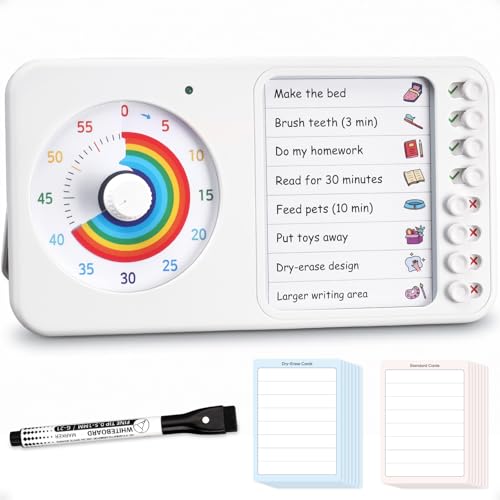
- Visual timer plus dry erase chore chart.
- Sliding checklist helps mark tasks complete.
- Useful for ADHD, autism, home, and classroom routines.
Best For: Kids who need visible routines and task tracking.
Impulse Control Story

- Story-based lesson on pausing before acting.
- Teaches four steps: stop, think, decide, choose.
- Includes tips for parents and educators.
Best For: Ages 6-9 learning impulse control through stories.
Three-in-One Focus Board
3-in-1 Visual Timer & ADHD Tool

- Visual timer, digital clock, and chore board in one.
- Silent, vibration, and ringing modes included.
- Built for ADHD, autism, and daily routine support.
Best For: Kids who need quiet, flexible time and task support.
Habit-building card deck
52 Daily Habit Cards for Focus & Follow-Through
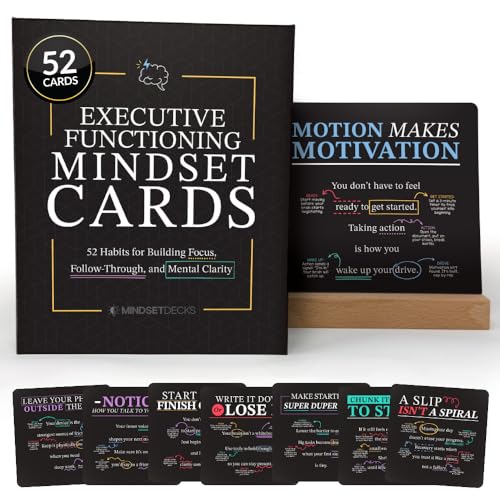
- 52 cards for focus, organization, and planning
- Turns big skills into small daily actions
- Includes wooden stand and keepsake box
Best For: Kids, teens, and adults building routine-based executive functioning skills
Sliding visual chore board
4-Piece Sliding Routine Chart for Kids

- Sliding markers show completed chores clearly
- Reusable for routines, checklists, and travel
- Includes 4 charts plus 10 customizable sheets
Best For: Families who want a visual, reusable task tracker for daily routines
Comprehensive ADHD strategy deck
165 ADHD Executive Functioning Strategy Cards

- Covers 15 executive function challenge areas
- Color-coded for quick strategy matching
- Kid-friendly, step-by-step coping guidance
Best For: Families, teachers, and therapists needing broad ADHD support strategies
Parent-Guided EF Workbook – Complete Executive Function Workbook for Kids Ages 6–12
If you’re looking for executive functioning tools for kids that fit into a real family routine, this workbook is built around short, 5-minute activities. It focuses on the everyday skills many kids ages 6–12 struggle with, including starting tasks, following routines, calming big emotions, and finishing what they begin.
Best For: Parents who want a structured, compassionate workbook to practice executive function skills at home or alongside school routines.
Pros:
- Built around 5-minute daily activities for easy follow-through
- Covers focus, planning, time, organization, emotional regulation, and motivation
- Includes parent snapshots to help you recognize what your child may be experiencing
- Comes with printable bonus tools like starter cards, routine builders, and progress trackers
Cons:
- Works best when an adult is available to guide the activities
- Primarily a workbook, so it may not suit families wanting a hands-on device
- Designed for ages 6–12, so older kids may outgrow the material
Overall, this is a practical pick if you want a compassionate, step-by-step workbook that turns executive function support into quick daily practice rather than a major time commitment.
Visual Time Trainer – Yunbaoit Visual Timer with Protective Case
A visual timer can be one of the simplest executive functioning tools for kids, especially when time feels abstract or hard to manage. This 60-minute timer uses a disappearing rainbow disk, silent operation, and optional alert volumes to help kids understand time passing during homework, chores, and classroom tasks.
Best For: Kids and adults who need a quiet, easy-to-read visual countdown for routines, schoolwork, or tasks with time limits.
Pros:
- Rainbow disk makes remaining time easy to see
- No ticking sound, which is helpful in quiet or sound-sensitive settings
- Three alert volume options, including mute
- Protective case adds durability for everyday use
Cons:
- Requires 2 AAA batteries, which are not included
- Only counts down up to 60 minutes
- Not smart-home compatible
This is a strong choice if your child responds better to a visual cue than to verbal reminders, and you want a simple timer that can support routines without adding noise.
Routine Board System – Chore Chart for Multiple Kids
PIQOLA Chore Chart for Multiple Kids, ADHD Tools Checklist Board Routine Schedule (to Do List)
Check Price On AmazonFor families building executive functioning tools for kids into daily life, a routine board can make tasks easier to see and track. This checklist-style chore chart is designed for multiple kids, with reusable sliders and blank inserts so you can customize chores, routines, and to-do lists at home.
Best For: Families who want a reusable visual checklist for chores, routines, and task management.
Pros:
- Made for multiple kids and shared household routines
- Reusable format with sliders and replaceable blank papers
- Can be customized for chores, weekly schedules, or task lists
- Includes marker and adhesive pads for setup
Cons:
- Not a dry erase board
- Requires you to create and swap checklist papers
- Smaller A5 format may limit how much you can display at once
This is a practical pick for parents who want a hands-on visual system rather than another verbal reminder, especially when more than one child needs structure.
All-in-One Skills Workbook – The Executive Functioning Workbook for Kids
If you want executive functioning tools for kids that cover more than one skill area, this workbook takes a broad, practical approach. It offers short daily activities aimed at focus, time management, memory, organization, problem-solving, and emotional skills, making it a flexible option for home practice.
Best For: Parents looking for a multi-skill workbook with quick activities and printable extras.
Pros:
- Combines several executive function topics in one resource
- Activities are designed to take about 5–10 minutes a day
- Includes bonuses like planner guides, focus tools, and emotion supports
- Uses playful, age-appropriate examples to keep kids engaged
Cons:
- Still requires adult guidance to get the most out of it
- Best suited to families who want workbook-style practice
- May overlap with other skill-building books if you already own several
This workbook is a good fit if you want a broad set of practical exercises in one place and prefer something you can use in short bursts without a big setup.
Visual Routine Hub – 2-in-1 Visual Timer with Task Board
If you’re comparing executive functioning tools for kids, this 2-in-1 timer and task board is built to make routines more visible and easier to follow. It combines a rainbow visual countdown with a dry erase schedule and sliding checklist, so kids can see time passing and mark tasks complete in one place.
Best For: Kids who benefit from visual schedules, clear transitions, and a simple way to track chores, homework, and daily routines.
Pros:
- Combines a visual timer, dry erase planning board, and sliding checklist in one tool.
- Colorful countdown disk makes remaining time easy to see at a glance.
- Helps support focus, time awareness, and smoother task transitions.
- Works for home, classroom, and homeschool routines.
Cons:
- Single-setting design may not suit users who want advanced timer customization.
- Larger combo format may take more desk or wall space than a basic timer.
- Best suited to visual learners rather than kids who prefer audio-only cues.
As a practical organizer, this is a strong pick for families who want one visible system for planning and follow-through. It’s especially useful when the goal is to reduce reminders and make expectations easier to understand.
Impulse Control Story – What Were You Thinking
What Were You Thinking: Helping Kids 6-9 Learn to Control Impulses (Executive Function)
Check Price On AmazonFor parents and educators shopping for executive functioning tools for kids, this storybook turns impulse control into an easy-to-teach lesson. It follows an impulsive third-grader and introduces a simple four-step strategy for stopping, thinking, deciding, and choosing better behavior.
Best For: Kids ages 6 to 9 who need help pausing before acting and learning self-control through a relatable story.
Pros:
- Teaches a clear four-step strategy for managing impulsive reactions.
- Uses a humorous story to keep the lesson engaging for young readers.
- Includes tips for parents and educators at the end.
- Targets a key executive function skill: thinking before acting.
Cons:
- Book format may be less hands-on than a timer or visual planner.
- Focused specifically on impulse control rather than broader organization skills.
- Best suited to younger elementary-age children, not older kids.
This is a strong educational choice if you want a simple, age-appropriate way to talk about self-control. It works best as a read-aloud or guided discussion tool alongside everyday coaching.
Three-in-One Focus Board – 3-in-1 Visual Timer & ADHD Tool
This 3-in-1 option is a flexible pick among executive functioning tools for kids because it blends a visual timer, digital clock, and chore board into one desk-friendly system. It’s designed to help kids stay on schedule with clearer routines, whether they’re working on homework, chores, or classroom tasks.
Best For: Kids and students who need a quiet, visual way to manage time, tasks, and daily routines.
Pros:
- Combines a visual timer, digital clock, and to-do/chore board.
- Offers silent, vibration, and ringing modes for different environments.
- Clear display and simple controls support easy time management.
- Useful for ADHD, autism, special needs, school, home, and study spaces.
Cons:
- More feature-rich design may feel larger or more complex than a basic timer.
- Best for users who want both visual cues and task tracking, not timer-only use.
- Requires setup to get the most from its multiple modes and planning features.
Overall, this is a versatile productivity aid for families that want one tool to support structure and self-regulation. The quiet mode options make it especially useful in spaces where noise needs to stay low.
Habit-building card deck – 52 Daily Habit Cards for Focus & Follow-Through
If you want executive functioning tools for kids that feel simple enough to use every day, this habit card deck is built around small mindset shifts and actionable prompts. It focuses on focus, organization, planning, time management, and follow-through, making it a practical pick for home routines, classrooms, or coaching settings.
Best For: Kids, teens, parents, and teachers who want a low-pressure tool for building daily routines and responsibility.
Pros:
- 52 habit cards cover focus, organization, productivity, and consistency.
- Cards are designed to break big skills into small, manageable actions.
- Includes a wooden display stand and magnetic keepsake box for daily use.
- Works at home, in school, or in counseling/coaching environments.
Cons:
- More of a mindset and habit tool than a step-by-step task board.
- Best suited to guided use rather than independent setup for very young kids.
This is a strong choice if your goal is to reinforce executive functioning through repeatable daily habits instead of one-time reminders. The format is practical, portable, and easy to build into routines.
Sliding visual chore board – 4-Piece Sliding Routine Chart for Kids
For families shopping executive functioning tools for kids, this sliding routine chart offers a visual way to track chores, checklists, and daily responsibilities. It is built to make task completion more concrete by letting users slide markers as items get done, which can help with morning routines, bedtime routines, study lists, and travel planning.
Best For: Kids and busy households that want a reusable visual checklist for routines and chores.
Pros:
- Sliding markers make completed tasks easy to see.
- Includes 4 charts and 10 sheets of cardstock for customization.
- Reusable design works for chores, RV checklists, study lists, and more.
- Small, portable format can be used at home, in an office, or while traveling.
Cons:
- Paper-based system may not feel as durable as a rigid board.
- Requires setup and customization before daily use.
This is a straightforward option if you want a tactile routine reminder rather than a card-based coaching tool. Its biggest strength is turning daily tasks into a visible, movable checklist.
Comprehensive ADHD strategy deck – 165 ADHD Executive Functioning Strategy Cards
If you need executive functioning tools for kids that go beyond reminders and into skill-building, this 165-card set is organized around 15 challenge areas such as working memory, attention, time management, emotional regulation, impulse control, and task initiation. The cards use color coding, step-by-step strategies, and kid-friendly language, which makes them useful for home, school, or therapy settings.
Best For: Kids, teens, and adults who need a broad, structured set of ADHD coping and executive function strategies.
Pros:
- Covers 15 executive functioning challenge areas with 165 cards.
- Color-coded borders help users quickly find relevant strategies.
- Kid-friendly front-side instructions with back-side explanations.
- Designed for home, school, and therapy use with evidence-based scaffolding.
Cons:
- Larger deck may be more than some families need for simple routine support.
- Cards are strategy-focused, so they work best when adults help guide selection.
This set stands out for its breadth and organization, especially if you want a more comprehensive executive function resource. It is a good fit when the goal is to match specific challenges with targeted coping strategies.
How We Picked These Executive Functioning Tools for Kids
We looked for tools that are easy for children to understand, simple for parents to use, and flexible enough for different ages and needs. Priority went to products that support real-world routines, such as timers, visual schedules, chore systems, habit cards, and workbook-style practice.
We also favored options that can help with common executive function challenges: getting started, staying on task, switching activities, remembering steps, and completing daily responsibilities.
Quick Comparison: Which Type of Tool Works Best?
Different kids need different supports. Visual timers are often best for time awareness and transitions. Chore charts and routine boards work well for daily structure and accountability. Workbooks and strategy cards are better for practicing skills like planning, self-monitoring, and impulse control.
If your child needs a more hands-on reminder system, choose a visual schedule or checklist board. If they need skill-building, choose workbook or card-based Executive Functioning Tools for Kids that reinforce habits through repeated practice.
Key Buying Factors for Executive Functioning Tools for Kids
Age and Reading Level
Match the tool to your child’s developmental stage. Younger children usually do better with pictures, short prompts, and simple routines, while older kids may benefit from more independence and self-checking features.
Ease of Use
The best tools reduce friction, not add it. Look for clear layouts, durable parts, and instructions that are easy for both kids and caregivers to follow consistently.
Skill Target
Choose the tool that matches the main challenge. For time blindness, use a timer. For forgetfulness, use a checklist or chore board. For emotional control or follow-through, habit cards or workbooks may be more useful.
Flexibility
Many families do best with a combination of supports. A visual timer plus a routine chart can be more effective than either one alone, especially for morning routines, homework, and bedtime.
Who Should Buy Which Executive Functioning Tools for Kids?
Choose visual timers if your child struggles with transitions or pacing. Pick chore charts and daily routine boards if the main issue is remembering steps and staying accountable. Select workbooks if you want structured practice with attention, planning, and self-management. Habit and coping cards are a strong choice for kids who need quick reminders they can revisit often.
For many families, the best Executive Functioning Tools for Kids are the ones that fit naturally into daily life and can be used every day without a lot of setup. Start with the biggest pain point, then build from there with one or two complementary tools.