Choosing the right support can make school days feel more predictable, less stressful, and easier to manage. The best time management tools for autistic students turn abstract time into something clear, visual, and actionable.
Below, you’ll find a focused roundup of tools designed to support routines, transitions, homework, and daily planning without adding unnecessary complexity.
Best 10 Time Management Tools for Autistic Students Picks for 2026
Visual Countdown Timer
EooCoo Cute School Supplies Visual Timer for Kids
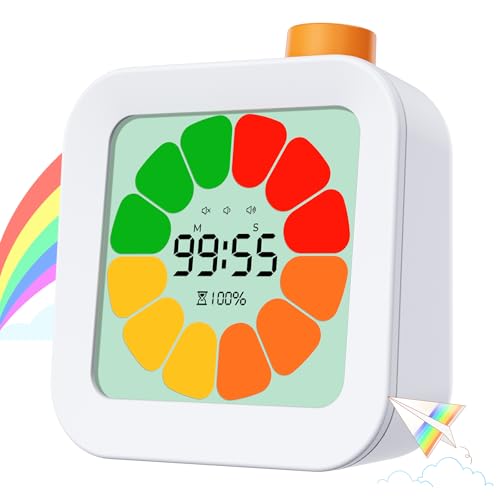
- Petal-style countdown makes time visible.
- Helps ease transitions and reduce meltdowns.
- Simple one-button use with no loud ticking.
Best For: kids who need a straightforward visual countdown for daily transitions
Visual Routine Board
ALSLEA Visual Schedule for Kids with Autism

- Large board with 124 visual cards.
- Supports morning, evening, and chore routines.
- Can hang on a wall or stand on a desk.
Best For: children who need a visual routine board for home or classroom schedules
Color Cue Focus Timer
Visual Life Timer for Kids and Adults
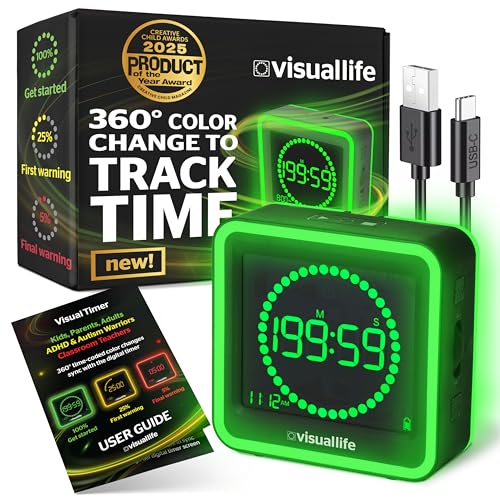
- Color cues show progress without clock-watching.
- Amber and red warnings help ease transitions.
- Rechargeable with alarm clock and stopwatch modes.
Best For: users who want a visual timer with color cues and extra timing modes
3-in-1 Planning Timer

- Combines timer, clock, and planning board.
- Includes visual schedule and chore chart features.
- Offers silent, vibration, and sound alert modes.
Best For: users who want one desk tool for timing, planning, and daily routines
Quiet Visual Timer & Planning Board

- Silent operation reduces classroom distractions.
- Visual clock and checklist board keep tasks clear.
- Helps with routines, chores, and homework planning.
Best For: Students who need quiet visual structure for daily routines
2-in-1 Visual Timer & Chore Chart
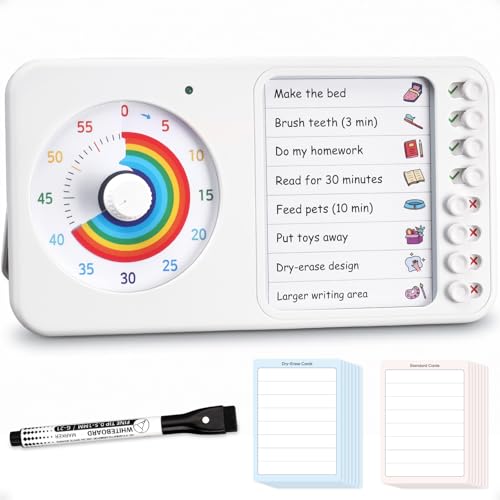
- Timer and dry erase checklist in one tool.
- Visible countdown helps with transitions and focus.
- Useful for home, classroom, and homeschool use.
Best For: Users who need simple visual scheduling and task tracking
7-in-1 Visual ADHD Timer

- Combines timer, alarms, task board, and checklist cards.
- Large display and knob make it easy to use.
- Rechargeable with built-in storage for desk organization.
Best For: Families wanting an all-in-one visual routine and planning tool
Visual Routine Helper
3-in-1 Timer with Planning Board

- Visual timer plus dry-erase planning board
- Silent design for quiet study spaces
- Built for routines, chores, and homework
Best For: Students who need a simple visual schedule and quiet countdowns
Focus Planner Pick

- Visual timer, digital clock, and chore board
- Silent, vibration, and ringing alert modes
- Clear display supports daily routines
Best For: Kids and adults who need flexible alerts and a simple task board
Routine Builder Choice

- 3-in-1 timer with chore chart and clock
- Five settings and multiple alert modes
- Works for school, home, and routines
Best For: Families needing one flexible timer for routines and task tracking
Visual Countdown Timer – EooCoo Cute School Supplies Visual Timer for Kids
If you’re comparing time management tools for autistic students, this visual timer stands out for making time feel concrete instead of abstract. The petal-style countdown shows progress clearly, which can help with transitions like ending screen time, starting homework, or preparing for bed.
Best For: children who need a simple, visual way to understand time passing during daily routines and transitions.
Pros:
- Clear visual countdown helps make time left easy to understand.
- Designed to reduce transition stress, resistance, and meltdowns.
- One-button operation keeps setup simple for parents and kids.
- No loud ticking, making it calmer for home, classroom, or therapy use.
Cons:
- Focused on countdown timing, so it does not include planning or schedule features.
- Basic design may not suit users who want multiple modes or advanced controls.
This is a practical pick if your main goal is calmer transitions and less repeated prompting. It is especially useful when a child benefits from seeing time instead of just hearing warnings.
Visual Routine Board – ALSLEA Visual Schedule for Kids with Autism
For families shopping for time management tools for autistic students, this visual schedule board is built to turn daily routines into something concrete and easy to follow. With 124 cards and a large hangable board, it can support morning routines, evening routines, and everyday chores.
Best For: kids who benefit from a visual daily routine board for school prep, chores, and home structure.
Pros:
- Includes 124 cards for a wide range of daily activities and tasks.
- Can be hung vertically or horizontally, or placed upright on a desk.
- Clear storage bag helps keep cards organized and less likely to get lost.
- Useful for building routines, self-discipline, and time awareness.
Cons:
- Works best for routine planning rather than timed countdowns.
- Larger board size may take up more wall or desk space.
This board makes sense if your priority is structure, sequencing, and visual reminders throughout the day. It is better for routine-building than for managing short work intervals.
Color Cue Focus Timer – Visual Life Timer for Kids and Adults
This is a strong option among time management tools for autistic students if you want a timer that keeps progress visible without demanding constant clock-checking. The color cues change as time passes, helping guide focus and make transitions feel more predictable.
Best For: students and families who want a rechargeable visual timer with gentle color-based reminders.
Pros:
- Color changes help users track progress at a glance.
- Amber and red cues provide clear transition warnings.
- Rechargeable design means no batteries are needed.
- Includes alarm clock and stopwatch modes for added flexibility.
Cons:
- More feature-rich than a basic timer, which may be more than some users need.
- Outer lights can be turned off, but the device still uses a more active visual style than simpler timers.
This timer is a good fit if you want a visually engaging tool that supports attention and smoother transitions. Its extra modes also make it more versatile for classrooms, home routines, and focused work.
3-in-1 Planning Timer – ADHD Tool with Chore Chart
If you need time management tools for autistic students that do more than count down minutes, this 3-in-1 unit combines a visual timer, digital clock, and task planning board. It is designed to help kids see time passing while also keeping homework, chores, and study routines organized.
Best For: families and classrooms that want a visual timer plus planning support in one desk-friendly tool.
Pros:
- Combines timer, clock, and task board in one product.
- Visual daily schedule and chore chart support routines and independence.
- Silent, vibration, and ringing modes help fit different environments.
- Simple controls and a rainbow display make it easy to use.
Cons:
- Larger desktop format may not suit small spaces.
- More features can be unnecessary if you only need a basic countdown timer.
This is a practical choice when routine management and time awareness need to work together. It fits especially well for students who benefit from both visual structure and flexible alert options.
Quiet Visual Timer & Planning Board – Noiseless Task Support
This visual timer is a practical pick for time management tools for autistic students because it pairs a silent countdown with a simple planning board. The visual clock helps make time passing easier to understand, while the checklist area keeps schoolwork, chores, and routines in one place.
Best For: Students who need a quiet, visual way to track time and manage daily tasks at school or home.
Pros:
- Noiseless design helps reduce distractions in classrooms and study spaces.
- Built-in planning board supports tasks, chores, and daily routines.
- Visual circular clock makes time progression easier to grasp.
- Useful for classroom, homeschool, and family routines.
Cons:
- Designed with a strong focus on visual support, so it may not suit users who prefer digital reminders.
- Only offers 5 settings, which may feel basic for more complex scheduling.
Overall, this is a straightforward assistive tool for building routine awareness and self-regulation without adding noise or clutter. It works best when the goal is simple, visual structure rather than advanced scheduling features.
2-in-1 Visual Timer & Chore Chart – Rainbow Countdown Planner
Among time management tools for autistic students, this 2-in-1 timer stands out for combining a visual countdown with a dry erase planning board and sliding checklist. It makes expectations more visible, which can help reduce stress around homework, chores, and transitions.
Best For: Kids and adults who benefit from a clear visual schedule plus an easy checklist for completing tasks.
Pros:
- Combines timer, visual schedule, and chore chart in one unit.
- Colorful disk makes remaining time easy to see at a glance.
- Sliding checklist supports task completion without constant reminders.
- Works well for classroom, home, and homeschool routines.
Cons:
- Only has 1 setting, so it is best for simple countdown use.
- Requires writing and updating the dry erase board for planning.
This is a solid option if you want a low-friction visual support tool that helps organize the day and make next steps obvious. It is especially useful when routine clarity matters more than advanced timer functions.
7-in-1 Visual ADHD Timer – Multi-Feature Routine Coach
This multi-function timer is a strong fit for time management tools for autistic students because it combines visual countdowns, alarms, a task board, and checklist cards. The large display and one-knob operation make routines and transitions easier to follow, while the built-in storage helps keep a desk tidy.
Best For: Students who need a feature-rich visual timer with planning support and desk organization.
Pros:
- Includes visual timer, pomodoro timer, alarm, date, temperature, and task board.
- Comes with 20 blank checklist cards for daily planning.
- USB-C rechargeable battery lasts up to a week.
- Built-in storage keeps supplies close and the workspace organized.
Cons:
- More features may be more than some users need for basic timing.
- Larger feature set may take a little more setup than a simple timer.
If you want one device to handle time awareness, task planning, and routine support, this model covers a lot of ground. It is especially appealing for families looking for an all-in-one desk tool that supports independence.
Visual Routine Helper – 3-in-1 Timer with Planning Board
If you’re comparing time management tools for autistic students, this 3-in-1 visual timer gives a clear, hands-on way to track work sessions, chores, and daily routines. The visual countdown, digital timer, and dry-erase planning board make it easier to see what’s happening now and what comes next.
Best For: Students who need a simple visual schedule, quiet countdowns, and an easy way to mark tasks complete.
Pros:
- Combines a visual timer, digital timer, and to-do/planning board in one tool.
- Silent operation helps keep classrooms, libraries, and study spaces distraction-free.
- Designed to support ADHD, autism, self-regulation, and smoother task transitions.
- Easy dial-based setup and a slide switch for checking off completed tasks.
Cons:
- Timer is limited to 60 minutes.
- Only one setting listed in the product details.
- Best suited to visual routines rather than complex multi-step planning.
This is a practical pick if you want a straightforward classroom or homeschool aid that reinforces time awareness without adding noise or complexity.
Focus Planner Pick – 3-in-1 Timer with Chore Chart
For shoppers looking at time management tools for autistic students, this model focuses on visual structure and flexible alerts. It combines a visual timer, digital clock, and chore chart with a clear display that helps make routines easier to follow at home, school, or a desk setup.
Best For: Kids and adults who benefit from visual cues, adjustable alerts, and a simple task board for daily routines.
Pros:
- 3-in-1 design includes a visual timer, digital clock, and chore chart.
- Offers silent, vibration, and ringing modes to fit different environments.
- Supports ADHD, autism, and special needs learners with structured scheduling.
- Clear circular display makes time easier to understand at a glance.
Cons:
- Only one color is listed in the product details.
- Specific timing range is not provided in the notes.
- May be more feature-rich than needed for very basic timers.
Overall, this is a solid all-around option if you want a timer that does more than count down and also supports routine building with multiple alert styles.
Routine Builder Choice – Visual Timer with Task Board
This option is a good fit if you want time management tools for autistic students that can support both routine tracking and flexible use across settings. It pairs a visual timer, digital clock, and chore chart with a clear display and multiple alert modes for home, school, or classroom use.
Best For: Students and families who want a timer that can handle routines, study sessions, and everyday task tracking in more than one setting.
Pros:
- 3-in-1 design combines a visual timer, digital clock, and chore chart.
- Five settings and multiple alert modes add more flexibility.
- Supports ADHD, autism, and special needs learners with structured time habits.
- Can be used for homework, cooking, workouts, games, and other daily activities.
Cons:
- More settings may feel unnecessary for users who want a very simple timer.
- No dedicated planning board or checklist is noted beyond the chore chart.
- Like the others, it is not smart-home compatible.
Because it’s designed for broad, everyday use, this is a practical choice if you want one tool that can move from schoolwork to routines to leisure-time limits.
How We Picked the Best Time Management Tools for Autistic Students
We focused on tools that make time visible, reduce transition friction, and support day-to-day planning in a way that feels practical for autistic learners. Priority went to clear countdown displays, visual schedules, checklist boards, and combo tools that can handle more than one need.
We also looked for student-friendly design, ease of use, and flexibility for home, classroom, or homework routines.
Quick Comparison
Visual timers are best for showing how long remains in a task. Schedule boards help map the day and prepare for changes. Combo products can be especially helpful when a student needs both time awareness and step-by-step structure in one place.
If the student struggles most with transitions, start with a visual timer. If the challenge is following multi-step routines, a planning board or checklist may be more useful. For students who need both, the best Time Management Tools for Autistic Students often combine multiple features in one system.
Key Buying Factors for Time Management Tools for Autistic Students
Clarity
Look for large visuals, simple color cues, and displays that are easy to understand at a glance. The tool should reduce confusion, not create it.
Routine Support
Choose tools that help with morning routines, class transitions, homework blocks, and bedtime steps. The more naturally it fits existing routines, the more likely it is to be used consistently.
Flexibility
Some students need a timer only, while others benefit from written checklists, dry-erase boards, or date and temperature information. Adjustable tools are useful when needs change by setting or age.
Independence
Good Time Management Tools for Autistic Students should support self-management without constant prompting. Products that let students check progress, complete tasks, and see what comes next can encourage independence over time.
Durability and Setup
For school or home use, consider build quality, ease of cleaning, and how quickly the tool can be reset between activities. Simple setup matters, especially for busy mornings and classroom use.
Who Should Buy Which Time Management Tools for Autistic Students?
If a student needs help understanding how long an activity will last, choose a visual timer. If they need help remembering steps or completing routines, choose a schedule or checklist board. If they benefit from both structure and time awareness, a 2-in-1 or 3-in-1 combo is usually the strongest choice.
Families and teachers supporting younger students may prefer highly visual, hands-on layouts, while older students may do better with cleaner boards that feel age-appropriate and less playful. The best option is the one that matches the student’s routine, communication style, and level of independence.