A daily communication board for special needs can make routines, choices, and basic needs easier to express. The right option should be simple to understand, durable enough for everyday use, and suited to the user’s age and communication goals.
In this roundup, we focus on practical tools for home, school, therapy, and caregiving settings, including visual schedules, cue cards, and AAC devices.
Best 10 Daily Communication Board for Special Needs Picks for 2026
Visual Learning Set
Boczif Communication Book for Kids

- Picture-based categories for everyday learning and communication
- Plastic cards are durable and made for active use
- Rounded corners and stickers help keep cards secure
Best For: Children who need a guided picture-based communication book at home or in therapy
Voice-Button AAC Tool
Joyreal Non Verbal Communication Device

- 23 preset messages for common daily needs
- 6 programmable buttons for custom voice recording
- Adjustable volume plus male/female voice switch
Best For: People who want a portable talking AAC tool with customizable phrases
Daily Routine Visual Chart

- 124 cards for school, home, and daily activity planning
- Foldable board can hang or stand in different spaces
- Storage bag helps keep cards organized and secure
Best For: Children who need a visual schedule for routines, chores, and planning
Portable Picture Card Binder
Plastic Communication Cards Set

- 60 picture words for essential needs and feelings
- Ring binder makes the cards easy to organize and carry
- Sized for portable communication at home, school, or travel
Best For: Users who need a compact set of basic communication cards
Starter AAC Board
MibbyTalk AAC Device for Autism & Nonverbal Kids and Adults

- 32 preset buttons in color-coded zones
- 11 recordable buttons with DIY stickers
- Portable silicone case with included batteries
Best For: Families beginning AAC or needing a simple backup communicator
Visual Cue Card Set
CHEFAN 110 PCS Autism Communication Cards

- 110 visual cards for routines, needs, and feelings
- Flip rings plus retractable clip for portability
- Water-resistant, tear-resistant cardstock
Best For: Portable low-tech support for speech therapy, school, and travel
Now-Next Routine Board
First Then Visual Schedule for Kids

- Simple now-next-later layout for routines
- 32 PCS symbols with hook-and-loop fasteners
- Waterproof plastic board that is easy to clean
Best For: Children who need help with transitions and predictable daily schedules
Portable Starter Set
Amonev Communication Flashcards
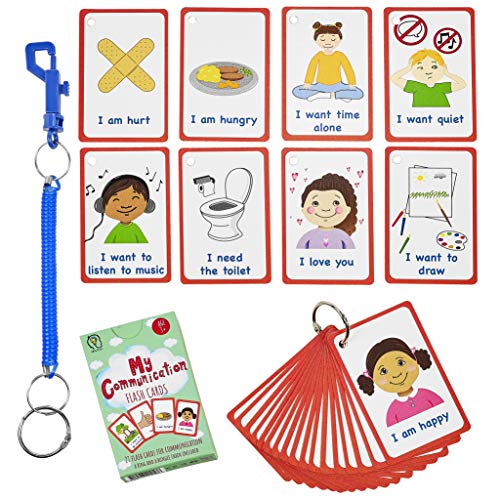
- 27 illustrated cards for core communication needs
- Compact box with bungee clip for easy storage
- Supports speech, language, and confidence building
Best For: A compact starter set for home, school, or travel use.
Large Everyday Set
Equsion 81-Piece Communication Cards

- 81 cards for common foods, drinks, and daily behaviors
- Includes rings plus spring cord keychain for portability
- Built for home, school, therapy, and outings
Best For: A larger set for routine communication across multiple settings.
Durable Pocket Set
Special Needs Communication Cards 80 Needs
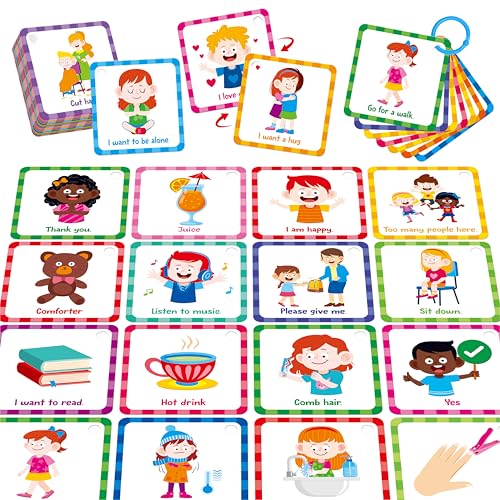
- 40 double-sided cards cover 80 basic communication needs
- Waterproof, tear-resistant PET film finish
- Includes ring and pouch for easy carrying
Best For: A durable, portable set for daily routines and therapy sessions.
Visual Learning Set – Boczif Communication Book for Kids
If you want a daily communication board for special needs that also doubles as an early learning activity, this Boczif communication book gives children a structured way to match picture cards to real-life categories. It supports simple requesting, labeling, sorting, and sentence-building with scenes like body parts, animals, transport, weather, and more.
Best For: Kids who benefit from a picture-based communication book for home, school, or therapy.
Pros:
- Includes category-based cards that support matching, labeling, and early sentence building.
- Plastic cards are wear-resistant, tear-resistant, and moisture-resistant for active use.
- Rounded corners and dot stickers help make the set safer and more secure for kids.
- Works as a visual support system for teachers, parents, caregivers, and therapists.
Cons:
- Card-based format is less immediate than a talking AAC device.
- Best suited to guided use rather than fully independent communication.
This is a practical pick if you want a hands-on communication tool that blends learning and functional expression. It is especially useful when you want to teach basic communication skills through visual categories and repeated practice.
Voice-Button AAC Tool – Joyreal Non Verbal Communication Device
For buyers looking for a daily communication board for special needs with spoken output, this Joyreal AAC device offers a simple button-based way to express common needs. It includes 23 pre-installed messages, six programmable buttons, voice switching, and adjustable volume for use in different settings.
Best For: Nonverbal children and adults who need a portable talking aid with customizable phrases.
Pros:
- 23 built-in messages cover common daily needs like yes, no, thirst, sleep, and noise.
- Six programmable buttons let you record custom phrases in your own voice.
- Male/female voice switch and adjustable volume add flexibility for different situations.
- Lightweight design and storage bag make it easier to carry while traveling.
Cons:
- Requires 3 AAA batteries, so it needs power management.
- Button-based format may not suit users who prefer picture cards.
This model is a strong choice when you want a more direct communication option than cards alone. The combination of preset phrases and programmable buttons makes it useful for daily routines, therapy, and travel.
Daily Routine Visual Chart – ALSLEA Autism Schedule Board
If your goal is a daily communication board for special needs that focuses on routines rather than spoken phrases, this ALSLEA visual schedule board is built for morning, evening, and chore planning. It uses 124 cards to help children see what comes next and build more predictable habits at home or in the classroom.
Best For: Kids who need a visual routine board for chores, school tasks, and daily planning.
Pros:
- Large flannel board provides a clear display for daily routines and chores.
- 124 included cards cover school, home, life activities, and behavior cues.
- Foldable, hangable design works on a wall, door, desk, or playroom.
- Storage bag helps keep the activity cards organized and less likely to be lost.
Cons:
- Focuses on scheduling and routines more than direct verbal communication.
- Requires placing and rearranging cards to update the plan.
This is a useful option when structure and predictability matter most. It is a good fit for children who do better when they can see daily tasks laid out in a simple visual sequence.
Portable Picture Card Binder – Plastic Communication Cards Set
For shoppers seeking a daily communication board for special needs in a compact format, this plastic communication card set focuses on essential needs and feelings. The ring binder and double-sided picture cards make it easy to carry 60 picture words for everyday nonverbal communication.
Best For: Kids, seniors, or patients who need a small portable set of basic communication cards.
Pros:
- 60 picture words cover essential daily needs and feelings.
- Double-sided 75 x 75 mm cards are sized for portability.
- Handy ring binder keeps cards organized and easy to access.
- Useful for autism, speech impairments, toddlers, hospital use, and senior communication.
Cons:
- Smaller card set may not cover as many categories as larger boards.
- Manual card handling may be slower than a voice-output device.
This set is a straightforward choice when you want basic communication support in a travel-friendly form. It works well for quick access to common needs without adding a complex system.
Starter AAC Board – MibbyTalk AAC Device for Autism & Nonverbal Kids and Adults
If you want a daily communication board for special needs that is simple to start using right away, MibbyTalk is built as an entry-level AAC device for home, school, and therapy. It focuses on everyday phrases, feelings, basic needs, and simple routines, with color-coded zones that make it easier to find messages quickly.
Best For: Families starting AAC, transitioning from PECS, or needing a portable backup communication tool.
Pros:
- 32 preset buttons cover common everyday phrases in organized color-coded zones.
- 11 recordable buttons let you add routine-specific or personalized messages.
- Tactile buttons, included AAA batteries, and a silicone case make it easy to use and carry.
- Suitable for home, school, speech therapy, car rides, and community outings.
Cons:
- It is a basic communication aid rather than a high-tech AAC system.
- Customization is limited to the 11 recordable buttons.
Overall, MibbyTalk is a practical starter option if you want a straightforward way to support basic communication without programming complexity. It is especially appealing when you need something durable, portable, and easy for beginners to understand.
Visual Cue Card Set – CHEFAN 110 PCS Autism Communication Cards
For shoppers looking for a daily communication board for special needs in a compact card format, this CHEFAN set offers 110 visual cue cards for routines, needs, and feelings. The cards are designed to help non-verbal children or children with speech delays recognize common actions and interactions through simple pictures.
Best For: Home, school, therapy, and travel use when you want a portable visual support set.
Pros:
- 110 cards cover a wide range of daily situations and essential interactions.
- Includes 3 flip rings and a retractable clip for easy carrying.
- Water-resistant, tear-resistant cardstock is made for repeated daily use.
- Clear, child-friendly illustrations support quick recognition and simple learning.
Cons:
- Card-based format may be less immediate than a button device for some users.
- Requires adult organization to keep the set arranged and accessible.
This is a practical low-tech option if you want a flexible visual aid that can travel easily and cover many everyday communication needs. It works well as a teaching tool for speech therapy or as a reinforcement set at home and on the go.
Now-Next Routine Board – First Then Visual Schedule for Kids
If you need a daily communication board for special needs that also helps with transitions, this visual schedule uses a simple now-next-later layout. It is designed to keep children focused on the current task while showing what comes next, which can help create a more predictable routine at home or in the classroom.
Best For: Autistic children or kids with ASD/ADHD who benefit from a clear, structured visual routine.
Pros:
- Simple 3-symbol layout keeps the schedule easy to understand.
- Includes 32 genuine Picture Communication Symbols and hook-and-loop fasteners.
- Premium plastic construction is waterproof, durable, and easy to clean.
- Compatible with PECS cards and familiar in many school or therapy settings.
Cons:
- Focuses on scheduling and transitions rather than expressive speech.
- Small parts mean it is not suitable for children under 36 months.
This board is a strong pick when your main goal is reducing uncertainty around daily routines. It is especially useful for building confidence around transitions without overwhelming a child with too much information at once.
Portable Starter Set – Amonev Communication Flashcards
If you want a daily communication board for special needs that is simple to grab and use, this 27-card flashcard set is built around clear pictorial cues for speech delay, autism, selective mutism, and other support needs. The compact format makes it a practical choice for home routines, travel, or quick communication support when words are hard to find.
Best For: Families, teachers, and caregivers who want a small, portable visual aid set for everyday communication practice.
Pros:
- 27 hand-drawn cards cover key ideas and items for basic communication.
- Lightweight, round-corner cards come in a small box with a bungee clip for organization.
- Designed to support language development, response recognition, and reduced anxiety.
- Useful for toddlers, children, teens, and some adult communication needs.
Cons:
- The set is smaller than larger daily communication board for special needs options.
- It focuses on core illustrated cues rather than a broad category library.
This is a straightforward, low-bulk option if you need a portable visual support tool rather than a large, expanded system. It works well as an introduction to communication cards or as a backup set for outings and quick reference.
Large Everyday Set – Equsion 81-Piece Communication Cards
For shoppers looking for a daily communication board for special needs with more scenario coverage, this 81-card set focuses on common real-life categories like food, vegetables, fruits, beverages, and daily behaviors. It is designed for autism and delayed language development, and the included rings and spring cord make it easier to keep the cards together during everyday use.
Best For: Parents, therapists, and special education classrooms that want a larger card set for routine communication practice.
Pros:
- 81 cards cover a wider range of frequent daily communication scenarios.
- Includes six metal rings and a spring cord keychain for carrying and organization.
- Suitable for home use, special education classes, therapy, and outings.
- Cardboard cards have a coated surface for repeated daily use.
Cons:
- The cards are focused on common categories, so they may not cover every communication need.
- Designed as a card system rather than a fixed board format.
This set stands out if you want more breadth than a small starter pack and need something easy to pack and move between settings. The organization accessories are especially helpful for keeping a larger communication set usable day to day.
Durable Pocket Set – Special Needs Communication Cards 80 Needs
If you need a daily communication board for special needs that is compact but still covers a lot of ground, this 40-card double-sided set provides 80 basic communication needs in a simple, easy-to-flip format. It uses clear illustrations and simple text to help children and adults with autism, speech delay, or non-verbal communication express needs, feelings, and routines.
Best For: Users who want a durable, pocketable communication set for everyday practice at home, school, therapy, or on the go.
Pros:
- 40 double-sided cards deliver 80 essential communication needs in one set.
- Includes a plastic ring and drawstring pouch for organization and portability.
- Thick cardstock with PET film is waterproof and tear-resistant.
- Clear illustrations and simple text help make the cards easy to recognize.
Cons:
- Smaller card size may feel limited if you want a large visual board layout.
- The set is focused on basic needs rather than an extensive vocabulary library.
This is a practical middle-ground option if you want more coverage than a tiny starter set without moving to a very large pack. The durable construction and carrying pouch make it especially appealing for everyday transport and repeated use.
How We Picked the Best Daily Communication Board for Special Needs
We focused on products that support real-world communication needs: simple symbols or prompts, age-appropriate layouts, and formats that work for nonverbal users, speech-delay learners, and caregivers. We also favored options that appear useful across settings such as home routines, classrooms, therapy sessions, and travel.
Durability, ease of use, and flexibility mattered too. A strong Daily Communication Board for Special Needs should be easy to introduce without a steep learning curve and sturdy enough for repeated daily handling.
Quick Comparison
Think of the options in three broad groups: visual schedule boards for routines, card-based communication sets for everyday needs and feelings, and AAC devices for users who may benefit from more interactive speech-support tools. If the goal is structure, choose scheduling tools. If the goal is expressing wants and needs, choose cards or AAC.
Key Buying Factors for a Daily Communication Board for Special Needs
Communication Level
Choose a board that matches the user’s current skills. Beginners usually do best with simple visuals, basic nouns, and routine prompts. More advanced users may need broader vocabulary or programmable features.
Use Setting
Home, classroom, therapy, and community use all have different demands. A board for school may need daily schedule support, while one for travel or medical visits may need fast access to basic needs and comfort phrases.
Durability and Portability
Look for thick cards, plastic construction, or easy-to-carry formats if the board will be handled often. Portability matters if the user will move between school, home, and appointments.
Vocabulary and Organization
The best Daily Communication Board for Special Needs groups words by function: wants, needs, emotions, routines, and behavior support. Clear organization helps caregivers and users find items faster and reduces frustration.
Ease of Teaching
A board should be easy for parents, teachers, and therapists to model consistently. Tools that are intuitive tend to be used more often, which is what drives progress.
Who Should Buy Which Daily Communication Board for Special Needs?
Choose a visual schedule if the main challenge is transitions or routine management. Choose communication cards if the priority is expressing basic needs, feelings, or classroom responses. Choose an AAC device if the user needs more interactive support and is ready for a broader communication system. For many families, the best starting point is the simplest board that can be used consistently every day.