A well-designed visual behavior chart can turn daily routines into clear, repeatable steps for an autistic child. The right board or card set can reduce confusion, support independence, and make transitions easier.
Below, we focus on the best options for homes, classrooms, and therapy-friendly routines, with attention to durability, ease of use, and how well each system supports real-world behavior goals.
Best 10 Visual Behavior Chart for Autistic Child Picks for 2026
Magnetic Routine Board
QUOKKA Visual Schedule for Kids with Autism
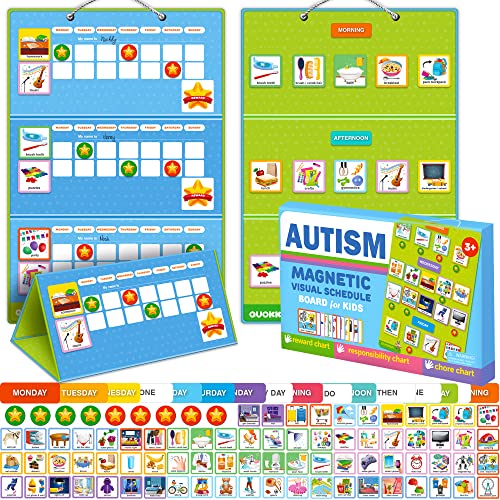
- 80 themed cards plus personalized task cards
- Large fonts and colorful topic frames
- Works for routines, chores, and weekly schedules
Best For: Reusable routine support for kids with autism and multiple children
All-In-One Magnet Set
SchKIDules 93-Pc Visual Schedules

- 72 activity magnets plus 21 headings
- No printing, laminating, or cutting needed
- Sized for clear display on magnetic surfaces
Best For: Fast-start magnetic schedules for kids who need simple visual support
Sticker Motivation Pad

- 26 perforated pages for reusable charting
- 2800 stickers plus motivational stickers
- Easy to hang on wall or fridge
Best For: Sticker-based reward tracking for chores and good habits
Potty Routine Board
Toilet Training Visual Schedule

- Step-by-step support for potty training
- Uses PCS symbols and PECS compatibility
- Waterproof plastic is easy to clean
Best For: Toilet training and hygiene routines for toddlers and autistic kids
Magnetic Motivation Pick
inamio Reward Chart for Home & School

- Magnetic backing for fridge, wall, or metal surfaces
- 80+ chore magnets plus dry-erase customization
- Tactile 3D stars add a reward-focused element
Best For: Families wanting a customizable responsibility chart for ages 3-9
Routine Visibility Choice
Visual Schedule Chart with 70 Cards

- 70 picture cards for a wide range of routines
- Felt board can hang or stand in different ways
- Durable cards and storage bag support repeated use
Best For: Parents and teachers seeking a reusable picture-based routine chart
Magnetic Routine Builder

- 95 cards cover chores, health, hobbies, and events
- Large fonts and color frames make sorting easier
- Includes personalized cards for flexible routines
Best For: Families wanting a broad magnetic card set for routines and responsibilities
2-in-1 Routine Board
Kids Visual Schedule Calendar Chart

- 96 picture cards for chores, meals, outings, and bedtime
- 2-in-1 felt board works on a wall or tabletop
- Reusable coated cards plus storage bag for organization
Best For: Home routines and simple communication support
Large Flannel Planner
ALSLEA Visual Schedule for Kids

- Large 27" x 9.5" board with 124 included cards
- Hangs horizontally or vertically, or stands on a desk
- Made from durable flannel with a protective storage bag
Best For: Larger routine planning at home or school
Weekly Transition Board
Large Visual Schedule for Kids

- Double-sided felt board gives extra room for planning
- 109 cards include weekly, arrow, blank, and activity options
- Works as a wall chart or tabletop teaching board
Best For: Weekly routines and transition support
Magnetic Routine Board – QUOKKA Visual Schedule for Kids with Autism
If you want a visual behavior chart for autistic child that can handle daily routines, chores, and family organization, this QUOKKA board gives you a flexible magnetic system with themed cards. The large fonts, colorful category frames, and reusable cards make it easy to sort tasks faster and build routines as your child grows.
Best For: Families who want a reusable magnetic routine and responsibility board for kids with autism, ADHD, or multiple children.
Pros:
- Includes 80 themed cards plus 6 personalized task cards and 15 extra functional cards.
- Large fonts and colorful topic frames help kids find cards more quickly.
- Can be used for daily to-do lists, weekly schedules, and responsibility charts.
- Made from thick cardboard with rounded edges for everyday use.
Cons:
- Requires a manual setup of the card system before use.
- Cardboard construction is less durable than waterproof plastic boards.
This is a strong option if you want a visual behavior chart for autistic child support that feels broad and adaptable rather than tied to one single routine. It is especially useful when you want one board that can cover chores, events, hobbies, and care tasks.
All-In-One Magnet Set – SchKIDules 93-Pc Visual Schedules
For shoppers comparing a visual behavior chart for autistic child use at home, this SchKIDules magnet set is a ready-to-go option with activity icons and heading magnets included. It is designed to help you build a custom schedule on any magnetic surface without printing, cutting, or laminating extra pieces.
Best For: Parents who want a quick-start magnetic visual schedule for kids who are distracted, forgetful, or on the autism spectrum.
Pros:
- Includes 72 colorful activity magnets and 21 headings.
- No DIY prep required, so it can be used as soon as it arrives.
- Compatible with any magnetic surface, including a refrigerator.
- Each activity magnet is 2 inches square for easy visibility.
Cons:
- Requires a magnetic surface to use.
- Smaller format may not suit users who want a large wall chart.
This set is practical if you want a simple, modular way to create a visual behavior chart for autistic child routines without extra crafting. The mix of icons and headings makes it easy to test different layouts until you find one that fits your household.
Sticker Motivation Pad – Behavior Reward Chart System
If you need a visual behavior chart for autistic child routines that emphasizes positive reinforcement, this reward chart pad focuses on stickers, goal tracking, and repeatable use. The perforated pages and large sticker count make it easy to reward good habits at home or school.
Best For: Kids who respond well to sticker-based motivation for chores, responsibility, and habit-building.
Pros:
- Includes 26 perforated chart pages for one child or multiple children.
- Comes with 2800 stickers plus 35 motivational stickers.
- Includes a chore and prize suggestion sheet for easy customization.
- Can be hung on a wall or attached to a fridge with the included magnet.
Cons:
- Paper construction is less durable than rigid boards or plastic charts.
- Does not offer built-in picture symbols or magnetic activity icons.
This is a straightforward reward-based tool if your goal is to reinforce routines with visible sticker progress. It works well as a visual behavior chart for autistic child support when you want motivation to stay simple, hands-on, and easy to update.
Potty Routine Board – Toilet Training Visual Schedule
When you need a visual behavior chart for autistic child toilet routines, this potty training board keeps the steps simple and easy to follow. It uses picture communication symbols and a compact layout designed to support independent hygiene without overwhelming the child.
Best For: Toddlers and young children who need step-by-step support for toilet training and personal hygiene.
Pros:
- Built around clearly defined potty-training steps.
- Uses genuine PCS symbols and is compatible with PECS cards.
- Waterproof plastic material is durable and easy to clean.
- Compact board fits neatly next to a toilet.
Cons:
- Focused mainly on potty training rather than broader daily routines.
- Single-purpose design may not replace a full household behavior chart.
This is a focused tool if your priority is a visual behavior chart for autistic child bathroom routines rather than a general schedule. The durable, easy-clean design makes it a practical fit for repetitive daily use in the bathroom.
Magnetic Motivation Pick – inamio Reward Chart for Home & School
If you’re comparing a visual behavior chart for autistic child use, this magnetic reward chart stands out for its tactile stars, reusable chore magnets, and flexible setup. With 80+ task options plus a dry-erase marker for custom chores, it can be adapted for routines at home or in school while keeping expectations visible and simple.
Best For: Families who want a magnetic, customizable responsibility chart for ages 3-9.
Pros:
- Strong magnetic backing works on a fridge, wall, or other metal surface.
- Includes 80+ chore magnets plus a dry-erase marker for custom tasks.
- Tactile 3D stars add a hands-on reward element.
- Designed to support independence, focus, and responsibility.
Cons:
- Best suited to metal surfaces for the strongest placement.
- Task-focused format may be less structured than a full visual schedule board.
This is a practical pick if you want a reusable behavior chart that feels engaging without being complicated. The mix of preset chores and custom writing makes it easy to adjust as routines change.
Routine Visibility Choice – Visual Schedule Chart with 70 Cards
This visual behavior chart for autistic child routines is built around clear pictures, durable cards, and multiple display options. The felt board includes 70 cards plus a storage bag, and it can hang horizontally, vertically, or stand upright on a table or counter for daily routine use.
Best For: Parents and teachers who want a reusable visual routine chart with picture cards for daily schedules.
Pros:
- Includes 70 visual schedule cards covering many daily activities.
- Cards are described as sturdy, waterproof, and durable.
- Can be displayed horizontally, vertically, or upright.
- Clear storage bag helps keep completed cards organized.
Cons:
- Uses paper-based card material rather than magnetic pieces.
- May be better for routine planning than for reward tracking.
For families focused on predictability and picture-based communication, this chart offers a straightforward way to make the day easier to follow. The flexible layout and card variety give it good day-to-day usefulness in home or classroom settings.
Magnetic Routine Builder – QUOKKA 95 Reward Chore Cards
If you want a visual behavior chart for autistic child routines that can grow with daily life, this magnetic card set offers a broad mix of themed activities. With 95 cards total, large fonts, color-coded topics, and extra personalized cards, it is designed to make routines easier to sort, display, and follow.
Best For: Families looking for a magnetic routine and responsibility card set with lots of topic variety.
Pros:
- Includes 95 total cards with daily chores, health, hobbies, events, and more.
- Large fonts and colorful topic frames help cards stand out.
- Includes personalized cards for added flexibility.
- Made for daily routines, weekly schedules, and responsibility charts.
Cons:
- Cards are cardboard rather than a full board system.
- No batteries or electronic features for interactive prompts.
This set works well when you want a broad, manual routine tool that can be adapted as a child’s schedule changes. Its themed organization makes it easier to build structure without relying on constant verbal reminders.
2-in-1 Routine Board – Kids Visual Schedule Calendar Chart
If you’re looking for a visual behavior chart for autistic child use at home, this KIKIGOAL board gives you a simple way to map out routines, chores, and bedtime steps with picture cards. The 2-in-1 design can hang on a wall or stand on a table, and the included storage bag helps keep the 96 cards organized for daily use.
Best For: Families and therapists who want a flexible visual schedule board for routines, chores, and communication support.
Pros:
- Includes 96 cards with daily life, school, outing, eating, and routine themes.
- 2-in-1 felt board can be wall-mounted or used upright on a table.
- Waterproof, coated paper cards are designed to be durable and reusable.
- Storage bag and grommets make the set easier to organize and hang.
Cons:
- Some users may want a larger layout for more complex schedules.
- The card system may take a little setup before first use.
This is a practical pick if you want a compact, multi-use routine board that supports both structure and communication. It leans more toward everyday family scheduling than a highly specialized classroom system, which makes it versatile for home use.
Large Flannel Planner – ALSLEA Visual Schedule for Kids
This visual behavior chart for autistic child use is built around a large flannel schedule board and 124 cards, making it a strong option for families who want a clearer day-by-day routine. It can be hung vertically or horizontally, or stood upright on a desk, so it adapts well to home rooms, classrooms, and play spaces.
Best For: Parents and teachers who want a larger, durable routine board with plenty of activity cards and flexible placement options.
Pros:
- Large 27″ x 9.5″ board gives more room for routine planning.
- 124 cards include activity, title, arrow, blank, and star cards.
- Foldable design can hang on a wall or stand upright on a desk.
- Clear storage bag helps keep cards organized and protected.
Cons:
- The larger set may be more than some families need for very simple routines.
- Flannel and card setup still requires some initial organization.
Overall, this model stands out for its size and card count, which can make it easier to build consistent routines and reinforce habits. It’s a good fit if you want more visual flexibility without moving to a full classroom system.
Weekly Transition Board – Large Visual Schedule for Kids
If you want a visual behavior chart for autistic child support that gives extra room for planning, this double-sided board is designed for daily transitions and weekly organization. The larger felt board, 109 cards, and arrow system make it easy to show what comes next, while the blank cards let you customize the chart for home or school use.
Best For: Families, homeschoolers, and special education classrooms that want a larger weekly planner with customization options.
Pros:
- Double-sided felt board provides more space for custom schedules.
- 109 cards include weekly cards, arrow cards, and blank cards for personalization.
- Can be used standing on a table or hung on a wall.
- Clear pocket storage helps keep flash cards together and portable.
Cons:
- Bulkier design may take up more space than smaller routine charts.
- Most useful when you want to manage many daily transitions or weekly plans.
This board is the most flexible of the three if you need a mix of daily structure and weekly planning. Its extra card set and larger layout make it a strong choice for kids who benefit from clear visual transitions throughout the day.
How We Picked the Best Visual Behavior Chart for Autistic Child
For this roundup, we looked for systems that work well as a Visual Behavior Chart for Autistic Child routines, not just generic chore charts. Priority went to products with clear icons, reusable pieces, simple daily sequencing, strong build quality, and enough cards or sections to support morning, bedtime, school, potty, and responsibility routines.
We also favored options that can be adapted as a child’s needs change. A good chart should be easy for caregivers to update, obvious for the child to follow, and flexible enough for home, school, or therapy settings.
Quick Comparison
If you want the simplest setup, choose a compact chart with a small number of high-frequency tasks. If you need more structure, a larger magnetic or card-based system is usually better because it can show multiple routines at once. Reward-focused charts work best for motivation and habit-building, while routine boards are stronger for consistency and transition support.
Key Buying Factors for a Visual Behavior Chart for Autistic Child
Clarity and Visual Design
Look for large, easy-to-recognize icons and minimal clutter. High contrast, simple pictures, and consistent symbols help children understand what comes next without extra explanation.
Ease of Use and Adjustability
The best chart is one you will actually use every day. Magnetic cards, velcro pieces, and reusable boards make it easier to change tasks, remove completed steps, and customize routines as needed.
Durability
Because charts may be handled frequently, choose sturdy materials that can hold up to repeated use. Thick cards, laminated pieces, and strong magnets are especially helpful in busy homes and classrooms.
Routine Scope
Think about whether you need support for one routine or many. Some families only need a morning or bedtime chart, while others need a broader Visual Behavior Chart for Autistic Child support across chores, school prep, toileting, and reward tracking.
Motivation and Reinforcement
If your child responds well to rewards, pick a chart that includes stars, stickers, or clear progress markers. Reinforcement can help connect completed tasks with positive outcomes.
Who Should Buy Which Visual Behavior Chart for Autistic Child?
Choose a smaller, simpler chart if you are introducing visuals for the first time or supporting a younger child. Pick a larger card set or weekly planner if you need structure across several parts of the day. Reward charts are best for children who benefit from immediate positive feedback, while routine boards are a stronger fit when the main goal is predictability and independence.
For many families, the best choice is the one that matches the child’s current attention span, communication style, and daily routine. A chart that is easy to understand and easy to maintain will usually deliver the most value over time.