Finding the right adaptive scissors for autistic child needs can make arts, classroom work, and fine-motor practice far less frustrating. The best options reduce hand strain, improve control, and support different grip preferences.
Below, we focus on scissors that are safer, easier to open, and better suited to sensory-sensitive or developing hands, so you can choose with more confidence.
Best 10 Adaptive Scissors for Autistic Child Picks for 2026
Multi-Pack Loop Scissors
Mini Loop Scissors for Children and Teens

- 6 colorful pairs for group use
- Easy-squeeze loop handles
- Ambidextrous and spring-open design
Best For: Shared classroom or home cutting practice for users who need a low-effort grip
Spring-Assisted Safety Pick
Koopy Spring-Assisted 5 Inch Educational Scissors

- Blunt tips for safer cutting practice
- Spring feature helps weaker hands
- Compact size for preschool use
Best For: Preschoolers and students who need assisted cutting with a safety-first design
Bulk Adaptive Pack
16 Mini Loop Scissors for Kids and Adults

- 16-piece pack in 8 colors
- Self-opening loop handles
- Ambidextrous stainless steel design
Best For: Households or classrooms that need many easy-open scissors for shared use
Toddler Safety Set
Toddler Blunt Tip Adaptive Scissors

- 4 colorful pairs for small groups
- Rounded tips with plastic blades
- Spring lever helps reset cuts
Best For: Toddlers and preschoolers starting supervised cutting practice
Tabletop Mounted Safety Pick
HARAC Adaptive Tabletop Scissors
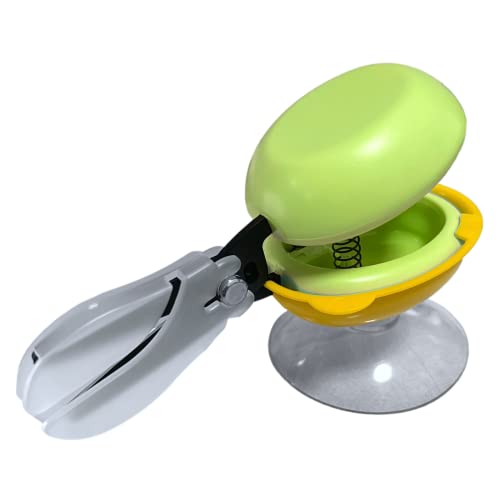
- Suction base supports fixed tabletop use
- Spring-loaded ambidextrous handle
- Non-stick blade cuts tape and adhesive smoothly
Best For: Hands-free cutting with low grip effort
Loop Training Trio

- Ring-style handles fit either hand
- Three-pack works well for home or school
- Helps build fine motor and coordination skills
Best For: Beginner cutting practice and supervised crafts
Japan-Made Practical Pick
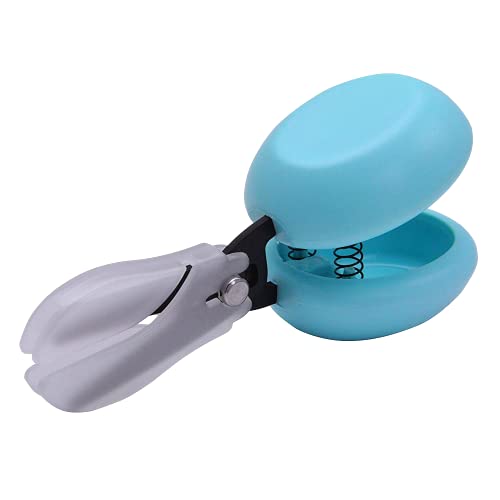
- Tabletop design cuts with palm, wrist, or elbow
- Spring-loaded ambidextrous handle
- Non-stick blade works smoothly on adhesive materials
Best For: Users needing a stable, low-grip cutting tool
Colorful Starter Set
LovesTown 4-Pack Blunt Tip Adaptive Safety Scissors
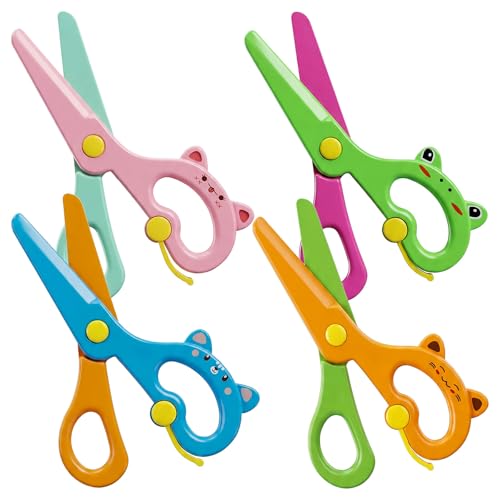
- 4 colorful pairs with rabbit-ear handles
- Rounded tips and plastic blades for paper/playdough
- Spring-action design helps reduce hand fatigue
Best For: Young children starting supervised cutting practice
Compact Self-Opening Option
3Pcs Loop Scissors, 5.5 Inch Adaptive Design

- Self-opening loop handle helps with control
- 5.5-inch size suits smaller or slender hands
- Stainless steel blades for simple craft use
Best For: Children who need a compact loop scissor for basic paper cutting
Larger Adaptive Handle
3 Pcs 8-Inch Loop Scissors for Teens and Adults

- Longer 8-inch body offers a larger grip area
- Self-opening loop design supports grasp-and-release motion
- Ambidextrous and suitable for simple craft work
Best For: Older children or users who need a larger adaptive handle
Multi-Pack Loop Scissors – Mini Loop Scissors for Children and Teens
For families and classrooms looking for adaptive scissors for autistic child support, this 6-pack of 5.5-inch loop scissors offers an easy-squeeze, spring-open design that helps kids stay steadier while cutting paper, cardstock, or fabric under supervision. The ambidextrous handles and colorful set make it easier to match different users and activities.
Best For: Home or classroom cutting practice where multiple children need easy-open, low-effort scissors.
Pros:
- Easy-squeeze loop handles help users with low coordination or hand strength.
- Automatic blade reopening adds control and reduces the need to manually reset each cut.
- Ambidextrous design supports both right- and left-handed users.
- Includes six distinct colors, which is useful for sharing in group settings.
Cons:
- Blades are intended for adult supervision during precise cutting.
- 5.5-inch size is better for small hands than for larger, heavier-duty tasks.
This set is a practical pick when you want simple, low-resistance cutting tools that are easy to assign, store, and use in routine craft or classroom work.
Spring-Assisted Safety Pick – Koopy Spring-Assisted 5 Inch Educational Scissors
If you’re shopping for adaptive scissors for autistic child craft work or early cutting practice, this spring-assisted 5-inch model is built to make opening and closing easier for users with weaker hands. The blunt tips and ergonomic feel make it a straightforward option for school, preschool, and supervised crafting.
Best For: Preschool and classroom cutting practice where safety and assisted cutting matter most.
Pros:
- Spring-assisted cutting helps children who need extra support with grip strength.
- Blunt tips are designed for safer use in young learners and classroom settings.
- Easy to handle for both right- and left-handed users according to the product notes.
- Compact 5-inch size suits small hands and early training use.
Cons:
- Product details list right-hand orientation only.
- Single pair included, so it is not ideal for group use without extras.
This is a solid no-frills choice when the priority is safer, assisted cutting rather than a large multi-pack or specialty grip style.
Bulk Adaptive Pack – 16 Mini Loop Scissors for Kids and Adults
For anyone comparing adaptive scissors for autistic child activities, this 16-pack offers a wide supply of 5.5-inch self-opening loop scissors in multiple colors. The ambidextrous design and stainless steel build make them a practical choice for family use, classrooms, and shared craft stations.
Best For: Families, classrooms, or therapy-style activities that need a large quantity of easy-open scissors.
Pros:
- 16-pack provides plenty of scissors for sharing or backup use.
- Self-opening loop design supports children and others with poor hand coordination.
- Ambidextrous fit works for left-handed and right-handed users.
- Stainless steel construction adds durability for repeated use.
Cons:
- Mini size may feel small for older users with larger hands.
- Quantity is a strength, but it may be more than needed for single-user use.
If you want a bulk option with simple adaptive handling, this set is a strong value for repetitive cutting practice or group settings.
Toddler Safety Set – Toddler Blunt Tip Adaptive Scissors
For parents and teachers seeking adaptive scissors for autistic child fine-motor practice, this 4-pack focuses on early learning with large-loop handles, spring return, and a lightweight design. The plastic construction and rounded safety features are aimed at supervised cutting practice with paper and sensory-friendly play.
Best For: Early preschool learners who need a safe, lightweight set for cutting practice.
Pros:
- Rounded tips and plastic blades are designed for safer beginner use.
- Built-in spring lever helps blades reset automatically and reduces hand fatigue.
- Large-loop handles support both right- and left-handed users.
- Four colorful pairs work well for small groups or family activities.
Cons:
- Plastic blades are limited to paper and similar light tasks.
- Smaller 2.4 x 5.3-inch size is aimed at toddlers and early learners only.
This set is best when the goal is simple, safer starter cutting practice rather than a more durable metal blade tool.
Tabletop Mounted Safety Pick – HARAC Adaptive Tabletop Scissors
If you need adaptive scissors for autistic child support at home, in class, or in therapy, this tabletop-mounted design is built for stable, hands-free cutting. The suction base fixes to a table or wall, and the spring-loaded handle lets users cut with a palm, elbow, or forearm instead of relying on a finger grip.
Best For: Children and users who need a stable, hands-free cutting option with low grip effort.
Pros:
- Removable suction base keeps the scissors fixed for tabletop use
- Spring-loaded, ambidextrous handle supports press-to-cut use
- Non-stick Japanese stainless steel blade helps cut tape and adhesives smoothly
- Rounded blade edge and safety cover add a more controlled cutting setup
Cons:
- Best suited to tabletop use rather than portable cutting
- May feel less familiar than standard finger-ring scissors
- Single unit only, so it is not a classroom multi-pack
Overall, this is a strong pick when stability and simplified hand motion matter most. It is especially practical for users with limited hand strength or limited dexterity who benefit from a guided, low-effort cutting tool.
Loop Training Trio – Sokoweii Loop Scissors 3-Pack
These loop scissors are a straightforward option if you want adaptive scissors for autistic child craft time, preschool practice, or classroom motor-skill work. The ring-style handle is designed to sit comfortably in either hand and reduces finger strain while helping users cut paper, cardstock, or fabric with more control.
Best For: Kids, beginners, and special-needs users who need a simple squeeze-style scissor set for practice.
Pros:
- Loop handle design supports right- or left-hand use
- Helps build hand-eye coordination and fine motor skills
- Three-color pack offers multiple scissors for home or classroom use
- Lightweight build makes them easy for children to handle
Cons:
- Requires adult supervision during use
- More suited to practice and craft cutting than heavy-duty jobs
- Blade design is intended for precision cutting, so extra care is needed
As a training-focused set, these scissors are useful when the goal is comfort, repetition, and basic cutting practice. They are a practical choice for supervised activities where a soft-handfeel design is more important than advanced cutting performance.
Japan-Made Practical Pick – HARAC Adapted Safety Scissors
For families looking for adaptive scissors for autistic child use, this tabletop model offers a simple, universal design that lowers the need for finger strength. The large handle and spring-loaded action allow cutting by pressing with the palm, wrist, or elbow, while the removable safety cover and rounded blade edge help keep the cutting process controlled.
Best For: Users who need a sturdy, universal design that works with minimal grip strength.
Pros:
- Tabletop-friendly design supports palm, wrist, or elbow pressure
- Spring-loaded handle opens automatically after each cut
- Ambidextrous build works for both right- and left-handed users
- Non-stick Japanese stainless steel blade handles tape and adhesives well
Cons:
- Not a standard handheld scissor shape
- Primarily designed for fixed-surface use
- Single item only, so it may not suit group settings on its own
This is a strong option when ease of use and stable support are more important than a conventional scissor feel. It should appeal to users who benefit from a press-to-cut setup and a design built around limited dexterity.
Colorful Starter Set – LovesTown 4-Pack Blunt Tip Adaptive Safety Scissors
If you’re looking for adaptive scissors for autistic child use during early cutting practice, this 4-pack is built to keep things simple, colorful, and low-risk. The rounded tips, plastic blades, and spring-action reset make it easier for kids to try cutting paper or playdough while staying focused on the task.
Best For: Preschoolers and young children who need a gentle, visually engaging starter set for cutting practice, sensory bins, and supervised craft time.
Pros:
- 4-piece set gives multiple color choices and plenty for home, classroom, or sharing.
- Rabbit-ear handles and bright patterns can help make the scissors more inviting to pick up.
- Spring-action lever helps blades reset automatically, reducing hand fatigue during practice.
- Rounded tips and metal-free blade design are intended for paper, playdough, and craft use.
Cons:
- Plastic blades are limited to paper-like materials, not tougher craft supplies.
- Smaller 2.9 x 5.3 inch size is aimed at young children, not older users.
- Best suited to supervised learning rather than heavy-duty cutting.
This set makes sense if you want a friendly-looking adaptive option for early motor-skill practice without adding unnecessary complexity. It focuses on comfort, safety, and repetition rather than advanced cutting performance.
Compact Self-Opening Option – 3Pcs Loop Scissors, 5.5 Inch Adaptive Design
For families comparing adaptive scissors for autistic child use, this 3-pack offers a straightforward loop-handle design that emphasizes control and stability. The self-opening action and compact 5.5-inch size can make it easier for children with smaller or slender hands to work on simple paper-cutting projects.
Best For: Kids who do best with a smaller adaptive scissor and a self-opening handle for simple school or home craft tasks.
Pros:
- Loop design supports a self-opening motion that can help with control and stability.
- 5.5-inch size is compact and suited to children or users with slender hands.
- Stainless steel construction adds durability and rust resistance.
- Ambidextrous design works for both right- and left-handed use.
Cons:
- Smaller size may not feel comfortable for older kids or larger hands.
- Best for simple paper cutting rather than heavier craft materials.
- Product notes are mixed on color descriptions, so shade expectations may vary.
This is a practical, no-frills choice if you want a compact adaptive scissor for basic classroom or home projects. Its value is in the easy-grip loop shape and the low-pressure feel of self-opening cutting.
Larger Adaptive Handle – 3 Pcs 8-Inch Loop Scissors for Teens and Adults
If you want adaptive scissors for autistic child use that allow a larger grip and more room between hand and blade, this 8-inch loop set is the most grown-up option here. The self-opening design is meant to support grasp-and-release motion, and the longer frame can be useful for children who need a more open, easy-to-hold handle.
Best For: Older children, teens, or adults who need a larger ambidextrous adaptive scissor for supervised craft and paper-cutting tasks.
Pros:
- 8-inch length provides a larger grip area than the smaller adaptive sets.
- Self-opening loop style supports grasp-and-release motion and low-coordination use.
- Ambidextrous design works for both right- and left-handed users.
- Stainless steel blades and round tip design add durability with a safety-focused shape.
Cons:
- Larger size may feel big for younger children with small hands.
- Adult supervision is noted as needed despite the safety features.
- More suitable for paper crafts than detailed or heavy cutting work.
This option stands out if a bigger handle and longer tool are easier to manage than a preschool-sized scissor. It’s a good fit for simple cutting tasks where control and comfort matter more than precision.
How We Picked the Best Adaptive Scissors for Autistic Child
We prioritized designs that help reduce effort and improve control, including loop handles, spring-assisted action, tabletop mounting, blunt tips, and ambidextrous use. We also looked for options that are practical for kids, teens, and special-needs users who may benefit from more predictable cutting motion.
For Adaptive Scissors for Autistic Child buyers, the most important question is not just whether the scissors cut well, but whether the grip, resistance, and setup match the user’s comfort and motor skills.
Quick Comparison
Loop and self-opening scissors are usually best for users who need extra assistance returning the blades after each cut. Spring-loaded and tabletop styles can be a stronger fit for those with limited hand strength or one-handed use. Standard handheld adaptive scissors are often better when the goal is classroom independence, practice, or general crafting.
Best Match by Use
Loop/self-opening: easier repetitive cutting and simpler hand motion.
Spring-assisted: less finger fatigue and more consistent blade return.
Tabletop-mounted: maximum stability and low-effort operation.
Blunt-tip training styles: best for early learners and supervision-focused use.
Key Buying Factors for Adaptive Scissors for Autistic Child
Handle style: Loop handles, oversized grips, and ergonomic shapes can reduce sensory and motor strain. If a child resists traditional finger loops, a self-opening design may be easier to accept.
Hand strength and coordination: Choose spring-loaded or mounted scissors for low strength, and training scissors for early cutting skills. If the user is building independence, lighter handheld models may be a better transition tool.
Safety: Blunt tips and controlled cutting action matter most for younger children and supervised therapy activities.
Handedness: Look for lefty-friendly or ambidextrous designs if the child switches hands or needs flexible positioning.
Task fit: Classroom crafts, therapy exercises, and tabletop use all call for slightly different features, so match the tool to the actual activity.
Who Should Buy Which Adaptive Scissors for Autistic Child?
Choose loop scissors if the user needs simple, repeatable opening and closing with less effort.
Choose spring-assisted scissors if fatigue, weak grip, or limited dexterity is the main concern.
Choose tabletop adaptive scissors if stability and one-handed use matter most.
Choose blunt-tip training scissors if you want a safer introduction to cutting for younger children or beginners.
For many families, the best Adaptive Scissors for Autistic Child use are the ones that match the child’s tolerance, strength, and learning stage—not just the most feature-packed option. If possible, start with the simplest tool that supports success, then upgrade only if needed.