Picture communication boards can give non-speaking children and adults a practical way to express needs, choices, feelings, and basic information.
We’ve gathered 10 portable, waterproof, symbol-based, and letter-based options to help families, caregivers, therapists, and healthcare teams choose the right format for daily communication.
Best 10 Picture Communication Boards Picks for 2026
Best for Adult Care
Durable Plastic Communication Boards

- Four specialised boards for expressing needs and preferences
- Durable plastic suited to frequent use
- Portable for hospitals, care homes, and daily activities
Best For: Adults with aphasia, stroke-related communication difficulties, or other communication needs
Best for Clinical Settings
Vidatak EZ Patient Communication Board

- Dry-erase style for repeated communication
- Attached marker and holder stay readily available
- Individually wrapped for infection-prevention use
Best For: Hospitals and healthcare facilities
Best for Portable Choice-Making
60-Picture Communication Cards

- 30 double-sided cards provide 60 picture words
- Ring binder keeps the set organised
- Portable size covers daily needs and feelings
Best For: Portable communication support for children, adults, toddlers, and special-needs users
Best for Outdoor Use
Waterproof Kids Communication Card
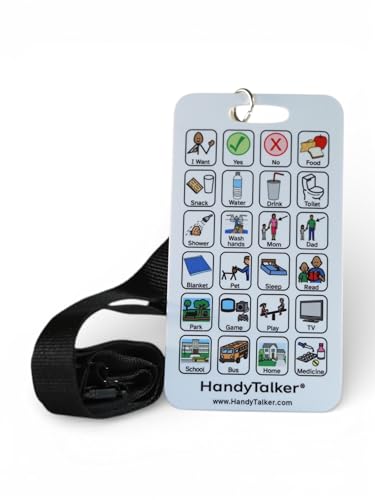
- Rigid waterproof plastic handles outdoor use
- Lanyard keeps the card close at hand
- Screen-free design needs no charging or Wi-Fi
Best For: Children communicating at home, school, while travelling, or outdoors
Portable Value Pick
Fuyoooo 3-Piece Picture Boards

- Three boards for convenient placement
- Symbols cover needs, emotions, and activities
- Compact and portable 11.81-by-8.27-inch format
Best For: Nonverbal adults and people with aphasia needing portable daily communication support
Durable Multi-Theme Set
Six-Board Communication Placemat Set

- Six themed boards for broad daily coverage
- Sturdy, tear-resistant plastic construction
- Wipeable surface supports easy cleanup
Best For: Shared home, therapy, hospital, and care environments
Healthcare Communication Pick

- Six bright boards for daily use and replacement
- Coated 300g cardboard resists tearing
- Writable and erasable with a marker
Best For: Patients communicating needs or discomfort to doctors and caregivers
Best Adult Letter Board
Portable Non-Slip Communication Aid

- Non-slip rubber backing for lap or tabletop use
- Large letters, words, numbers, and symbols
- Portable adult-focused design
Best For: Non-speaking adults who can communicate by selecting letters or printed options
Best Adult Picture Set
12-Card Communication Poster Collection

- 12 adult-focused topic boards
- Covers needs, emotions, health, food, and safety
- Bright illustrated cards for wall display
Best For: Adults and seniors needing broad visual communication support in care settings
Best Kids’ Picture Set
12-Card Visual Communication Collection

- 12 colorful child-focused boards
- Includes play, school, routines, and safety topics
- Designed for classroom, home, and therapy use
Best For: Nonverbal children who benefit from visual support for communication and daily routines
Best for Adult Care – Durable Plastic Communication Boards
These picture communication boards are designed for adults who need a straightforward way to express needs, preferences, and requests. The four-board plastic set is especially practical for hospitals, care homes, and everyday use where durability and portability matter.
Best For: Adults with communication difficulties, including people with aphasia or following a stroke.
Pros:
- Includes four specialised boards for different communication needs.
- Simple, intuitive picture-symbol layout.
- Durable plastic construction for frequent use.
- Compact, lightweight format for use in different locations.
Cons:
- The supplied notes do not indicate whether the symbols or layout can be customised.
- Designed for adult use, so it may be less suitable for children’s communication needs.
This set is a sensible choice when you want multiple sturdy boards rather than a single portable card. Its focus on adult needs makes it particularly useful in care and healthcare environments.
Best for Clinical Settings – Vidatak EZ Patient Communication Board
The Vidatak EZ Board is one of the more healthcare-focused picture communication boards in this roundup. Its dry-erase style, attached marker and holder, and infection-prevention packaging make it suited to structured patient communication in clinical environments.
Best For: Hospitals and healthcare facilities needing a reusable patient communication board.
Pros:
- Dry-erase style supports repeated use.
- Marker and holder are attached for convenient access.
- Individually wrapped boards support infection-prevention practices.
- Designed with input from patients and nurses and used in healthcare facilities.
Cons:
- The supplied notes do not specify the board’s dimensions or symbol categories.
- Its clinical design may be less suited to casual home or travel use.
Choose this board when healthcare workflow and repeated patient use are priorities. The attached writing accessories and individually wrapped format give it a distinctly clinical advantage.
Best for Portable Choice-Making – 60-Picture Communication Cards
This ring-bound set offers a broad selection of picture communication cards for daily needs, feelings, and basic choices. With 30 double-sided cards showing 60 picture words, it is a flexible option for home, therapy, hospital, or on-the-go use.
Best For: Children, adults, toddlers, and people with special needs or speech impairments who benefit from portable visual prompts.
Pros:
- Provides 60 picture words across 30 double-sided cards.
- Ring binder keeps the cards together and easy to access.
- Portable 75 x 75 mm card size suits travel and daily activities.
- Covers essential needs and feelings for practical communication.
Cons:
- Cardstock may be less durable than a plastic board in heavy-use settings.
- The supplied notes do not mention waterproofing.
- Its compact format may provide less viewing space than a full-size board.
This is a versatile pick when variety and portability matter most. The ring binder makes it easier to keep a larger vocabulary set together, though it may need more careful handling than rigid plastic alternatives.
Best for Outdoor Use – Waterproof Kids Communication Card
This rigid visual communication card is built for children who need a simple, screen-free way to express wants, needs, choices, and feelings. Its waterproof plastic construction and included lanyard make it especially convenient for school, travel, recreation, and outdoor activities.
Best For: Kids who need an always-ready communication tool at home, school, during travel, or outdoors.
Pros:
- Uses easy-to-recognize pictures and words for pointing-based communication.
- Waterproof, rigid plastic construction suits outdoor and wet environments.
- Included lanyard keeps the card nearby and accessible.
- Requires no batteries, charging, apps, Wi-Fi, or electronic device.
Cons:
- It is a single card, so it may offer less vocabulary than a multi-card set.
- Designed for kids, making it less appropriate for adult-specific communication needs.
- The supplied notes do not indicate customisation options.
For families seeking durable picture communication boards for active daily routines, this card stands out for its waterproof design and hands-free portability. It is a practical screen-free option when quick access matters.
Portable Value Pick – Fuyoooo 3-Piece Picture Boards
For shoppers comparing picture communication boards, the Fuyoooo set offers three compact boards with symbols covering everyday needs, emotions, and activities. Their portable size makes them practical for keeping communication support available in multiple locations.
Best For: Nonverbal adults and people with aphasia who need a lightweight board for home or travel.
Pros:
- Three-board bundle supports placement in different locations.
- Includes varied symbols and images for needs and emotions.
- Compact 11.81-by-8.27-inch format is easy to carry.
- Covers common daily-life phrases, activities, and feelings.
Cons:
- The notes do not specify a wipeable or laminated surface.
- The compact format may provide less display space than larger boards.
This is a straightforward, portable option for caregivers who want multiple everyday communication aids without carrying a larger communication book.
Durable Multi-Theme Set – Six-Board Communication Placemat Set
Among picture communication boards, this six-piece set stands out for its themed layouts and wipeable plastic construction. The boards address feelings, personal needs, requested items, food, places, and general communication in a larger placemat-style format.
Best For: Homes, therapy settings, hospitals, and care environments that need durable, easy-clean boards for varied interactions.
Pros:
- Six boards provide distinct themes for different communication situations.
- Bright colors, matching words, and images support easier selection.
- Plastic construction is described as sturdy and resistant to tearing or bending.
- Wipeable surface helps simplify cleanup after regular use or meals.
Cons:
- The larger 16.93-by-12.6-inch size is less compact for travel.
- The set weighs more than smaller board options.
Choose this set when durability, hygiene, and broad theme coverage matter more than maximum portability, particularly in shared or frequently used spaces.
Healthcare Communication Pick – Eaasty Six-Pack Picture Cards
These picture communication boards are designed with daily-life content to help patients express needs and ideas more clearly. The six-board package uses bright colors and clear patterns, while the coated cardboard surface can be marked with a marker and erased.
Best For: Patients communicating with doctors or caregivers, plus families seeking a reusable set for everyday needs.
Pros:
- Six boards provide replacements for regular daily use.
- Bright colors and clear patterns are intended to support easy communication.
- 300g coated cardboard is thick and described as tear-resistant.
- Marker notes can be erased without scratching the printed surface.
Cons:
- Cardboard may be less durable around moisture than plastic boards.
- The supplied notes do not list the board dimensions individually or identify specific themes.
This set is a practical choice for healthcare communication, especially when patients need to indicate discomfort, needs, or ideas to doctors and caregivers.
Best Adult Letter Board – Portable Non-Slip Communication Aid
For adults who need a straightforward alternative to speech, this letter-based option is a practical choice among picture communication boards. Its large letters, words, numbers, and symbols support communication about needs, discomfort, and pain, while the non-slip backing helps keep it stable on a lap, tray, or table.
Best For: Non-speaking adults, stroke recovery, aphasia, Parkinson’s, dementia, ALS, tracheotomy recovery, and care settings such as hospitals, rehabilitation centers, nursing homes, and hospice.
Pros:
- Non-slip rubber backing helps prevent movement on laps, trays, and tables.
- Large 9.5-by-8-inch format and smooth vinyl surface make finger selection easier.
- Compact, flexible design fits in a wheelchair side pocket or backpack.
- Adult-oriented blue-and-green design avoids a childlike appearance.
Cons:
- Uses letters and printed words rather than a broad set of picture symbols.
- Includes one board, so it offers less topic coverage than a multi-card set.
This board is especially useful when users can spell or select printed options and need a durable, portable aid that stays put during conversations.
Best Adult Picture Set – 12-Card Communication Poster Collection
This 12-piece collection is a broad, visual choice among picture communication boards for adults and seniors. The cards cover everyday needs, emotions, health, safety, food, schedules, and more, giving caregivers multiple topic-specific tools for home, therapy, and facility use.
Best For: Nonverbal adults and seniors with aphasia or other communication difficulties in hospitals, nursing homes, rehabilitation centers, assisted living facilities, adult day care, and private homes.
Pros:
- Includes 12 distinct boards covering practical daily and care-related topics.
- Bright colors, clear illustrations, and corresponding text support visual understanding.
- Approximately 11.4 by 8.3 inches for easy reading and display.
- Can be posted on walls, bulletin boards, or other visible locations.
Cons:
- Paper construction may be less suitable for frequent handling than a rigid or vinyl board.
- Wall-mount format may be less convenient for users who need a portable bedside aid.
- Unframed cards may require separate mounting supplies.
Choose this set when variety matters most: its topic-specific posters can keep frequently needed vocabulary visible and accessible across different care environments.
Best Kids’ Picture Set – 12-Card Visual Communication Collection
Designed for younger users, this 12-piece collection provides colorful picture communication boards for children who are nonverbal or have aphasia. Its subjects move beyond basic requests to include play, school, routines, digital time, rewards, bedtime, and safety, making it suitable for structured learning and daily communication.
Best For: Nonverbal children in homes, classrooms, schools, hospitals, and therapy or care settings.
Pros:
- Includes 12 visual boards with child-focused topics and cartoon-style imagery.
- Covers emotions, personal needs, play, school, routines, time, rewards, and safety.
- Bright illustrations and text are intended to make information easier for children to understand.
- Approximately 11.4 by 8.3 inches and suitable for wall or bulletin-board display.
Cons:
- Paper construction may be less durable for repeated handling than a rigid board.
- Wall-mount design may not be ideal for carrying between activities.
- Its child-oriented themes may not suit older students or adults.
This is a strong fit for caregivers and educators who want a broad set of colorful, routine-oriented visuals rather than a single portable communication board.
How We Picked the Best Picture Communication Boards
We focused on boards and card sets designed for non-speaking users, aphasia, autism, stroke recovery, speech therapy, hospital care, and everyday support. Our comparison considers the communication formats offered, portability, durability, ease of cleaning, symbol clarity, and suitability for different ages and settings.
Because communication needs vary widely, this list includes compact single boards, multi-card sets, picture-symbol systems, and letter charts. Product descriptions and stated features were used to identify the most useful applications, but caregivers and speech-language professionals should match any system to the user’s individual abilities and care plan.
Quick Comparison
| Board type | Best suited to | Main advantage |
|---|---|---|
| Single rigid picture board | Home, hospital, or care settings | Simple, fast access to common needs |
| Multi-card picture set | Children, therapy, and varied routines | More vocabulary and flexible use |
| Waterproof portable board | Travel and everyday carry | Better protection from spills and wear |
| Letter-based chart | Users who can spell or identify letters | Supports a wider range of messages |
Key Buying Factors for Picture Communication Boards
Communication Level and Symbol Design
Choose symbols the user can recognize quickly. Basic needs such as food, drink, pain, toilet, yes, and no are often the most useful starting points. A letter chart may be more appropriate for someone who can read, spell, or point to individual characters.
Age and Intended Setting
Children may benefit from colorful cards with familiar routines, while adults may prefer discreet, clearly labeled symbols. Hospital and care-home use often calls for large, high-contrast graphics that can be understood by caregivers at a glance.
Durability and Cleaning
Rigid plastic and waterproof materials are useful where boards may be handled frequently or exposed to spills. Check whether the surface can be wiped clean and whether cards can be kept together with a ring, lanyard, pouch, or similar attachment.
Portability and Organization
A compact board is easier to keep beside a bed, attach to a wheelchair, or carry in a bag. Multi-card sets provide more choices but need a practical way to organize, display, and locate the right card quickly.
Vocabulary and Customization
Look for a set that covers the user’s real routines rather than simply offering the largest number of symbols. Extra cards can help with behavior, emotions, activities, or medical needs, but only if the user can access them without confusion.
Who Should Buy Which Picture Communication Boards?
For hospitals, care homes, and stroke recovery: choose a durable board with large basic symbols, medical needs, and yes-or-no communication. A letter chart can add flexibility for users with stronger literacy skills.
For children and autism support: multi-card picture sets are useful when communication must cover routines, choices, behavior, and emotions. Keep the most frequently used cards visible and within easy reach.
For travel and everyday carry: select a waterproof, rigid, lightweight option with a lanyard or compact format. The best board is one that is consistently available when communication becomes difficult.
For speech therapy: consider a broader card set that allows therapists and caregivers to build vocabulary gradually. Introduce symbols at a manageable pace and coordinate choices with the user’s speech-language professional when possible.