A well-designed sensory tent can give children a predictable, lower-stimulation space for calming down, relaxing, or taking a break. Blackout models add privacy and reduce visual distractions, making them useful in bedrooms, classrooms, and calm corners.
Our roundup covers compact pop-up tents, larger options for children and adults, and models that include extras such as lights, blankets, or fiber-optic accessories. Compare dimensions, setup, materials, and included features before choosing the best fit.
Best 10 Blackout Sensory Tents Picks for 2026
Best Overall Blackout Sensory Tent

- Fully blackout fabric for a dark retreat
- Pops up in seconds
- Designed for one child and light play
Best For: One child needing a compact indoor calm space
Best Classroom Blackout Sensory Tent

- Creates a dark calm corner indoors
- Sized for one child
- Supports projectors and sensory accessories
Best For: Classrooms and home calm corners
Best Spacious Blackout Sensory Tent

- Larger 39-inch square design
- Sets up in about one minute
- Includes a storage bag and airflow window
Best For: Children needing more room for play or relaxation
Best Feature-Rich Blackout Sensory Tent

- Includes remote-controlled LED lighting
- Dual mesh windows and storage pockets
- Folds flat with a carry bag
Best For: Users wanting customizable lighting and organized sensory tools
Best Accessory-Rich Pick
Special Supplies Blackout Sensory Tent

- Includes a fiber optic lamp and glow-in-the-dark blanket
- Quick pop-up design with a darkening door
- 36-inch cube for reading, rest, and light play
Best For: Children ages 6–12 who want a calming hideaway with extras
Best Compact Calm Corner
Sensory Tent Mini Blackout Hideaway
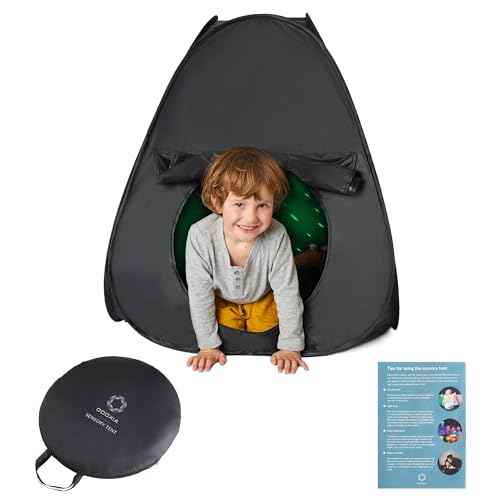
- Small design suits younger children
- Blackout fabric creates a dark retreat
- Pops open and folds away for storage
Best For: Ages 36 months–6 years needing a simple quiet space
Best Certified Portable Option

- CPC certification is listed in the product details
- Closable panels block most outside light
- Collapsible 35.4-inch cube with adjustable windows
Best For: Ages 6+ needing a portable home or classroom retreat
Extra-Large Blackout Retreat

- Fully black interior creates a low-stimulation space
- Spacious 47-inch cube for kids
- Pop-up setup includes storage bag
Best For: Children needing a roomy, dark calm-down retreat
Certified Large Oasis

- PU-coated fabric is designed for complete shading
- Mesh windows and pockets add practicality
- Folds into an 18.5-inch storage bag
Best For: Home or classroom use with adjustable ventilation and storage
Compact Certified Hideout

- Compact size suits smaller rooms
- PU-coated fabric is designed to block light
- Lightweight 2.7-pound foldable design
Best For: Portable sensory use where floor space is limited
Best Overall Blackout Sensory Tent – Sensory Play Tent
This compact blackout sensory tent is a practical choice for creating a private, dark retreat indoors. Its instant pop-up design suits families who want a quick sensory hideout for calming breaks, play, or UV and projector-based activities.
Best For: One child who needs a small, portable calm space at home.
Pros:
- Fully blackout fabric creates a dark, low-distraction environment.
- Sets up in seconds without complicated assembly.
- Works well for light play with UV lights, projectors, and similar toys.
- Lightweight at about 0.79 kg.
Cons:
- Single-child capacity limits shared use.
- The compact 35.4-inch cube may feel small for older or larger children.
Choose this model if fast setup and a straightforward blackout space matter most. Its small footprint makes it convenient for indoor use, though buyers should check the dimensions before purchasing.
Best Classroom Blackout Sensory Tent – Pop-Up Calm Corner Tent
Sensory Tent | Pop-up Sensory Black Out Tent with Calming Effect | Kids for Classroom Calm Corner
Check Price On AmazonAmong blackout sensory tents, this pop-up model is geared toward creating a calm corner at home or in a classroom. It provides a dark retreat in daylight and can be personalized with cushions, blankets, toys, projectors, or other sensory accessories.
Best For: Classrooms, calm corners, and one child who needs a dedicated break area.
Pros:
- Blackout design helps reduce light and visual distraction.
- Suitable for indoor home or classroom use.
- Supports sensory play with UV lights, projectors, and lava lamps.
- Fiberglass frame and pop-up construction make setup simple.
Cons:
- Its 72 x 72 x 78 cm dimensions provide space for one child.
- It is intended for indoor use rather than outdoor camping.
This is a sensible pick when a school or home needs a compact, ready-to-use retreat without dedicating an entire room to sensory support. The single-child capacity is the main limitation to consider.
Best Spacious Blackout Sensory Tent – Quick-Setup Calming Tent
This larger blackout sensory tent offers more floor space than compact cube-style options, while retaining quick setup and packaway convenience. The blacked-out interior is designed to limit external light and distractions, and the included carry bag supports use at home, school, or while traveling.
Best For: Children who need extra room to play, relax, or sleep in an indoor sensory retreat.
Pros:
- 39 x 39 x 39-inch design provides about 10.56 square feet of floor area.
- Blackout interior creates a non-stimulating space.
- Sets up in about one minute and packs into the included storage bag.
- Door and window support access and airflow.
Cons:
- At 3.3 pounds, it is heavier than the smaller sensory tents.
- Its camping-style construction may take up more indoor floor space.
- The product notes recommend indoor use despite waterproofing features.
This model stands out when room to move is more important than the smallest possible footprint. It is a strong option for families wanting a larger indoor hideout that can still be folded away between uses.
Best Feature-Rich Blackout Sensory Tent – L'ARCHE LED Calm Corner
This feature-rich blackout sensory tent combines a dark retreat with battery-powered multicolor LED lighting and a remote control. Dual mesh windows, interior storage pockets, a carry bag, and regular or big size options make it adaptable for home, therapy, or classroom use.
Best For: Families, teachers, and therapists who want customizable lighting and organized sensory storage.
Pros:
- 100% blackout design supports a dark, calming space.
- Includes LED lights with dynamic effects and a remote control.
- Dual mesh windows provide airflow, while inner pockets hold sensory tools.
- Folds flat, pops up quickly, and includes a carry bag.
Cons:
- Battery-powered lights require batteries, which are not included.
- The listed regular size is 35.4 inches per side; larger users may need the big option.
- More features may mean more setup considerations than a basic tent.
Choose this tent if lighting control and built-in organization are priorities. It offers more sensory customization than a plain blackout shelter, with size selection helping accommodate different users.
Best Accessory-Rich Pick – Special Supplies Blackout Sensory Tent
The Special Supplies blackout sensory tent combines a dark, private hideaway with calming accessories. Its 36-inch cube size, quick pop-up design, fiber optic lamp, and glow-in-the-dark blanket make it a practical choice for children who want a cozy place to read, rest, or enjoy light-based play.
Best For: Children ages 6–12 who would benefit from a portable calming corner with included sensory accessories.
Pros:
- Door can create a dark environment, including during daytime.
- Includes a fiber optic lamp and glow-in-the-dark fuzzy blanket.
- Single-pole pop-up design is intended for quick setup.
- Provides room for pillows, blankets, and toys.
Cons:
- The 36-inch cube may feel compact for larger children or extended play.
- The supplied notes recommend it for ages 6–12, limiting its fit for younger children.
Choose this model if the included lamp and blanket add meaningful value to your child’s calming routine. It is especially appealing for homes, classrooms, or bedrooms where quick setup and imaginative light play matter.
Best Compact Calm Corner – Sensory Tent Mini Blackout Hideaway
This small blackout sensory tent is designed as a straightforward calm corner for younger children. Its blackout synthetic fabric helps create a dark setting for reading, relaxing, or using sensory lights, while the pop-open construction makes storage and setup simple.
Best For: Children ages 36 months–6 years who need a compact, foldable space for quiet time and sensory play.
Pros:
- Blackout fabric is designed to create a dark, calming environment.
- Pop-open construction supports easy assembly and folding for storage.
- Can accommodate reading, relaxation, and sensory room items.
- Intended to support quiet time, focus, and children with sensory sensitivities.
Cons:
- The small size may not suit older or taller children.
- The supplied details do not list included sensory accessories.
- It is less suitable if you need a larger tent for multiple children or abundant cushions and toys.
This is a practical pick when footprint and easy storage are priorities. Its simpler design keeps the focus on providing a dark, private retreat rather than supplying a collection of accessories.
Best Certified Portable Option – CPC Blackout Sensory Tent
This CPC-certified blackout sensory tent offers a roughly 35.4-inch cube for a private calming corner at home or in a classroom. Its closable door and windows block most outside light, while the collapsible design supports portable use with cushions, toys, projectors, or other light-up items.
Best For: Children ages 6 and up who need a portable, enclosed sensory space for bedrooms or classrooms.
Pros:
- CPC certification is listed in the supplied product details.
- Closed door and windows block almost all outside light according to the product description.
- Windows on both sides allow viewing and light adjustment.
- Includes a 1-year warranty against manufacturer defects.
Cons:
- Accessories such as projectors and lava lamps are not listed as included.
- The 35.4-inch cube may be limiting for larger children or extensive furnishings.
- The manufacturer recommends it for ages 6 and up, so it may not be the best fit for younger children.
Consider this model when certification, adjustable windows, and portability are high on your list. It provides a flexible shell for a calming setup, but you will need to supply any preferred lighting or sensory toys separately.
Extra-Large Blackout Retreat – 47-Inch Calming Sensory Tent
If you need blackout sensory tents with generous interior space, this 47-inch pop-up model creates a fully dark, enclosed retreat for children ages 3 to 12. Its roll-up door and window allow you to adjust the enclosure, while the included storage bag makes it practical for moving between rooms or locations.
Best For: Children who need a spacious, fully blacked-out calm-down area for relaxing, reading, sleeping, or self-regulation.
Pros:
- Large 47 x 47 x 47-inch interior provides room for a child to sit or relax.
- Completely black interior helps create a low-stimulation environment.
- Pop-up design requires no assembly and includes a storage bag.
- Roll-up door and window can support flexible ventilation and access.
Cons:
- Its 47-inch footprint may require a relatively spacious setup area.
- The supplied details identify it for kids ages 3 to 12, so it may not suit larger users.
This is a strong choice when interior room and complete darkness matter most. It also supports customization with lights, projectors, or sensory toys, though those additions are not included.
Certified Large Oasis – Portable 47-Inch Sensory Tent
Among blackout sensory tents, this CPC-certified 47-inch model stands out for its PU-coated, light-blocking fabric and convenience features. Mesh windows, closable covers, and built-in pockets make it useful for longer quiet-time sessions at home or in a classroom.
Best For: Children or families wanting a large portable sensory space with storage pockets, adjustable windows, and a stated CPC certification.
Pros:
- PU-coated fabric is designed to block light, including light from a flashlight or phone.
- Large 47 x 47 x 47-inch size accommodates reading, playing, or relaxing.
- Mesh windows support airflow and have Velcro covers for adjustment.
- Folds into an 18.5-inch storage bag and weighs 3.8 pounds.
Cons:
- The larger size takes more floor space than the 35-inch alternative.
- The high-elastic steel frame may need shaking if one side appears bent after setup.
This model offers the most feature-rich setup in the group, combining blackout fabric with pockets and adjustable mesh windows. Its CPC certification and portable design may be particularly useful for shared or classroom environments.
Compact Certified Hideout – 35-Inch Portable Sensory Tent
This compact option is one of the more portable blackout sensory tents, measuring about 35 inches on each side and weighing 2.7 pounds. It combines CPC certification with PU-coated blackout fabric, closable mesh windows, and a quick pop-up setup for smaller rooms or travel between spaces.
Best For: Children who need a smaller, easy-to-carry dark retreat for bedrooms, classrooms, or other areas where floor space is limited.
Pros:
- Compact 35.4 x 35.4 x 35.4-inch size fits more easily in limited spaces.
- PU-coated fabric is designed to block light in bright surroundings.
- Mesh windows provide airflow and can be covered with Velcro panels.
- Weighs 2.7 pounds and folds into a 15.7-inch storage bag.
Cons:
- The smaller interior offers less room than the 47-inch models.
- The frame may need a few shakes if it appears bent inward after popping open.
Choose this version when portability and a smaller footprint outweigh the need for maximum interior room. It retains the blackout-focused construction and adjustable windows while being easier to carry and store.
How We Picked the Best Blackout Sensory Tents
We focused on practical features that affect everyday use: blackout coverage, interior dimensions, setup time, portability, ventilation, stability, and ease of cleaning. We also noted whether each tent is designed for a particular age range, supports adult use, or includes calming accessories. Product claims about autism, ADHD, SPD, anxiety, or focus should not be treated as medical guarantees; the right tent is a supportive environment, not a replacement for professional care.
Safety matters too. Look for clear supervision guidance, breathable construction, secure openings, and materials appropriate for the intended user. Always follow the manufacturer’s instructions and avoid leaving a child unattended inside a fully enclosed tent.
Quick Comparison
| Best For | What to Prioritize | Useful Features |
|---|---|---|
| Small rooms or travel | Compact folded size and fast setup | Carry bag, lightweight frame |
| Home calm corners | Blackout coverage and comfortable floor area | Quiet opening, soft accessories |
| Classrooms | Durable, wipeable materials | Simple supervision and storage |
| Older children or adults | Interior height and floor dimensions | Large 47-inch designs, sturdy construction |
Key Buying Factors for Blackout Sensory Tents
Size and Usable Space
Check the assembled dimensions rather than relying on terms such as “extra large.” A smaller tent may suit one child and a tight corner, while a 47-inch model can provide more room to sit, stretch, or use calming items. Confirm the interior height and entrance size if the user is tall, needs assistance, or may use the tent with a cushion.
Blackout Level and Ventilation
Blackout fabric can reduce visual stimulation, but complete darkness is not ideal for every user. Look for adjustable openings, mesh panels, or ventilation features that allow you to control airflow and light. A tent should feel enclosed without becoming hot or difficult to monitor.
Setup, Storage, and Durability
Pop-up frames are convenient, especially for classrooms and travel, but they must fold safely and hold their shape. Consider the packed size, included storage bag, frame construction, and whether the fabric can be spot-cleaned. For frequent use, durable seams and a floor that tolerates regular cleaning are valuable.
Included Calming Extras
Some Blackout Sensory Tents include LED lights, fiber-optic lamps, blankets, or glow accessories. These can add value, but they are not essential if you already have preferred sensory tools. Check exactly what is included, how accessories are powered, and whether loose items are appropriate for the intended age.
Who Should Buy Which Blackout Sensory Tents?
Choose a compact pop-up model for occasional breaks, travel, or a small bedroom. A mid-size tent is a practical choice for a home calm corner or classroom when one child needs a private retreat. Select a larger design for older children, shared floor space, or users who find small enclosures restrictive. If visual stimulation is the main concern, prioritize reliable blackout fabric; if portability is most important, favor fast setup and a manageable folded size. Before buying, measure the available space and decide whether the tent will be used daily, occasionally, or in more than one location.