The best indoor sensory tents give children a defined space to decompress, play quietly, or manage overwhelming sights and sounds. The right option should balance privacy, ventilation, portability, and enough room for comfortable use.
We compared blackout designs, pop-up frames, calming features, child-friendly themes, and practical extras to help you choose a tent that fits your space and your child’s sensory needs.
Best 10 Indoor Sensory Tents Picks for 2026
Deep-Calm Retreat
Extra-Large Blackout Sensory Tent

- Fully blackout interior for a low-stimulation retreat
- Roomy 47-inch cube accommodates comfortable quiet time
- Pop-up design includes a storage bag
Best For: Children ages 3–12 needing a spacious calming corner
Galaxy Hideaway

- Galaxy theme supports imaginative space play
- Breathable mesh panels improve airflow
- Folds into a compact included carry bag
Best For: Ages 3–8 wanting a playful retreat for reading and pretend play
Classroom Calm Corner

- Blackout interior supports a darker retreat
- Compact size fits home or classroom calm corners
- Designed for one child and quick pop-up use
Best For: Ages 3+ needing a dedicated single-child break space
Ocean Imagination Nook

- Colorful ocean theme encourages imaginative play
- Roomy design fits up to three children
- Portable pop-up design is easy to store
Best For: Ages 3+ wanting a shared playhouse and reading nook
Certified Blackout Retreat

- 35.4-inch enclosed cube with blackout panels
- Tool-free pop-up setup and side viewing windows
- Durable vinyl build with stated 1-year warranty
Best For: A personal, portable calming space for indoor sensory play
Compact Calm Corner

- 35-inch personal space for one child
- Blackout nylon enclosure for indoor use
- Spring-steel frame pops open in seconds
Best For: Toddlers and young children needing a compact retreat
Best Accessory-Rich Pick
Fiber Optic Blackout Sensory Tent

- Blackout door supports a darker retreat
- Includes fiber optic lamp and fuzzy blanket
- Quick pop-up setup with 36-inch footprint
Best For: Children ages 6–12 who want included sensory-play accessories
Best Portable Nook
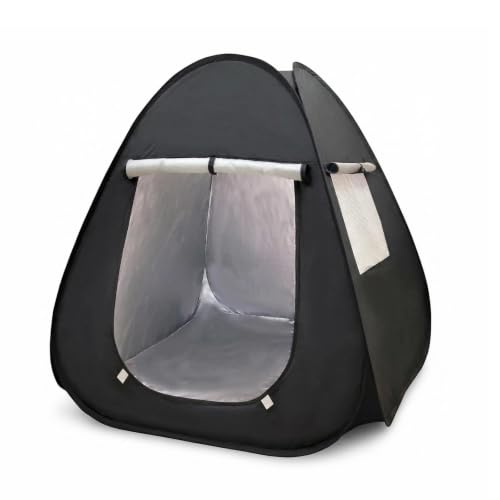
- Full-blackout fabric creates a dim retreat
- Pops up in about one second
- Folds flat for storage and transport
Best For: Young children needing a portable, customizable quiet nook
Best for Light Play
Single-Child Blackout Sensory Den

- Blackout interior supports UV and projector play
- Pops up quickly for an enclosed retreat
- Designed for one child
Best For: One child using personal lights or projectors for sensory play
Deep-Calm Retreat – Extra-Large Blackout Sensory Tent
For shoppers comparing indoor sensory tents, this extra-large pop-up model is designed around a dark, enclosed retreat. Its 47-inch cube shape, blackout interior, and portable setup make it practical for creating a calming corner at home.
Best For: Children ages 3–12 who benefit from a spacious, low-stimulation space for calming, relaxing, or quiet play.
Pros:
- Fully black interior helps create a dark, non-stimulating environment.
- Extra-large 47 x 47 x 47-inch design offers generous room.
- Sets up quickly, folds down for transport, and includes a storage bag.
- Roll-up door and window support flexible use with projectors or lights.
Cons:
- The blackout design may be less suitable when children need bright, open play space.
- At 3.4 pounds, it is portable but heavier than some compact play tents.
This is a strong choice when the priority is a roomy, genuinely dark sensory retreat rather than a brightly themed playhouse.
Galaxy Hideaway – Starry Pop-Up Play Tent
This galaxy-themed option gives indoor sensory tents a more imaginative, open-ended feel. Its breathable mesh panels, roomy interior, and lightweight folding design suit children who want a personal hideout for reading, pretend play, or relaxing.
Best For: Children ages 3–8 who prefer imaginative space-themed play alongside a cozy personal retreat.
Pros:
- Starry galaxy design encourages imaginative play and space exploration.
- 47 x 47 x 43-inch interior can fit two to three children, according to the supplied notes.
- Mesh panels promote airflow and ventilation.
- Folds into the included compact carry bag for storage or travel.
Cons:
- It is not described as a blackout tent, so it may not block visual stimulation as effectively as dedicated sensory models.
- The recommended age range is narrower than some alternatives, especially for taller children.
Choose this tent when imaginative play and ventilation matter more than complete darkness or a specialized calm-down setup.
Classroom Calm Corner – Compact Blackout Sensory Tent
Sensory Tent | Pop-up Sensory Black Out Tent with Calming Effect | Kids for Classroom Calm Corner
Check Price On AmazonAmong indoor sensory tents, this compact blackout model is tailored to calm corners at home or school. The pop-up fiberglass frame creates a dark retreat for one child, while its small footprint is convenient where space is limited.
Best For: One child age 3 or older who needs a dedicated break space in a classroom, nursery, or home.
Pros:
- Blackout construction creates a darker, calmer environment even during daylight.
- Compact 72 x 72 x 78 cm size suits classrooms and smaller rooms.
- Can be personalized with cushions, blankets, favorite toys, projectors, or lamps.
- Pop-up format is intended for quick indoor setup.
Cons:
- The supplied notes indicate space for one child, limiting group play.
- Its smaller dimensions provide less room than the 47-inch models in this roundup.
This is the most space-conscious choice for a structured calm corner, particularly when one-child use and blackout performance are the main priorities.
Ocean Imagination Nook – Mermaid Ocean Play Tent
This ocean-themed tent is a colorful alternative among indoor sensory tents, combining a cozy retreat with imaginative play. Its undersea graphics, pop-up construction, and space for up to three children make it suitable for reading, role-play, and sensory exploration.
Best For: Children age 3 and older who enjoy bright themed play, ocean storytelling, and a shared indoor hideaway.
Pros:
- Underwater artwork featuring mermaids, whales, sea turtles, clownfish, and coral encourages imaginative play.
- Spacious interior can accommodate up to three children, according to the supplied notes.
- Pop-up design, portable rods, and included bag support convenient storage and transport.
- Fabric is described as durable and easy to clean with a damp cloth.
Cons:
- Bright ocean visuals may not suit children who need a dark, low-stimulation sensory environment.
- The supplied details do not specify blackout construction or exact dimensions.
This tent fits families seeking a versatile playhouse that can double as a reading nook or sensory retreat, rather than a dedicated blackout space.
Certified Blackout Retreat – CPC-Certified Sensory Tent
For shoppers comparing indoor sensory tents, this 35.4-inch cube is a compact, enclosed option designed to create a darker, quieter retreat. Its blackout panels, viewing windows, and pop-up setup make it practical for bedrooms, classrooms, or other indoor spaces.
Best For: Children who need a personal, portable calming space for quiet play, relaxation, or light-based sensory activities.
Pros:
- CPC-certified children’s product, according to the manufacturer.
- Blackout door and windows help block most outside light when closed.
- Sets up without additional tools and includes accessible side windows.
- Durable vinyl construction with a 1-year manufacturer-defect warranty.
Cons:
- The 35.4-inch cube is sized for a personal retreat rather than shared use.
- The manufacturer lists different age guidance in the supplied details, so shoppers should review suitability carefully.
This is a strong fit when blackout performance, certification, and a compact footprint matter more than extra interior room.
Roomy Starry-Night Den – OUTREE Extra-Big Sensory Tent
Among indoor sensory tents, the OUTREE stands out for its 47-inch cube and room for two to three individuals. The blackout design, layered windows, and included carry bag make it a flexible choice for creating a larger sensory corner at home.
Best For: Families seeking a spacious sensory tent for shared calming time, play, naps, or use with sensory lights and toys.
Pros:
- Extra-large 47-by-47-by-47-inch interior can fit two to three individuals.
- Blackout panels create a cocooned space, even during daylight.
- Two-sided windows offer a choice between a darker den and more airflow.
- Sets up in about a minute without tools and stores in the included carry bag.
Cons:
- The larger footprint requires more floor space than compact personal tents.
- At 1.66 kg, it is heavier than some smaller pop-up options.
Choose this model if interior space and flexible ventilation are priorities, particularly when a child may want an adult or sibling nearby.
Compact Calm Corner – Small Blackout Sensory Tent
This small indoor sensory tent creates a dedicated 35-inch retreat for one child. Its blackout nylon enclosure pops open in seconds, making it useful at home or in a classroom when a child needs a quick break from a busy environment.
Best For: One toddler or young child who needs a compact calming corner for quiet play, relaxation, or focus breaks.
Pros:
- Blackout design helps create a dark, calming environment during daylight.
- 35-inch size is suited to one child and smaller indoor areas.
- Spring-steel frame pops open in seconds for quick setup.
- Can accommodate comforting toys, cushions, blankets, projectors, or other light toys.
Cons:
- The small interior is not intended for multiple children.
- Supplied details recommend the product for ages 12 months to 8 years, so older children may find it restrictive.
This is the most space-conscious choice of the three, especially for buyers who want an instant personal calm corner rather than a larger play tent.
Best Accessory-Rich Pick – Fiber Optic Blackout Sensory Tent
For families comparing indoor sensory tents, this pop-up model combines a dark, enclosed retreat with accessories for calming and light-based play. Its 36-inch square footprint provides room for pillows, blankets, and toys, while the included fiber optic lamp and glow-in-the-dark blanket add sensory-play options.
Best For: Children ages 6–12 who want a cozy blackout hideout with included light-play and comfort accessories.
Pros:
- Blackout door helps create a darker daytime environment.
- Includes a fiber optic lamp and glow-in-the-dark fuzzy blanket.
- Single-pole pop-up design is intended for quick setup.
- Suitable for reading, resting, naps, and quiet play.
Cons:
- The 36-inch dimensions are designed for one child rather than group use.
- The included accessories may be unnecessary if you already have sensory lighting and blankets.
This is a strong choice when a ready-to-use calming corner matters more than a minimalist tent-only setup. Its space theme, blackout capability, and bundled accessories make it particularly versatile for quiet time and creative light play.
Best Portable Nook – Compact Blackout Sensory Tent
This indoor sensory tent focuses on creating a private, low-distraction nook for play, reading, drawing, or quiet time. Its full-blackout polyester design measures 33.5 by 33.5 by 37.8 inches, and the automatic pop-up format folds flat for storage or transport.
Best For: Children ages 2–10 who need a portable, customizable calming space at home, in classrooms, or in daycare settings.
Pros:
- Full-blackout fabric helps reduce harsh or glaring light.
- One-second pop-up design requires no complicated assembly.
- Folds flat and is described as suitable for indoor and outdoor use.
- Can be paired with mood lights, cushions, blankets, and toys.
Cons:
- Accessories such as lights and cushions are not included.
- The medium-sized interior is intended as a personal nook, not a shared play space.
Choose this model if portability and a simple, customizable setup are priorities. It offers a straightforward blackout retreat without bundling extra sensory accessories, making it easy to tailor to a child’s preferences.
Best for Light Play – Single-Child Blackout Sensory Den
Among indoor sensory tents, this single-size model is geared toward children who benefit from a dark space for retreating and light play. Its blackout fabric supports the use of UV lights, projectors, and other light toys, while the pop-up design provides an enclosed space without a full sensory room.
Best For: One child who wants a dedicated blackout den for quiet retreat and supervised light-based activities.
Pros:
- Fully blackout construction supports a dark, calming environment.
- Designed for light play with UV lights, projectors, and light toys.
- Pops up in seconds for quick setup.
- Provides a compact alternative to creating a full sensory room.
Cons:
- Single-child sizing limits shared play.
- Lighting and sensory-play accessories are not listed as included.
- The supplied dimensions contain conflicting measurements, so confirm the listing before purchase.
This tent is a practical pick for families prioritizing blackout light play at a lower-complexity setup. Plan to supply your own lighting and verify the final size if the available floor space is limited.
How We Picked the Best Indoor Sensory Tents
We focused on features that matter in everyday use rather than choosing tents by appearance alone. Our comparison considered interior size, blackout coverage, setup and storage, portability, airflow, construction, included accessories, and how easily each tent can fit into a bedroom, classroom calm corner, playroom, or therapy space.
Because sensory preferences vary, we also considered whether a tent offers a truly low-stimulation environment or is better suited to imaginative play. Product descriptions and specifications were weighed carefully, especially where terms such as “calming” or “sensory-friendly” can mean different things for different children.
Quick Comparison
| Feature | What to look for | Why it matters |
|---|---|---|
| Size | At least enough floor space for the child and preferred comfort items | Prevents the hideout from feeling cramped |
| Light control | Blackout fabric or covered panels | Helps reduce visual stimulation |
| Setup | Pop-up or collapsible construction | Makes the tent easier to use and store |
| Ventilation | Mesh windows, vents, or openings | Supports comfortable, supervised use |
| Accessories | Lights, blankets, mats, or sensory extras | Can add value, but should match the child’s preferences |
Key Buying Factors for Indoor Sensory Tents
Size and Usable Space
Check the assembled dimensions, not just the product name. A smaller tent may suit a toddler or compact calm corner, while an extra-large model is more practical for older children, floor cushions, books, or a caregiver joining briefly. Leave clearance around the tent so entry and ventilation are not blocked.
Blackout Level and Stimulation
Blackout fabric can reduce glare and visual distractions, but not every child prefers a completely dark enclosure. Look for adjustable openings or windows if your child may need light, visibility, or easier supervision. Decorative patterns and starry designs may encourage play but can be less calming than plain interiors.
Safety, Airflow, and Supervision
Use the tent on a stable, clear surface and follow the manufacturer’s age, assembly, and weight guidance. Confirm that doors and windows can remain open when needed, and supervise children who may become distressed in enclosed spaces. A sensory tent should be a voluntary retreat, not a restraint or punishment area.
Portability and Storage
Pop-up frames are convenient, but folded sizes and carrying cases differ. If the tent will move between rooms, school, or therapy appointments, prioritize a manageable packed size and simple setup. Check whether the frame springs open securely and whether it can be stored without staying assembled.
Who Should Buy Which Indoor Sensory Tents?
Choose an extra-large blackout tent for children who need room for cushions, books, or a familiar comfort object. A compact collapsible design is better for apartments, classrooms, and shared bedrooms. Families wanting a multipurpose play space may prefer a themed tent, while children sensitive to visual input may do better with a plain, darker interior.
Models with included lights, blankets, or other accessories can be useful when those items already support your child’s regulation, but extras should not replace the basics: comfortable dimensions, reliable construction, airflow, and easy supervision. When in doubt, prioritize the child’s established sensory preferences and introduce the tent gradually.