Finding the right sensory tent for a teen means balancing privacy, calming features, usable space, and everyday practicality. The best options create a predictable retreat without taking over a bedroom, classroom, or shared living area.
We compared these 10 sensory tents by design, dimensions, blackout performance, setup, accessories, and likely use cases so you can choose a calm space that fits the teen and the environment.
Best 10 Sensory Tents for Teens Picks for 2026
Best Overall

- Spacious 47-inch cube
- Fully blackout fabric
- Supports projector and UV-light play
Best For: Older children, teens, or two children needing a roomy retreat
Best Compact Pick

- Compact 35.4-inch size
- Blackout polyester enclosure
- Quick pop-up setup
Best For: Smaller rooms and individual calming use
Best Portable Large Tent

- Roomy 47-inch interior
- Folds into an included storage bag
- Roll-up door and window
Best For: Families needing a movable, spacious indoor calm corner
Best Feature-Rich Option

- Includes LED lights and remote
- Two mesh windows and storage pockets
- Folds flat with a carry bag
Best For: Users wanting adjustable lighting and organized sensory-tool storage
Best Creative Light-Play Pick
Blackout Fiber Optic Sensory Tent

- Blackout door supports a darker retreat
- Includes fiber optic lamp and sensory blanket
- Quick pop-up setup in a compact size
Best For: Younger users who enjoy light play and a cozy hideout
Best Bedtime Privacy Option
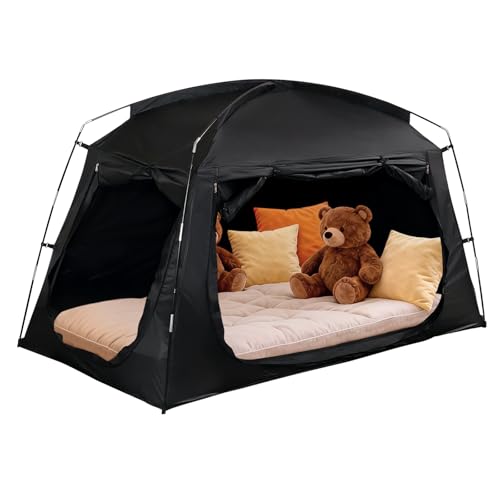
- Fits a twin bed or floor
- Light-reducing 75-inch-long design
- Two-sided access for easier entry
Best For: Users needing a roomy sleeping or privacy space
Best Instant Blackout Retreat

- Pops up in seconds
- Blackout fabric supports dark light play
- Designed as a single-child retreat
Best For: Quick indoor calming spaces and projector or UV-light play
Best Compact Blackout Retreat

- Blackout interior for reduced visual stimulation
- Compact, lightweight design for home or classroom use
- Customizable with blankets, toys, and light accessories
Best For: One child needing a small, portable calm corner
Best Accessory Bundle
Blackout Sensory Tent with Fiber Optic Lamp

- Includes a fiber optic lamp and glow blanket
- Blackout fabric helps limit bright visual input
- Folds into a carry bag for storage and transport
Best For: A ready-made sensory retreat with included accessories
Best Ventilated Certified Option
Portable Blackout Sensory Hideout

- CPC-certified design with blackout PU-coated fabric
- Mesh windows provide adjustable ventilation
- Portable 35-inch cube folds into a compact storage bag
Best For: A portable calm space where airflow and certification matter
Best Overall – Large Blackout Sensory Tent
For shoppers comparing sensory tents for teens, this large pop-up model offers a roomy 47-inch cube that can work as a private retreat, play space, or calming corner. Its blackout fabric is also suited to projector and UV-light activities.
Best For: Older children, teens, or two children who need a spacious, fully dark hideaway.
Pros:
- Large 47 x 47 x 47-inch interior
- Fully blackout fabric creates a dark, enclosed environment
- Sets up in seconds without needing a full sensory room
- Works well for light play with projectors or UV lights
Cons:
- The supplied age guidance is primarily child-focused
- The large footprint may require considerable indoor space
This is a practical pick when interior room and blackout performance matter most. Verify the available floor space before buying, particularly if the tent will be used in a bedroom or shared room.
Best Compact Pick – Medium Pop-Up Sensory Tent
This 35.4-inch pop-up is a useful option for shoppers seeking sensory tents for teens in a more compact size. The blackout polyester enclosure provides a low-distraction space for calming down, relaxing, or using light-based toys.
Best For: Smaller rooms, individual use, and families wanting a straightforward portable sensory hideaway.
Pros:
- Compact 35.4 x 35.4 x 35.4-inch design
- Full blackout fabric supports a dark, calming environment
- Instant pop-up setup
- Suitable for projectors, UV lights, and other light toys
Cons:
- Less spacious than the 47-inch alternatives
- The supplied age guidance starts at 3 years and up rather than specifically targeting teens
Choose this model when portability and a smaller footprint outweigh the need for extra room. Its dimensions are worth checking carefully for taller teens or anyone who prefers to stretch out.
Best Portable Large Tent – Extra-Large Blackout Hideout
Among sensory tents for teens, this extra-large blackout tent stands out for its portable design and included storage bag. The 47-inch interior creates a dark personal space, while the roll-up door and window allow some control over access and visibility.
Best For: Families wanting a large, movable calm corner for indoor use.
Pros:
- Roomy 47 x 47 x 47-inch size
- Completely black interior for a low-stimulation environment
- Collapsible design with included storage bag
- Roll-up door and window provide flexible access
Cons:
- Listed manufacturer age range is 3 to 12 years, so teen suitability should be judged by fit and preferences
- Its 3.4-pound weight is heavier than some compact options
This model makes sense when a larger enclosure and easy storage are priorities. Because the listed age range is child-focused, measure the user and consider how much interior room they need before purchasing for a teen.
Best Feature-Rich Option – LED Sensory Tent with Storage
For sensory tents for teens with added features, this pop-up model combines blackout fabric with battery-powered LED lights, a remote, mesh windows, and interior storage pockets. It is designed for home, classroom, or therapy-room use and folds into a carry bag.
Best For: Users who want adjustable light effects, ventilation, and storage for calming tools in one tent.
Pros:
- Includes multicolor LED strip and remote control
- Blackout design creates a dedicated calming space
- Two mesh windows support airflow
- Two inner pockets hold fidgets and sensory tools
Cons:
- Batteries for the LED lights are not included
- The supplied manufacturer age recommendation is 3 to 12 years, despite the listing mentioning teens and adults
- The regular size is 35.4 inches per side
This is the most feature-packed choice in the group, particularly for users who value customizable lighting and organized storage. Check the size and plan to supply the required batteries before use.
Best Creative Light-Play Pick – Blackout Fiber Optic Sensory Tent
For families comparing sensory tents for teens, this compact blackout tent is a practical choice for creating a private indoor retreat. Its space-themed design includes a fiber optic lamp and glow-in-the-dark fuzzy blanket for calming downtime, reading, naps, or light play.
Best For: Older children and younger teens who want a small, cozy hideout with included light-play accessories.
Pros:
- Blackout door helps create a darker environment during the day.
- Includes a fiber optic lamp and glow-in-the-dark sensory blanket.
- Sets up quickly with a pop-up design and single support pole.
- Compact 36-by-36-by-36-inch size works in bedrooms, living rooms, or classrooms.
Cons:
- The 36-inch interior is intended for one child and may feel small for teens.
- The manufacturer recommends ages 6–12, so it may not suit older teenagers.
This tent stands out for its ready-to-use accessories and imaginative space theme. Check the dimensions carefully, particularly if the intended user is a larger teen or wants room for substantial bedding and toys.
Best Bedtime Privacy Option – Twin-Size Sensory Bed Tent
Among sensory tents for teens, this twin-size bed tent is designed for users who need more room than a small floor hideout provides. It creates a light-reducing privacy space on a twin bed or floor, with openings on both sides for easier entry and exit.
Best For: Children or teens who want a spacious indoor sleeping, relaxing, or privacy area on a twin bed or floor.
Pros:
- Twin-size 75-by-39-by-47-inch interior offers substantially more room.
- Can be used on a twin bed or directly on the floor.
- Dark polyester design helps reduce light and create a private space.
- Two openable sides support convenient entry and exit from inside or outside.
Cons:
- Setup takes about five minutes rather than popping up instantly.
- It is intended for indoor use and is not waterproof or water-resistant.
- The care instructions specify dry cleaning, despite the material being described as washable.
The larger footprint makes this the most practical option here for sleeping or extended quiet time. Its bed-compatible design is useful, but shoppers should plan for more floor space and follow the listed care instructions carefully.
Best Instant Blackout Retreat – Pop-Up Sensory Den
For shoppers seeking sensory tents for teens that can be deployed quickly, this single-size sensory den offers an instant enclosed retreat. Its blackout fabric supports a dark environment for quiet time, play, or compatible light activities such as projectors and UV lights.
Best For: One child or teen who needs a fast, compact indoor space for retreating, calming down, or light play.
Pros:
- Instant pop-up setup creates an enclosed space within seconds.
- Blackout fabric supports a dark, calming environment.
- Suitable for light play with UV lights, projectors, and other light toys.
- Provides a compact alternative when a full sensory room is unavailable.
Cons:
- Single size is designed for one child.
- The supplied notes do not list the tent’s dimensions or included accessories.
- It is described for indoor use, limiting placement options.
This is the straightforward pick for families prioritizing rapid setup and blackout performance over extra accessories or sleeping space. Confirm the size before ordering if the intended teen needs room to sit, stretch, or bring comfort items inside.
Best Compact Blackout Retreat – Pop-Up Sensory Calm Tent
Sensory Tent | Pop-up Sensory Black Out Tent with Calming Effect | Kids for Classroom Calm Corner
Check Price On AmazonFor shoppers comparing sensory tents for teens, this compact blackout model is a straightforward choice for creating a private calm corner at home or in a classroom. Its dark interior can help reduce visual stimulation, while the lightweight pop-up design makes it easy to put away when not in use.
Best For: One child who needs a small, portable retreat for quiet time, reading, or calming down.
Pros:
- Blackout design creates a darker environment, even during daylight.
- Compact 72 x 72 x 78 cm size fits home or classroom calm corners.
- Can be personalized with cushions, blankets, toys, UV lights, or projectors.
- Lightweight at approximately 0.76 kg.
Cons:
- The listed dimensions provide space for one child rather than multiple users.
- It is recommended for ages 3 and up, so older teens should be checked for fit before purchase.
- The notes do not list included sensory accessories.
This is a sensible option when floor space is limited and a simple, dark retreat is the priority. For teens, verify the interior dimensions first, especially if the tent will be used for extended quiet time.
Best Accessory Bundle – Blackout Sensory Tent with Fiber Optic Lamp
This bundled option stands out among sensory tents for teens because it includes a glow-in-the-dark blanket and a battery-operated fiber optic lamp. The larger 35.4-inch cube offers more room than a compact child-sized retreat, while the window, door, and carry bag support flexible use at home, school, or while traveling.
Best For: Users who want a ready-to-use sensory setup with included visual and tactile accessories.
Pros:
- Includes a glow-in-the-dark blanket and fiber optic lamp.
- Blackout material helps block bright light and visual distractions.
- Window and door allow fresh air to circulate.
- Pop-up setup requires no tools and folds into the included carry bag.
Cons:
- The fiber optic lamp requires batteries, which are not included.
- The product is recommended for ages 3 and up and may require a fit check for teens.
- The notes describe it as suitable for one or two children, but space may feel limited for larger users.
The included accessories make this a convenient starter kit rather than an empty shell. Its combination of blackout fabric, ventilation, portability, and sensory extras is useful for families or schools building a calm corner without sourcing every item separately.
Best Ventilated Certified Option – Portable Blackout Sensory Hideout
For buyers seeking sensory tents for teens with ventilation and portability in mind, this CPC-certified model offers a 35 x 35 x 35-inch blackout retreat with mesh windows on both sides. The window covers can be opened or closed with Velcro, making it easier to adjust airflow and privacy during use.
Best For: Home or classroom use where certification, adjustable ventilation, and a portable blackout space are important.
Pros:
- CPC certified according to the supplied product notes.
- PU-coated fabric is designed to block light, including flashlight or phone light.
- Two mesh windows improve airflow and have adjustable Velcro covers.
- Sets up quickly and folds into a 15.7-inch storage bag; listed weight is 2.7 pounds.
Cons:
- The product is recommended for ages 3 and up, so teens should be checked for comfortable fit.
- The compact cube shape is intended as a personal retreat rather than a large room.
- The frame may need a few shakes to restore its shape if one side bends inward after setup.
This model is the strongest fit for shoppers who prioritize airflow, a documented certification, and easy transport. Its blackout interior can also be customized with blankets, LED lights, projectors, white noise, or other preferred calming items.
How We Picked the Best Sensory Tents for Teens
We focused on features that matter beyond a product’s marketing claims: interior dimensions, enclosure and blackout coverage, ventilation, setup time, portability, cleaning, and the quality of included calming accessories. We also considered whether each tent is better suited to quiet breaks, sensory decompression, reading, sleep, or supervised classroom use.
Because sensory preferences vary widely, no single tent is ideal for every teen. A completely dark enclosure may be comforting for one person but restrictive for another, while a larger tent can provide useful movement room but require more floor space.
Quick Comparison
| Priority | Look for | Best suited to |
|---|---|---|
| Maximum privacy | Full blackout fabric and a closable entrance | Quiet decompression and low-light environments |
| More personal space | Large interior dimensions, ideally around 47 inches or wider | Teens who dislike confined spaces |
| Portable use | Pop-up construction, carry bag, and lightweight frame | Travel, therapy rooms, and classrooms |
| Calming stimulation | Fiber-optic lights, glow accessories, or soft blankets | Teens who benefit from controlled visual or tactile input |
| Sleep or floor use | Bed-tent compatibility or a reinforced floor area | Rest, reading, and longer quiet periods |
Key Buying Factors for Sensory Tents for Teens
Size and Usable Space
Check the interior measurements rather than relying on labels such as “extra large.” A teen should be able to sit comfortably, change position, and use preferred comfort items without feeling cramped. Also measure the intended room, allowing clearance for the entrance and ventilation.
Blackout Level and Ventilation
Blackout fabric can reduce visual input, but it should not eliminate airflow. Look for mesh panels, vents, or an entrance that can remain partially open. The tent should always be used according to the manufacturer’s age, supervision, and ventilation guidance.
Materials, Stability, and Cleaning
Choose a frame that opens securely and fabric that can be spot-cleaned or removed for washing. Inspect seams, poles, zippers, and anchors regularly. A soft floor or blanket can improve comfort, but avoid loose cords and accessories that create trip or entanglement hazards.
Accessories and Sensory Preferences
Lights, fuzzy blankets, and other extras are useful only when they match the teen’s preferences. Removable accessories are often more versatile because they allow the space to be adjusted for low-stimulation or more engaging activities.
Setup and Portability
Pop-up designs are convenient, but confirm how the tent folds, whether it fits its storage bag, and how much adult help setup requires. For frequent moves, prioritize low weight and a simple folding mechanism over decorative features.
Who Should Buy Which Sensory Tents for Teens?
Choose a compact blackout tent for a bedroom, therapy area, or classroom calm corner where floor space is limited. A larger pop-up model is a better match for teens who need more room to sit, stretch, or bring in a pillow and weighted blanket. Select a bed-compatible canopy when the primary goal is privacy during rest or sleep.
If the teen seeks controlled visual stimulation, a model with removable fiber-optic lighting or glow-in-the-dark accessories may be worthwhile. For travel or shared settings, prioritize portability, durable construction, and easy cleaning. Regardless of style, introduce the tent gradually, keep exits accessible, and let the teen determine which lighting, door, and comfort arrangements feel safe.