The best play kitchens for toddlers turn everyday pretend play into opportunities to practice language, sharing, sequencing, and fine-motor skills. The right set should also fit your space, match your child’s age, and hold up to enthusiastic play.
We compared 10 popular options across size, materials, interactive features, storage, accessories, and adjustability to help you choose a play kitchen that offers lasting value.
Best 10 Play Kitchens for Toddlers Picks for 2026
Space-Saving Wooden Pick
KidKraft Ultimate Corner Kitchen
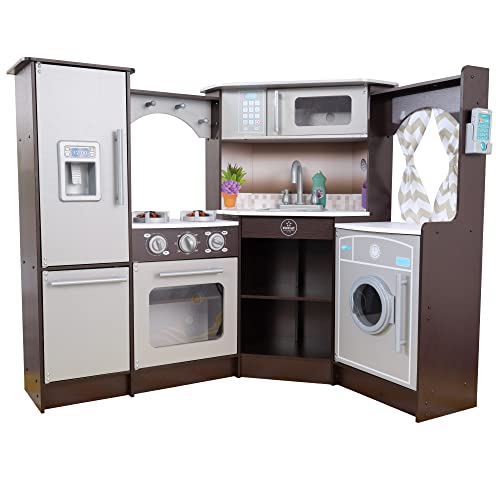
- Corner design helps use room efficiently
- Lights and sounds add realistic play
- Includes washer, phone, curtains, and storage
Best For: Realistic corner play for children ages 3 and up
Compact Classic Pick
Little Tikes Super Chef Kitchen

- Compact design for smaller play spaces
- Includes cookware, dishes, utensils, and phone
- Electronic burner sounds and working doors
Best For: Simple plastic pretend play for ages 3 and up
Toddler-Friendly Plastic Pick

- Suitable for ages 2 to 5
- Includes 25 accessories and storage features
- Durable, wipe-clean double-walled plastic
Best For: Interactive everyday play for toddlers and preschoolers
Modern Wooden Pick

- Multiple zones for cooking, washing, baking, and coffee play
- Cabinets and shelves provide organized storage
- Wood construction with water-based paint and rounded edges
Best For: Realistic, storage-focused play for ages 3 and up
Interactive Space-Saver
Step2 Fun with Friends Gray Kitchen
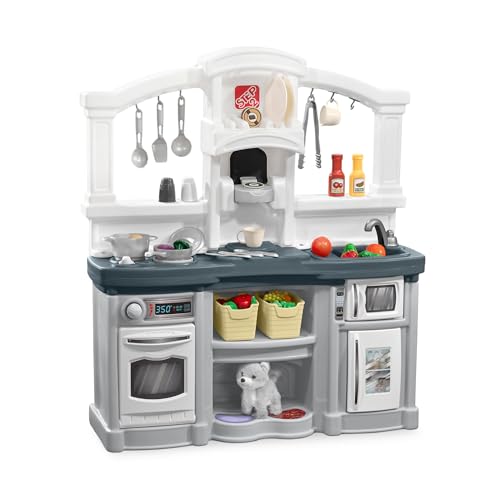
- Light-up burner with sizzling sounds
- 25 accessories with built-in storage
- Compact, easy-clean plastic design
Best For: Toddlers who want interactive play in a compact kitchen
Cottage-Style Pick
Best Choice Products Cream Kitchen

- Engineered-wood cottage design
- Five cooking accessories included
- Open storage for toys and stuffies
Best For: Families wanting a traditional-looking kitchen for ages 3 and up
Colorful Interactive Choice
Step2 Fun with Friends Pink Kitchen

- Lights and sounds for engaging play
- 25-piece accessory set included
- Compact plastic design with storage
Best For: Ages 2–6 who enjoy colorful interactive role play
Classic Wooden Pick

- Lights and several opening appliance doors
- Wood construction with storage space
- Designed for ages 3 to 8
Best For: Traditional pretend play and tidy-up routines
Growing-With-Them Choice
Tiny Land Adjustable Play Kitchen

- Three height settings for growing children
- Lights, sounds, sink, stove, and appliances
- Includes 18-piece food and cookware set
Best For: Families wanting adjustable, interactive pretend play
Feature-Packed Pick
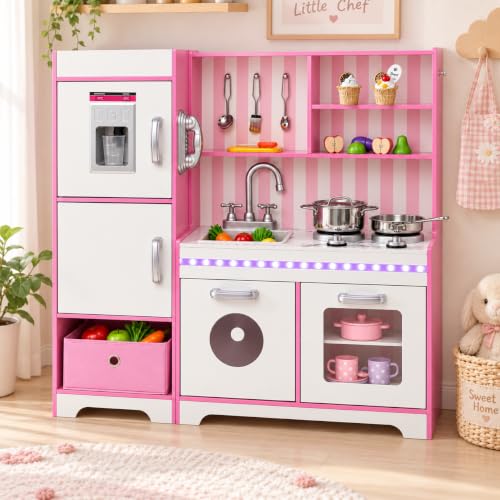
- Highly customizable remote-controlled LED lights
- Ice maker, telephone, stove, sink, and oven
- 16 accessories plus flexible storage
Best For: Interactive play and organized accessory storage
Space-Saving Wooden Pick – KidKraft Ultimate Corner Kitchen
If you want play kitchens for toddlers with a more realistic look, the KidKraft Ultimate Corner Wooden Play Kitchen brings detailed pretend-play features to an efficient corner layout. Its wood construction, storage areas, lights, and sounds suit families looking for an immersive setup for children ages 3 and up.
Best For: Families seeking a realistic wooden kitchen that makes good use of corner space.
Pros:
- Curved corner design helps maximize available room.
- Burners and water dispenser provide lights and realistic sounds.
- Includes a washer, phone, curtains, storage, knobs, buttons, and handles for varied play.
- Made with engineered wood and designed for children ages 3 to 10.
Cons:
- Assembly may take up to about two hours and is easier with two people.
- The larger 42.5-inch depth may not suit very small play areas.
- Recommended starting age is 36 months, so it is not intended for younger toddlers.
This is a feature-rich choice for pretend cooking and household role-play, especially when a corner-friendly design matters more than quick setup.
Compact Classic Pick – Little Tikes Super Chef Kitchen
Little Tikes Super Chef Kitchen Blue & Cream, 14.00 l x 28.00 w x 40.00 h inches
Check Price On AmazonThe Little Tikes Super Chef Kitchen is a compact plastic option for families comparing play kitchens for toddlers. It includes essential pretend appliances, electronic cooking sounds, storage, and a starter set of dishes and utensils, making it ready for everyday imaginative play.
Best For: Families wanting a compact, traditionally styled plastic kitchen with included accessories.
Pros:
- Compact 14-inch-deep design fits more easily in smaller play areas.
- Working microwave, oven, refrigerator, and cabinet doors encourage hands-on play.
- Includes a coffee pot, cookware, dishes, utensils, and a phone.
- Burner produces electronic cooking sounds and the unit has a towel rail.
Cons:
- Requires two AAA alkaline batteries for electronic features.
- Plastic construction may appeal less to shoppers seeking a wooden aesthetic.
- Some listed dimensions vary, so check the current product measurements before buying.
This kitchen offers a straightforward balance of compact sizing, interactive doors, and included accessories for children ages 3 to 10.
Toddler-Friendly Plastic Pick – Step2 Best Chefs Kitchen
For shoppers seeking play kitchens for toddlers, the Step2 Best Chefs Kitchen combines an open layout with interactive features and 25 accessories. Its durable double-walled plastic construction, molded-in colors, and wipe-clean surface make it practical for frequent play starting at age 2.
Best For: Toddlers and preschoolers who need an interactive, easy-to-clean kitchen with plenty of accessories.
Pros:
- Recommended for ages 2 to 5, making it suitable for younger toddlers.
- Includes working oven and refrigerator doors, a pass-through window, and lights and sounds.
- 25-piece accessory set, shelves, hooks, and recycling bin support organized play.
- Durable, molded-color plastic is designed to resist chipping, fading, cracking, and peeling.
Cons:
- Plastic construction offers less of a wooden furniture-style appearance.
- The open design may provide less enclosed storage than larger kitchen sets.
- Its 34.4-inch width still requires a dedicated play area.
This is a practical starter kitchen when durability, simple cleanup, and age-appropriate interactive play are top priorities.
Modern Wooden Pick – Tiny Land Wooden Play Kitchen
The Tiny Land Play Kitchen is a modern wooden option for families comparing play kitchens for toddlers ages 3 and up. It provides separate pretend zones for cooking, washing, baking, coffee-making, and storage, along with hands-on details such as clicking knobs and a turning faucet.
Best For: Families wanting a modern wooden kitchen with multiple activity zones and organized storage.
Pros:
- Includes a stovetop, sink, microwave, oven, ice dispenser, coffee station, and shelving.
- Built-in cabinets and open shelves help store pretend food and cookware.
- Natural wood, water-based paint, rounded edges, and ASTM/CPSIA compliance are specified.
- Numbered parts and illustrated instructions are intended to simplify assembly.
Cons:
- Recommended for ages 3 and up, so it is not aimed at younger toddlers.
- At 35.6 pounds, it is relatively heavy to move frequently.
- The notes specify two wooden ice cubes but do not list a large accessory set.
This set stands out for shoppers who value a furniture-like wooden design, realistic activity areas, and storage that encourages cleanup routines.
Interactive Space-Saver – Step2 Fun with Friends Gray Kitchen
The Step2 Fun with Friends Kids Kitchen is a practical choice for shoppers comparing play kitchens for toddlers who enjoy interactive pretend play. Its light-up burner, sizzling sounds, clicking knobs, coffee maker, sink, refrigerator, and oven create several play stations while the compact depth helps it fit smaller rooms.
Best For: Toddlers ages 2 and up who want interactive features, included accessories, and a kitchen that is easy to organize.
Pros:
- Light-up burner and cooking sounds add sensory interaction.
- Includes a 25-piece accessory set and built-in storage spots.
- Durable plastic construction is designed for easy cleaning.
- Compact 12.5-inch depth and 24.25-pound weight make it relatively easy to place or move.
Cons:
- Requires two AA batteries, which are not included.
- Plastic construction may appeal less to shoppers seeking a wooden kitchen.
Choose this model if interactive lights and sounds matter more than a traditional wood finish. Its storage design is especially useful for keeping the included accessories together after play.
Cottage-Style Pick – Best Choice Products Cream Kitchen
The Best Choice Products Cottage Kitchen is a wood-based option for families comparing play kitchens for toddlers with a more traditional look. Scalloped trim, a play microwave and oven, clicking knobs, and open storage give children room for imaginative cooking while leaving space for additional pretend-play items.
Best For: Children ages 3 and up whose families prefer a cream-colored engineered-wood kitchen with open storage and cottage styling.
Pros:
- Engineered-wood construction with metal components provides a traditional alternative to plastic.
- Includes three utensils, a play pot, and a Dutch oven.
- Open pantry, oven, and sink shelving can hold accessories or stuffies.
- ASTM- and CPSIA-certified materials are listed in the product notes.
Cons:
- Assembly involves dozens of screws and fasteners.
- Only five accessories are included, fewer than some larger play kitchen sets.
- The manufacturer recommends it for ages 36 months and up.
This is a sensible fit when appearance and open storage are priorities. Plan extra setup time, and note that its 23-pound engineered-wood design is less explicitly lightweight than the plastic alternatives here.
Colorful Interactive Choice – Step2 Fun with Friends Pink Kitchen
The pink Step2 Fun with Friends Kitchen combines toddler-friendly pretend-play stations with interactive lights and sounds. For families choosing among play kitchens for toddlers, it offers a pretend sink, stovetop, refrigerator, coffee station, and oven, plus a 25-piece accessory set and dedicated storage for cleanup.
Best For: Children ages 2 to 6 who enjoy colorful, interactive role play and families needing a compact plastic kitchen.
Pros:
- Lights and sounds make the stovetop and cooking play more engaging.
- Includes cookware, dishes, utensils, and other accessories.
- Built-in storage spots help children put accessories away independently.
- Compact footprint and 24.25-pound weight make it easier to move than many larger play kitchens.
Cons:
- Batteries and play food are not included.
- Plastic construction may not suit shoppers looking for a wood kitchen.
- The bright pink finish may not fit every room or style preference.
This version is a strong match for young children who respond to sound, color, and multiple pretend-play areas. Its compact dimensions and wipe-clean plastic also make it practical for everyday indoor play.
Classic Wooden Pick – Espresso Pretend Kitchen
If you want play kitchens for toddlers with a traditional wooden look, this espresso set offers realistic spaces for pretend cooking. Opening appliance doors, integrated lighting, and included utensils give children plenty to explore, while the storage areas support cleanup habits.
Best For: Families seeking a sturdy wooden kitchen for children ages 3 to 8 who enjoy imaginative role-play and organized storage.
Pros:
- Includes lights and multiple interactive areas, including an oven, microwave, refrigerator, freezer, and cabinet.
- Wood construction features a reinforced, anti-scratch surface and is described as meeting ASTM F963 and CPSIA standards.
- Storage space encourages children to put play dishes and utensils away after use.
Cons:
- Assembly is required, and a screwdriver must be provided separately.
- At 9.44 inches wide, the listed dimensions may offer less front-to-back play space than larger kitchen sets.
This is a practical choice for buyers prioritizing a classic wooden design, pretend-kitchen realism, and durability. Plan for assembly and verify that its dimensions suit your play area.
Growing-With-Them Choice – Tiny Land Adjustable Play Kitchen
For play kitchens for toddlers that can adapt as children grow, the Tiny Land set combines three height settings with lights, sounds, and a broad accessory collection. Its compact profile is designed for playrooms or shared living spaces without giving up the main features of a pretend kitchen.
Best For: Growing children ages 3 to 8 and families wanting adjustable height, interactive features, and included chef-role-play accessories.
Pros:
- Three adjustable height settings help accommodate children as they grow.
- Light-up stove elements, an interactive range hood, turnable knobs, faucet, removable sink, oven, and microwave support hands-on play.
- Includes pretend food, cookware, plates, utensils, a cup, chef hat, and apron.
- Wood construction uses non-toxic, BPA-free materials and is described as meeting ASTM F963 and EN71 standards.
Cons:
- The many interactive components may be more than children seeking a simple, low-tech kitchen need.
- The product listing provides varying dimensional measurements, so confirm the current size before purchasing.
Its adjustable format is the standout advantage, especially for households hoping to use one kitchen through several early-childhood stages. The included costume pieces also make it easy to begin role-play right away.
Feature-Packed Pick – HONEY JOY Pink Kitchen Set
Among play kitchens for toddlers, this HONEY JOY model stands out for its highly customizable LED lighting and extensive pretend-kitchen details. An ice maker, telephone, rotary knobs, storage bin, and 16 accessories give children multiple ways to build cooking and organization games.
Best For: Children over age 3 who enjoy colorful interactive features and families that value flexible toy storage.
Pros:
- Remote-controlled LED lighting offers seven colors, five brightness modes, ten speed modes, and 21 dynamic modes.
- Includes an ice maker, telephone, stove, sink, oven, and knobs that make clicking sounds.
- Multiple storage areas, a removable fabric bin, and a shelf support sorting and cleanup.
- Comes with 16 accessories, including cookware, utensils, play vegetables, an apron, chef hat, and ice cubes.
Cons:
- At 42 pounds, it is relatively heavy to move once assembled.
- The electronic lighting and sound features may require more setup and supervision than a basic wooden kitchen.
- Its pink finish may not suit every room or preference.
This is a strong option when interactive lighting and storage matter as much as cooking play. Buyers should account for its weight, electronic features, and bold pink finish before choosing a location.
How We Picked the Best Play Kitchens for Toddlers
We focused on the features that matter most in daily family use: sturdy construction, toddler-friendly layouts, useful accessories, realistic but manageable lights and sounds, storage, and overall footprint. We also considered whether each kitchen is better suited to younger toddlers, preschoolers, shared play, or homes with limited floor space.
Age guidance is important. Several options are marked for ages 3 and up, so check the manufacturer’s recommendations, supervise play, and inspect small accessories before handing them to a younger child.
Quick Comparison
| Best For | Look For |
|---|---|
| Small spaces | Compact layouts and fewer protruding parts |
| Realistic pretend play | Lights, sounds, phones, ice makers, and interactive appliances |
| Growing children | Adjustable-height features and durable construction |
| Shared play | Two-sided access, broad counters, and generous storage |
| Accessory-heavy play | Included cookware, food pieces, and dedicated storage |
Key Buying Factors for Play Kitchens for Toddlers
Size and Layout
Measure the available area before buying, including clearance for doors, oven fronts, and children moving around the set. Corner and compact designs can work well in bedrooms or apartments, while larger kitchens provide more room for siblings and friends.
Safety and Durability
Choose a stable set with smooth, finished surfaces and securely attached hardware. Look for rounded edges, reliable hinges, and a construction style that can tolerate pulling, opening, and repeated imaginative play. Anchor taller units when the instructions recommend it.
Interactive Features
Lights and sounds can make a kitchen more engaging, but they are not essential for meaningful pretend play. Consider volume, battery requirements, and whether your child prefers open-ended play over electronic effects.
Storage and Accessories
Bins, shelves, hooks, and cabinets help keep play food and utensils organized. More accessories are useful only if there is somewhere to store them; otherwise, a simpler set may be easier to maintain.
Adjustability and Age Range
Adjustable counters can extend usability as children grow. Always compare the listed age range with your child’s height, coordination, and ability to follow safety rules.
Who Should Buy Which Play Kitchens for Toddlers?
Choose a compact wooden kitchen if floor space, appearance, and long-term durability are priorities. These models suit families seeking a furniture-like addition to a playroom or bedroom.
Choose a Little Tikes or Step2 option if you want a lightweight, practical setup with a familiar child-focused design and easy-access play areas. These are often strong choices for active toddlers and shared play.
Choose a Tiny Land or HONEY JOY model if realistic details, storage, or adjustable features are especially appealing. They can offer a richer pretend-cooking experience, provided the dimensions and assembly requirements fit your home.
Choose a basic accessory set if your child already has play food and cookware or you want to keep cleanup simple. Whichever model you select, prioritize stability, proper supervision, and enough open space for safe movement.