Art should be accessible, comfortable, and fun for every child. The right tools can reduce frustration, improve control, and make drawing, coloring, and painting feel more independent.
In this roundup, we focus on practical adaptive art tools for disabled children that support a range of grip styles, hand strengths, and motor needs.
Best 10 Adaptive Art Tools for Disabled Children Picks for 2026
Inclusive Studio Kit
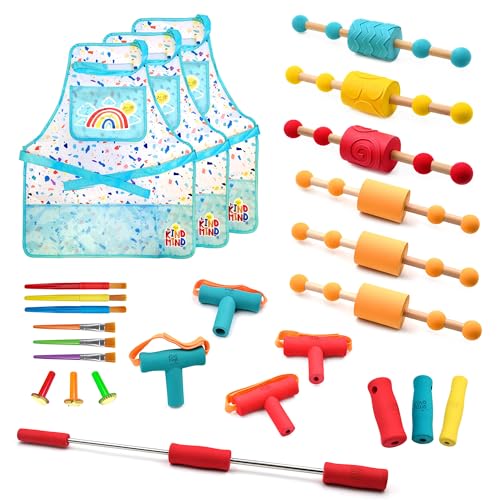
- Foam grips, brushes, rollers, and stampers in one set
- Adjustable tool holder helps extend reach
- Includes 3 washable smocks for cleaner art time
Best For: Families wanting a full adaptive art kit for varied creative activities
Fine Motor Grip Trainer

- Aims to support tripod grasp training
- Uses visual and fine motor cues for practice
- Works with crayons and markers for coloring
Best For: Young children practicing grasp development while coloring
Comfort Grip Set

- Three grip sizes with different diameters and ports
- Works for pencils, brushes, markers, and stampers
- CVI-friendly colors and easy-clean design
Best For: Users who want customizable grips for existing art and writing tools
Hands-Free Drawing Aid

- No-grip design supports glide-style drawing
- Weighted base adds stability and control
- Ambidextrous and portable for daily use
Best For: Users who need a hands-free aid for writing or sketching
Silicone Universal Cuff Support

- Soft silicone cuff for pencils, brushes, and markers
- Three sizes plus straps for children through adults
- Easy to wash and reuse after art sessions
Best For: Kids who need a soft, washable universal cuff for creative tasks
Ergonomic Writing Grip Aid
ZJchao Assistive Writing Device

- Supports sketching, note taking, and pen control
- Fits all hand sizes and both left- and right-handed users
- Durable ABS design for repeated daily practice
Best For: Students and young artists who need steadier handwriting and drawing control
Adjustable T-Grip Art Aid
Kind Mind Company Small 2-Pack

- Adjustable strap helps secure a comfortable grip
- Foam port fits thicker markers, brushes, and stampers
- Washable, latex-free materials for repeated use
Best For: Kids and adults who need a secure T-grip for thicker art tools
Ergonomic Hand-Guide
Ambidextrous Pen Grip Assistive Tool

- Mouse-like body reduces the need for a tight closed grip.
- Ambidextrous design works for left- or right-handed users.
- 3 oz weight and large base help improve stability.
Best For: Independent writing and drawing support for users with limited hand mobility
Reach Extension Kit
Telescoping Adaptive Art Tool Holder

- Telescopes from 20.25" up to 34.25" for extra reach.
- Soft foam grips and tension port hold many art tools.
- Bright, CVI-friendly colors support visual accessibility.
Best For: Seated painting, drawing, and craft work that needs extended reach
Coloring Grip Set
Ergonomic Crayon Holders for Kids

- Wide-base design helps children hold crayons more securely.
- Includes 4 color-coded holders plus crayons.
- Retractable storage makes cleanup simpler.
Best For: Kids who need a more stable crayon grip for coloring and therapy
Inclusive Studio Kit – Complete Adaptive Art Bundle
This adaptive art tools for disabled children bundle is built for more comfortable, independent creative play when fine motor control or hand strength is limited. It combines grips, brushes, rollers, stampers, a tool holder, and smocks into one practical set for painting and crafting with less strain.
Best For: Kids, teens, and adults who need a fuller adaptive art setup for painting, stamping, and hands-on creativity.
Pros:
- Includes a wide mix of foam grips, brushes, rollers, and stampers for different art tasks.
- Adjustable extending tool holder can help extend reach and support more independent use.
- Comes with 3 washable art smocks for cleaner, more accessible art sessions.
- Designed for users with limited hand strength or fine motor skills.
Cons:
- More complete than a basic grip-only option, so it may be more than some families need.
- Best suited to painting and craft activities rather than handwriting support.
For families looking for a broad, all-in-one adaptive art kit, this bundle covers the main tools needed to make creative activities easier to start and sustain. It is especially appealing when you want one purchase to support a range of mobility and dexterity needs.
Fine Motor Grip Trainer – Multi-Size Coloring Grippers
These adaptive art tools for disabled children are designed to support tripod grasp training and intentional finger placement during coloring and writing tasks. The grippers are aimed at younger kids who need visual and fine motor cues while practicing a more upright grip.
Best For: Preschool and elementary-age children working on grasp development with crayons or markers.
Pros:
- Supports tripod grasp training and helps encourage an upright grip instead of palm-down holding.
- Provides visual and fine motor cues for grasp practice.
- Works with markers and crayons for drawing and coloring activities.
- Sized for children 3.5 years and older.
Cons:
- Focused on grasp training, so it is narrower in use than a full adaptive art set.
- Best for drawing and coloring rather than broader craft projects.
If your priority is helping a child practice a more functional pencil or crayon hold, this is a simple and targeted tool. It is most useful as a training aid rather than a general-purpose art accessory.
Comfort Grip Set – Adaptive Foam Grips for Tools
These adaptive art tools for disabled children are a flexible grip-only option for users who need more comfort and control across different creative tasks. With multiple sizes and color cues, they can support a range of tools used for drawing, painting, stamping, and similar activities.
Best For: Kids and adults who need customizable foam grips for better handling of pencils, brushes, markers, and stampers.
Pros:
- Three grips with varying diameters and ports support different tools and grip strengths.
- Can be used in end-on or bisecting positions for handwriting and creative projects.
- Bright colors are designed with CVI in mind and may be easier to visually track.
- Latex-free, non-toxic, and easy to clean with soap and water.
Cons:
- Grips only, so it does not include brushes, rollers, or other art tools.
- Users will need compatible tools to pair with the grips.
This set makes sense if you already have tools and mainly need better hold, positioning, and comfort. It is a practical way to adapt everyday art and writing items without buying a larger kit.
Hands-Free Drawing Aid – Ergonomic Writing Tool
Glomora Assistive Writing and Drawing Tool, Ergonomic Adaptive Device for Sketching with Pen Holder
Check Price On AmazonThis adaptive art tools for disabled children option is built for users who want a hands-free way to write or draw with less grip demand. The ergonomic design, stable base, and ambidextrous shape make it a practical choice for independent sketching and drawing sessions.
Best For: Children or adults who need a no-grip drawing aid that reduces hand fatigue and supports steadier movement.
Pros:
- No-grip design lets the user place a hand on the device and glide to write or draw.
- Weighted base helps add stability and reduce friction for smoother movement.
- Ambidextrous design works for both left- and right-handed users.
- Lightweight ABS construction makes it portable for home, school, or work.
Cons:
- More specialized than a traditional grip or full art kit.
- Best suited to writing and drawing tasks rather than painting or crafting.
For users who struggle with holding standard tools, this is a different kind of adaptive aid that prioritizes glide and stability over grasp. It is a strong fit when independence and reduced fatigue matter more than a conventional pen-style hold.
Silicone Universal Cuff Support – EaZyHold Art Pack
If you’re comparing adaptive art tools for disabled children, the EaZyHold Art Pack is a flexible option for helping small hands hold pencils, markers, and paint brushes more securely. The silicone cuffs are designed to adapt to a range of hand sizes and limb positions, while the soft, non-slip material adds grip without feeling rigid.
Best For: Children who need a soft universal cuff for drawing, painting, and other daily creative tasks.
Pros:
- Three cuff sizes plus two yellow straps help fit infants through adults.
- Soft silicone offers a stretchy, non-slip hold that works well with wet hands.
- Compatible with pencils, brushes, markers, and even makeup tools.
- Easy to clean with water or in the dishwasher basket.
Cons:
- Adult users are described as best suited for fingers only, not full-hand use.
- Universal cuff style may feel less precise than a shaped grip tool for some users.
This is a practical pick if you want a simple, washable adaptive aid that can support both creative play and everyday handling needs. Its main strength is flexibility across ages and tool types.
Ergonomic Writing Grip Aid – ZJchao Assistive Writing Device
For families looking at adaptive art tools for disabled children, this ZJchao writing device is built to support better control during sketching, writing, and note taking. Its ABS frame is shaped to guide hand position without blocking natural movement, making it a straightforward option for learners who need a more stable grip.
Best For: Students and young artists who need help with handwriting grip, drawing control, and reduced hand strain.
Pros:
- Works with pencils, pens, and markers for versatile classroom or art use.
- Designed to fit all hand sizes and support both left- and right-handed users.
- Ergonomic shaping aims to improve control and reduce fatigue during longer sessions.
- Durable ABS plastic is made for repeated daily use.
Cons:
- Best suited to writing and sketching rather than broader brush-based art tasks.
- Rigid ABS construction may feel less soft than silicone or foam alternatives.
This is a strong value-style choice if the priority is handwriting confidence and steady pencil control. It focuses more on guided grip support than on highly flexible adaptation.
Adjustable T-Grip Art Aid – Kind Mind Company Small 2-Pack
If you’re shopping for adaptive art tools for disabled children, this T-grip 2-pack is built for users who struggle with loose grips on traditional art supplies. The lightweight foam-and-strap design helps hold thicker tools like markers and wide brushes, giving children a more secure way to paint or draw.
Best For: Kids and adults who need an adjustable T-grip for thicker art tools and easier control.
Pros:
- Adjustable nylon strap with hook-and-loop closure helps customize the fit.
- Foam port fits thicker tools such as classic markers, wide brushes, and stampers.
- Latex-free materials are washable with soap and water.
- Bright teal and orange colors can help with easy identification, including for visual impairments.
Cons:
- Small size may not suit every hand or every grasp preference.
- Designed around thicker tools, so it may be less useful for slim pencils.
This is a practical adaptive option when the main challenge is keeping a stable hold on larger art supplies. It combines adjustability, easy cleaning, and accessibility-focused design in a compact package.
Ergonomic Hand-Guide – Ambidextrous Pen Grip Assistive Tool
For adaptive art tools for disabled children, this assistive pen holder is built to make writing and drawing feel more natural without requiring a tight grip. Its mouse-like body lets the hand rest on top while the user presses and drags, which can be helpful for children or adults with limited hand mobility, arthritis, or tremor-related control needs.
Best For: Users who need a stable, easy-to-hold writing and drawing aid for independent use.
Pros:
- Ambidextrous shape works for both left- and right-handed users.
- Large base and 3 oz weight add stability for better control.
- No complex setup required; designed for independent use.
- 3D-printed ABS construction is made for everyday assistive use.
Cons:
- Supplied notes indicate visible 3D-print layer lines may be present.
- Designed as a writing aid, so it is not a full art kit on its own.
This is a practical pick when the main goal is reducing grip strain and supporting steady, hands-on mark-making. It favors simplicity and accessibility over extra features, which can be a plus in home, school, or therapy settings.
Reach Extension Kit – Telescoping Adaptive Art Tool Holder
When looking at adaptive art tools for disabled children, this telescoping holder stands out for adding reach and stability during painting, drawing, and craft activities. It is designed to help users with limited hand or arm strength work from a seated position and can support a variety of art tools thanks to its flexible tension port.
Best For: Artists, students, and therapy users who need extra reach for mark-making and craft tasks.
Pros:
- Adjustable length extends from 20.25″ to 34.25″ for customized reach.
- Soft EVA foam grips and flexible tension port help secure many art tools.
- Bright, CVI-friendly colors can support visual accessibility needs.
- Lightweight, latex-free, and easy to wash with soap and water.
Cons:
- Sold as 1 piece, so it is not a multi-tool set.
- Best suited to tools that fit the 0.375″ tension port.
This is a strong option if reach, positioning, and accessibility matter more than a traditional handheld grip. It looks especially useful for therapy settings, seated easel work, and users who benefit from a longer extension between hand and surface.
Coloring Grip Set – Ergonomic Crayon Holders for Kids
For families shopping for adaptive art tools for disabled children, this crayon holder set is designed to improve grip, control, and comfort during coloring. The wide-base, ergonomic shape supports children with limited motor skills, while the included crayons let them start coloring right away.
Best For: Young artists who need help holding crayons for coloring and occupational therapy activities.
Pros:
- Ergonomic design supports better grip and control for limited motor skills.
- Includes 4 color-coded holders in red, blue, green, and yellow.
- Wide base adds stability and helps with easier grasp patterns.
- Built-in storage makes it easy to retract crayons for tidier cleanup.
Cons:
- Compatible with standard-sized crayons, so it is not for every writing tool.
- Best suited to coloring rather than broader drawing-tool needs.
This set is a practical starter choice for children who need a more secure crayon hold during creative play or therapy. It combines simple adaptive support with an easy-to-use, kid-friendly format that can fit classroom or home use.
How We Picked These Adaptive Art Tools for Disabled Children
We looked for products that can genuinely help children participate in creative activities with less strain and more stability. Priority went to easy-to-hold designs, versatile formats, durable materials, and options that can work for different levels of dexterity support.
We also favored tools that are simple for caregivers, teachers, and occupational therapists to introduce quickly, without complicated setup or hard-to-clean parts.
Quick Comparison
Some items in this list are best for broad support, such as universal cuffs, foam grips, and tool holders. Others are more specialized, including crayon grips, pen grippers, and reach extenders. If a child needs help with a full range of art activities, a bundle or multi-piece set may offer the best value. If the goal is improving one specific motion, a targeted grip accessory can be the better fit.
Key Buying Factors for Adaptive Art Tools for Disabled Children
Grip Style and Hand Position
Check whether the tool supports palmar grasp, finger placement, a universal cuff, or a more traditional pencil-like hold. The best option depends on how the child naturally stabilizes a marker, crayon, brush, or pen.
Comfort, Size, and Weight
Too much bulk can be tiring; too little support can be hard to control. Look for Adaptive Art Tools for Disabled Children that match hand size and strength, with soft-touch materials when pressure sensitivity matters.
Task Versatility
Some children need one tool for coloring, while others need support across painting, sketching, and handwriting-style activities. Multi-use sets are helpful for classrooms and home art stations.
Cleaning and Durability
Because art supplies get messy, choose materials that can handle frequent wiping or washing. Durable grips and holders are especially useful for repeated therapy or school use.
Left- or Right-Hand Use
Not every adaptive accessory is truly ambidextrous. If handedness may change or the child switches hands often, choose tools designed for both left and right use.
Who Should Buy Which Adaptive Art Tools for Disabled Children?
If you want broad, all-in-one support, a bundle with grips, brushes, rollers, and holders is the most flexible place to start. For children who mainly color, crayon and marker grips are a smart, low-cost upgrade. For sketching or note-taking support, pen holders and writing devices make more sense. If reach, positioning, or stability is the main challenge, look for cuffs, tool holders, or extender-style helpers.
In general, the best choice is the one that matches the child’s current abilities while leaving room to grow. Adaptive Art Tools for Disabled Children should feel enabling, not complicated—so start with the simplest tool that solves the biggest problem.