Choosing the right apraxia speech therapy cards can make practice feel clearer, more consistent, and easier to use at home or in therapy.
Below, we focus on sets that support visual cueing, repeated practice, and flexible speech activities for a range of ages and skill levels.
Best 10 Apraxia Speech Therapy Cards Picks for 2026
Visual Sound Cue Deck
Bjorem Speech 2nd Edition Sound Cues

- 28 consonants and 17 vowels
- Back-of-card Cue-Tips and descriptions
- Useful for speech and literacy practice
Best For: Children with apraxia and early speech sound learning
Fast-Paced Articulation Game

- 57 cards for 9 target sounds and blends
- Matching game format boosts repetitions
- Includes guides for home and group use
Best For: SLPs who want portable articulation practice
Prosody Skill Cards
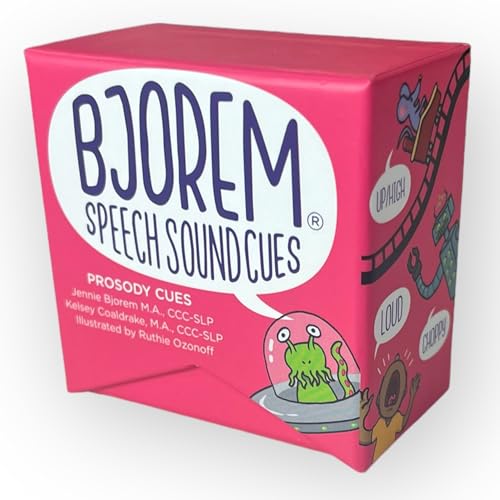
- Focuses on stress, tone, and rhythm
- Illustrated cards support natural speech flow
- Works for therapy, classroom, or home
Best For: Children needing prosody and expressive speech support
All-in-One Toddler Set
Clever Fox Play 3-in-1 Speech Cards

- 45 cards for articulation, description, and prepositions
- Playful illustrations keep preschoolers engaged
- Includes challenge cards for added practice
Best For: Preschoolers needing varied speech and language activities
Multisyllable Speech Support
Bjorem Speech Multisyllabic Words Deck
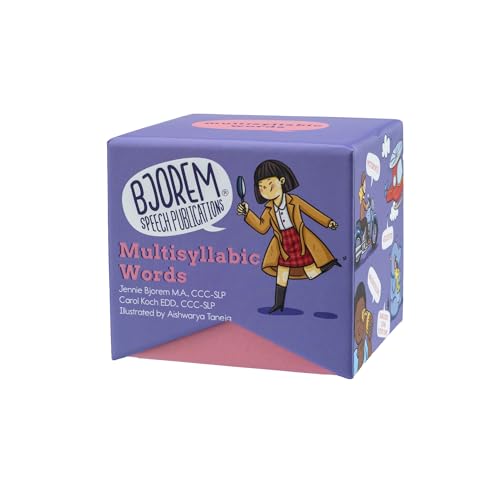
- 78 cards with 281 target words
- Color-coded by syllable count
- Useful for home, school, or clinic practice
Best For: SLPs, parents, and educators working on multisyllabic apraxia practice
Sequencing and Story Practice
What Happens Next Sequencing Cards

- 60 cards across 15 complete stories
- Prompts on the back guide discussion
- Good for language, logic, and sequencing practice
Best For: Ages 4+ needing sequencing and expressive language support
Sound Cue Learning

- 28 consonant and 17 vowel cue cards
- Large format for easier visibility
- Supports speech sounds and early literacy
Best For: Young children in early intervention and literacy-based speech work
Everyday Vocabulary Builder

- 140 common noun cards for everyday vocabulary practice
- Double-sided cards add image, word, category, and function
- Thick cardstock with rounded corners for repeated use
Best For: Functional vocabulary building for toddlers, ESL learners, and speech support
Apraxia Therapy Planner

- 250+ reproducible pages for speech therapy and home practice
- Targets sounds by syllable shape, position, and complexity
- Includes data sheets, stories, coloring pages, and cue visuals
Best For: Structured apraxia, articulation, and literacy practice with minimal prep
Action Verb Practice Set

- 80 action verb cards for early speech and vocabulary practice
- QR-code videos add visual motion cues for learning
- Traceable backs support handwriting and letter formation
Best For: Young children practicing verbs, early language, and speech therapy
Visual Sound Cue Deck – Bjorem Speech 2nd Edition Sound Cues
If you’re comparing apraxia speech therapy cards, this Bjorem Speech Sound Cues deck is built to give children a visual, developmentally appropriate way to connect sounds with meaning. With consonant and vowel cue cards plus clear illustrations and back-of-card explanations, it fits speech therapy, reading support, and early practice at home or in the classroom.
Best For: Children with apraxia, early speech sound needs, and literacy-linked practice.
Pros:
- Includes 28 consonants and 17 vowel cue cards, plus short and long vowel group cards.
- Created by certified speech pathologists and grounded in research-based practice.
- Back-of-card descriptions and Cue-Tips help guide parents and therapists.
- Works well for play-based therapy, drill work, and early literacy routines.
Cons:
- Focused on sound cues, so it is not a broad language or articulation game set.
- Small card size may be less ideal for group visibility.
- Best suited to sound learning rather than open-ended play.
This is a strong choice if you want apraxia speech therapy cards that emphasize visual cueing and sound awareness. It’s especially practical for early learners who benefit from simple, repeatable prompts tied to speech and literacy goals.
Fast-Paced Articulation Game – Speech Spot 57 Card Set
For shoppers looking for apraxia speech therapy cards that keep practice active, this Speech Spot set turns articulation work into a matching game. The 57 round cards target 9 speech sounds and blends, and the included guides help therapists expand into repetition, receptive tasks, and home practice.
Best For: Therapists who want a compact articulation activity with lots of repetition.
Pros:
- Covers R, L, S, Z, K, G, CH, SH, TH, and blends.
- Matching format encourages repeated productions without feeling like drill.
- Includes bonus cards for Speech Boosters, SLP Corner, home practice, and word lists.
- Portable tin case makes it easy to carry between sessions.
Cons:
- Best for matching and articulation work, not broader language instruction.
- Sound targets are fixed, so it may not fit every caseload need.
- Round card format may be less familiar than standard flash cards.
This set stands out if you want a simple, engaging way to build high-repetition speech practice into therapy. It’s a practical option for clinicians who need portable apraxia speech therapy cards that also support quick home carryover.
Prosody Skill Cards – Bjorem Speech Prosody Cues
If your search for apraxia speech therapy cards also includes prosody support, this Bjorem deck focuses on speech melody, stress, tone, and rhythm. It uses illustrated cards to make prosody easier to teach in therapy, classroom activities, or home practice, especially for children who need help sounding more natural and expressive.
Best For: Children working on prosody, expressive communication, and more natural speech flow.
Pros:
- Targets prosody skills like stress patterns, tone, and rhythm.
- Illustrated cards make abstract speech-melody concepts easier to understand.
- Useful in therapy sessions, classrooms, and at-home practice.
- Designed with durable, kid-friendly cardstock.
Cons:
- Not a full articulation deck for broad sound inventory practice.
- More specialized than general-purpose speech therapy cards.
- May work best as a support tool rather than a standalone program.
This deck makes sense for children who need help with the rhythm and natural flow of speech. It’s a focused add-on for apraxia and fluency-related goals when you want apraxia speech therapy cards that go beyond individual sounds.
All-in-One Toddler Set – Clever Fox Play 3-in-1 Speech Cards
For families and therapists comparing apraxia speech therapy cards for younger children, this 3-in-1 set offers a mixed practice approach. It combines articulation, description, and preposition cards with playful challenge prompts, making it a flexible option for preschool speech work at home or in sessions.
Best For: Preschoolers who need mixed speech, vocabulary, and sentence practice.
Pros:
- Includes 45 cards across articulation, description, prepositions, and challenge activities.
- Bright illustrations with cute animals and everyday objects help hold attention.
- Supports pronunciation, vocabulary, and simple spatial concepts.
- Rounded corners and durable materials make it kid-friendly.
Cons:
- Only 15 cards are specifically for articulation practice.
- Less specialized than decks made purely for speech sound cueing.
- Targets broader language skills, so it may be too general for focused apraxia drill work.
This is a good pick if you want one compact set that blends sound practice with language building. It may not replace dedicated apraxia speech therapy cards, but it does offer variety for younger learners who need a playful format.
Multisyllable Speech Support – Bjorem Speech Multisyllabic Words Deck
If you want apraxia speech therapy cards that keep practice practical and organized, this multisyllabic words deck is built for exactly that. It offers 2- to 6-syllable targets, a color-coded syllable system, and 281 target words to support speech therapy, phonological work, and language practice across home, school, or clinic use.
Best For: SLPs, parents, and educators looking for a flexible multisyllabic word deck for apraxia and speech sound practice.
Pros:
- Includes 78 cards with 281 target words for broad practice.
- Color-coded syllables make it easier to quickly sort and teach word length.
- Supports speech skills, literacy skills, language skills, and cognitive skills.
- Works for children and adults in therapy, classroom, or home settings.
Cons:
- Focused on multisyllabic words, so it is not a full speech therapy system.
- Card size is compact, which may feel small for group display.
Overall, this is a strong choice if you need apraxia speech therapy cards that emphasize repeated multisyllabic practice in a functional, easy-to-use format.
Sequencing and Story Practice – What Happens Next Sequencing Cards
These apraxia speech therapy cards are a good pick when you want kids to talk through stories, predict outcomes, and build language while sequencing events. The set includes 60 illustrated cards across 15 complete stories, plus back-of-card prompts that help guide conversation, vocabulary, and sentence building.
Best For: Kids ages 4+ who need sequencing practice, guided speech prompts, and simple storytelling support.
Pros:
- 60 cards include 15 complete stories for repeated sequencing practice.
- Back-of-card prompts support vocabulary, discussion, and expressive language.
- Useful for speech therapy, ESL, homeschool, classroom, and social skills work.
- Durable cardstock with rounded corners suits repeat use.
Cons:
- Built around sequencing rather than direct articulation drill.
- Best suited for preschool and elementary ages, not older learners.
If your goal is to pair speech practice with storytelling and thinking skills, this is a practical, screen-free card set with clear therapy uses.
Sound Cue Learning – Bjorem Big Box of Sound Cues
For apraxia speech therapy cards that also support early literacy, this large-format sound cue set gives you a broad visual reference for consonants and vowels. It includes 28 consonant and 17 vowel cue cards, plus short and long vowel group cards, all in a bigger format that is easier to see during teaching and drill work.
Best For: Early intervention, literacy support, and speech sound cueing for young children.
Pros:
- Includes 28 consonant and 17 vowel cue cards.
- Large-size cards are easier to use in shared instruction or therapy sessions.
- Designed by a certified speech pathologist for developmentally appropriate use.
- Can be used for play-based therapy, classroom activities, reading programs, and drill work.
Cons:
- More of a cueing and literacy tool than a dedicated word-practice deck.
- Single set format may be less targeted for specific articulation goals.
This is a versatile option if you want visual speech support that bridges sound practice and literacy in a child-friendly format.
Everyday Vocabulary Builder – 140 Noun Picture-Word Cards
If you’re looking for apraxia speech therapy cards that keep practice visual and concrete, this noun card set is a practical pick. The 140 real-life picture-word cards cover common everyday items, making them useful for naming, categorizing, and building functional vocabulary during speech sessions or at home.
Best For: Toddlers, ESL learners, and children or adults working on basic vocabulary, language delays, or autism support.
Pros:
- Includes 140 noun cards covering animals, foods, furniture, vehicles, and household items.
- Double-sided design shows a real image on the front and word, description, category, and function on the back.
- Thick cardstock with rounded corners is made for repeated handling in therapy or classroom use.
- Portable format works well for home practice, special education, travel, or waiting-room sessions.
Cons:
- Focused on nouns, so it does not directly target sounds, syllables, or apraxia-specific drill structure.
- Not a full therapy program; it is a visual language aid rather than a step-by-step curriculum.
As a vocabulary support tool, this set is strongest when you want simple, repeatable naming practice with clear visuals. It’s a good companion resource for speech therapists and parents who need flexible cards for everyday language-building.
Apraxia Therapy Planner – Box of Sounds in a Book
For apraxia speech therapy cards that need structure, repetition, and ready-to-use practice, this reproducible sound book stands out. It offers 250+ pages of sound-based materials organized by syllable shape, sound position, and complexity, which makes it a practical fit for clinicians or families working on Childhood Apraxia of Speech.
Best For: SLPs, parents, and educators who want reproducible materials for apraxia, articulation, phonology, and literacy practice.
Pros:
- Provides 250+ reproducible pages, reducing prep time for therapy and home practice.
- Organizes single-word targets by syllable shape, sound position, and complexity.
- Includes data sheets, stories, coloring pages, and intelligibility tools for varied sessions.
- Built with full-color sound cue visuals to support quick reference and consistent practice.
Cons:
- Paper-based and reproducible, so it is less like a standalone card deck and more like a workbook resource.
- Best suited to users who want structured sound practice rather than broad general vocabulary building.
This is the most therapy-targeted option in the group and is especially useful when you want apraxia materials that can be copied and adapted across sessions. It pairs evidence-based sound work with literacy and engagement features that make ongoing practice easier to manage.
Action Verb Practice Set – 80 Verb Cards with Videos
If your apraxia speech therapy cards need more movement-based language practice, this verb set offers a focused way to work on action words. Each card pairs with a QR-code video, so kids can see the verb in action while practicing listening, articulation, and cognitive skills.
Best For: Kids ages 2 to 5 working on verbs, early language, or speech therapy practice in home, preschool, or special education settings.
Pros:
- Includes 80 action verb cards designed for speech therapy and vocabulary building.
- QR-code videos add a visual motion cue to support learning and recall.
- Backs feature traceable words for handwriting and letter-formation practice.
- Thick, laminated cards with rounded corners are made for repeated use.
Cons:
- Centered on verbs, so it is narrower than a broad language or apraxia resource.
- Best for younger children; older learners may need more advanced material.
This set works well when you want short, engaging action-word practice that blends speech, movement, and early writing. It is a strong supplement for therapy routines, but it is most useful as a focused vocabulary tool rather than a full apraxia curriculum.
How We Picked the Best Apraxia Speech Therapy Cards
We prioritized cards that support speech motor planning, visual prompting, and repeatable practice. For apraxia, the most useful sets are easy to see, simple to cue, and adaptable for drills, imitation, sequencing, and functional word work. We also looked for options that could work in both clinical and home settings.
Quick Comparison
The best Apraxia Speech Therapy Cards usually fall into a few groups: phonetic cue cards for sound shaping, multisyllabic or functional word cards for structured practice, and picture-word or action-card sets for language carryover. Some products are more specialized for Childhood Apraxia of Speech, while others are broader speech and language tools that can still support targeted practice.
Key Buying Factors for Apraxia Speech Therapy Cards
Visual Clarity
Look for large, clean images or phonetic symbols that make the target easier to model and imitate. Strong visual supports can reduce confusion and help learners focus on the movement pattern or sound shape.
Target Flexibility
Good Apraxia Speech Therapy Cards should let you practice single sounds, syllables, multisyllabic words, and short functional phrases. The more ways a deck can be used, the better its long-term value.
Level of Structure
Some learners need highly structured cue cards with explicit sound guidance, while others benefit from open-ended picture cards for generalization. Choose a deck that matches current goals, not just age range.
Durability and Ease of Use
Because practice often happens repeatedly, sturdy cards, compact storage, and easy sorting matter. If you plan to travel or use the set frequently, portability can be just as important as content.
Who Should Buy Which Apraxia Speech Therapy Cards?
For children working on sound shaping and early motor planning, phonetic cue decks are usually the best starting point. For learners ready to practice longer words, multisyllabic sets are a strong next step. If your main goal is carryover into everyday communication, choose functional noun, verb, or sequencing cards that help practice in context. Families wanting a more general speech-and-language toolkit may prefer versatile flash card sets, while SLPs often benefit from a mix of specialized apraxia cards and broader language resources.
In short, the best Apraxia Speech Therapy Cards are the ones that match the learner’s current cueing needs, make practice easy to repeat, and support progress from sound accuracy to functional communication.