Finding the right apraxia speech therapy toys can make practice feel less like work and more like play. The best options support sound imitation, oral-motor awareness, and early communication skills without overwhelming kids.
Below, we’ve rounded up 10 practical picks for different ages, therapy goals, and learning styles, so you can choose toys that fit your child’s needs and keep sessions engaging.
Best 10 Apraxia Speech Therapy Toys Picks for 2026
Oral-Motor Starter Pick
Tongue Trainer for Speech Myofunctional Therapy

- 4-piece oral training set
- Child-sized and gentle fit
- Supports tongue control and coordination
Best For: Children needing tongue-positioning practice for speech support
Sound-Building Classroom Pick

- Covers all 44 English phonemes
- Hands-on roll-and-say format
- Durable for home or classroom use
Best For: Children practicing speech sounds with guided phonics play
Early Language Flashcard Pick
Toddler Speech Development Cards

- 62 sounds and simple words
- Built for imitation and early speech
- Sized for toddlers and preschoolers
Best For: Toddlers beginning speech and sound imitation practice
Mirror Practice Pick
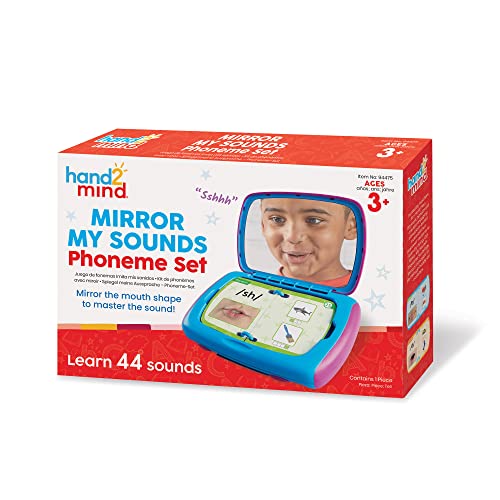
- Mirror and mouth-position booklet included
- Practices 44 English sounds
- Compact case for easy storage
Best For: Kids who benefit from visual feedback during sound practice
Best for Easy Setup
Top Bright 3-in-1 Sensory Blowing Toy

- 3-in-1 play with whistle, ball blowing, and floating balls
- Supports breath control, lung capacity, and oral motor coordination
- BPA-free, phthalates-free, manual, and easy to clean
Best For: Toddlers 3+ who need a simple oral-motor practice toy
Conversation Builder

- 60 scenario cards with visual clues and animal characters
- Builds social skills, emotional intelligence, and critical thinking
- Useful for guided conversation, sequencing, and articulation work
Best For: Kids 4+ who need structured conversation prompts
Progressive Sensory Set

- Eight-piece kit with whistles, balloon launcher, and ball blower
- Supports sensory development, breathing control, and speech improvement
- Progressive difficulty helps kids build skills step by step
Best For: Toddlers 3+ who need variety in oral-motor play
Whisper & Sound
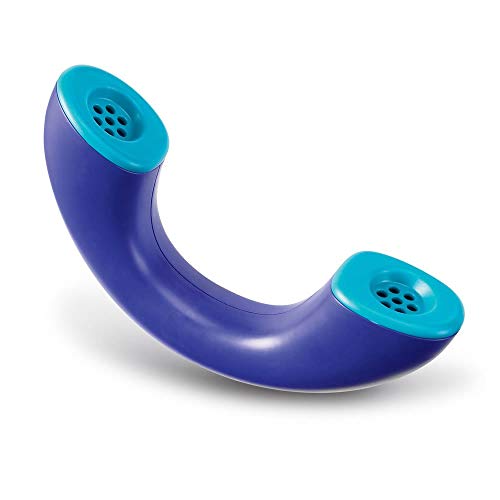
- Amplifies a child's voice into their own ear
- Supports phonemic awareness and speech-to-print work
- Useful for speech therapy, ESL, and pretend play
Best For: Kids practicing sound awareness and early speech skills
Breath & Blow

- Three play modes: whistle, ball, and balloon launcher
- Focuses on breathing control and lung exercise
- Made with burr-free ABS and ASTM F963 certification
Best For: Kids who need playful breathing and oral motor practice
Talk & Learn

- Speaks 240 sight words aloud for repetition
- No-screen design reduces device use
- Includes cards, reader, and USB charging cable
Best For: Preschoolers building vocabulary and word recognition
Oral-Motor Starter Pick – Tongue Trainer for Speech Myofunctional Therapy
For families shopping for apraxia speech therapy toys, this tongue exerciser is a practical oral-motor tool aimed at tongue positioning, lateralization, and elevation practice. It is designed to support clearer pronunciation, help with stuttering improvement, and build better oral muscle coordination through repeated training.
Best For: Children who need a simple tongue-training tool for speech practice and oral-motor exercises.
Pros:
- Includes 4 pieces for a more complete oral training set
- Made for children with a comfortable, gentle fit
- Supports tongue control, positioning, and oral muscle coordination
- Can be used to help encourage clearer speech and communication skills
Cons:
- More of a therapy aid than a traditional toy
- Requires consistent adult-guided practice to be useful
- Best suited to children already working on oral-motor exercises
This is a focused training tool rather than a broad educational toy, so it makes the most sense when your goal is hands-on speech support. If you want something built around tongue movement and structured practice, it fits that niche well.
Sound-Building Classroom Pick – Say-a-Sound Speech Cubes
These speech cubes are a strong fit if you want apraxia speech therapy toys that make sound practice more interactive. Kids roll the cubes, identify sounds, and practice enunciating phonemes, making them useful for building speech confidence and phonemic awareness at home or in therapy settings.
Best For: Kids practicing English sounds through a hands-on phonics game.
Pros:
- Covers all 44 English phonemes with color-coded cubes
- Offers multiple ways to practice sounds and word parts
- Durable enough for home, classroom, or speech therapy use
- Designed with educators and therapists in mind
Cons:
- Better for sound practice than for open-ended imaginative play
- Works best when an adult guides the activity
- May be less suitable for very young children under 3
For families and therapists who want structured sound repetition in a game-like format, these cubes are a solid pick. They lean more educational than toy-like, but that is exactly what makes them useful for targeted speech work.
Early Language Flashcard Pick – Toddler Speech Development Cards
For apraxia speech therapy toys aimed at very young children, this flashcard set is built around early speech initiation and imitation. It uses 62 sounds and simple everyday words to encourage saying, repeating, playing, and mimicking, which makes it a useful choice for toddler speech practice.
Best For: Toddlers ages 1 to 4 who are starting speech and sound imitation activities.
Pros:
- Includes 62 playful sounds and simple words
- Designed for early speech development and mimicry
- Sized for toddlers and preschool learners
- Can work well as a gift or home practice tool
Cons:
- Paper-based cards may wear faster than plastic manipulatives
- Less hands-on than 3D therapy tools or games
- Most helpful with adult prompting and repetition
This set makes sense if you want a low-tech, early-stage speech resource that focuses on simple sounds and repetition. It is especially appealing for parents looking to encourage imitation in a format that is easy to use anywhere.
Mirror Practice Pick – Mirror My Sounds Phoneme Set
This phoneme set is a smart choice for apraxia speech therapy toys when you want kids to see mouth positions while they practice sounds. With a built-in mirror, phonics flash cards, and a mouth-position booklet, it supports repeated articulation work and phonemic awareness in a simple, hands-on format.
Best For: Kids learning sound production with visual mouth-position guidance.
Pros:
- Includes a mirror plus a mouth-position booklet
- Covers practice for 44 English sounds
- Useful for speech therapy, ESL, and phonics work
- Compact and easy to store in the included case
Cons:
- More of a structured learning tool than a toy
- Battery-powered listing may be unnecessary for some buyers
- Best results depend on guided practice and repetition
If visual feedback is important in your speech routine, this set offers a practical way to pair sound practice with mouth awareness. It is especially useful for learners who benefit from seeing their own articulation as they work.
Best for Easy Setup – Top Bright 3-in-1 Sensory Blowing Toy
If you’re comparing apraxia speech therapy toys, this Top Bright set is a simple way to make breath control and oral-motor practice feel like play. The 3-in-1 design combines a whistle, ball blowing, and floating blow pipe balls, so kids can work on airflow, hand-eye coordination, and sensory exploration without needing batteries or setup.
Best For: Toddlers ages 3+ who need a basic, engaging oral-motor toy for breath training and speech practice.
Pros:
- Includes three play modes: whistle, ball blowing toy, and floating blow pipe balls.
- Supports lung capacity, breath control, and oral motor coordination.
- Made from BPA-free and phthalates-free ABS for toddler use.
- Lightweight, manual, and easy to clean with water.
Cons:
- Only one main play set is included, so variety is limited compared with larger bundles.
- Requires active blowing, which may be a challenge for some children at first.
Overall, this is a practical starter option when you want a small, portable tool that turns repeated breathing practice into an active game. It’s especially useful for families who want a straightforward toy for home, travel, or outdoor play.
Conversation Builder – Who What Why Card Game
For families looking at apraxia speech therapy toys that support language beyond simple sound practice, this Who What Why card game adds guided conversation and thinking skills. Each card uses real-life scenarios and visual clues to help children talk through emotions, details, and cause-and-effect, which makes it a useful companion for speech therapy, sequencing work, and articulation-focused activities.
Best For: Kids ages 4+ who benefit from structured conversation prompts and social-thinking practice during therapy or home learning.
Pros:
- Uses 60 relatable scenarios to spark communication and discussion.
- Supports social skills, emotional intelligence, and critical thinking.
- Animal characters and visual clues keep the activity approachable.
- Works well for parents, teachers, counselors, and therapists.
Cons:
- It is a card-based learning tool, so it does not provide oral-motor blowing practice.
- Best suited for guided interaction rather than solo play.
This is a strong pick if your goal is to encourage fuller responses, observation, and reasoning as part of speech support. It’s more about conversation development than articulation drills, which makes it a useful complement to hands-on therapy toys.
Progressive Sensory Set – Joyreal 8-in-1 Speech Tools
If you want apraxia speech therapy toys with more variety, this Joyreal 8-in-1 set gives kids multiple ways to practice blowing, listening, and mouth control. With six whistles, a balloon launcher, and a ball blower, it offers progressive challenges that can keep practice fresh while supporting breathing control, lung capacity, and early articulation skills.
Best For: Toddlers 3+ who do best with a multi-piece sensory set that grows with their blowing skills.
Pros:
- Eight-piece set includes six whistles plus balloon and ball-blowing activities.
- Designed to support sensory development and speech improvement.
- Progressive difficulty helps children build confidence step by step.
- Made from high-quality ABS and designed to be washable for easier hygiene.
Cons:
- Smaller pieces and multiple parts may require more supervision during play.
- Like other blowing toys, it depends on the child’s ability to coordinate breath control.
This set stands out for families who want more than one oral-motor activity in a single box. The mix of whistles, balloon play, and ball blowing can make repetition feel less repetitive, which is helpful when you’re building skills through play.
Whisper & Sound – hand2mind Phoneme Phone
If you’re comparing apraxia speech therapy toys, this phoneme phone is a simple, low-tech option that helps kids hear their own voice more clearly while practicing sounds. It supports phonemic awareness, speech-to-print activities, and speech practice in a multisensory way without adding screen time.
Best For: Kids working on phonemic awareness, whisper-style speech practice, and early literacy support.
Pros:
- Amplifies a child’s voice into their own ear for sound awareness.
- Supports speech therapy, phonemic awareness, and reading whisper activities.
- Can be used for pretend play and at-home learning.
- Works as a simple ESL or literacy support tool.
Cons:
- Focused on listening and sound practice rather than full speech programming.
- Best results depend on adult guidance and consistent use.
Overall, this is a practical speech support tool for families who want a hands-on way to reinforce listening and sound production. It is especially useful when you want something lightweight and easy to bring into home practice sessions.
Breath & Blow – 3-in-1 Speech Exerciser
For apraxia speech therapy toys that focus on airflow and oral motor practice, this 3-in-1 exerciser offers a hands-on way to work on blowing control. It combines a whistle, floating ball game, and balloon launcher, and the notes say it may help children improve pronunciation to a certain extent.
Best For: Kids who need playful breathing exercises and simple speech-related oral motor practice.
Pros:
- Three play modes: whistle, floating ball, and balloon launcher.
- Designed to exercise children’s lungs and breathing control.
- Made from burr-free ABS plastic and certified to ASTM F963 safety standards.
- Portable, manual, and easy for shared play.
Cons:
- Assembly is required.
- More suited to breathing practice than direct articulation drills.
This is a good pick if you want a toy that turns breath work into a game. It may fit well as part of a broader therapy routine, especially for children who respond better to active, sensory play.
Talk & Learn – 240-Sight-Word Flash Cards
Among apraxia speech therapy toys, talking flash cards are useful when you want repeated word exposure without a screen. This set speaks the cards aloud, covers a wide range of everyday categories, and can help build vocabulary, hearing skills, and word recognition through repetition.
Best For: Preschool and early elementary kids who benefit from repeated spoken word practice and vocabulary building.
Pros:
- Includes 240 sight words across many familiar categories.
- Card reader pronounces words automatically for repetition practice.
- No-screen design helps reduce tablet and phone time.
- Portable set includes cards, reader, and USB charging cable.
Cons:
- More vocabulary-focused than hands-on oral motor therapy.
- Best for guided practice rather than independent speech work alone.
This set is a strong option for families who want structured word repetition in a kid-friendly format. It pairs well with speech practice at home when the goal is hearing, naming, and reinforcing everyday words.
How We Picked These Apraxia Speech Therapy Toys
We focused on toys and tools that encourage repeatable speech practice, oral-motor movement, breath control, sound awareness, and interactive communication. We also prioritized options that are easy to use at home, adaptable for different skill levels, and engaging enough to support regular practice.
Quick Comparison
Some of these products are best for direct speech practice, such as phoneme-focused tools, mirrors, and sound cards. Others are better for warm-up activities, including blowing toys, whistles, and oral-motor sets. A few support broader language development through conversation, sight words, and phonics practice. The best choice depends on whether your child needs help with sound production, motivation, or general speech-language exposure.
Key Buying Factors for Apraxia Speech Therapy Toys
Speech Goal Fit
Match the toy to the skill you want to build. For apraxia, look for tools that support repeated practice of specific sounds, syllables, and simple word patterns. If your child is working on articulation, sound cards and phoneme tools may be more useful than general sensory toys.
Oral-Motor and Breath Control Support
Many children benefit from activities that strengthen awareness of lip rounding, tongue placement, and controlled exhalation. Blowing toys, whistles, and tongue exercisers can be helpful as part of a broader therapy plan, especially for warm-ups and motor planning practice.
Age and Attention Span
Choose items that match your child’s developmental stage. Younger children often do better with simple cause-and-effect toys, picture-based prompts, and short activities. Older kids may engage more with conversation cards, phonics sets, and more structured speech tasks.
Ease of Use at Home
The best Apraxia Speech Therapy Toys are easy for caregivers to set up and repeat consistently. Look for clear instructions, durable pieces, and activities that can be completed in a few minutes at a time.
Who Should Buy Which Apraxia Speech Therapy Toys?
If your main goal is sound production and speech modeling, phoneme-focused tools and flash cards are a strong place to start. If your child needs extra oral-motor input or breath work, sensory blow toys and tongue exercises may be a better fit. For children who need more motivation and interaction, conversation cards and talking flash cards can help turn practice into a game. Many families will get the best results by combining one direct speech tool with one engaging play-based option.
In short, the best Apraxia Speech Therapy Toys are the ones your child will use often. Consistency matters more than complexity, so pick tools that fit your routine and support frequent, low-pressure practice.