The best communication boards for home use make everyday choices, needs, and feelings easier to express without relying on speech. This roundup compares 10 practical options for children, adults, families, and caregivers.
We focus on usability, portability, durability, symbol clarity, and the needs of people navigating autism, aphasia, stroke recovery, or other communication differences.
Best 10 Communication Boards for Home Use Picks for 2026
Clinically Trusted Pick

- Clinically validated design
- Marker and holder attached
- Individually wrapped boards
Best For: Home caregivers seeking a healthcare-tested communication board
Portable Two-Board Set

- Two double-sided boards
- Waterproof and wipe-clean
- Portable 30 x 21 cm format
Best For: Families and caregivers needing portable, sanitizable boards
Large-Print Choice
Visually Speaking Extra Large Board

- 13 x 19 inch large format
- Double-sided communication layout
- Includes pain, needs, emotions, and alphabet
Best For: Home care users who need highly visible communication prompts
Most Comprehensive Set
Six-Theme Communication Boards

- Six themed communication boards
- Colorful words-and-picture symbols
- Durable, wipeable plastic
Best For: Homes and therapy settings needing varied daily communication prompts
Best Multi-Location Set
Fuyoooo 3-Piece Picture Symbol Boards

- Three boards for convenient placement
- Covers needs, emotions, and activities
- Compact and portable 30 x 21 cm design
Best For: Nonverbal adults or people with aphasia who prefer picture-based communication
Best Letter-Based Option
Adult Non-Slip QWERTY Communication Board

- Non-slip rubber backing stays in place
- QWERTY layout supports custom words
- Portable 9.5 x 8-inch adult design
Best For: Adults who need letter-based communication during home care or recovery
Best Value Picture Pack
Eaasty 6-Piece Aphasia Communication Cards

- Six cards for spares or multiple locations
- Bright daily-life pictures and patterns
- Reusable coated 300g cardboard surface
Best For: Households and caregivers needing multiple reusable picture cards
Best Step-by-Step Board
Kids Laminated Visual Communication Chart
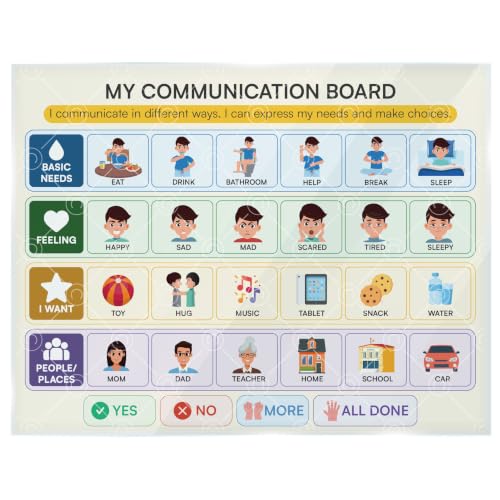
- 9-by-12-inch laminated chart
- Icons cover needs, feelings, routines, and requests
- Suitable for home, school, and therapy use
Best For: Children building everyday communication skills
Best Adult Set
Plastic Communication Boards for Nonverbal Adults

- Set includes four specialized boards
- Designed for needs, wants, and preferences
- Plastic and portable for frequent use
Best For: Adults with aphasia or communication difficulties
Best Portable Option
Waterproof Kids Communication Card with Lanyard
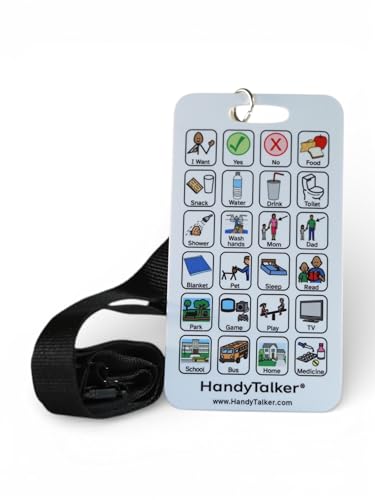
- Rigid waterproof card for active settings
- Lanyard keeps it readily accessible
- No batteries, charging, apps, or Wi-Fi
Best For: Children needing portable communication during outings
Clinically Trusted Pick – Vidatak EZ Board
For shoppers comparing communication boards for home use, the Vidatak EZ Board offers a clinically validated, dry-erase-style format designed around everyday patient and caregiver communication. It includes a marker and attached holder, while individually wrapped boards support infection-prevention practices.
Best For: Home caregivers and patients who want a healthcare-tested board with an attached writing setup.
Pros:
- Clinically validated and designed by patients and nurses.
- Includes a marker and holder attached to the board.
- Individually wrapped for infection-prevention considerations.
- Used in thousands of healthcare facilities.
Cons:
- The supplied details do not specify the board’s dimensions or symbol layout.
- Individual wrapping may be less convenient for casual household storage.
With its clinical background and integrated marker holder, this is a practical choice for home care situations that call for a familiar, structured communication aid.
Portable Two-Board Set – Plastic Communication Boards
This two-board set is a practical option for communication boards for home use when portability, wipe-clean materials, and clear picture symbols matter. The double-sided plastic boards are sized for carrying between rooms, appointments, care settings, or family homes.
Best For: Non-verbal children or adults, and stroke or aphasia patients who need a portable board set for home or care environments.
Pros:
- Includes two double-sided boards with clear medical communication symbols.
- Waterproof material can be wiped clean and sanitised.
- Portable 30 x 21 cm format is easy to carry.
- Suitable for domestic settings, hospitals, and care homes.
Cons:
- The supplied details list both plastic and cardstock material descriptions.
- The symbol selection may be more healthcare-focused than tailored to a specific individual.
This set stands out for flexible use and easy cleaning, making it well suited to households that also move the boards between therapy, care, and medical settings.
Large-Print Choice – Visually Speaking Extra Large Board
For communication boards for home use where visibility is a priority, the Visually Speaking Extra Large board provides a 13-by-19-inch, double-sided layout with large print and illustrations. Users can point to words, pictures, letters, pain information, emotions, and common needs.
Best For: Home care, hospice, rehabilitation, and families who need a tabletop board that is easier to see from a distance.
Pros:
- Extra-large 13 x 19 inch format with large print and illustrations.
- Double-sided design includes practical communication categories and an alphabet.
- UV coating supports durability.
- Designed by a nurse and made in the USA.
Cons:
- Its large size may be less convenient to carry or store than smaller boards.
- The supplied details identify it as a single board rather than a multi-board set.
The generous surface and broad selection of symbols, words, and letters make this a strong home-care option when clear viewing and varied communication needs are more important than compactness.
Most Comprehensive Set – Six-Theme Communication Boards
This six-piece set broadens the choices available in communication boards for home use with separate themes for feelings, personal needs, desired items, food and places, and general communication. Its plastic, wipeable surfaces are designed for regular use at home, in therapy, or in care facilities.
Best For: Families, therapists, and caregivers who want multiple themed boards for non-verbal children, adults with aphasia, or people with autism.
Pros:
- Includes six boards covering emotions, needs, wants, food, places, and general communication.
- Colorful picture symbols are paired with matching words.
- Durable plastic is resistant to tearing or bending.
- Wipeable surface supports quick cleanup after regular use.
Cons:
- The larger 16.93 x 12.6 inch format may require more storage space.
- The supplied details do not specify whether the boards are double-sided.
- Multiple themed boards may be more than needed for users seeking a single basic aid.
Its range of themes makes this the most versatile choice of the group for building a broader communication routine at home, especially when needs change throughout the day.
Best Multi-Location Set – Fuyoooo 3-Piece Picture Symbol Boards
For shoppers comparing communication boards for home use, the Fuyoooo set stands out as a flexible picture-based option. It includes three compact boards with symbols and phrases covering common needs, emotions, and daily activities, making it practical to keep one in several accessible locations.
Best For: Nonverbal adults or people with aphasia who benefit from pointing to pictures and phrases at home or while traveling.
Pros:
- Three-board bundle supports placement in multiple rooms or locations.
- Includes varied symbols, images, phrases, needs, and emotions.
- Compact 30 x 21 cm format is lightweight and portable.
Cons:
- Picture-based format may be less suitable for users who need to spell custom words.
- The notes describe the boards as compact, so the symbols may be smaller than on a large tabletop chart.
The Fuyoooo set is a practical choice when accessibility and portability matter most. Multiple boards can help keep communication support close at hand throughout the home, while the broad daily-life content encourages more independent expression.
Best Letter-Based Option – Adult Non-Slip QWERTY Communication Board
Among communication boards for home use, this adult-oriented letter chart is designed for users who need to spell words or point to clearly organized choices. Its 9.5 x 8-inch rubber-and-vinyl construction stays in place on a lap, tray, or bedside table, while the QWERTY layout supports more customized communication.
Best For: Adults with limited or no speech, aphasia, stroke-related communication difficulties, or other conditions who need a stable letter-and-word board.
Pros:
- Non-slip rubber backing helps prevent movement on laps and tables.
- Large letters and a smooth vinyl surface support finger-pointing or sliding.
- Portable profile fits in a wheelchair side area or backpack without creasing.
- Adult-focused design includes letters, words, numbers, and symbols.
Cons:
- Sold as a single board rather than a multi-board set.
- Letter-based communication can require more time than pointing to ready-made pictures.
This board is a strong fit for home care when stability and adult-appropriate design are priorities. The QWERTY layout gives users more flexibility to form words, while the nonslip backing helps keep the board usable on a bed, table, tray, or lap.
Best Value Picture Pack – Eaasty 6-Piece Aphasia Communication Cards
If you want communication boards for home use with extras for replacement or wider distribution, the Eaasty six-piece pack offers practical value. The bright, clearly patterned cards feature everyday communication content and use thick coated cardboard that can be written on with a marker and wiped clean.
Best For: Families, caregivers, and patients who need multiple reusable picture cards for everyday needs or communication with healthcare providers.
Pros:
- Six boards provide convenient spares and support use in different locations.
- Daily-life content helps users express needs and ideas more comprehensively.
- 300g coated cardboard is thick, sturdy, and designed for repeated use.
- Marker notes can be erased without scratching the printed design.
Cons:
- Cardboard construction may be less convenient for travel than a flexible or vinyl board.
- The picture-card format may not provide the spelling flexibility of a letter chart.
- The notes do not specify a compact individual card size.
The Eaasty pack makes sense for households that want several communication aids available at once. Its reusable surface and six-card quantity are particularly useful when caregivers need a board nearby, a replacement on hand, or a card available for communication with medical professionals.
Best Step-by-Step Board – Kids Laminated Visual Communication Chart
For families comparing communication boards for home use, this 9-by-12-inch laminated chart offers a broad selection of clearly organized picture icons. It covers everyday requests, emotions, people, places, and routines, making it a practical screen-free aid for home learning, therapy practice, or classroom support.
Best For: Children developing communication skills, including children with autism, speech delays, language challenges, or developmental disabilities.
Pros:
- Includes icons for needs, wants, feelings, food, drinks, family, bathroom requests, help, and daily routines.
- Laminated surface is easy to clean and suited to everyday use.
- Supports independent communication and AAC learning in home, school, and therapy settings.
- Useful for parents, teachers, speech therapists, occupational therapists, and homeschool environments.
Cons:
- Designed around children’s communication needs, so it may not suit adult users.
- The fixed visual layout may offer less flexibility than a customizable communication system.
Choose this board when you want a durable, easy-to-clean chart with extensive coverage of common child-focused communication situations. Its 9-by-12-inch format provides more room for varied icons than a small portable card.
Best Adult Set – Plastic Communication Boards for Nonverbal Adults
Among communication boards for home use, this four-board plastic set is geared toward adults who need straightforward picture symbols for expressing needs and preferences. Its compact format also makes it practical for care homes, hospitals, and everyday situations outside the house.
Best For: Nonverbal adults and adults with aphasia or communication difficulties following a stroke, especially in care or support settings.
Pros:
- Includes four specialized boards for different needs and wants.
- Simple, intuitive picture-symbol layout supports straightforward pointing-based communication.
- Plastic construction is designed to withstand frequent use.
- Compact and lightweight for transportation between home, hospital, care home, and other locations.
Cons:
- The supplied details do not indicate that the boards are laminated or waterproof.
- Its adult-focused design may be less suitable for young children’s learning activities.
This set stands out when coverage across multiple situations matters more than having one large board. Four separate boards can be useful for organizing requests, preferences, and assistance needs in supported living or recovery environments.
Best Portable Option – Waterproof Kids Communication Card with Lanyard
If portability is a priority when choosing communication boards for home use, this rigid visual card is easy to keep nearby and carry beyond the house. Recognizable pictures and words help users point to everyday wants, needs, choices, and feelings without batteries, apps, or a network connection.
Best For: Children who need a readily available communication aid at home, school, during travel, or in outdoor and recreational settings.
Pros:
- Waterproof rigid plastic design suits pools, playgrounds, travel, and other active settings.
- Included lanyard keeps the lightweight card close at hand.
- Screen-free operation requires no charging, batteries, Wi-Fi, or app.
- Small 5.5-by-3-inch format is convenient for carrying during outings.
Cons:
- The compact card likely provides less symbol space than a full-size communication board.
- It is specifically designed for kids and may not match adult communication needs.
This is a strong fit for families who want an always-ready backup for communication outside a familiar room. Its waterproof construction and lanyard make it particularly practical for travel, recreation, and situations where electronics are inconvenient.
How We Picked the Best Communication Boards for Home Use
We evaluated these boards by looking at the features that matter most in daily home communication: clear symbols, readable layouts, useful vocabulary, durable construction, and ease of cleaning. We also considered whether each format suits a specific setting, such as a kitchen, bedroom, therapy area, or on-the-go bag.
Because communication needs vary widely, the list includes large-format boards, compact letter charts, picture-card sets, laminated charts, and waterproof rigid designs. A board should support the user’s established communication approach rather than replace individualized advice from a speech-language professional.
Quick Comparison
| Best For | Look For | Useful Format |
|---|---|---|
| Young children | Simple pictures and familiar routines | Laminated visual chart or cards |
| Adults with aphasia or stroke recovery | Large text, relevant needs, and letter access | Adult chart or picture-symbol board |
| Frequent cleaning | Water-resistant or wipeable materials | Plastic or waterproof board |
| Multiple rooms or caregivers | Several boards or interchangeable cards | Multi-piece set |
| Travel and appointments | Lightweight construction and compact size | Portable chart with lanyard |
Key Buying Factors for Communication Boards for Home Use
Vocabulary and Symbol Relevance
Choose symbols that match the person’s actual routines. Essential categories may include food, drinks, pain, toileting, temperature, emotions, people, activities, and yes-or-no responses. A smaller board with familiar choices can be more effective than an overcrowded design.
Size and Readability
Large boards are easier to see from a bed, recliner, or across a room, while smaller charts are more convenient for travel. Check the print size, contrast, and spacing, especially if the user has vision or motor challenges.
Durability and Cleaning
Laminated, plastic, and waterproof options are practical for repeated handling, spills, and shared use. Confirm that the surface can be wiped without damaging symbols or text. Rigid boards may last longer, while flexible laminated sheets are often easier to store.
Access Method
Some users point with a finger, while others use eye gaze, a hand-held pointer, or partner-assisted scanning. Select a layout that supports the person’s movement and positioning. Non-slip backing, a lanyard, or detachable cards may improve access.
Who Should Buy Which Communication Boards for Home Use?
Families supporting young children may prefer simple, colorful visual charts or card sets that can be placed near routines such as meals, dressing, and play. Adults with aphasia or stroke-related communication difficulties may benefit from larger text, practical picture symbols, and an alphabet or letter-based option.
Choose a multi-board or multi-card set if communication tools are needed in several rooms or by multiple caregivers. A portable, rigid, or lanyard-style board is better for appointments and outings. For users who need communication from bed or across a room, prioritize an extra-large, high-contrast format.
Before buying, ask the user’s speech-language pathologist or care team about vocabulary, positioning, and access needs. The right board is the one the person can see, reach, understand, and use consistently in everyday situations.