If you’re looking for a simple, engaging way to help a child recognize feelings, an emotion matching game for autism can be a smart place to start. These games turn social-emotional learning into hands-on play, which can make emotional concepts easier to understand and remember.
Below, we focus on options that support matching, naming, and discussing emotions while fitting different ages, skill levels, and therapy or home-use settings.
Best 10 Emotion Matching Game for Autism Picks for 2026
Emotion Match Starter
72-Piece Emotion Matching Cards

- 72 cards with 36 matching pairs
- Blank reverse side for custom play
- Thick, rounded-edge cardboard
Best For: Toddlers, preschoolers, and therapy or classroom emotion practice
Feelings Puzzle Builder

- 25 emotions with face-and-word matching
- Real photo plus cartoon format
- Durable cardstock with PET film
Best For: Visual learners who need help naming and discussing feelings
Feelings Memory Match
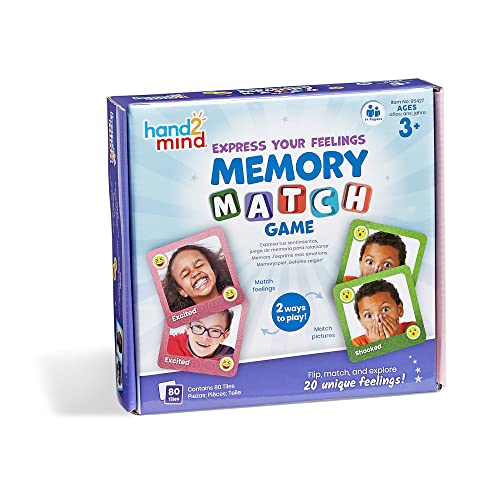
- 20 feelings with two faces each
- Color-coded borders and feelings chart
- Includes a guide for SEL prompts
Best For: Therapy, counseling, and small-group emotional learning
SEL Puzzle Pair
Feelings & Emotions Puzzle Cards

- 24 double-sided matching puzzles
- One-correct-answer puzzle shapes
- Bright illustrations for ages 3+
Best For: Preschool SEL, homeschool, and calm-down spaces
Swat-and-Match SEL Game
Emotion Matching Card Game for Speech Therapy

- Fast swat-and-match gameplay for emotions practice.
- Includes 60 emotion cards, 180 fly cards, and 4 frogs.
- Adds coping strategies and out-loud reading to each match.
Best For: Active therapy and classroom play with movement and verbal practice
Flashcards + Party Game
Exploding Emotions for Social Skills

- Works as both flashcards and a scenario game.
- Coping ideas on the back are speech-therapist created.
- Includes 140 scenarios for social-emotional learning.
Best For: Flexible use across therapy, home practice, and family games
Feelings Safari Match Game
Therapist-Designed Emotion Tiles

- No reading required for pre-readers and younger kids.
- Two main matching modes plus bonus variations.
- Built with 40 thick tiles for repeated use.
Best For: Preschool and early therapy matching with simple visuals
Feelings Puzzle Pick
Kasfalci Feelings & Emotions Puzzle Cards

- 20 double-sided cards with vivid emotion illustrations
- Matching format supports feelings recognition and SEL
- Includes a storage bag for easy transport
Best For: Visual learners needing a simple emotion matching activity
Game Night Match
Faces & Feelings Go Fish Card Game

- Two games in one: Go Fish and Memory Match
- 96 emotion cards plus rewards and challenges
- Supports 2-6 players for group learning
Best For: Ages 6+ kids who enjoy flexible card games for SEL
Fast Action Pick

- Swatting format makes emotion practice active and engaging
- Includes 56 emotion cards, 56 flies, and 4 swatters
- Built for up to 4 players in therapy or classroom use
Best For: Active kids who learn emotions best through movement and play
Emotion Match Starter – 72-Piece Emotion Matching Cards
If you want an emotion matching game for autism that keeps things simple and hands-on, this 72-card set is a strong place to start. It helps young children recognize feelings, build memory, and practice fine motor skills through easy matching play.
Best For: Toddlers, preschoolers, and classroom or therapy use where a basic emotion recognition activity is needed.
Pros:
- 72 cards with 36 emotion pairs for repeated matching practice
- Double-sided design adds flexibility, including a blank side for custom drawing
- Thick cardboard, rounded edges, and non-toxic plant ink
- Suitable for home, therapy sessions, classrooms, and calm-down corners
Cons:
- Best suited to younger children rather than older kids needing advanced emotion work
- Cards are small at 2 x 2 inches, so supervision may help with very young users
This set is a practical pick if you want a durable, straightforward matching activity focused on basic feelings vocabulary and social-emotional learning.
Feelings Puzzle Builder – 25-Emotion Puzzle Cards
This emotion matching game for autism uses a puzzle format to help kids identify and talk about feelings in a more visual way. Each card pairs a real face with a cartoon version and the emotion name, making it useful for children who benefit from clear, direct cues.
Best For: Kids who learn well with visual matching and need support building emotion vocabulary and self-awareness.
Pros:
- 25 different emotions for broader feelings vocabulary
- Real-life and cartoon representations help reinforce recognition
- Reverse side adds a scene that can spark conversation about context
- Thick cardstock with double-sided PET film for durability
Cons:
- More puzzle-based than classic memory matching, so it may suit some learners better than others
- Format may feel less open-ended than card-only emotion games
It’s a good choice if you want a structured, picture-heavy learning tool that supports emotion identification, discussion, and social understanding.
Feelings Memory Match – Express Your Feelings Tiles
For families and therapists looking for an emotion matching game for autism, this memory set adds extra structure with 20 feelings and repeatable tile matching. The color-coded borders and included feelings chart make it easier to reference emotions while kids play.
Best For: Therapy sessions, classroom centers, and small-group play focused on social-emotional learning.
Pros:
- 20 distinct feelings with two different faces per emotion
- Color-coded borders align with the included feelings chart
- Sturdy tiles are designed for repeated use
- Guide adds prompts and extensions for discussion and coping skills
Cons:
- Requires more guided discussion to get the most out of the activity
- Paper-based tiles may not feel as rugged as thicker board-game pieces
This is a solid pick if you want a therapy-friendly matching game that goes beyond simple recall and supports emotional language, perspective-taking, and regulation.
SEL Puzzle Pair – Feelings & Emotions Puzzle Cards
If you’re shopping for an emotion matching game for autism that works well as a calm, visual activity, this puzzle set keeps the focus on clear one-to-one matching. Kids match feelings to real-life images, which can make social-emotional learning feel concrete and approachable.
Best For: Preschoolers, homeschool families, and calm-down corners that need a simple SEL matching tool.
Pros:
- 24 double-sided puzzles for repeated matching practice
- Unique puzzle shapes create one correct answer for each match
- Bright illustrations help hold attention during learning
- Made for ages 3+ and suitable for home, classroom, or counselor use
Cons:
- Smaller set than some larger emotion card games
- Focuses on matching rather than broader emotion discussion tools
This set is a practical option when you want a durable, child-friendly activity that reinforces feelings awareness without adding too much complexity.
Swat-and-Match SEL Game – Emotion Matching Card Game for Speech Therapy
If you want an emotion matching game for autism that keeps kids moving, this swat-style set turns feeling identification into a fast, hands-on activity. Players match emotion fly cards to their own cards, use the suction-cup frogs to grab targets, and say the emotion plus coping strategy out loud, which makes it practical for therapy sessions and classroom SEL play.
Best For: Active kids who learn best through movement, matching, and verbal practice in therapy or classroom settings.
Pros:
- Combines emotion matching, speech practice, and coping strategies in one game.
- Includes 60 emotion cards, 180 fly cards, and 4 color-coded suction frogs for group play.
- Durable cards and non-toxic printing are made for energetic use.
- Designed for play therapy, counseling, SEL lessons, and speech therapy materials.
Cons:
- The swatting format may be too active for children who prefer quiet, seated games.
- Winning depends on speed, so it may not suit every learner or group dynamic.
- Best fit is for ages 5+, not younger preschoolers.
This is a strong pick if you want a lively, skill-building emotion matching game for autism that encourages both recognition and regulation. The physical gameplay helps make emotional learning feel engaging rather than abstract.
Flashcards + Party Game – Exploding Emotions for Social Skills
This emotion matching game for autism works well if you want something that can be used both as flashcards and as a family-style game. The cards show real-life feeling illustrations, and the coping ideas on the back were created by a speech therapist, so it supports emotional regulation while still giving you a flexible game format for kids of different ages.
Best For: Families, therapists, and teachers who want one set that can work as both learning cards and a social-emotional game.
Pros:
- Two-in-one design: emotion cards plus a scenario-based game.
- Includes 140 scenarios for social-emotional play and discussion.
- Coping ideas on the back are created by a speech therapist.
- Organized box makes it easier to travel with or store.
Cons:
- The game adds more complexity than simple matching-only card sets.
- May be less ideal if you want a highly active or physical game.
- Best for broader social skills work rather than a single focused mechanic.
This is a versatile option if you want a learning tool that can grow with the child. It works well for emotional vocabulary, perspective taking, and relaxed social skills practice in home or therapy settings.
Feelings Safari Match Game – Therapist-Designed Emotion Tiles
For parents and therapists looking for a quieter emotion matching game for autism, Feelings Safari focuses on clear visual matching rather than speed or reading. Kids match facial expressions or character images across 40 thick tiles, and the included variations give you easy ways to keep the activity fresh while building emotional vocabulary and empathy.
Best For: Preschoolers, pre-readers, and therapy sessions that need a simple, durable matching activity.
Pros:
- No reading required, which makes it accessible for younger children.
- Two core ways to play plus extra variations for replay value.
- Therapist- and educator-friendly for individual, small-group, or homeschool use.
- 40 thick emotion tiles are designed to hold up to repeated use.
Cons:
- Only covers 10 core feelings, so it is more focused than larger sets.
- Less physically interactive than swat or movement-based games.
- Best suited to basic matching and discussion, not fast-paced gameplay.
This set is a good fit if you want an approachable emotions activity that feels calm and easy to teach. The simple visuals and replayable formats make it especially practical for early learners and therapy use.
Feelings Puzzle Pick – Kasfalci Feelings & Emotions Puzzle Cards
If you want an emotion matching game for autism that is simple, visual, and easy to use, this feelings puzzle set is a solid fit. The 20 double-sided cards use vivid illustrations and a two-piece match format, making it approachable for kids who need clear visual cues while practicing feelings recognition and social-emotional learning.
Best For: Kids who benefit from a hands-on, visual matching activity for identifying emotions at home, in therapy, or in the classroom.
Pros:
- 20 double-sided puzzle cards create 40 matching pieces for repeated practice.
- Designed to help children identify feelings and emotions through matching.
- Suitable for ADHD and autism learning, plus ABA and speech therapy use.
- Includes a storage bag for easier cleanup and portability.
Cons:
- Manual puzzle matching may be too basic for older kids who need a more advanced game.
- Only supports 1-2 players, so it is less ideal for larger group play.
Overall, this set works well as a calm, low-pressure starting point for emotion learning. Its compact format and visual design make it especially practical for classrooms, home use, and travel.
Game Night Match – Faces & Feelings Go Fish Card Game
This emotion matching game for autism adds a familiar Go Fish format to feelings practice, which can make learning more engaging for kids ages 6+. With 96 emotion cards, a Memory Match option, and token rewards, it gives children multiple ways to build feelings vocabulary and social skills through play.
Best For: Families, classrooms, and therapy settings that want a flexible card game with more structure and replay value.
Pros:
- Two games in one: Go Fish and Memory Match.
- Includes 96 emotion cards, 14 challenges, and 54 tokens.
- Supports 2-6 players for group play at home or in class.
- Uses rewards and challenges to reinforce emotion recognition and coping talk.
Cons:
- Recommended for ages 6+, so it may not suit younger children.
- Card-game format may be less hands-on than puzzle or movement-based options.
For kids who enjoy card games, this is a strong choice because it blends entertainment with emotional learning. The variety of cards, rules, and rewards makes it especially useful when you want a game that can grow with a child.
Fast Action Pick – Garybank Emotions Swat Game
For kids who learn best through movement, this emotion matching game for autism turns feelings practice into a fast swatting activity. The set pairs 56 emotion cards with 56 fly cards and four swatters, so children can match emotions quickly while building vocabulary, hand-eye coordination, and emotional awareness.
Best For: Active learners who need a lively, interactive game for social-emotional learning, therapy, or small group play.
Pros:
- Fast-paced gameplay makes emotion practice more active and engaging.
- Includes 56 emotion cards, 56 fly cards, and 4 swatters.
- Designed to reinforce feelings vocabulary, anger management, and social skills.
- Works for up to 4 players in classrooms, counseling, or family play.
Cons:
- Paper-and-plastic components may feel less durable than heavier-duty classroom toys.
- The quick reaction format may be challenging for kids who prefer slower-paced learning.
This is a good pick if you want emotion learning to feel energetic instead of worksheet-like. The built-in coping strategy content also gives it extra value for therapy and social skills practice.
How We Picked the Best Emotion Matching Game for Autism
We prioritized games that are easy to understand, visually clear, and useful for building foundational emotional skills. The strongest picks also offer flexible play modes, repeated practice, and formats that work well for speech therapy, calm-down corners, classrooms, and home learning.
Quick Comparison
Matching-card sets are usually best for straightforward recognition and vocabulary building. Puzzle-style cards can be better for hands-on learners who benefit from fitting pieces together. Swat and Go Fish formats add movement or turn-taking, which can be helpful for children who learn best through active play.
Key Buying Factors for Emotion Matching Game for Autism
Visual Clarity
Look for simple faces, clear labels, and limited visual clutter. Children with autism often respond well to direct images that make each emotion easy to identify.
Age and Skill Level
Choose sets that match the child’s current abilities. Beginners may do better with basic happy, sad, mad, and scared cards, while older kids may benefit from more nuanced feelings and conversation prompts.
Play Style
Consider whether you want a memory match, puzzle, card game, or movement-based activity. A versatile Emotion Matching Game for Autism can support different goals, from independent matching to guided social interaction.
Durability and Therapy Use
Sturdy cards, easy-to-handle pieces, and wipe-clean surfaces matter if the game will be used often in classrooms, clinics, or busy homes.
Who Should Buy Which Emotion Matching Game for Autism?
For toddlers and early learners, simple matching cards or puzzle cards are often the best fit. For speech therapy or social skills practice, choose games that encourage naming, turn-taking, or discussion. For active kids, swat-style or movement-based games can make participation more engaging. For families wanting a fun group activity, card games with broader emotion vocabulary may offer the most replay value.
In short, the right choice depends on how the child learns best and what skill you want to build first: recognition, language, regulation, or social interaction.