The right foam crash pad can create a softer, more controlled landing area for sensory play, tumbling practice, and energetic indoor activities. Size, foam density, cover design, and floor grip all affect how useful and safe a pad will be.
We compared 10 popular options across these practical factors to help you choose a crash mat that fits your space, activity level, and cleaning routine.
Best 10 Foam Crash Pads Picks for 2026
Best Kids’ Sensory Crash Pad
SaferBounce 3-Foot Foam Crash Pad

- High-density foam supports active play
- Removable cover is machine washable
- Compact size for home or therapy spaces
Best For: Kids’ sensory play, jumping, and calming areas
Best Gymnastics Training Crash Pad
We Sell Mats Bifolding Landing Mat

- Bifolding design improves portability
- Multiple thickness options are listed
- Vinyl-and-mesh construction for training use
Best For: Gymnastics, tumbling, cheer, and wrestling practice
Best Durable Sensory Crash Pad
Skil-Care 5-by-5-Foot Foam Mat

- Roomy surface for one or two children
- Mesh vents help the pad recover its shape
- Water-resistant nylon cover is easy to maintain
Best For: Supervised home, school, or clinic sensory play
Best Multi-Use Sensory Landing Pad

- EPE and foam core support impact absorption
- Large pad doubles as a reading or rest area
- Stain-resistant cover wipes clean
Best For: Large home, school, clinic, or sensory-room setups
Best Overall Foam Crash Pad

- Soft shredded-foam cushioning for jumping and crashing
- Handles and non-slip bottom support portable, stable use
- Machine-washable cover works for play and relaxation
Best For: Versatile home, classroom, and playroom use
Best Supportive Foam Crash Pad

- High-density foam blocks support active landings
- Four mesh ports help release airflow during play
- Works for therapy, classrooms, reading, and relaxation
Best For: Sensory and therapeutic movement spaces
Best Easy-Clean Foam Crash Pad
Cheer Collection Crash Landing Pad
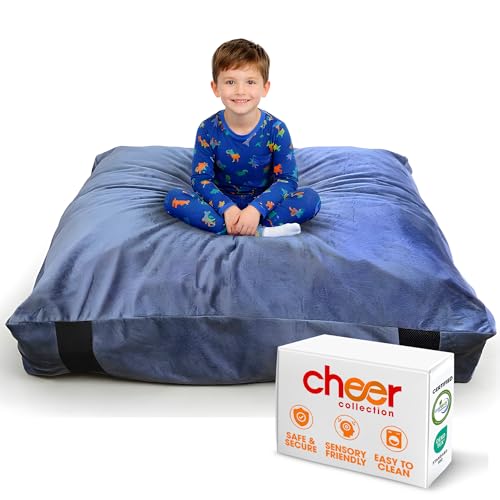
- High-density foam pieces cushion jumps and crashes
- Mesh vents support comfortable air release
- Washable cover suits active, everyday indoor use
Best For: Families wanting a washable multipurpose play mat
Everyday Sensory Play
- 3-by-4-foot indoor design
- High-density foam-piece filling
- Machine-washable removable cover
Best For: Compact sensory play, jumping, and lounging
Large-Scale Active Play

- 59.1-by-59.1-inch landing zone
- 15 kg of high-density foam
- Non-slip base and washable cover
Best For: Large playrooms, clinics, preschools, and sensory rooms
Extra-Thick Comfort

- 17-inch-thick foam cushioning
- Soft, double-sided velvet cover
- Machine-washable removable cover
Best For: Thick cushioning, calming corners, and versatile sensory spaces
Best Kids’ Sensory Crash Pad – SaferBounce 3-Foot Foam Crash Pad
For families seeking foam crash pads for jumping, tumbling, or sensory play, this compact SaferBounce model provides a cushioned landing area in a manageable 3-by-3-foot size. Its high-density foam supports active play and quiet downtime, while the removable, machine-washable cover simplifies cleanup.
Best For: Children’s home playrooms, sensory spaces, classrooms, and therapy areas where a smaller crash pad is useful.
Pros:
- Supports jumping, rolling, tumbling, and crashing.
- Designed for sensory seekers and calming downtime.
- Removable cover is machine washable.
- Available in multiple listed sizes, including 3 by 3 feet.
Cons:
- The 3-by-3-foot version offers less landing area than the listed larger sizes.
- Product details identify a polyester cover but do not specify the foam density.
This is a versatile choice when you want one of the more compact foam crash pads for kids, particularly if easy cover washing and mixed active-and-calm use matter. Check the selected size carefully before ordering.
Best Gymnastics Training Crash Pad – We Sell Mats Bifolding Landing Mat
Among foam crash pads for gymnastics practice, this bifolding We Sell Mats model emphasizes portability and training versatility. The 4-by-4-foot folded configuration uses sponge-core foam and a heavy-duty 18-ounce vinyl top to cushion tumbling, vault drills, and other routines.
Best For: Gymnastics, tumbling, cheerleading, wrestling, and multi-use training spaces that need a foldable landing mat.
Pros:
- Bifolds for easier transport and storage.
- Available in listed 4-inch, 8-inch, and 12-inch thicknesses.
- Heavy-duty vinyl top with mesh sides.
- Can also serve as playroom flooring or a wrestling mat.
Cons:
- Hand-wash care may require more maintenance than a machine-washable cover.
- The supplied details do not identify a machine-washable cover.
- Buyers must select the desired thickness for their training needs.
This is a strong fit for structured athletic training rather than a soft sensory lounge. Its folding design and multiple thickness options make it practical for practices where setup, storage, and impact cushioning are priorities.
Best Durable Sensory Crash Pad – Skil-Care 5-by-5-Foot Foam Mat
This Skil-Care model is one of the larger foam crash pads for kids, with a 5-by-5-foot surface intended for supervised jumping, climbing, and floor activities. High-density foam sections absorb impact, while mesh vents help the pad release air and regain its shape after use.
Best For: Playrooms, schools, and clinics needing a roomy sensory crash surface for one or two children.
Pros:
- Large 5-by-5-foot surface accommodates active play.
- High-density foam sections are designed to absorb impact.
- Mesh vents support airflow and shape recovery.
- Water-resistant nylon cover wipes clean and is machine washable below 180°F.
Cons:
- Use is specified for supervised environments.
- The foam interior should not be laundered.
- The product requires keeping mesh vents unblocked and away from walls or furniture.
Choose this pad when surface area, ventilation, and a rugged nylon exterior are more important than compact storage. Its care instructions are clear, but setup should leave the vents unobstructed.
Best Multi-Use Sensory Landing Pad – FINCOME 5-by-5-Foot Crash Mat
For shoppers comparing foam crash pads that can serve more than one purpose, the FINCOME crash mat combines an EPE base layer with a high-density foam core. Its 5-by-5-foot, 10-inch profile is designed for jumping and crashing, while the same pad can function as a bean bag bed, reading nook, or therapeutic tool.
Best For: Homes, sensory rooms, schools, clinics, and special-education settings seeking a large multi-purpose pad.
Pros:
- EPE and high-density foam construction is designed for impact absorption.
- Breathable holes support airflow and rebound after unpacking or use.
- Polyester cover resists stains and wipes clean.
- Works as a crash mat, reading nook, bean bag bed, or therapeutic tool.
Cons:
- Vacuum-compressed packaging requires shaking the mat after unpacking.
- The supplied warranty is one year.
- Its large 5-by-5-foot footprint may require considerable floor space.
This is a practical option if you want foam crash pads with a broader role in a room. Its large surface and multi-use design are appealing, though buyers should plan for unpacking time and adequate floor space.
Best Overall Foam Crash Pad – JOYWOO Sensory Crash Mat
The JOYWOO sensory crash mat is a versatile foam crash pad for indoor jumping, tumbling, sensory play, and quiet time. Its shredded-foam filling, breathable mesh panel, non-slip bottom, and removable microfiber cover make it a practical option for active playrooms, classrooms, and home use.
Best For: Families and classrooms wanting a portable, washable crash pad that also works as a cozy relaxation space.
Pros:
- Soft shredded-foam filling cushions jumps and crashes.
- Four reinforced handles make it easier to move.
- Non-slip bottom helps keep the mat steady during play.
- Removable, machine-washable cover simplifies cleaning.
Cons:
- The expanded 4 x 4-foot version is bulky for smaller rooms.
- Shredded foam may provide a softer, less structured feel than block foam.
Choose this model if portability and everyday versatility matter as much as impact cushioning. The available 4 x 4-foot and 5 x 5-foot sizes also make it adaptable for children, teens, adults, and pets.
Best Supportive Foam Crash Pad – WOUDY Sensory Landing Zone
The WOUDY sensory landing zone is a foam crash pad designed for active floor play, jumping, landing, and therapeutic sensory activities. High-density polyurethane foam blocks provide support, while mesh ventilation ports help release airflow during use.
Best For: Therapy rooms, classrooms, and homes seeking a supportive sensory surface for movement, coordination, and calming activities.
Pros:
- High-density foam blocks offer a supportive landing surface.
- Designed to provide shock absorption for jumping and repetitive games.
- Four mesh ventilation ports promote airflow during sensory play.
- Suitable for reading, relaxation, and active floor activities.
Cons:
- Its listed package weight of 17.69 kg makes it less convenient to move.
- The supplied details provide fewer portability features than some competing mats.
This is a strong choice when structured foam support and sensory-room versatility are priorities. Its design accommodates both active movement and quieter focus-oriented activities.
Best Easy-Clean Foam Crash Pad – Cheer Collection Crash Landing Pad
The Cheer Collection crash landing pad is a 4 x 4-foot foam crash pad for jumping, crashing, sensory play, and lounging. Plush high-density foam pieces cushion landings, while mesh vents allow gentle air release and the washable cover helps simplify maintenance.
Best For: Active children and families who want one indoor mat for sensory play, climbing-related landings, reading, and relaxing.
Pros:
- Plush high-density foam pieces cushion active landings.
- Mesh vents help release air with each jump.
- Removable machine-washable cover is parent-friendly.
- Oversized design can accommodate both kids and adults.
Cons:
- The 4 x 4-foot format requires substantial indoor floor space.
- It is listed for indoor use, limiting placement options.
Consider this model if easy cleaning and multi-use comfort are key buying factors. It combines a cushioned landing area with a lounge-friendly surface for everyday indoor activity.
Everyday Sensory Play – Compact Crash Landing Pad
This 3-by-4-foot foam crash pad is a practical option for indoor sensory play, jumping, and quiet time. Its high-density foam-piece filling provides cushioned support, while mesh vents allow air to escape for a slower, softer bounce.
Best For: Families seeking a compact foam crash pad for active children, sensory rooms, lounging, and indoor play.
Pros:
- High-density foam pieces cushion jumps and landings.
- Four mesh vents support gentle air release during use.
- Removable, machine-washable cover simplifies cleanup.
- Can also serve as a lounge or reading spot.
Cons:
- The 3-by-4-foot size offers less landing area than larger models.
- Designed for indoor use.
Choose this model when easy cleaning and a smaller footprint matter more than maximum size. It offers a straightforward combination of cushioned active play and everyday relaxation.
Large-Scale Active Play – VEVOR Foam Crash Pad
This large VEVOR foam crash pad creates a broad landing zone for jumping, tumbling, climbing, and sensory activities. It uses 15 kg of CertiPUR-US-certified high-density foam, with a waterproof inner liner, breathable sides, and a non-slip base for busy play spaces.
Best For: Families, preschools, clinics, and sensory rooms that need a generously sized foam crash pad for active play and relaxation.
Pros:
- Large 59.1-by-59.1-inch surface provides ample landing space.
- High-density foam helps absorb impact during climbing and gymnastics.
- Velvet outer cover adds a soft sensory texture.
- Machine-washable cover and water-resistant inner liner aid maintenance.
Cons:
- At 35.8 pounds, it is relatively heavy to move.
- Its large footprint requires considerable floor space.
This is the strongest fit for buyers prioritizing landing area and multifunctional use. The non-slip base, substantial foam fill, and washable construction make it well suited to high-use environments.
Extra-Thick Comfort – Givjoy Sensory Crash Mat
The Givjoy crash pad combines a 17-inch-thick foam design with a soft velvet cover for jumping, tumbling, climbing, and calming sensory play. Its double-sided cover, rounded corners, reinforced stitching, and removable machine-washable construction make it a versatile choice for home playrooms and sensory spaces.
Best For: Children who need a thick, supportive foam crash pad for active play, calming corners, reading, naps, or in-home sensory rooms.
Pros:
- 17-inch thickness provides substantial cushioning and support.
- Soft surface can provide deep-pressure sensory input.
- Double-sided design allows either side to be used.
- Hidden-zipper cover is removable and machine washable.
Cons:
- The 60-by-60-inch footprint needs ample floor space.
- The supplied details do not specify the foam’s certification or a warranty.
Consider this model if extra thickness and comfort are your main priorities. It is especially practical for spaces that need one cushioned surface for both energetic movement and quieter activities.
How We Picked These Foam Crash Pads
We focused on the features that matter most in everyday use: overall dimensions, foam construction, folding or modular design, cover materials, cleaning convenience, and stability on indoor floors. We also considered whether each pad is better suited to sensory rooms, home play areas, tumbling practice, or occasional landing support.
Because crash pads are not interchangeable with certified gymnastics landing systems, buyers should match the product to the activity and follow the manufacturer’s weight, age, and use guidance.
Quick Comparison
| Best For | What to Look For | Useful Features |
|---|---|---|
| Sensory play | Large, soft landing surface | Washable cover, low-profile access |
| Tumbling practice | Firm, supportive foam | Foldable sections, secure handles |
| Shared playrooms | Durable construction | Removable cover, reinforced seams |
| Small spaces | Compact folded dimensions | Bifolding design, storage straps |
Key Buying Factors for Foam Crash Pads
Size and Landing Area
A 3-by-3-foot pad can work for limited spaces or younger children, while 4-by-4- and 5-by-5-foot models provide more room for rolling, jumping, and movement. Measure the available floor area and storage location before buying.
Foam Firmness and Support
Soft foam feels comfortable for sensory use, but a pad that is too soft may bottom out under heavier landings. For tumbling or repeated impact, prioritize high-density foam and a construction intended for athletic training.
Cover and Cleaning
Removable, washable covers are especially valuable in sensory rooms and children’s play areas. Check the care instructions, zipper placement, and whether the outer material is designed to tolerate frequent use.
Grip, Seams, and Portability
Anti-slip bottoms can reduce unwanted movement on smooth floors. Reinforced seams, sturdy handles, and folding panels make a pad easier to reposition and store. However, portability should not come at the expense of a stable landing surface.
Who Should Buy Which Foam Crash Pads?
Choose a large, soft crash pad with a washable cover for sensory rooms, autism-support spaces, or children who benefit from a dedicated landing zone. Families with limited storage should consider a bifolding model that can be stored vertically or under furniture.
For cheerleading, tumbling, or back-handspring drills, select the firmest athletic-style option that matches the manufacturer’s intended use, and use additional coaching and safety equipment where appropriate. If several children will share the pad, prioritize durable covers, generous dimensions, and easy cleaning.
Before first use, place the mat on a clear, level surface and inspect it regularly for torn covers, exposed foam, flattened sections, or slipping. Replace or repair damaged components rather than continuing to use a compromised landing pad.