The best crash pads for children create a softer landing zone for jumping, tumbling, sensory play, and quiet movement. The right choice depends on more than thickness: size, filling, cover design, stability, and cleaning needs all matter.
We compare 10 popular options across different room sizes, materials, and use cases so you can choose a crash mat that fits your child’s activities and your available space.
Best 10 Crash Pads for Children Picks for 2026
Active Play Pick
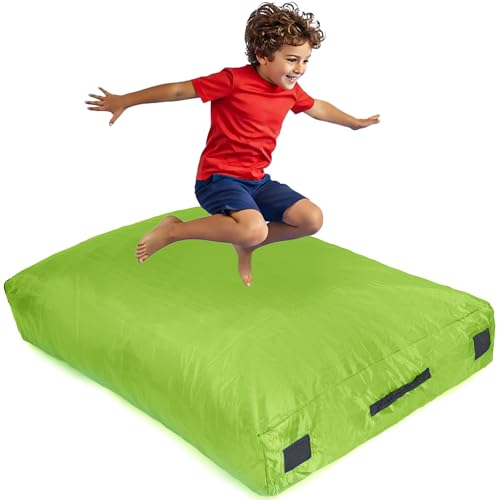
- High-density foam landing surface
- Machine-washable removable cover
- Designed for play and calming sensory use
Best For: Sensory seekers and active indoor play
Therapy-Focused Choice

- High-density cushioning for active play
- Four mesh ventilation ports
- Supports sensory and gross motor activities
Best For: Therapy, classroom, and sensory routines
Most Versatile

- Shredded-foam cushioning
- Four handles and a non-slip bottom
- Machine-washable microfiber cover
Best For: Moveable home, classroom, and sensory use
Replacement-Cover Option
Dark Gray 3 x 4 Ft Crash Pad Cover

- Soft crystal-fabric exterior
- Machine washable and removable
- Fits compatible 3-by-4-foot pads
Best For: Refreshing a compatible existing crash pad
Soft Sensory Retreat
Matini Home Sensory Landing Pad

- Dual-use crash pad and beanbag-style relaxation space
- Removable water-resistant cover with mesh vents
- Low-VOC foam; made in the US
Best For: Sensory support, calming spaces, and indoor active play
Compact Active-Play Zone

- 3-by-4-foot size fits smaller spaces
- High-density foam cushions active play
- Water-resistant nylon cover with concealed zipper
Best For: One-child supervised play in bedrooms and compact areas
Large Landing Zone

- Large 70.9-by-47.6-inch landing surface
- Thick 35D foam with 20 cm cushioning
- Washable chenille cover and non-slip base
Best For: Gymnastics, climbing, tumbling, and spacious play areas
Best Overall
JOYWOO 5 x 5-Foot Sensory Crash Mat

- Soft shredded-foam landing surface
- Four handles and non-slip bottom
- Machine-washable microfiber cover
Best For: Large playrooms, classrooms, and versatile sensory use
Best for Sensory Support
WOUDY Soft Foam Sensory Crash Mat

- Pressure-reducing foam for sensory input
- Supports jumping and gross-motor play
- Four mesh ports encourage airflow
Best For: Home, classroom, and therapy-room sensory activities
Best for Small Spaces
AMJ25 3 x 4-Foot Star Crash Pad
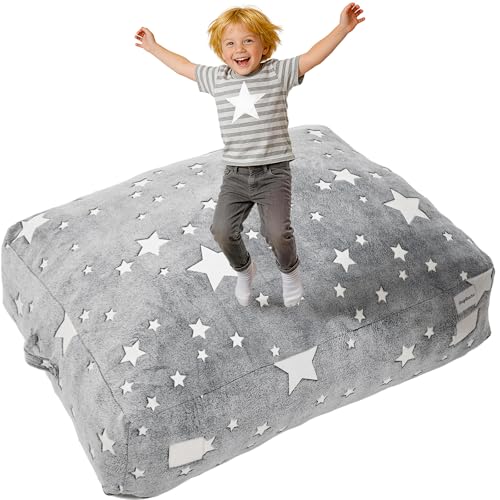
- Compact size for corners and playrooms
- Waterproof inner liner helps contain spills
- Washable cover with non-slip bottom
Best For: Small rooms, corners, and spaces under climbing frames
Active Play Pick – SaferBounce Sensory Crash Pad
For families seeking crash pads for children that support jumping, tumbling, and calming sensory time, this SaferBounce pad combines high-density foam with a washable removable cover. Its 4-by-3-foot format suits playrooms, classrooms, and therapy spaces.
Best For: Sensory seekers, active indoor play, and children who need a soft place to relax or release energy.
Pros:
- Supports jumping, rolling, tumbling, and crashing.
- High-density foam helps absorb impact while providing a supportive landing surface.
- Removable cover is machine washable.
- Suitable for homes, schools, classrooms, and therapy spaces.
Cons:
- The supplied details identify this option as 4 by 3 feet, so it may offer less coverage than larger models.
- Its 5.91-inch listed height may not provide the same deep cushioning as thicker crash mats.
This is a practical choice when washable maintenance and flexible sensory use matter more than maximum size. Confirm the dimensions before buying if your child needs a larger landing area.
Therapy-Focused Choice – 3 x 3 Ft Sensory Crash Pad
This 3-by-3-foot crash pad is designed for children who need cushioning during active play as well as a supportive surface for quiet focus. Its high-density foam, sensory buffer zone, and ventilation ports make it suitable for home, classroom, and therapy routines.
Best For: Therapy sessions, sensory activities, classroom use, and children developing balance, coordination, and gross motor skills.
Pros:
- Cushioning helps minimize joint impact during jumping and landing.
- Supports proprioceptive input, balance, coordination, and full-body movement.
- Four mesh ventilation ports help release airflow during use.
- Can function as an active-play pad or a calming surface.
Cons:
- The 3-by-3-foot size provides less landing space than larger crash pads.
- The supplied notes do not mention a removable or machine-washable cover.
This option stands out for buyers prioritizing sensory and therapy-oriented features in a compact footprint. It can transition from energetic movement to reading, study, or relaxation without requiring a separate mat.
Most Versatile – JOYWOO 4 x 4 Ft Crash Mat
Among crash pads for children, the JOYWOO model offers a roomy 4-by-4-foot landing area with shredded-foam cushioning, a non-slip bottom, and reinforced handles. It is built for jumping and tumbling but also works as a comfortable place to read, rest, or calm down.
Best For: Families wanting a movable, easy-to-clean crash mat for playrooms, classrooms, sensory spaces, and everyday relaxation.
Pros:
- Soft shredded foam cushions jumps and crashes.
- Four reinforced handles make it easier to move.
- Non-slip bottom helps keep the mat steady during active play.
- Microfiber cover has a hidden zipper and is machine washable.
Cons:
- The 4-by-4-foot model is listed at 12.37 kg, so frequent repositioning may still require effort.
- The supplied dimensions vary between fully expanded measurements and product details, so buyers should verify the final size.
- Its larger footprint requires more floor space.
This is a strong all-purpose pick for households that need both active-play cushioning and a cozy quiet-time surface. The handles, non-slip base, and washable cover add practical value for regular use.
Replacement-Cover Option – Dark Gray 3 x 4 Ft Crash Pad Cover
This product is a replacement cover rather than a complete crash pad, making it a useful maintenance option for compatible crash pads for children. The 3-by-4-foot dark gray cover has a soft fabric exterior, mesh vents, an inner zipper, and a machine-washable design.
Best For: Replacing a worn cover on a compatible 3-by-4-foot crash pad used for bouncing, climbing, or sensory therapy.
Pros:
- Crystal ultra-soft fabric provides a comfortable surface for play or reading.
- Removable cover is machine washable for regular upkeep.
- Four mesh vents support airflow and sensory feedback.
- Inner zipper helps keep foam contained during active use.
Cons:
- This listing is for a cover, not a complete foam crash pad.
- Compatibility is specified for a crash pad up to 3 by 4 feet and 9.84 inches high.
- Buyers should verify measurements before ordering a replacement.
Choose this option when your existing pad needs a cleaner or refreshed outer layer. It is not suitable as a standalone landing pad, so confirm that your current foam insert matches the listed dimensions.
Soft Sensory Retreat – Matini Home Sensory Landing Pad
The Matini Home Sensory Landing Pad is a versatile choice when shopping for crash pads for children who need a soft landing area, sensory input, or a comfortable place to relax. Its foam-block filling and generous 36-by-36-inch size also make it suitable as a large beanbag-style seat.
Best For: Children who need sensory stimulation, a calming space, or a soft area for jumping and active play.
Pros:
- Can function as both a crash pad and a relaxing beanbag-style space.
- Removable, zippered cover uses water-resistant, easy-to-wipe fabric.
- Mesh vents release air during active use and help keep foam inside.
- Low-VOC foam and no flame retardants; made in the US.
Cons:
- Hand-wash care may require more effort than machine-washable options.
- The 36-by-36-inch footprint may provide less landing space than larger pads.
This pad stands out for combining active-play cushioning with a quiet retreat for reading or unwinding. It is a practical pick for families prioritizing sensory versatility and easy surface maintenance.
Compact Active-Play Zone – Skil-Care Crash Pad for Kids
The Skil-Care Crash Pad is a compact option for parents comparing crash pads for children in bedrooms, corners, and other smaller spaces. Its high-density foam sections cushion jumping and floor activities while the 3-by-4-foot format is intended for one child at a time in supervised use.
Best For: Toddlers and early school-age children who need a personal crash zone for supervised active play.
Pros:
- Compact 3-by-4-foot size fits bedrooms, nooks, and reading corners.
- High-density foam sections absorb impact and are designed to hold their shape.
- Water-resistant nylon cover wipes clean and is machine washable below 180°F.
- Concealed TamperShield zipper helps deter access to the foam interior.
Cons:
- Designed for one child at a time rather than group play.
- The foam itself should not be laundered; the inner cloth requires spot cleaning or wiping.
- Use requires keeping mesh vents clear and the pad away from walls and furniture.
With its smaller footprint and durable nylon cover, this crash pad suits homes where space is limited. The maintenance and positioning instructions are important considerations for safe, supervised use.
Large Landing Zone – VEVOR Foam Crash Pad for Kids
The VEVOR Crash Pad offers a large, thick landing area for families seeking crash pads for children who jump, tumble, climb, or need a place to relax. Its 20-centimeter high-density foam, non-slip base, and washable chenille cover make it suitable for home playrooms as well as clinics, preschools, and gyms.
Best For: Active children who need a spacious landing zone for gymnastics, climbing, tumbling, or calm time.
Pros:
- Large 70.9-by-47.6-inch surface provides substantial landing space.
- Thick 35D foam is designed to absorb impact and restore after unpacking.
- OEKO-TEX-certified chenille cover removes for gentle machine washing.
- Non-slip base helps stabilize the pad on wood, tile, or carpet.
Cons:
- At 35.9 pounds, it is relatively heavy to move frequently.
- Its large footprint requires more floor space than compact crash pads.
- The cover requires cold washing and low-heat tumble drying.
This is the strongest fit for buyers who want a roomy, substantial crash pad rather than a small personal cushion. Its large dimensions, thick foam, and non-slip base support active use, while the neutral gray chenille finish can blend into a living space.
Best Overall – JOYWOO 5 x 5-Foot Sensory Crash Mat
For shoppers comparing crash pads for children, the JOYWOO sensory mat stands out as a generously sized option for active play, sensory activities, and downtime. Its shredded-foam filling, breathable mesh panel, and non-slip bottom create a cushioned landing area, while the removable microfiber cover helps simplify cleanup.
Best For: Families, classrooms, or playrooms needing a large, versatile crash and relaxation mat.
Pros:
- Large 5 x 5-foot expanded size with soft shredded-foam cushioning
- Four reinforced handles and a non-slip bottom support portability and stability
- Removable, machine-washable microfiber cover
- Can be used for jumping, sensory play, reading, or relaxing
Cons:
- The large size may require substantial floor space
- The supplied details list both 8-inch and 14-inch dimensions, so shoppers should verify the final configuration
This is a flexible pick when you want one crash pad to serve multiple children’s activities. Its larger footprint and washable cover are especially practical for shared play areas, though smaller rooms may be better suited to a compact model.
Best for Sensory Support – WOUDY Soft Foam Sensory Crash Mat
Among crash pads for children designed around sensory activities, the WOUDY model emphasizes pressure-reducing foam and shock absorption. It is intended for jumping, landing, repetitive games, and quiet activities, making it suitable for homes, classrooms, and therapy spaces.
Best For: Children who benefit from sensory input, movement practice, or a soft surface for calming activities.
Pros:
- Soft, pressure-reducing surface provides tactile sensory feedback
- Designed for jumping, landing, balance, coordination, and gross-motor activities
- Four mesh ventilation ports promote airflow during sensory play
- Usable in homes, classrooms, and therapy rooms
Cons:
- The supplied listing does not specify a washable-cover feature despite mentioning a washable cover in the title
- The size information is presented as “34FT blue,” which may require confirmation before purchase
The WOUDY is a focused option for buyers prioritizing sensory and developmental use over decorative styling. Confirm the dimensions and cover details before ordering, especially if the mat must fit a particular room or cleaning routine.
Best for Small Spaces – AMJ25 3 x 4-Foot Star Crash Pad
For smaller rooms, this AMJ25 mat offers a compact 3 x 4-foot landing zone with a 10-inch-thick shredded-foam core. The plush Dutch Velvet cover, waterproof inner liner, non-slip bottom, and reinforced handles make it a practical choice for playrooms, corners, or use beneath climbing frames.
Best For: Small play areas and children who need a soft, washable mat for active or sensory play.
Pros:
- Compact 3 x 4-foot footprint fits smaller spaces
- 25D shredded foam is designed for impact absorption and deep-pressure input
- Machine-washable cover plus a wipe-clean, leak-resistant inner liner
- Corner handles and a non-slip bottom improve mobility and stability
Cons:
- Smaller surface area may be less suitable for multiple children at once
- Six-month warranty is shorter than the one-year warranty listed for the WOUDY mat
This model is a strong fit when floor space and easy maintenance are top priorities. Its waterproof inner layer and soft star-patterned cover add practical and visual appeal, while the smaller footprint keeps it easier to position around existing play equipment.
How We Picked the Best Crash Pads for Children
We focused on the features that most affect everyday use: overall dimensions, foam density and filling, cover materials, removable or washable construction, non-slip performance, portability, and suitability for sensory or active play. We also considered whether each pad appears better suited to light landing, repeated jumping, gymnastics practice, or shared use by children and adults.
A crash pad can reduce the impact of a landing, but it is not a substitute for supervision, appropriate technique, or professional safety equipment. Use it on a stable, level surface and follow the manufacturer’s age, weight, and care instructions.
Quick Comparison
- Best for large play areas: Choose a 5-by-5-foot pad when your room can accommodate a broad landing zone.
- Best for smaller rooms: A 3-by-3- or 3-by-4-foot model is easier to store and position.
- Best for sensory environments: Look for soft foam construction, a flexible landing surface, and a removable washable cover.
- Best for repeated active use: Prioritize high-density foam, durable seams, and a cover that resists wear.
- Best for flexible play: Foam-block designs can provide a softer, more adaptable landing experience.
Key Buying Factors for Crash Pads for Children
Size and Available Space
Measure the intended landing area before buying. Larger crash pads provide more coverage but can be difficult to move, clean, or store. Smaller models work well beside a trampoline, climbing structure, or indoor play station when the landing zone is limited.
Foam and Filling
High-density foam generally offers more structured support, while shredded foam or foam blocks may feel softer and conform more readily to the body. Consider whether your child needs a stable surface for controlled practice or a cushioned pad for sensory impact and free play.
Cover, Cleaning, and Durability
Removable, washable covers are especially useful for sensory rooms and frequent use. Check the fabric, zipper placement, seam construction, and whether the cover is designed to tolerate regular cleaning. A durable nylon or similarly hard-wearing exterior may suit intensive use better than a delicate decorative fabric.
Grip and Placement
An anti-slip underside can help keep the pad from shifting, but no crash pad should be placed on an unstable or cluttered surface. Leave adequate clearance around the pad and inspect it regularly for flattened filling, torn seams, or exposed foam.
Who Should Buy Which Crash Pads for Children?
Choose a large 5-by-5-foot pad for children who need a generous landing zone or for families with a dedicated sensory or playroom. Choose a 3-by-3- or 3-by-4-foot option when storage and portability are priorities. Choose a high-density foam model for frequent jumping, tumbling, or structured practice. Choose a washable-cover design for classrooms, therapy spaces, and households where the pad will see daily sensory play. If adults will use it too, check the stated weight capacity rather than assuming a child-focused model is suitable.