Helping kids learn friendship skills does not have to feel like a lesson. The best games turn turn-taking, empathy, and conversation into something children actually want to do.
This roundup of the best friendship skills game for kids options in 2026 focuses on practical picks for home, classrooms, therapy, and small-group play.
Best 10 Friendship Skills Game for Kids Picks for 2026
Groovy SEL Match-Up

- Teaches sharing and kindness through situation cards
- Includes tokens, spinner, and Friendship Toolbox dispenser
- Good for ages 4+ and small-group play
Best For: Preschoolers who need a simple, guided friendship game
Talk Starter Cards

- 70 prompt cards for discussion and reflection
- Four categories cover emotions, inquiry, mindfulness, and expression
- Portable and durable for home, class, or travel
Best For: Kids who need guided conversation practice
Social Skills Game Set
Junior Learning 4-in-1 Board Games

- Four games in one set for more variety
- Focuses on empathy, friendship, and manners
- Good for classroom or family play
Best For: Ages 5-8 needing varied social-skills practice
House of Friendship
Open The Joy DIY Social Skills Kit
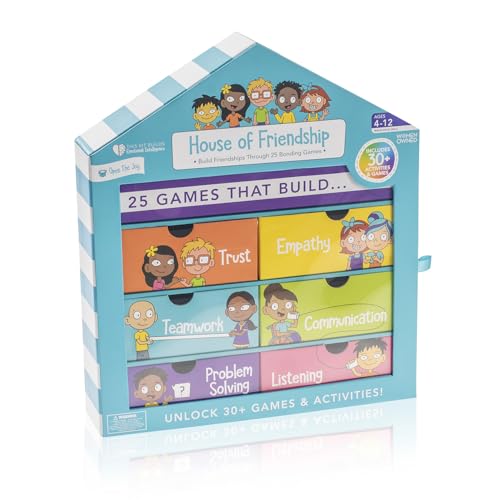
- 25 cooperative games and mini challenges in one kit
- Promotes teamwork, empathy, communication, and cooperation
- Reusable house-shaped box adds extra play value
Best For: Kids who like cooperative, imaginative social-skills play
Emotion Play Card Game
ThinkPsych Go Fish Faces & Feelings

- Emotion-themed twist on Go Fish
- No reading required for play
- Includes memory match mode
Best For: Younger kids practicing feelings and social-emotional skills
Conflict Talk Cubes
Learning Resources Conflict Resolution Cubes
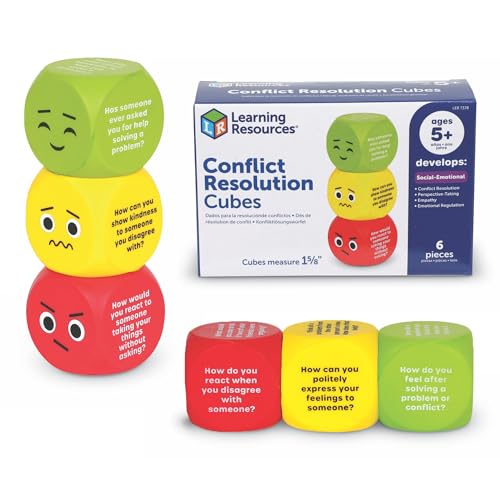
- 30 prompts for communication practice
- Color-coded cubes guide discussion
- Good for home or classroom use
Best For: Guided conflict resolution and conversation practice
Conversation Chain Game

- 150 topics for social conversation
- Built for ages 8+ and therapy use
- Helps build confidence and empathy
Best For: Older kids and teens practicing conversation skills
SEL Scenario Set
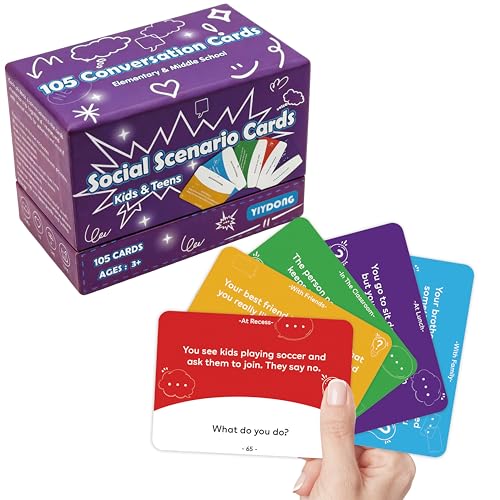
- 100+ cards across five everyday themes
- Guided prompts for problem-solving and empathy
- Useful for home, school, and therapy
Best For: Structured friendship and behavior discussions
Conversation Card Game

- 60 animal-themed real-life scenarios
- Builds empathy, observation, and communication
- Works well for speech therapy and home use
Best For: Guided social skills conversations
Leveled SEL Cards
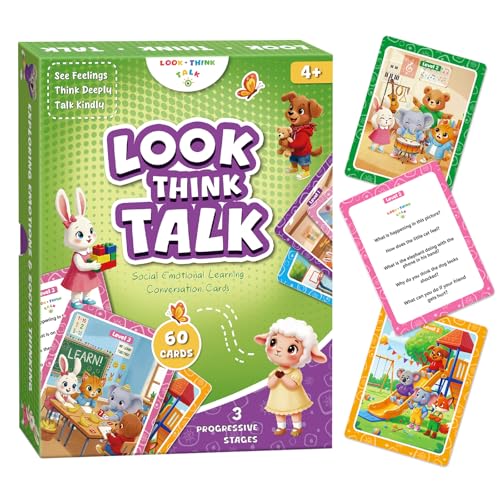
- 60 cards in three progressive levels
- Builds empathy, inference, and prediction skills
- Durable coating and sturdy storage box
Best For: Step-by-step social skills practice
Groovy SEL Match-Up – Pete the Cat Friendship Game
If you want a friendship skills game for kids that turns everyday social situations into a simple matching activity, this Pete the Cat board game is a strong fit. It focuses on sharing, kindness, taking turns, and other early social-emotional skills through cards, tokens, and a spinner that guide kids through different scenarios.
Best For: Preschoolers ages 4+ who learn best through hands-on matching games and guided social-emotional play.
Pros:
- Teaches sharing, kindness, and other friendship basics through everyday situations
- Includes tokens, situation cards, spinner, and a Friendship Toolbox dispenser for interactive play
- Works for 2-4 players, making it suitable for family game night or small-group play
- Designed for ages 4+ with no batteries or assembly required
Cons:
- Best suited to guided play rather than fast-paced action
- Limited to 2 players in the supplied details, despite the 2-4 player note in the description
Overall, this is a practical pick if you want a structured preschool game that introduces friendship skills in a familiar, low-pressure format. The mix of matching, reading, and talking about scenarios gives kids repeated practice with core SEL habits.
Talk Starter Cards – 70 Mindful Conversation Cards
For families, classrooms, or therapy settings looking for a friendship skills game for kids that centers on conversation, this 70-card set keeps the focus on communication and emotional expression. The questions are divided into four categories—emotions, inquiry, mindfulness, and expression—so adults can guide discussions in a more intentional way.
Best For: Kids who benefit from conversation prompts that build expression, listening, and social confidence.
Pros:
- 70 conversation cards provide lots of repeated use
- Four color-coded categories help organize different kinds of discussion
- Compact, portable size works well for road trips and travel
- Thick cardstock with PET film is waterproof and tear-resistant
Cons:
- More of a discussion tool than a traditional board game
- Requires adult or group facilitation to get the most value
This set makes sense if you want a low-prep way to practice social skills through talking rather than competitive play. It is especially useful when your goal is to help kids open up, listen well, and build empathy in everyday settings.
Social Skills Game Set – Junior Learning 4-in-1 Board Games
If you are comparing a friendship skills game for kids that goes beyond one activity, this 4-in-1 Junior Learning set offers multiple ways to practice empathy, manners, friendship, and emotional understanding. The mix of board games, action games, and sentence-building activities gives children several chances to learn social skills in a playful format.
Best For: Ages 5-8 who need a variety of board-game-style activities to reinforce social skills.
Pros:
- Four games in one set add variety and replay value
- Targets empathy, friendship, manners, and emotional understanding
- Includes counters, spinner, die, and answer sheet for ready-to-play use
- Suitable for both classroom and family settings
Cons:
- Small parts may be a concern for younger children
- May be better for children who can handle structured game rules
This is a solid choice if you want a more traditional board-game experience with clear social-emotional learning goals. The multiple game formats make it easier to keep kids engaged while reinforcing the same core friendship ideas.
House of Friendship – Open The Joy DIY Social Skills Kit
This friendship skills game for kids mixes cooperative play, surprises, and a DIY keepsake-style design into one screen-free kit. With 25 bonding games, mini challenges, and a house-shaped box that can be repurposed into a playhouse or memory box, it is built to keep kids engaged across multiple play sessions.
Best For: Kids ages 4-12 who enjoy cooperative games, pretend play, and hands-on social learning.
Pros:
- Includes 25 cooperative bonding games for repeat play
- Built-in drawers and mini games add surprise and variety
- Designed to promote teamwork, communication, empathy, and cooperation
- House-shaped box can be reused as a DIY playhouse or memory box
Cons:
- Less like a standard board game and more like a mixed activity kit
- May appeal most to kids who enjoy imaginative or craft-style play
For families who want a more creative approach to social-emotional play, this kit offers a lot of built-in value. Its cooperative format and reusable packaging make it a flexible option for playdates, classrooms, or travel.
Emotion Play Card Game – ThinkPsych Go Fish Faces & Feelings
If you want a friendship skills game for kids that also builds emotional vocabulary, this Go Fish version adds a simple feelings twist to familiar play. It is designed for ages 6+ and uses acting and matching instead of reading-heavy instructions, making it a practical pick for home, classrooms, or therapy settings.
Best For: Kids who learn best through playful emotion practice, including family game nights, classrooms, and therapy use.
Pros:
- Turns classic Go Fish into an emotions-based social learning game
- No reading required, so kids can act out feelings to play
- Includes memory match play for extra vocabulary review
- Compact set with cards, tokens, and instructions for 2-6 players
Cons:
- Best suited to younger kids rather than older players
- Focuses on emotion learning more than fast-paced competition
Overall, this is a strong option if you want a simple, therapist-developed way to practice emotions and social skills through familiar card-game play.
Conflict Talk Cubes – Learning Resources Conflict Resolution Cubes
For families or classrooms looking for a friendship skills game for kids that prompts real conversation, these color-coded cubes are built around conflict resolution and communication practice. The 30 prompts help kids identify disagreements, talk through problems, and reflect on teamwork in a simple tabletop format.
Best For: Kids who need guided practice with conversation, problem solving, and resolving conflicts at home or in school.
Pros:
- 30 prompts focused on conflict, communication, and reflection
- Color-coding makes the conversation flow easy to follow
- Useful for home, classroom, or counseling-style discussions
- Durable foam cubes are built for repeated use
Cons:
- Requires guided discussion, so it is less of a traditional game
- Only supports 2 players according to the product details
This is a practical pick when the goal is not just play, but structured practice with hard conversations and social problem solving.
Conversation Chain Game – ThinkPsych Chat Chains
This friendship skills game for kids is built to spark conversation, confidence, and connection through 150 topics and a structured play format. With a 15-minute playtime and therapist-developed design, it works well for family game nights, counseling, or social skills practice for kids and teens ages 8+.
Best For: Older kids and teens who need help starting conversations, sharing feelings, and building confidence in social settings.
Pros:
- 150 conversation starters create plenty of replay value
- Designed by child psychologists for therapy and school use
- Supports empathy, relationship-building, and social confidence
- Includes progressive difficulty levels for different abilities
Cons:
- More discussion-focused than action-oriented
- Best fit starts at age 8, so it is not ideal for younger children
If you want a structured conversation game that can work in both home and professional settings, Chat Chains offers a flexible way to practice real social skills.
SEL Scenario Set – 100+ SEL Task Cards
If you want a friendship skills game for kids that feels practical and easy to use, these social scenario task cards focus on real-life situations like borrowing, gossip, peer pressure, honesty, and following rules. The set is built around discussion prompts that help children identify problems, talk through feelings, and choose better responses.
Best For: Parents, teachers, counselors, and therapists who need ready-to-use SEL cards for friendship, classroom, recess, and family situations.
Pros:
- 100+ scenario cards across five themes: friends, family, classroom, recess, and lunch.
- Supports problem-solving, empathy, communication, and emotional regulation.
- Works well for small groups, partner work, morning meetings, and home practice.
- Includes guided questions for critical thinking and conflict resolution.
Cons:
- Paper cards may need careful handling for frequent classroom use.
- Scenario-based format is better for discussion than fast-paced play.
Overall, this is a strong choice if you want a structured friendship skills game for kids that goes beyond simple prompts and helps children practice real-world decision-making. It is especially useful when you need a flexible SEL tool for home, school, or therapy.
Conversation Card Game – Who What Why Cards
For families and educators shopping for a friendship skills game for kids, this Who What Why set turns visual clues into simple conversation practice. The cards use animal characters and real-life situations to build observation, empathy, and critical thinking through guided questions.
Best For: Parents, teachers, and speech therapists who want an engaging card game for social skills, emotional intelligence, and reasoning practice.
Pros:
- 60 relatable scenarios with friendly animal characters.
- Designed to support emotional intelligence, communication, and critical thinking.
- Visual clues help kids practice observation and analysis.
- Suitable for parents, teachers, counselors, and therapists.
Cons:
- Best for guided conversation rather than independent play.
- Limited to one main question-and-answer style of activity.
This is a solid pick if you want a conversation-based friendship skills game for kids that feels approachable and low-pressure. The animal artwork and scenario format make it easy to use for speech therapy, classroom discussion, or family learning time.
Leveled SEL Cards – Look, Think, Talk Cards
If you need a friendship skills game for kids that develops thinking step by step, Look, Think, Talk combines social emotional learning with structured question levels. The cards focus on emotions, causes and consequences, and prediction using everyday scenes with animal characters.
Best For: Families, classrooms, and therapy settings that want leveled conversation cards for social skills, language development, and emotional growth.
Pros:
- 60 large-format cards organized into three progressive levels.
- Supports emotional intelligence, empathy, and social communication.
- Includes questions for observation, inference, prediction, and sentence building.
- Waterproof, tear-resistant coating and sturdy box improve durability.
Cons:
- More structured than freeform games, so it may feel slow for some kids.
- Paper-based cards still require care despite the protective coating.
This set stands out if you want a friendship skills game for kids with a clearer learning path and more built-in scaffolding. The leveled approach makes it a practical option for repeated use across home, school, or therapy sessions.
How We Picked the Best Friendship Skills Game for Kids
We looked for age-appropriate options that support social-emotional learning through play. Strong picks encourage conversation, perspective-taking, emotion naming, cooperation, and problem-solving without requiring a lot of setup.
We also favored games and activities with flexible use cases, since a Friendship Skills Game for Kids should work in more than one setting. That means good options for family game night, recess support, classroom circles, counseling, and speech or occupational therapy.
Quick Comparison
Board games are usually best for structured play, card games work well for repeated conversation practice, scenario cards fit group discussion, and craft-based kits can help kids learn by creating. If you want the easiest repeat use, choose a simple card deck or prompt set. If you want more engagement and a clearer game structure, pick a board game or activity kit.
Key Buying Factors for a Friendship Skills Game for Kids
Age and Reading Level
Match the product to the child’s developmental stage. Younger kids often do best with visual prompts, simple rules, and short turns. Older children can handle more abstract questions, emotion scenarios, and discussion-based play.
Skill Focus
Different products build different strengths. Some emphasize empathy and manners, others focus on emotional vocabulary, conflict resolution, or conversation skills. Choose the one that matches the skill your child needs most.
Format and Group Size
Consider whether you need a game for one-on-one practice, small groups, or a whole class. A Friendship Skills Game for Kids that works in multiple group sizes offers more value, especially for teachers and therapists.
Ease of Use
Look for clear instructions, minimal prep, and reusable components. The best options are easy to pull out quickly and simple enough to use often.
Who Should Buy Which Friendship Skills Game for Kids?
Parents of preschool and early elementary kids should lean toward colorful board games and simple social-emotional play. Teachers and counselors may prefer conversation cards, scenario decks, and group-friendly tools that spark discussion. If you want hands-on learning, a DIY or craft-based option can be a strong fit.
For older kids and tweens, pick products that move beyond basic turn-taking and into deeper conversations about emotions, problem-solving, and perspective. In general, the right choice is the one your child will use consistently, because repeated play is what makes social skills stick.