Turn-based play can be a practical, low-pressure way to practice waiting, sharing, and flexible thinking. The best games keep rules simple, turns clear, and success easy to understand.
This roundup highlights accessible choices for families, classrooms, and therapy settings looking for turn taking games for autism that support social learning without overwhelming kids.
Best 10 Turn Taking Games for Autism Picks for 2026
Visual Social Skills Support
Autism Emotions & Social Life Skills Set

- Super visual teaching aids
- Supports emotions and communication
- Laminated for added durability
Best For: Families wanting visual social-skills support for autistic kids
Fast-Action Turn Practice

- Practices turn-taking in small groups
- Builds hand-eye coordination
- Engaging rotating pond gameplay
Best For: Young kids who enjoy active, simple group play
Gentle First Turn Game
- Designed to teach taking turns
- Includes parent guide and instructions
- Supports language and fine motor skills
Best For: Toddlers who need a calm, guided starter game
Counting and Turn Practice

- Simple turn-based gameplay
- Practices counting and number skills
- Good for preschool-age players
Best For: Preschoolers who like predictable, quick tabletop play
Cooperative Cupcake Chase
- No reading required for easy setup
- Cooperative play supports turn-taking and teamwork
- Adds movement, singing, and simple spinner turns
Best For: Preschoolers and classrooms needing a gentle cooperative turn-taking game
Bee-Quiet Dexterity Challenge

- Turn-by-turn leaf pulling keeps the structure simple
- Builds hand-eye coordination and dexterity
- Works for 2 to 4 players ages 3+
Best For: Small-group play that practices patience, sharing, and careful hands
Mix-and-Match Bug Builder

- No reading required and easy to teach
- Spinner turns create predictable gameplay
- Builds creative thinking and team-building skills
Best For: Preschoolers who enjoy visual, hands-on bug-building with simple turns
Fine-Motor Turn Practice
Noodle Knockout Ramen Challenge

- 3 game variations for 1-4 players
- Chopstick play builds fine motor skills
- Sensory noodles and toppings keep kids engaged
Best For: Kids who like hands-on, turn-based play with matching and sorting
Suspenseful Turn Game
- Simple turn-taking with 2-4 players
- No reading or assembly required
- Big surprise keeps gameplay lively
Best For: Kids who enjoy quick, suspenseful games with clear turns
Simple Two-Player Choice

- No-reading gameplay is easy to teach
- Turn-taking is clear and repetitive
- Colorful beans add visual interest
Best For: Preschoolers who do best with simple two-player turn practice
Visual Social Skills Support – Autism Emotions & Social Life Skills Set
If you’re shopping for turn taking games for autism that also support emotions and communication, this set is more of a visual teaching aid than a traditional board game. It’s designed to help autistic children understand feelings, express themselves more clearly, and practice small social steps with simple, ultra-concise materials.
Best For: Parents and caregivers looking for a highly visual tool to support emotions, social skills, and communication practice for autistic kids.
Pros:
- Uses super visual, ASD-friendly teaching aids.
- Supports social skills, self-feelings, and emotional expression.
- Laminated pages are described as autism-grade durable.
- Useful for nonverbal or verbally struggling children.
Cons:
- Not a classic turn-taking board game.
- Focuses more on teaching aids than group play.
- May work best alongside adult-guided interaction.
Overall, this is a practical support product if your priority is reducing frustration and building early social understanding rather than playing a competitive game. It fits families who want a simple, visual tool that can be used again and again.
Fast-Action Turn Practice – Let's Go Fishin' Game
Let's Go Fishin' Game by Pressman - The Original Fast-Action Fishing Game!, 1-4 players
Check Price On AmazonFor turn taking games for autism, this classic fishing game offers a simple, fast-paced way to practice waiting, sharing the action, and using fine motor skills. Players take turns using mini fishing poles to catch fish from the rotating pond, making it easy to keep children engaged in short play sessions.
Best For: Kids ages 4 and up who benefit from a simple, active game that practices turn-taking and hand-eye coordination.
Pros:
- Supports hand-eye coordination and fine motor skills.
- Simple rules make turn-taking easy to follow.
- Rotating pond and opening fish create strong engagement.
- Works for 1-4 players, useful for small-group play.
Cons:
- Contains small parts and small magnets.
- Fast action may feel overstimulating for some children.
- Requires batteries for operation.
This is a strong pick if you want a lively game that naturally builds turn-taking in a low-complexity format. It’s especially useful when you want movement, focus, and practice with waiting all in one activity.
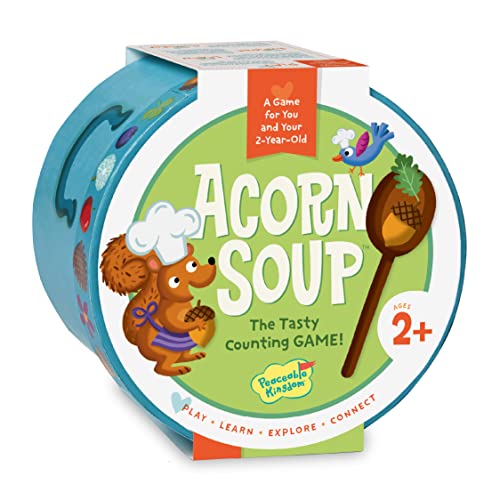
Gentle First Turn Game – Acorn Soup Toddler Game
When looking for turn taking games for autism for very young children, Acorn Soup is a gentle option with simple rules and a calm pace. The game uses recipe cards, wooden ingredients, and a spoon to help children practice taking turns, following directions, and building early play skills.
Best For: Toddlers and preschoolers ages 2 and up who need a very simple, parent-guided turn-taking game.
Pros:
- Specifically designed to help children experience taking turns.
- Includes a parent guide and instructions.
- Supports language, fine motor, and early math skills.
- Wooden pieces offer tactile, hands-on play.
Cons:
- Best suited to very young children rather than older kids.
- Gameplay is loose and guided, not competitive.
- Only supports one core play style and can feel repetitive.
This is a practical starter game for families focused on early social learning. Its simple structure makes it easier for young children to join in without the pressure of more complex rules.
Counting and Turn Practice – Hi Ho! Cherry-O
Hasbro Gaming Hi Ho Cherry-O Board Game for 2 to 4 Players Kids Ages 3 and Up (Amazon Exclusive)
Check Price On AmazonHi Ho! Cherry-O is a classic choice if you want turn taking games for autism that are easy to understand and quick to play. Children take turns spinning and picking fruit, which creates a predictable routine while also practicing counting and basic number skills.
Best For: Preschoolers ages 3 and up who do well with simple rules, short turns, and counting practice.
Pros:
- Simple gameplay is easy for preschoolers to follow.
- Reinforces counting, addition, and subtraction.
- Turn-based structure fits small-group or family play.
- Includes all major game components needed for play.
Cons:
- Depends partly on luck, which may reduce control for some kids.
- Uses many small pieces.
- May be more focused on math than social interaction.
For children who benefit from predictable, short turns, this game is a dependable classroom or home option. It blends basic learning with social play in a way that stays familiar and easy to repeat.
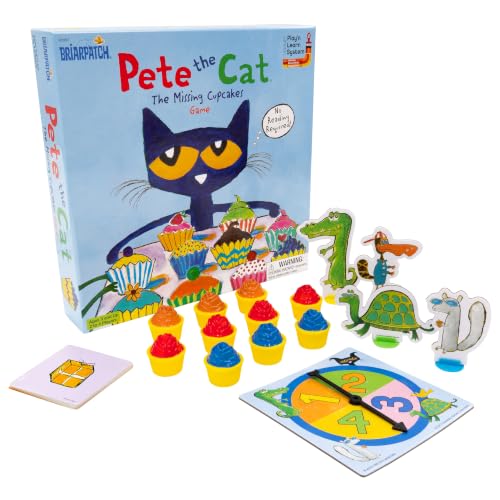
Cooperative Cupcake Chase – Pete the Cat Missing Cupcakes
Briarpatch Pete the Cat The Missing Cupcakes Game, Fans of Pete the Cat Books, Ages 3+
Check Price On AmazonIf you want turn taking games for autism that keep things simple, active, and cooperative, Pete the Cat: The Missing Cupcakes is a friendly choice. Kids do not need to read, and the quick turns, spinner action, singing, and movement give players clear structure while they work together to find the missing cupcakes.
Best For: Preschoolers, family play, and classrooms that want a cooperative game with easy turn-taking and gross motor movement.
Pros:
- No reading required, so kids can jump in quickly.
- Cooperative gameplay encourages teamwork instead of competition.
- Supports turn-taking, listening, memory, and gross motor skills.
- Designed for ages 3+ and 2 to 4 players.
Cons:
- Very short 5-minute playtime may feel brief for some families.
- Includes small parts, so adult supervision is important.
This is a practical pick if you want a low-pressure game with clear turns and playful movement. The cooperative structure can work well for young children who benefit from predictable routines and shared goals.
Bee-Quiet Dexterity Challenge – Honey Bee Tree Game
For families looking at turn taking games for autism, Honey Bee Tree offers a calm, hands-on challenge with a very clear one-at-a-time structure. Players carefully remove leaves without waking the bees, so the game naturally reinforces waiting, turn order, and controlled movements.
Best For: Kids ages 3+ who enjoy simple tactile games that build turn-taking, fine motor control, and careful decision-making.
Pros:
- Simple turns and easy-to-follow play for young kids.
- Supports hand-eye coordination, dexterity, and strategic thinking.
- Encourages sharing and taking turns in a group setting.
- Works for 2 to 4 players, making it flexible for small groups.
Cons:
- Requires careful fine motor control, which may be challenging for some children.
- The suspense element may feel intense for kids who prefer very low-stimulation play.
This game is a strong fit if you want a turn-based tabletop activity with clear actions and a built-in pause between moves. Its careful, tactile format can help keep attention focused while still feeling playful.
Mix-and-Match Bug Builder – Hasbro Cootie Classic Edition
Hasbro Cootie is a straightforward option if you want turn taking games for autism that use repetition, visuals, and simple spinning turns. Players build a bug piece by piece, and the no-reading-required setup keeps the focus on taking turns and matching parts rather than learning complicated rules.
Best For: Preschool kids who like visual, hands-on games with simple turns and creative mix-and-match play.
Pros:
- No reading required, making it easy to explain and start.
- Spinner-based play gives each turn a clear, predictable action.
- Supports creative thinking and team-building skills.
- Includes different play options for more variety.
Cons:
- Small parts may not suit every child.
- Competitive race-to-finish structure may be less ideal for kids who prefer fully cooperative play.
This is a solid classic if you want a game that feels familiar but still offers simple repetition and clear turn order. The modular build style can be especially appealing for kids who like concrete, visual progress.
Fine-Motor Turn Practice – Noodle Knockout Ramen Challenge
If you’re looking for turn taking games for autism that keep hands busy and expectations simple, Learning Resources Noodle Knockout is a strong pick. Players take turns using chopsticks to grab noodles and toppings, which creates clear turn-based play while also building fine motor and matching skills.
Best For: Preschoolers and early elementary kids who benefit from hands-on, turn-by-turn play with sensory appeal.
Pros:
- Supports turn-taking for 1-4 players with three game variations.
- Uses soft noodles and colorful toppings for engaging tactile play.
- Builds hand strength, dexterity, coordination, counting, and color recognition.
- Includes a complete 67-piece set for home, school, or group play.
Cons:
- Requires chopstick use, which may be challenging for some children.
- Best suited to kids age 4 and up rather than younger preschoolers.
This is a practical choice if you want a game that blends structured turns with active, skill-building play. Its simple setup and tactile components make it a good fit for therapy rooms, classrooms, or family game time.
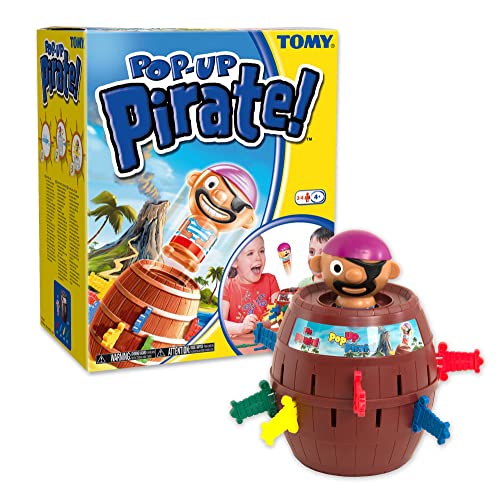
Suspenseful Turn Game – Pop Up Pirate Board Game
Among turn taking games for autism, Pop Up Pirate stands out for its simple rules and predictable structure. Players take turns sliding swords into the barrel, and the suspense of when Pirate Pete will pop adds excitement without adding complicated steps.
Best For: Kids ages 4 and up who do well with a straightforward take-turns game and a big surprise payoff.
Pros:
- Easy to learn: players simply take turns inserting swords.
- Works for 2-4 players, making it useful for family or small-group play.
- High-suspense gameplay keeps kids engaged from turn to turn.
- No assembly required and includes barrel, pirate, and 24 swords.
Cons:
- The popping surprise may feel intense for some sensitive players.
- Gameplay depends on luck rather than strategy.
This is a good option when you want a quick, low-reading game that clearly marks each player’s turn. The simple mechanics make it easy to repeat, which is helpful for practicing routine and waiting.
Simple Two-Player Choice – Don't Spill The Beans Game
If you need turn taking games for autism that are easy to explain and easy to repeat, Don’t Spill the Beans is a strong fit. Each player places beans into the jar one at a time, so the game gives kids a clear turn structure with a playful balancing challenge.
Best For: Two-player games for preschoolers who benefit from no-reading rules and simple, repetitive turns.
Pros:
- No reading required, so play starts quickly.
- Turn-based bean placement is simple and repetitive.
- Over 60 colorful beans make the game visually engaging.
- Designed for 2 players, which keeps the social setup manageable.
Cons:
- Only supports two players, so it is less flexible for groups.
- The jar tipping can be frustrating if a child prefers low-surprise play.
This game works well when you want a short, structured activity with a clear finish. It is especially useful for practicing waiting, turn exchange, and cause-and-effect in a simple format.
How We Picked the Best Turn Taking Games for Autism
We focused on Turn Taking Games for Autism that are easy to explain, quick to start, and predictable from round to round. Priority went to games with short play times, simple rules, clear physical actions, and age ranges that fit preschool and early elementary learners.
We also considered whether a game supports important practice areas like waiting, following a sequence, copying actions, and tolerating small losses or changes. Games that work well for siblings, parents, therapists, and classroom helpers scored higher.
Quick Comparison
Some games lean toward fine-motor practice, such as placing, stacking, or balancing pieces. Others emphasize matching, color recognition, or light strategy. If your goal is to reduce frustration, choose the most predictable options first. If your goal is to build flexibility, add games with a little more surprise or movement once your child is comfortable.
Key Buying Factors for Turn Taking Games for Autism
Rules and Setup
Choose games with one or two core actions and minimal setup. Long instructions can derail engagement before play even starts.
Turn Clarity
Look for games where each turn is obvious. Passing a piece, drawing a card, or making one simple move can help children understand whose turn it is.
Sensory Load
For many children, quieter games with fewer sudden sounds or fast movements are easier to handle. If a game has popping, dropping, or surprise actions, consider whether that level of stimulation is motivating or stressful.
Skill Match
The best game is one your child can mostly do independently with light support. For Turn Taking Games for Autism, success should feel achievable, not constantly corrective.
Group Size and Flexibility
Check player counts carefully. Some games work best one-on-one, while others are better for small groups. Flexible player counts are useful for home and therapy use.
Who Should Buy Which Turn Taking Games for Autism?
If you want the easiest entry point, pick a game with very predictable turns and simple matching or moving tasks. If you want more social practice, choose a game that naturally encourages waiting, anticipation, and brief shared excitement.
For younger children, look for large pieces, short rounds, and minimal reading. For older kids, a little more strategy or fine-motor challenge can keep the game engaging without sacrificing structure. In general, the best fit is the one that matches your child’s attention span, sensory tolerance, and current play skills while leaving room to grow.