Special Supplies Therapy Putty is a practical hand-strength and sensory tool for kids and adults.
This Special Supplies Therapy Putty review breaks down whether it fits therapy, stress relief, and everyday fidget use.
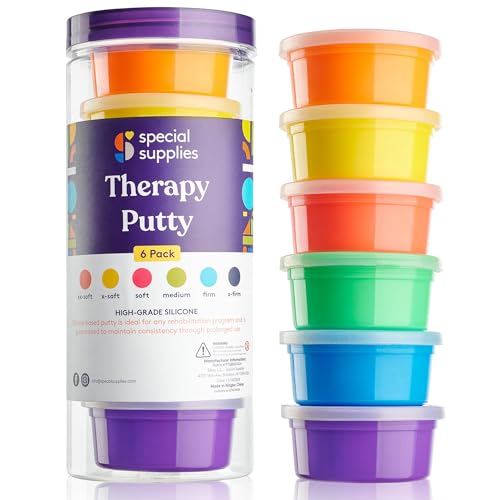
Special Supplies Putty Review Summary
If you want a simple, low-tech way to work on grip, finger control, and tactile focus, Special Supplies Therapy Putty is an easy product to recommend.
It is especially appealing for buyers who need a latex-free silicone option, a color-coded set for multiple users or stages, and a portable tool for therapy sessions, school desks, offices, or recovery routines.
What makes it stand out is the balance between therapy usefulness and everyday convenience.
The six-container kit gives you multiple resistance choices, while the soft ball-style format makes it approachable for kids, adults, and people who simply want a calming way to keep their hands busy.
Scorecard
| Category | Score | Why It Matters |
|---|---|---|
| Hand Strength Training | 9.0 | Built for stretching, pulling, pinching, twisting, and smushing to build hand and finger strength. |
| Sensory and Stress Relief | 9.0 | The soft silicone texture gives hands a calming tactile outlet for stress, anxiety, and focus. |
| Variety of Resistance Levels | 8.0 | Six strengths make it useful across therapy stages and different users. |
| Skin Safety and Material Quality | 8.0 | Premium silicone and no natural rubber latex make it a better fit for sensitive skin. |
| Kid-Friendly Usability | 8.0 | Color coding and playful handling make it accessible for children and adults. |
| Portability and Everyday Use | 7.0 | The 3-ounce containers are easy to carry, though putty is still more storage-sensitive than rigid tools. |
Bottom line: this is a strong buy for hand therapy, sensory play, and desk-side fidgeting, but it is not the best choice if you need very heavy resistance or a completely mess-free rehab tool.
Key Features and Specifications of Special Supplies Putty
The details matter with therapy putty because resistance, texture, and material quality affect both comfort and results.
Here is a clear look at what Special Supplies Therapy Putty brings to the table.
| Brand | Special Supplies |
|---|---|
| Manufacturer | Special Supplies |
| Model Number | ST8-H16 |
| Part Number | ST8-H16 |
| UPC | 859756007999 |
| Unit Count | 6 containers |
| Container Size | 3 ounces each |
| Material | Silicone |
| Color | Color-coded |
| Shape | Round ball-style putty |
| Resistance | Medium |
| Skin Safety | Non-toxic, made without natural rubber latex |
| Intended Use | Hand therapy, dexterity training, sensory focus, stress relief |
From a buyer’s perspective, the most important spec here is the medium resistance level.
It usually hits the sweet spot for general hand exercises, especially if you are easing back into movement or want a putty that feels usable without being overly demanding.
The silicone material is another major plus, because it gives the product broader appeal for users who prefer a latex-free option.
The six-container format also changes how you can use it.
Instead of one tub that gets passed around, each container can be assigned to a person, a therapy stage, or a specific exercise routine.
That is useful in homes with multiple users, classrooms, or occupational therapy settings where organization matters.
Pros and Cons of Special Supplies Putty
Every therapy product has tradeoffs, and Special Supplies Therapy Putty is no exception.
Here is the practical Special Supplies Therapy Putty pros and cons breakdown from a buyer’s perspective.
Pros
- Versatile for strength, dexterity, and sensory work
- Six resistance options add flexibility for different users and routines
- Silicone build is gentler for sensitive skin and latex allergies
- Color-coded containers are easy to organize
- Portable size works well for school, work, travel, or therapy bags
- Approachable for kids and adults who need a calming hand activity
Cons
- Putty can pick up debris if it is not stored carefully
- Medium resistance may feel too light for advanced grip rehabilitation
- It is best for hand and finger work, not broader strength training
The biggest strength is versatility.
The biggest drawback is also typical of putty products: if you leave it out or handle it carelessly, it can attract lint and dirt.
That does not make it a bad product, but it does mean storage discipline matters.
Who Should Buy Special Supplies Putty?
Special Supplies Therapy Putty is a smart fit for buyers who need an easy hand exercise tool with a broad use case.
It works well for people recovering hand movement, children building fine motor skills, and adults who want a discreet fidget option at work.
- Buy it if you need hand-strength or dexterity exercises for therapy or home rehab.
- Buy it if you want a sensory tool for calming, focus, or stress relief.
- Buy it if you prefer latex-free materials and want something softer on sensitive skin.
- Buy it if multiple people will use the set, since the color-coded containers are easy to assign.
- Buy it if you want something portable for a desk, backpack, classroom, or travel bag.
You should probably skip it if you need a rigid, high-resistance trainer or a rehab tool for heavier grip work.
In that case, a firmer putty or a hand exerciser ball may be the better match.
How the Six Resistance Levels Work
The six-piece structure is one of the most useful design choices in this set.
Even though the listed resistance is centered around medium support, the kit format makes it easier to separate exercises by goal, user, or progression.
For example, a therapy patient may start with a softer-feeling container for simple squeezing and gradually move to a firmer one for pinching, twisting, and finger isolation work.
A parent might keep one container in a school bag, another at home, and a third in a car kit.
A clinician or teacher may also appreciate that each color can function as a visual cue, which can improve compliance during repetitive exercises.
This flexibility matters because hand therapy is rarely one-size-fits-all.
If you are trying to improve finger spread, pinch strength, or endurance, having multiple putty portions helps you avoid plateaus and keeps the routine from feeling stale.
Texture, Stretch, and Clean Handling
Therapy putty lives or dies by how it feels in the hand.
In this case, the silicone construction gives Special Supplies Therapy Putty a soft, pliable character that is well suited to smushing, stretching, twisting, and pinching.
The round ball-style format is also easy to grab quickly.
That sounds minor, but in real use it matters because users do not want to wrestle with packaging before every exercise.
The shape makes it simple to scoop out a portion and start working.
Still, buyers should set expectations correctly: putty is inherently more maintenance-heavy than a grip ring or foam exerciser.
To keep it clean, seal containers tightly after each session and avoid using it on dusty desks or dirty hands.
That is the tradeoff for getting a tactile, adaptable hand exercise tool.
Best practice: store the containers in a pouch or drawer, and keep a simple hand-cleaning habit before use.
That will preserve the texture and reduce debris pickup.
Is This Putty Good for Kids and Occupational Therapy?
Yes, and this is one of the most important reasons the product has broad appeal.
The color-coded design, soft texture, and manageable size make it approachable for children, while the silicone material and exercise-friendly resistance give it real value in occupational therapy settings.
For kids, it can support fine motor development through squeezing, rolling, pinching, and finger isolation.
Those actions help with foundational skills used in handwriting, cutting, and classroom tasks.
For adults, especially those working on recovery or maintaining mobility, it can serve as a practical daily-use aid.
That said, younger children should be supervised.
Therapy putty is not meant to be eaten or left unsupervised for long periods, and its best use is as a guided tool rather than an open-ended toy.
In an OT environment, the biggest advantage is repeatability.
The same exercises can be used consistently, and the set format makes it easy to increase or reduce challenge without switching tools entirely.
Best Uses for Therapy Putty at Home, School, and Work
One reason this product stands out in the category is that it is not limited to medical use.
It works in a lot of everyday scenarios, which helps justify the purchase for buyers who want more than a single-purpose rehab item.
- At home: morning hand warm-ups, rehab exercises, or quiet sensory breaks.
- At school: fine motor support, calm-down tools, or supervised classroom hand activity.
- At work: discreet desk fidgeting and stress relief during breaks.
- On the go: small containers that fit in a bag, glove box, or office drawer.
If you often feel hand stiffness after typing, writing, gaming, crafting, or repetitive work, a product like this can be a practical daily companion.
It is not flashy, but it may be more useful than more expensive-looking gadgets that do less.
How to Rotate Putty for Hand Exercises
To get the most from therapy putty, rotation matters.
If you use the same container and same movement every day, the exercise can become repetitive and less effective.
A simple rotation plan keeps the routine productive.
- Day 1: squeezing and releasing for warm-up and endurance.
- Day 2: pinching between thumb and fingers for isolation work.
- Day 3: twisting and pulling for grip control.
- Day 4: rolling into a ball and flattening for wrist and palm activation.
- Day 5: finger presses or hiding small motions inside the putty for dexterity.
The point is not to follow a rigid therapy schedule, but to keep the hands challenged in different ways.
If one resistance feels too easy, move to a firmer container.
If a user struggles to maintain form, step down and rebuild control first.
That progression logic is where the six-pack format really earns its keep.
Comparable Alternatives to Consider
If Special Supplies Therapy Putty is close to what you want but not exactly right, there are a few alternatives worth comparing on Amazon.
These are especially useful if you need either more resistance, less mess, or a different sensory experience.
- Theraputty – a widely used therapy putty line that is often chosen for more structured rehab use.
- CanDo Therapy Putty – a common occupational therapy alternative with multiple resistance levels.
- Hand exercise balls – a less messy option if you want simple squeezing without putty residue.
- Grip strengthener – better for users who want firmer, more mechanical resistance.
Compared with those options, Special Supplies Therapy Putty is strongest when you want a soft, flexible, latex-free, multi-use set rather than a hard-core rehab tool.
Special Supplies Putty Review: Final Buying Advice
So, is Special Supplies Therapy Putty worth it?
For most buyers who want a dependable hand exercise and sensory tool, the answer is yes.
It offers a smart mix of therapy value, portability, and skin-friendly construction that makes it easy to recommend for home use, classroom support, and occupational therapy routines.
The main reasons to buy are clear: six containers, latex-free silicone, medium resistance, and wide usability.
The main reasons to pass are just as clear: it is not ideal for very heavy grip training, and like all putty products, it needs proper storage to stay clean and usable.
Final verdict: if you want a practical hand-strength product that also works as a calming fidget, Special Supplies Therapy Putty is a strong choice.
If you need more intense rehabilitation or a mess-free grip trainer, look at firmer putty or a hand exerciser instead.
Buying tip: choose this set if you value flexibility, comfort, and everyday usability more than maximum resistance.