The best handwriting boards for children make letter formation, number practice, and early writing feel more approachable while reducing paper waste. Reusable surfaces also let children practice repeatedly and receive quick feedback.
This roundup compares 10 options across tracing formats, ruled boards, slant boards, wooden designs, magnetic features, and value-focused multipacks so you can match the board to a child’s age, skill level, and learning setting.
Best 10 Handwriting Boards for Children Picks for 2026
Best All-Around Practice Board
Small Double-Sided Lined Whiteboard
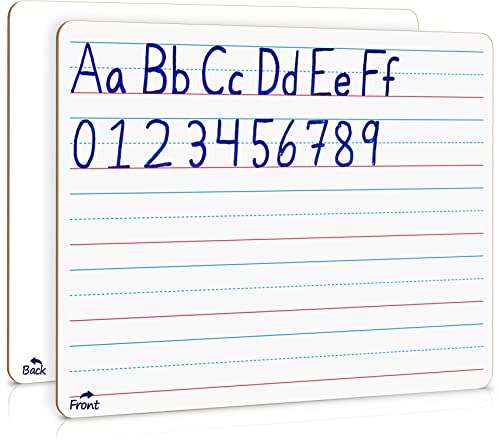
- Lined side for handwriting and blank side for other activities
- Reusable dry-erase surface
- Portable 9-by-12-inch masonite design
Best For: Everyday home, homeschool, or classroom practice
Best Classroom Set

- Six boards for small-group instruction
- Slanted surface supports writing posture
- Dry-erase and clipboard functionality
Best For: Classrooms, therapy, and group practice
Best for Early Tracing

- Dotted uppercase and lowercase letter guides
- Reverse side covers numbers one through 10
- Includes marker and wipes clean for reuse
Best For: Preschool alphabet and number tracing
Best Posture-Focused Design

- Angled surface supports writing posture
- Lined and blank double-sided surfaces
- Integrated clip holds paper securely
Best For: Young children practicing on paper or dry erase
Best Bamboo Tracing Board
Asweets Montessori Alphabet Board

- Smooth bamboo board with engraved letter grooves
- Uppercase and lowercase sides with writing arrows
- Compact 9 x 7-inch design for travel
Best For: Toddlers and preschoolers learning letter formation
Best Reusable Writing Set
Nicpro Double-Sided Lap Boards
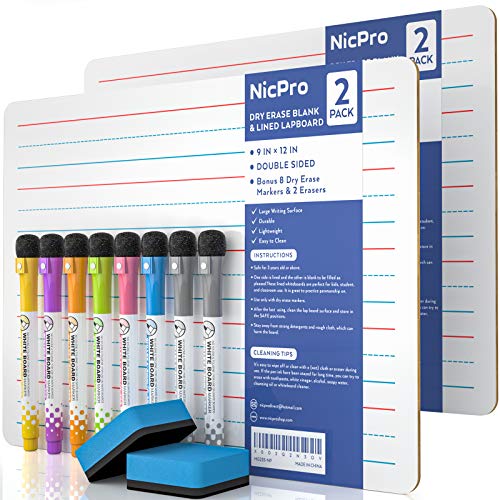
- Two 9 x 12-inch reusable lap boards
- Lined side for penmanship and blank side for drawing
- Includes eight pens and two erasers
Best For: Students and classrooms practicing handwriting and drawing
Best Magnetic Letter Board

- Double-sided uppercase and lowercase letter practice
- Stylus-guided paths with tactile bead feedback
- Portable 12.5 x 10-inch design for children age 3+
Best For: Tactile alphabet learning and guided tracing
Best Starter Board

- 9-by-12-inch size for young learners
- Reusable surface for ABC and number practice
- Also supports drawing and early math activities
Best For: Preschool children ages 3–5 beginning handwriting practice
Best Multi-Student Set
8-Pack Alphabet & Number Boards

- Eight double-sided boards for group practice
- Alphabet templates on one side, numbers on the other
- Includes a marker for classroom or home use
Best For: Classrooms, homeschool groups, and multi-child practice
Best for Free Practice

- Three-line ruled side guides penmanship
- Blank reverse side supports creative writing
- Ten lightweight reusable boards for groups
Best For: Children needing guided handwriting and creative practice
Best All-Around Practice Board – Small Double-Sided Lined Whiteboard
For families comparing handwriting boards for children, this 9-by-12-inch Scribbledo board offers a practical reusable surface for everyday letter practice. The ruled side supports handwriting drills, while the plain reverse side handles math, drawing, and open-ended activities.
Best For: Young students, homeschoolers, and classrooms needing a portable general-purpose practice board.
Pros:
- Double-sided design includes a lined handwriting surface and a blank side.
- Reusable dry-erase coating supports repeated writing and erasing.
- Compact, lightweight 9-by-12-inch format is easy for children to carry.
- Sturdy masonite construction is suited to regular home or classroom use.
Cons:
- It does not provide dotted letter guides for early tracing practice.
- The single-board package may be less practical for small-group instruction.
This is a versatile pick when children need to move beyond tracing and practice handwriting, numbers, math, and drawing on one reusable board.
Best Classroom Set – Rainbow Writing Slant Boards
Among handwriting boards for children, this six-piece hand2mind set stands out for group learning. Its slanted dry-erase surface and built-in clipboard support writing posture, while the compact boards can be used horizontally or vertically with paper or markers.
Best For: Classrooms, therapy sessions, homeschool groups, and reusable handwriting practice stations.
Pros:
- Set of six supports small-group lessons and independent work.
- Slanted surface is designed to encourage comfortable wrist and shoulder positioning.
- Works as a dry-erase board or clipboard for A4 and 8.5-by-11-inch paper.
- Lightweight, stackable boards include easy-grip handles for portability.
Cons:
- The set is more than needed for a single child.
- Dry-erase markers are not listed as included.
- No warranty is specified in the supplied details.
Choose this set when multiple children need a consistent angled writing surface for letter formation, spelling, or therapy activities.
Best for Early Tracing – Alphabet and Number Lapboard
For preschoolers beginning with letter formation, this Scribbledo lapboard is one of the more focused handwriting boards for children. Dotted uppercase and lowercase letters appear on one side, while numbers one through 10 are provided on the reverse for guided, repeatable practice.
Best For: Children ages three to five who are starting alphabet and number tracing at home or school.
Pros:
- Dotted guides provide step-by-step tracing for letters and numbers.
- Double-sided layout combines alphabet practice with numbers one through 10.
- Reusable surface wipes clean for repeated exercises.
- Rounded, lightweight 9-by-12-inch design is easy for small hands to handle.
Cons:
- The guided layout is less suitable for older children seeking open handwriting practice.
- The single-board format is not designed for group instruction.
With its included marker and clearly guided surfaces, this is a straightforward choice for early learners building tracing confidence before moving to worksheets.
Best Posture-Focused Design – Magnetic Slant Board
This Junior Learning board adds an angled writing surface to the reusable-board format, making it a useful option for shoppers seeking handwriting boards for children that support positioning. One side is lined for writing, the other is blank for math or drawing, and the integrated paper clip holds worksheets in place.
Best For: Children ages three to six who need a stable surface for handwriting, paper activities, and fine-motor practice.
Pros:
- Slant-board design is intended to support writing posture and hand positioning.
- Double-sided write-and-wipe surface includes lines and a blank side.
- Integrated paper clip helps secure worksheets or drawing paper.
- Rounded edges and lightweight construction suit regular indoor use.
Cons:
- The supplied details do not list a marker as an included component.
- Its posture-focused design may be unnecessary for children who only need a flat board.
- The listed dimensions are larger than the compact 9-by-12-inch lapboards.
This board is a strong fit when posture, paper stability, and flexible write-and-wipe practice matter as much as handwriting repetition.
Best Bamboo Tracing Board – Asweets Montessori Alphabet Board
For families seeking handwriting boards for children, the Asweets Montessori Alphabet Tracing Board offers a compact wooden format for practicing letter shapes. Its engraved grooves, directional arrows, and two-sided uppercase and lowercase layouts support guided ABC writing practice at home, school, or while traveling.
Best For: Toddlers and preschoolers beginning uppercase and lowercase letter formation.
Pros:
- Natural bamboo construction with a smooth, eco-friendly coated surface.
- Double-sided design includes uppercase and lowercase letters.
- Engraved grooves and arrows model correct writing direction.
- Compact 9 x 7-inch size is convenient for travel.
Cons:
- Includes one tracing board; additional boards require a bundle option.
- Focused on alphabet practice rather than open-ended drawing or reusable marker work.
This is a straightforward choice for early handwriting practice, especially if you prefer a tactile wooden board and a portable Montessori-style learning aid.
Best Reusable Writing Set – Nicpro Double-Sided Lap Boards
The Nicpro set is a practical option among handwriting boards for children when you want repeated penmanship practice, drawing, and classroom-style activities. Each 9 x 12-inch board has a lined side for handwriting and a blank side for free drawing, with markers and erasers included.
Best For: Students, homeschoolers, and classrooms needing reusable handwriting and drawing surfaces.
Pros:
- Two boards provide a shared or multi-child practice set.
- Lined side supports penmanship, while the blank side suits drawing and notes.
- Includes eight water-based pens and two erasers.
- Lightweight, portable format helps reduce paper use.
Cons:
- Requires wiping after use, so it is less self-contained than a groove-based tracing board.
- Marker-based practice may be less tactile for children learning basic letter strokes.
Choose this set if flexibility matters more than letter-specific guidance. The lined and blank surfaces make it useful beyond handwriting drills, from diagrams to everyday classroom exercises.
Best Magnetic Letter Board – GAMENOTE ABC Tracing Board
For children who enjoy interactive learning, the GAMENOTE Magnetic Letter Board adds tactile feedback to handwriting practice. One side presents uppercase letters and the other lowercase letters, while the stylus follows guided paths and the internal beads pop into place as children trace.
Best For: Children age 3 and older who benefit from tactile, guided alphabet practice.
Pros:
- Uppercase and lowercase letters are separated across two sides.
- Stylus, stroke sequence guides, and path directions support letter formation.
- Bead feedback makes tracing interactive, and fingers can erase letters.
- Lightweight 12.5 x 10-inch format works on a desk, lap, or during car rides.
Cons:
- Primarily teaches alphabet tracing rather than extended writing or drawing.
- The attached stylus must remain connected to the board for use.
This board is a strong fit for early learners who need more engagement than a flat worksheet provides. Its guided magnetic bead mechanism combines repetition with a playful sensory response.
Best Starter Board – ABC Tracing Practice Board
For shoppers comparing handwriting boards for children, this 9-by-12-inch dry erase board offers a simple introduction to ABC tracing. Its compact tabletop format is sized for young learners and supports repeat practice without disposable worksheets.
Best For: Preschool and kindergarten children ages 3–5 practicing letters, numbers, drawing, and early math activities.
Pros:
- Reusable dry erase surface supports repeated practice.
- ABC tracing helps develop early handwriting skills.
- Compact 9-by-12-inch size suits small hands and tabletop use.
- Can also be used for numbers, drawing, and math activities.
Cons:
- Only one board is included.
- It has no frame and no warranty is listed.
This is a straightforward choice for families or educators who want one reusable practice surface for early writing activities rather than a multi-board classroom pack.
Best Multi-Student Set – 8-Pack Alphabet & Number Boards
This eight-pack is a practical option among handwriting boards for children when several learners need their own practice surface. Each double-sided 12-by-9-inch board provides alphabet tracing on one side and number practice on the other.
Best For: Classrooms, homeschool groups, teachers, and families needing multiple reusable boards for letter and number instruction.
Pros:
- Eight boards provide supplies for group learning or repeated individual use.
- Double-sided design separates uppercase/lowercase letters from numbers.
- Smooth coating is designed for writing and wiping clean.
- Rounded edges are intended to be safer for small hands.
Cons:
- Boards are made of paper/cardboard rather than a framed rigid board.
- The set is focused on printed alphabet and number practice, with less emphasis on free-form writing.
Choose this set when quantity matters. Its two-sided templates make it especially useful for structured classroom or homeschool sessions covering both letters and numbers.
Best for Free Practice – 10-Pack Ruled & Blank Boards
For handwriting boards for children that balance guided practice with creativity, this 10-pack combines ruled instruction with blank writing space. Each 12-by-8-inch board has three-line ruling on one side and a blank surface on the other.
Best For: Daily handwriting training, classroom instruction, homeschooling, after-school practice, doodling, and creative drawing.
Pros:
- Ten boards are useful for groups, lessons, or keeping extras available.
- Three-line ruling supports letter height, spacing, and penmanship practice.
- Blank reverse side allows free writing, doodling, and drawing.
- Lightweight, reusable, and easy to store or carry.
Cons:
- At 12 by 8 inches, the boards are slightly narrower than some 9-by-12-inch options.
- The boards use cardboard and paper materials rather than a framed construction.
This set is the most flexible of the three for learners who need both handwriting guidance and open-ended practice. It is a strong fit for recurring lessons where children move between penmanship and creative activities.
How We Picked the Best Handwriting Boards for Children
We evaluated these boards by looking at the skills they support, the clarity of their writing guides, surface reusability, size, portability, and suitability for different ages. We also considered whether each design works best for independent practice, adult-led instruction, classroom activities, or repeated homeschool use.
Because handwriting needs change quickly during early learning, the selection includes simple ruled lapboards, alphabet-tracing formats, angled slant boards, wooden Montessori-style tools, and multipacks for siblings or groups.
Quick Comparison
| Board type | Best for | What to look for |
|---|---|---|
| Ruled dry-erase board | Letter size and line control | Clear ruling, suitable dimensions, easy erasing |
| Alphabet tracing board | Early letter formation | Readable models, directional cues, age-appropriate layout |
| Slant board | Wrist position and posture | Stable angle, non-slip support, comfortable writing area |
| Wooden tracing board | Tactile Montessori practice | Smooth construction, durable grooves, safe edges |
| Multipack | Classrooms, siblings, or stations | Consistent quality, storage convenience, marker compatibility |
Key Buying Factors for Handwriting Boards for Children
Practice Format
Choose tracing guides when a child is learning letter shapes and stroke order. Ruled boards are more useful once the child is ready to copy words or build consistent letter height. A blank side can extend the board’s useful life as skills improve.
Size and Portability
A 9-by-12-inch board generally provides enough room for early writing without becoming difficult to carry. Smaller designs suit lap use and travel, while larger boards may be easier for children who need generous spacing or visual prompts.
Writing Angle and Ergonomics
Slant boards can encourage a more comfortable wrist position and may help children who press heavily or struggle with posture. Look for a stable base or non-slip surface so the board does not shift during practice.
Materials and Cleanup
Dry-erase boards should erase cleanly without ghosting after repeated use. Confirm that the recommended markers are supplied or readily available, and check whether the surface requires a particular type of eraser. Wooden boards should have smooth, rounded edges and securely made tracing grooves.
Quantity and Learning Environment
A single board is usually sufficient for home tutoring, while sets are practical for classrooms, playgroups, siblings, or rotating activity stations. Multipacks also make it easier to separate alphabet, number, and free-writing exercises.
Who Should Buy Which Handwriting Boards for Children?
- For preschool beginners: Choose an alphabet tracing board with clear letter models and simple prompts.
- For children developing line control: A ruled double-sided dry-erase board offers repeated practice with less visual clutter.
- For posture or wrist support: Select a stable slant board that keeps the writing surface at a comfortable angle.
- For tactile learners: A wooden Montessori-style tracing board can add a hands-on element to letter practice.
- For classrooms and siblings: Multipacks provide better coverage for group activities and simultaneous practice.
- For mixed skill levels: Pick a double-sided model with guided practice on one side and a blank surface on the other.
Whichever format you choose, pair short practice sessions with appropriately sized markers and positive feedback. The most effective board is one a child can use comfortably, erase easily, and return to regularly.