A well-chosen sensory tent can create a quieter, lower-stimulation space for calming down, resting, reading, or taking a break from a busy environment. The best option depends on more than blackout fabric: interior room, airflow, access, portability, and setup all affect daily comfort.
We compared 10 popular sensory tents and privacy-style pop-up tents to help adults, caregivers, and households find a practical fit for bedrooms, calm corners, travel, or shared living spaces.
Best 10 Sensory Tents for Adults Picks for 2026
Best Overall Blackout Retreat

- Fully blackout fabric for a dark retreat
- Pops open in seconds
- Supports UV and projector light play
Best For: Calm corners, therapy activities, and enclosed light play
Best for Shared Sensory Corners

- 47-inch cube fits two to three individuals
- Windows open for ventilation or close for darkness
- Includes a carry bag
Best For: Shared sensory spaces with adjustable airflow
Best Certified Design

- CPC certification is stated in the product notes
- Blackout PU-coated fabric blocks light
- Adjustable mesh windows improve airflow
Best For: Portable dark retreats with ventilation control
Best for Adult Sleep and Privacy
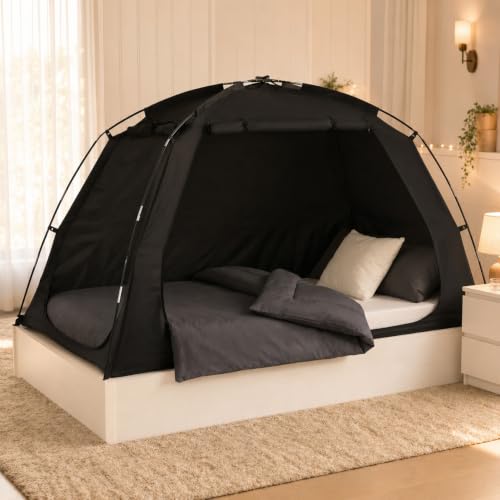
- 93% blackout for darker sleep
- Two doors support airflow and access
- Secures to a twin bed with Velcro straps
Best For: Adult sleep, dorm privacy, and shared rooms
Extra-Large Blackout Retreat

- Fully black interior for a low-stimulation retreat
- Pop-up design with carry bag for portability
- Room for lights, projectors, and sensory accessories
Best For: Families seeking a portable blackout calm space for children
Adult-Friendly Certified Oasis
Large CPC-Certified Sensory Tent

- Listed capacity for one to two adults
- Blackout PU-coated fabric blocks incoming light
- Mesh windows and pockets improve usability
Best For: Adults and families needing a versatile, portable sensory retreat
Research-Inspired Calm Corner

- Fits one adult and one child lying down
- Blocks approximately 95% of external light
- Includes tactile sensory patches and carry bag
Best For: Users wanting blackout privacy plus tactile sensory support
Best Extra-Large Blackout Pick
47-Inch Adult-Friendly Sensory Tent

- 47-inch cube can fit one to two adults
- Blackout PU fabric creates a dark retreat
- Folds into a 19-inch storage bag
Best For: Adults or families needing maximum interior space
Best Compact Option
Portable 35-Inch Sensory Hideout

- Weighs only 2.5 pounds
- Packs into a 14.5-inch storage bag
- Blackout fabric and ventilation windows
Best For: Small spaces and highly portable sensory breaks
Best Relaxation Setup
Large 47-Inch Blackout Calm Tent

- Spacious 47-inch interior for quiet activities
- Blackout fabric supports a darker retreat
- Packs into an 18.5-inch storage bag
Best For: Reading, resting, and customizable sensory environments
Best Overall Blackout Retreat – Cozy Pop-Up Sensory Tent
For shoppers comparing sensory tents for adults as well as children, this roomy pop-up model offers a fully blackout fabric enclosure for calming downtime, light play, or relaxation. Its approximately 47-inch cube shape is designed to fit two children, so adults should confirm the dimensions meet their intended use.
Best For: Households seeking a dark, enclosed retreat for calm corners, therapy activities, or light-based play.
Pros:
- Fully blackout fabric creates a dark environment in bright rooms.
- Sets up in seconds as an alternative to a dedicated sensory room.
- Suitable for UV lights, projectors, and other light toys.
- Large cube design can accommodate two children.
Cons:
- The supplied age guidance describes it primarily for children.
- Its 47-inch dimensions may feel restrictive for many adults.
- No windows or ventilation features are specified in the supplied details.
This is a straightforward choice when blackout performance is the priority. For adult use, measure the available space and consider whether the compact cube format provides enough room to sit comfortably.
Best for Shared Sensory Corners – OUTREE Extra-Big Pop-Up Tent
This extra-big OUTREE model is worth considering among sensory tents for adults when flexibility and airflow matter. The 47-inch cube reportedly fits two to three individuals, while its two-sided windows can be closed for a darker den or opened for ventilation.
Best For: Families building a shared sensory corner with room for sensory toys, lights, and adjustable airflow.
Pros:
- Generous 47-by-47-by-47-inch interior can fit two to three individuals.
- Two-sided window design offers a choice between darkness and ventilation.
- Sets up within about a minute without additional tools.
- Includes a carry bag for portability and storage.
Cons:
- The product details and age guidance focus on children.
- Mesh windows may reduce blackout conditions when left open.
- The compact cube height may not suit adults who want to stand or stretch.
Choose this model if adaptable ventilation and a relatively spacious interior are more important than a permanently sealed blackout design. Adults should review the dimensions before using it as a personal retreat.
Best Certified Design – Large Blackout Sensory Tent
For buyers evaluating sensory tents for adults and older children, this 47-inch pop-up tent combines a claimed CPC certification with blackout fabric and adjustable mesh windows. It folds into an approximately 18.5-inch storage bag and weighs about 3.8 pounds, making it practical for home or classroom use.
Best For: Users who prioritize a portable, dark retreat with adjustable ventilation and space for sensory accessories.
Pros:
- Product notes state that it is CPC certified.
- PU-coated fabric is designed to block light, including flashlight or phone light.
- Mesh windows open or close with Velcro for airflow control.
- Pop-up setup and included storage bag support portability.
Cons:
- The 47-inch cube may be small for many adults.
- Product guidance is centered on children aged three and up.
- The frame may need shaking if one side bends inward after setup.
This is the most feature-focused option in the group, especially for shoppers who want blackout performance, ventilation control, and portability. Check the interior dimensions carefully before selecting it for adult use.
Best for Adult Sleep and Privacy – Twin Bed Tent
Unlike cube-style sensory tents for adults, this twin-size bed tent is designed around sleeping and personal privacy. It provides 93% blackout, two zippered doors, and a Velcro strap system to secure the shelter to a twin mattress or bed frame.
Best For: Adults who need a darker, private sleep space for a shared room, dorm, or night-shift schedule.
Pros:
- 93% blackout fabric helps reduce outside light.
- Two zippered doors provide airflow and convenient access.
- Velcro straps help keep the tent securely fitted to the bed.
- Lightweight setup includes fiberglass poles and a storage bag.
Cons:
- It fits one person and a standard twin mattress rather than multiple users.
- It is intended for indoor use and is not water resistant.
- At 44.5 inches high, it is designed for bed use rather than standing room.
This is the strongest match for adults seeking privacy, darkness, and sleep support rather than a floor-based sensory play enclosure. Confirm that your mattress measures approximately 75 by 39 inches before buying.
Extra-Large Blackout Retreat – 47-Inch Calming Hideout
For shoppers comparing sensory tents for adults, this pop-up model is worth considering when a fully dark, enclosed retreat is the priority. Its 47-inch cube shape, blackout interior, roll-up openings, and lightweight design also make it practical for children’s calm-down spaces.
Best For: Families wanting a portable, fully blackout sensory corner primarily sized for children, with room for calming lights or sensory accessories.
Pros:
- Fully black interior creates a dark, low-stimulation environment.
- Large 47 x 47 x 47-inch design provides a roomy personal retreat.
- Pop-up setup, roll-up door and window, and included storage bag support portability.
- Can accommodate projectors, UV lamps, lights, and other sensory items.
Cons:
- The listed recommended age is 3 to 12 years, so adult use is not the primary sizing guidance.
- It has a polyester body and aluminum frame, but the notes do not specify additional comfort features such as padding.
This is a straightforward choice for a dark, portable calm-down den. Adults should confirm the interior space meets their needs, while families shopping for children may appreciate the generous footprint and simple setup.
Adult-Friendly Certified Oasis – Large CPC-Certified Sensory Tent
Among sensory tents for adults, this model stands out because its listed 47-inch cube can accommodate one to two adults or two to three children. The blackout PU-coated fabric, mesh windows, storage pockets, and quick pop-up format make it adaptable for home, classroom, or quiet-time use.
Best For: Adults and families seeking a larger portable sensory retreat with strong light blocking, ventilation, and built-in storage.
Pros:
- Listed capacity accommodates one to two adults or two to three children.
- PU-coated fabric is designed to block light, including flashlight and phone light.
- Mesh windows support airflow, while Velcro covers allow adjustable privacy.
- Side pockets provide storage for books, toys, or snacks; the tent folds into a 19-inch bag.
Cons:
- The product is marketed heavily toward children, despite its stated adult capacity.
- The high-elastic steel frame may need reshaping with a few shakes if one side bends inward after setup.
This is the most explicitly adult-capable option in the group. Its combination of stated capacity, blackout construction, airflow, and pockets makes it a versatile choice when a sensory tent needs to serve more than one age group.
Research-Inspired Calm Corner – Sensory Tent with Patches
This option suits shoppers looking for sensory tents for adults that combine adult-inclusive sizing with added tactile accessories. Its 47-inch interior, 95% light-blocking Oxford fabric, breathable mesh window, and included sensory patches are designed for calm-down sessions at home, school, or therapy settings.
Best For: Adults, children, and caregivers who want a blackout calm corner with tactile patches and a sturdy frame for repeated use.
Pros:
- 47-inch cube is listed as fitting one adult and one child lying down or two children.
- Full blackout coating blocks approximately 95% of external light.
- Includes tactile sensory patches for calm-down sessions.
- Pop-up steel-wire frame sets up without tools and packs into a 21-inch disc with carry bag.
Cons:
- At 5.5 pounds, it is heavier than the first listed model.
- The manufacturer recommends airing it out for 24 to 48 hours to clear an initial fabric smell.
- The supplied age guidance includes adults but also emphasizes children ages 3 to 12.
This tent is a strong fit when tactile input matters as much as darkness. The included patches and reinforced steel-wire frame add practical value, while the compact packed size supports transport between home, school, and therapy environments.
Best Extra-Large Blackout Pick – 47-Inch Adult-Friendly Sensory Tent
For shoppers comparing sensory tents for adults, this extra-large lukidoki model offers a 47-by-47-by-47-inch interior that can accommodate one to two adults or two to three children. Its pop-up design, blackout PU-coated fabric, ventilation windows, and storage pockets make it a practical calm corner for home or classroom use.
Best For: Adults or families who need the most spacious option for reading, relaxing, sensory breaks, or quiet activities.
Pros:
- Extra-large interior can accommodate one to two adults.
- Blackout PU-coated fabric blocks light for a darker retreat.
- Mesh windows support airflow, while Velcro covers and side pockets add flexibility.
- Folds into a 19-inch storage bag and weighs 3.8 pounds.
Cons:
- The larger footprint requires more floor space than the compact model.
- The manufacturer recommends giving the flexible frame a few shakes if it bends inward after setup.
This is the strongest choice when adult usability and interior room matter most. The CPC-certified design and adaptable blackout environment add reassurance, while the larger size makes it less convenient for very tight spaces.
Best Compact Option – Portable 35-Inch Sensory Hideout
This compact lukidoki model is worth considering among sensory tents for adults when portability and a smaller footprint take priority. Measuring 35.4 by 33.5 by 33.5 inches, it pops open quickly, provides blackout coverage, and folds into a 14.5-inch bag for convenient storage or transport.
Best For: Smaller rooms, classrooms, or users who want a lightweight sensory retreat that is easy to pack away.
Pros:
- Lightweight 2.5-pound design is easy to carry.
- Folds into a compact 14.5-inch storage bag.
- Blackout PU-coated fabric helps create a darker calming space.
- Mesh windows, adjustable covers, and side pockets improve usability.
Cons:
- The smaller interior is less suitable for most adults than the 47-inch models.
- Its listed size is 35.4 by 33.5 by 33.5 inches, so usable room is limited.
- The frame may need a few shakes if it folds inward during setup.
This is the easiest model to store and transport, but its compact dimensions make it better suited to children or adults seeking a close, enclosed nook rather than a roomy retreat.
Best Relaxation Setup – Large 47-Inch Blackout Calm Tent
For buyers seeking sensory tents for adults with room for quiet activities, this 47-inch lukidoki tent combines a spacious cube-shaped retreat with blackout fabric and a quick pop-up setup. Mesh windows, Velcro window covers, and pockets allow the interior to be adjusted for airflow, privacy, and personal items.
Best For: Reading, listening to music, resting, or creating a customizable relaxation corner with blankets, toys, lights, or white noise.
Pros:
- Large 47-by-47-by-47-inch interior provides generous personal space.
- PU-coated fabric is designed to block light, including light from a flashlight or phone.
- Pop-up construction sets up quickly and folds into an 18.5-inch storage bag.
- CPC certification and adjustable mesh windows support a practical retreat setup.
Cons:
- The 3.8-pound weight is less portable than the smaller 2.5-pound model.
- It needs more floor space than a compact sensory tent.
- The flexible frame can bend inward and may need shaking to restore its shape.
Choose this version if you want a roomy, adaptable space rather than the smallest packed size. Its combination of blackout coverage and customizable sensory elements makes it well suited to calm, focused activities.
How We Picked These Sensory Tents for Adults
We focused on the features that matter most in real use: interior dimensions, blackout or light-blocking coverage, ease of assembly, door placement, portability, and suitability for calm corners. We also considered whether each design can accommodate an adult comfortably, rather than treating a child-sized tent as a universal solution.
Product claims such as CPC certification, blackout performance, and intended use should be verified on the current listing and packaging. A certification claim does not replace supervision, safe setup, or an individual assessment of sensory needs.
Quick Comparison
| Best For | What to Prioritize | Typical Trade-Off |
|---|---|---|
| Maximum interior room | 47-inch cube-style dimensions or larger bed-tent designs | Requires more floor space |
| Sleep and privacy | High blackout coverage, doors, and mattress compatibility | May retain more heat |
| Portable calming breaks | Pop-up construction, carry bag, and simple folding | Less rigid structure |
| Smaller rooms | Compact dimensions and a single accessible entrance | Less room to stretch or add cushions |
Key Buying Factors for Sensory Tents for Adults
Size and Usable Space
Check the interior dimensions, not just the advertised footprint. Adults may need enough height to sit upright, turn comfortably, or use the tent with a cushion, blanket, weighted lap pad, or other preferred item. Measure the intended floor area before ordering.
Blackout, Privacy, and Airflow
Blackout fabric can reduce visual stimulation, but total darkness is not always desirable. Look for door options, mesh panels, vents, or openings that allow airflow and easier monitoring. Avoid blocking ventilation or placing the tent near heaters.
Access and Setup
A wide, easy-to-open entrance is useful when the tent is used frequently or by someone who dislikes confined access. Pop-up designs are convenient, while bed tents may provide more consistent coverage but require a suitable bed or frame.
Safety and Cleaning
Choose a stable location away from walkways, cords, sharp edges, and heat sources. Review the manufacturer’s age, weight, and use guidance. Confirm how the fabric can be spot-cleaned and dried, especially if the tent will be used daily.
Who Should Buy Which Sensory Tents for Adults?
Choose a large 47-inch-style sensory tent if the user wants a dedicated calm corner with room to sit and a few comfort items. A compact model is better for limited bedrooms, desks, or occasional short breaks. For sleep, reading, or privacy on a bed, a blackout bed tent such as the Alvantor-style design may be more practical than a freestanding cube. If the tent will travel between rooms or locations, prioritize lightweight pop-up construction and a carry case. Whichever model you choose, treat it as a personal retreat—not a substitute for professional support when anxiety, sensory overload, or sleep difficulties are persistent.