The best sensory wall panels for home use turn open wall space into an engaging area for touch, movement, fine-motor practice, and independent play. The options in this roundup range from compact tactile tiles and flip-sequin boards to larger wooden activity centers.
When choosing, consider the child’s age, preferred textures, available wall space, installation method, and how easily surfaces can be cleaned or replaced. The right panel should be inviting without overwhelming the room, while remaining sturdy enough for regular use.
Best 10 Sensory Wall Panels for Home Use Picks for 2026
Best Train-Themed Pick
11-in-1 Wooden Busy Board Train
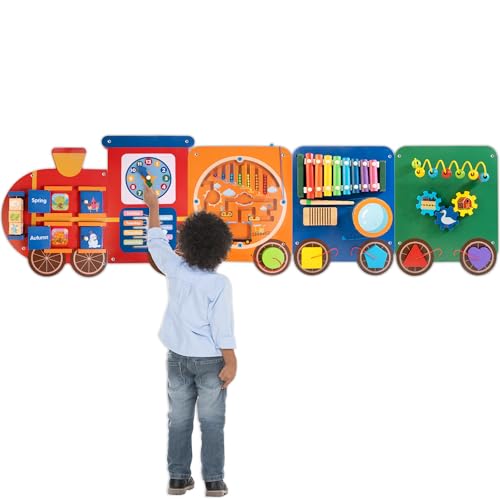
- 57-inch train layout with 11 activities
- Supports solo or group play
- Solid wood, non-toxic painted construction
Best For: Toddler playrooms and shared indoor play areas
Best Modular Option
24-Piece Texture Pad Wall System

- Rearrangeable 24-piece hexagon system
- Includes seven fabric textures
- Supports tactile and fine-motor exploration
Best For: Flexible home sensory rooms and learning spaces
Best Creative Display

- Three framed panels in varied colors
- Supports patterns, letters, and designs
- Combines tactile play with wall decor
Best For: Creative playrooms and decorative sensory spaces
Best Multi-Activity Set
Six-Panel Sensory Exploration Boards
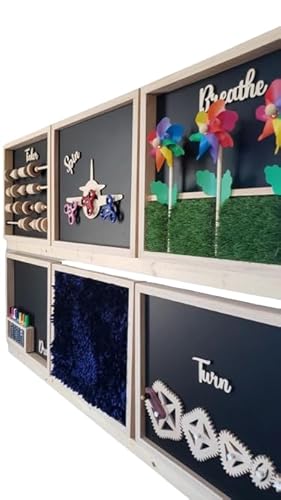
- Six distinct tactile activity boards
- Includes spin, touch, scratch, create, and count elements
- Designed for indoor sensory spaces
Best For: Homes needing varied activities across a large wall
Best Textured Tile Set

- 12 tactile squares with varied textures
- Wall or floor use with included nano tape
- Made for sensory exploration at home or school
Best For: Home sensory corners and tactile play for ages 3 and up
Best Wooden Activity Center

- Nine wooden panels with different activities
- Supports motor, cognitive, and early learning skills
- Includes screws for secure indoor wall mounting
Best For: Playrooms, nurseries, classrooms, and screen-free activity areas
Best Customizable Sensory Display
LILXIU 16-Piece Wall Panel Kit

- Includes textured pads, flip-sequin mats, and frames
- DIY layouts for flexible wall arrangements
- Wall or floor use with tactile and color activities
Best For: Custom sensory rooms, home learning spaces, and classrooms
Best Heat-Responsive Pick
Magic Hands Color-Changing Panel

- Warm touch creates bright color changes
- Screen-free activity for ages 24 months+
- Compact 22-by-15-inch wall-mounted design
Best For: Toddler playrooms and indoor waiting areas
Best Calm-Corner Option
Caterpillar Flip-Sequin Sensory Panel

- Flip-sequin fabric provides tactile feedback
- Supports fine motor skills and focus
- Designed for sensory rooms and calm corners
Best For: Tactile play and home sensory spaces
Best Multi-Activity Choice
5FT Sunshine Rainbow Wooden Board

- Eight Montessori-inspired activities in one board
- Large colorful 5-foot wall-mounted design
- Wood construction with pre-drilled assembly holes
Best For: Spacious playrooms and homes with multiple children
Best Train-Themed Pick – 11-in-1 Wooden Busy Board Train
For shoppers seeking sensory wall panels for home use, this 57-inch train-shaped set combines colorful wall decor with 11 hands-on Montessori-inspired activities. Its five pre-drilled wooden panels are designed for indoor play and can reportedly be assembled in about 30 minutes.
Best For: Toddler playrooms, nurseries, and homes where multiple children can play together.
Pros:
- Offers 11 activities covering colors, shapes, counting, clocks, animals, and more.
- Long train layout supports solo or group play for up to five players.
- Solid wood construction with non-toxic paint and no batteries required.
- Pre-drilled panels simplify indoor installation.
Cons:
- Designed for indoor use only.
- At 57 inches long, it requires substantial wall space.
- Recommended for children ages 3 to 6, limiting use for younger toddlers.
This is a strong choice when you want one large, decorative activity center rather than a collection of smaller panels. Its broad mix of learning tasks makes it particularly practical for shared play areas.
Best Modular Option – 24-Piece Texture Pad Wall System
This modular set is a flexible option for sensory wall panels for home use, with wooden hexagons and interchangeable texture pads that can be arranged in different layouts. Seven fabric textures provide tactile exploration while encouraging grasping, tracing, pressing, and other fine-motor actions.
Best For: Home learning spaces, sensory rooms, daycare areas, and families that want a rearrangeable tactile display.
Pros:
- Includes 24 pieces for customizable wall arrangements.
- Seven textures support comparison and tactile exploration.
- Encourages finger dexterity, hand-eye coordination, and bilateral hand use.
- Rounded corners, reinforced stitching, and rear hanging loops support practical installation.
Cons:
- Surface clean only; the pads are not machine washable.
- The many separate pieces may require more planning during installation.
- Individual hexagons are relatively compact at about 9.4 by 8.1 inches.
Choose this set if layout flexibility and texture variety matter more than built-in games. It can adapt as a child’s interests or available wall space changes, though maintenance is limited to surface cleaning.
Best Creative Display – Reversible Sequin Wall Panels
These three framed sequin panels bring a colorful, low-tech option to sensory wall panels for home use. Children can flip the sequins to make patterns, letters, and shapes, while the wood frames and felt backs also allow the panels to function as decorative wall hangings or note boards.
Best For: Playrooms and bedrooms where creative, visually engaging wall art is also useful.
Pros:
- Three color combinations provide varied visual appeal.
- Flipping sequins encourages focus, patience, creativity, and fine-motor practice.
- Panels can be used for patterns, letters, and imaginative designs.
- Felt backs and included pins add a practical display function.
Cons:
- Sequins move in one direction and may require extra effort to flip.
- The set is primarily a creative tactile activity rather than a broad learning station.
- Each panel measures about 16.5 by 12.6 inches, so the activity area is more limited than larger systems.
This set fits homes that want sensory engagement without a bulky activity center. Its framed design makes it easier to blend into a playroom, bedroom, classroom, or office-style creative space.
Best Multi-Activity Set – Six-Panel Sensory Exploration Boards
For households wanting several distinct tactile experiences, this six-panel set offers sensory wall panels for home use with activities such as spinning, scratching, touching, creating, and counting. Each board is approximately 18 by 18 by 1.5 inches and is intended for indoor settings including bedrooms and sensory rooms.
Best For: Sensory rooms, therapy-inspired spaces, classrooms, and homes that need varied activity boards.
Pros:
- Pack of six provides multiple sensory and movement-based activities.
- Activity variety includes pinwheels, turf, reversible sequins, gears, abacus-style elements, and more.
- Suitable for classrooms, clinics, waiting rooms, bedrooms, and sensory rooms.
- Manual operation requires no batteries.
Cons:
- Its six large boards require considerable wall area.
- The supplied age recommendation is 36 months to 3 years, which is a relatively narrow range.
- The notes do not specify mounting hardware or installation details.
This is the most suitable choice for buyers prioritizing breadth over a single theme. Before purchasing, measure the intended wall and confirm how the boards will be mounted, since the set’s six sizable panels create a substantial installation.
Best Textured Tile Set – 12-Piece Sensory Wall Squares
For a simple introduction to sensory wall panels for home use, this 12-piece tile set offers varied textures in a flexible wall- or floor-friendly format. The panels range from soft and squishy to rough and bumpy, and included nano tape is designed to simplify setup.
Best For: Home sensory corners, educational spaces, and children ages 3 and up who benefit from tactile exploration.
Pros:
- Includes 12 tactile sensory squares with varied textures.
- Can be arranged on a wall or used as a sensory floor setup.
- Includes nano tape for straightforward installation.
- Designed for sensory play and exploration at home or in classrooms.
Cons:
- The set is recommended for children ages 3 and up.
- Nano-tape mounting may not suit every wall surface.
This is a practical choice if you want multiple tactile experiences without installing a larger wooden activity center. Its simple tile format also makes it easy to adapt to a cozy corner or small sensory area.
Best Wooden Activity Center – 9-Piece Hexagon Busy Board
These sensory wall panels for home use combine nine colorful hexagonal wooden boards into a space-saving activity center. Each panel offers an activity intended to support skills such as shape and color recognition, hand-eye coordination, motor development, clock learning, and early musical awareness.
Best For: Toddler playrooms, nurseries, classrooms, daycare spaces, and families seeking a screen-free wall-mounted activity area.
Pros:
- Includes nine hexagonal activity panels and 20 mounting screws.
- Offers multiple learning activities in one coordinated set.
- Made from wood with smooth surfaces and rounded edges.
- Wall mounting helps conserve floor space and supports group or individual play.
Cons:
- Installation requires securely mounting the panels with screws.
- Designed for indoor use.
The hexagonal layout makes this set both a developmental activity center and a decorative wall feature. Choose it when structured, hands-on activities matter more than interchangeable tactile textures.
Best Customizable Sensory Display – LILXIU 16-Piece Wall Panel Kit
If you want sensory wall panels for home use that can be rearranged, the LILXIU kit provides nine textured pads, seven flip-sequin mats, and nine wooden frames. The components can be combined in different configurations, while the sequin panels add a visual and tactile activity with each touch.
Best For: Sensory rooms, home learning areas, classrooms, offices, and break spaces needing a flexible tactile display.
Pros:
- Includes nine sensory pads, seven colored flip-sequin mats, and nine frames.
- Panels can be combined into different layouts.
- Flip sequins reveal two colors and support tactile and color-recognition activities.
- Frames can be wall-mounted, while pads can also be placed on the floor.
Cons:
- Wall installation requires using the included screwdriver and screws.
- The larger component set may require more planning and mounting space.
This kit stands out for households that want to customize the arrangement over time. It offers more configuration flexibility than a fixed tile set, with flip-sequin panels adding a distinctive fidgeting element.
Best Heat-Responsive Pick – Magic Hands Color-Changing Panel
For families comparing sensory wall panels for home use, the Magic Hands panel offers a mess-free, screen-free activity that responds to warm touch. Its 22-by-15-inch plastic surface is designed for children ages 24 months and up, with performance influenced by room temperature.
Best For: Toddler playrooms, nurseries, or indoor waiting areas where children can explore color-changing, touch-based play.
Pros:
- Warm touch reveals bright, changing colors without mess.
- Supports focus, motor skills, sensory awareness, and independent play.
- Wall-mounted design works well in playrooms, classrooms, libraries, and waiting areas.
- Smooth plastic surface is designed for active toddler hands.
Cons:
- Room conditions matter: the panel performs best around 68°F–73°F and activates around 74°F–83°F at the surface.
- Its 22-by-15-inch format offers less activity variety than a multi-feature busy board.
This is a focused choice for homes wanting a visually engaging sensory panel rather than a collection of mechanical activities. Check the available wall space and typical room temperature before buying.
Best Calm-Corner Option – Caterpillar Flip-Sequin Sensory Panel
This caterpillar-themed panel is a practical option for sensory wall panels for home use when touch, movement, and visual texture are priorities. Its flip-sequin fabric and manual design encourage hands-on exploration while fitting into playrooms, nurseries, therapy spaces, or calm-down corners.
Best For: Children who benefit from tactile, screen-free activities in a home sensory room, playroom, or calm-down area.
Pros:
- Flip-sequin fabric adds a tactile and visually changing surface.
- Encourages fine motor development, coordination, focus, and sensory processing practice.
- Can be combined with sensory mats or floor tiles for a larger activity area.
- Lightweight at approximately 0.55 kg, according to the supplied details.
Cons:
- The supplied information does not specify the panel’s full width and height beyond an item dimension of 44.88 inches.
- It provides tactile exploration but does not offer the broader range of activities found on multi-activity boards.
Choose this panel when texture and calming sensory engagement matter more than musical, sorting, or mechanical features. Confirm the exact dimensions and mounting requirements for your intended wall.
Best Multi-Activity Choice – 5FT Sunshine Rainbow Wooden Board
For shoppers seeking sensory wall panels for home use with multiple built-in activities, this 5-foot wooden rainbow board packs eight Montessori-inspired features into a wall-mounted design. It includes gears, shape matching, xylophones, a clock, maze, hourglass game, and track game for varied hands-on play.
Best For: Larger playrooms, daycare spaces, or homes with multiple children who can benefit from varied interactive activities.
Pros:
- Offers eight activities covering sorting, music, time, movement, and problem-solving play.
- Large 5-foot rainbow layout creates a substantial interactive wall feature.
- Wall mounting saves floor space and suits homes, daycares, and learning centers.
- Eight wooden panels include pre-drilled holes and screws for assembly.
Cons:
- The approximately 59-by-31.5-inch footprint requires considerably more wall space than a compact panel.
- Assembly is required, although the supplied notes estimate about 30 minutes.
- The supplied age information is inconsistent, so verify the manufacturer’s recommended age before purchase.
This is the strongest fit for buyers who want a centerpiece activity wall rather than a single sensory surface. Measure carefully, allow for assembly, and verify age suitability for the children using it.
How We Picked the Best Sensory Wall Panels for Home Use
We compared these panels by looking at activity variety, tactile diversity, construction, installation flexibility, maintenance, and suitability for common home settings. We also considered whether each design supports open-ended exploration, fine-motor skills, calming routines, or structured learning. Products with replaceable elements can offer extra value because families can refresh worn or less-preferred textures over time.
Quick Comparison
| Type | Best For | What to Look For |
|---|---|---|
| Busy board | Fine-motor practice and independent activity | Secure hardware, varied mechanisms, smooth edges |
| Tactile tile set | Flexible wall or floor layouts | Modular mounting, washable surfaces, strong backing |
| Texture or sequin panel | Focused touch and visual feedback | Durable fabric, sealed frame, snag-resistant construction |
| Large activity panel | Playrooms, classrooms, and shared spaces | Stable installation, generous dimensions, multiple activities |
Key Buying Factors for Sensory Wall Panels
Texture and Activity Variety
Look for a useful mix of tactile, visual, and movement-based activities rather than simply the highest piece count. Spinners, textured pads, flip sequins, gears, and latches can support different preferences and skill levels. If a child is easily overstimulated, a simpler panel with a few predictable textures may be more appropriate than a busy multi-activity board.
Safety and Construction
Check the recommended age range, fasteners, corners, and small detachable components before installation. Panels should be firmly secured to a suitable wall or backing, especially when children may pull, lean, or climb on them. Supervise young children around loose parts, cords, hardware, and fabric elements, and inspect the panel regularly for damage.
Size, Placement, and Cleaning
Measure the wall before ordering and leave enough clearance for children to stand or sit comfortably. A lower installation may work better for toddlers, while older children may benefit from eye-level placement. For home use, prioritize wipeable surfaces and replaceable pads when possible. Avoid placing panels near hazards or in areas where they could block doors and walkways.
Installation and Flexibility
Some products are designed as permanent wall fixtures, while others can be rearranged or used on the floor. Modular squares and tiles make it easier to create a small setup or expand gradually. Confirm whether mounting hardware is included and whether the wall type can support the finished installation.
Who Should Buy Which Sensory Wall Panels for Home Use?
Choose a busy board for children who enjoy switches, latches, spinners, and hands-on problem solving. Choose modular sensory tiles if you want a customizable arrangement or need to fit an unusual wall. Choose replaceable texture panels for households that want to rotate materials or accommodate changing preferences. Choose a large wooden activity panel when the playroom, therapy area, or classroom has enough space for a more substantial centerpiece. For calming corners, favor a focused panel with predictable tactile feedback rather than a crowded design.