Small rooms can still support meaningful sensory play. The best sensory wall panels for small spaces turn unused wall area into an interactive destination without consuming valuable floor space.
These 10 options include tactile mats, sequin panels, activity boards, mirrors, and fidget surfaces for different ages, settings, and sensory preferences. Use the guide below to narrow your choices by installation, stimulation level, durability, and available wall area.
Best 10 Sensory Wall Panels for Small Spaces Picks for 2026
Dinosaur Discovery
Interactive Sensory Wall Panel

- 24-by-36-inch wall-mounted format
- Flip-sequin and tactile activities
- Supports fine-motor and sensory play
Best For: Compact playrooms, classrooms, and calm-down corners
Texture Sampler Set

- 15 mats with different textures
- Compact 5.91-inch round tiles
- Bright colors for tactile exploration
Best For: Custom sensory displays and flexible classroom use
Hexagon Learning Hub

- Nine wall-mounted activity panels
- Wooden Montessori-style activities
- Covers shapes, clocks, logic, and motor skills
Best For: Playrooms, nurseries, daycares, and classrooms
Flip-and-Trace Tiles

- Three 7.9-inch tactile tiles
- Reversible sequins enable pattern drawing
- Non-slip backing with flexible placement
Best For: Small, portable sensory areas for youth and adults
Visual Discovery Pick

- Nine colorful convex acrylic mirrors
- Shatterproof, easy-clean construction
- Useful for compact sensory corners
Best For: Visual exploration, tummy time, and imaginative play
Texture Variety Pick

- Twelve panels with varied textures
- Works on walls or floors
- Includes nano tape for setup
Best For: Tactile play in classrooms and cozy corners
Large Soft-Play Pick

- Eight distinct tactile fabric sections
- Lightweight, washable felt design
- Peel-and-stick mounting for smooth walls
Best For: A cohesive tactile feature in nurseries and sensory corners
Best Compact Texture Set

- Four colorful tactile mats for hands and feet
- Washable, lightweight silicone construction
- Flexible for home, classroom, or therapy use
Best For: Portable sensory corners and small rooms
Best Decorative Wall Feature
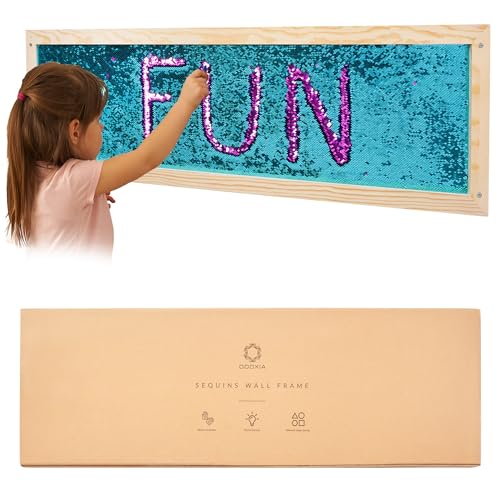
- Wall-mounted framed sequin activity
- Flip sequins to create patterns and designs
- Includes stencils for guided creative play
Best For: Kids’ rooms, daycares, and compact activity walls
Best Themed Tactile Play

- Animal-themed mats with bright colors
- Supports tactile, language, and motor-skill play
- Clean with a damp cloth or mild soapy water
Best For: Ages 3+ in home, classroom, or therapy spaces
Dinosaur Discovery – Interactive Sensory Wall Panel
For shoppers seeking sensory wall panels for small spaces, this 24-by-36-inch dinosaur panel offers a focused, wall-mounted activity area without requiring a large play setup. Its flip-sequin fabric and hands-on design support screen-free exploration in playrooms, classrooms, therapy spaces, or calm-down corners.
Best For: Children who benefit from tactile, fine-motor, and focus-building activities in a compact indoor sensory area.
Pros:
- Compact 24″ W x 36″ H format suits limited wall space.
- Includes touch-based activities and flip-sequin fabric for tactile exploration.
- Designed to support sensory processing, coordination, fine-motor skills, and cognitive development.
- Works in playrooms, classrooms, nurseries, sensory rooms, and calm-down corners.
Cons:
- Only one panel is included, so a larger sensory wall requires additional pieces.
- The dinosaur theme may not suit every room or age group.
- Indoor use only.
This is a practical choice when you want one dedicated sensory feature rather than a full wall system. Its vertical format keeps the activity off the floor while providing an engaging tactile focal point.
Texture Sampler Set – 15-Piece Sensory Mats
These 15 sensory mats are a flexible option for sensory wall panels for small spaces because each 5.91-inch round tile can be arranged individually or used as part of a larger tactile display. The assortment provides varied textures and bright colors while taking up relatively little room.
Best For: Families, classrooms, and therapy areas that want multiple tactile surfaces for rotating, sharing, or arranging in a custom sensory setup.
Pros:
- Includes 15 mats in 15 different material textures.
- Small 5.91-inch size supports flexible placement in compact areas.
- Bright colors and varied surfaces encourage tactile exploration.
- No batteries are required.
Cons:
- The supplied notes do not specify mounting hardware or an adhesive backing for wall installation.
- These are individual mats rather than a complete mounted wall panel.
- Recommended age details are inconsistent, so shoppers should verify suitability before use.
This set works best for buyers who value variety and modular placement over a ready-to-install wall board. It can also be used as a portable collection of tactile activities when space or layout needs change.
Hexagon Learning Hub – 9-Panel Wooden Busy Board
For small playrooms or nurseries, this nine-panel wooden set creates a structured sensory wall while using vertical space efficiently. The hexagonal panels combine hands-on activities with early-learning features and include 20 screws for wall mounting.
Best For: Toddlers and children in playrooms, daycares, nurseries, preschools, and classrooms where a permanent, educational wall activity is useful.
Pros:
- Includes nine hexagonal activity panels and 20 screws.
- Offers activities related to colors, shapes, hand-eye coordination, clocks, logic, and musical awareness.
- Wood construction, smooth surfaces, and rounded edges are designed for repeated indoor use.
- Wall mounting helps save floor space.
Cons:
- The complete set may require more wall area than a single compact panel.
- Installation is required, even though screws are included.
- Its colorful hexagon design may be visually busier than a minimalist sensory setup.
This is the strongest choice in the group for buyers wanting a more comprehensive educational activity center. Its modular arrangement can turn an otherwise unused wall into a dedicated learning zone.
Flip-and-Trace Tiles – 3-Piece Sequin Sensory Set
This three-piece sequin set is a space-conscious option for sensory wall panels for small spaces. Each 7.9-by-7.9-inch tile can be used alone or arranged into a small tactile display, making it suitable for walls, desks, floors, activity boards, and other flexible indoor areas.
Best For: Youth and adults who enjoy repetitive tactile exploration, pattern-making, quiet-time activities, or a portable sensory feature.
Pros:
- Three compact tiles can be used individually or grouped together.
- Reversible sequins support swiping, tracing, pattern drawing, and repeated exploration.
- Non-slip backing and reinforced edges support use on walls, floors, desks, or boards.
- Includes three vibrant colors: deep blue, light blue, and bright red.
Cons:
- The set contains only three tiles, so coverage is limited.
- The supplied notes do not specify wall-mounting hardware.
- Sequin interaction may be less suitable for shoppers seeking varied textures beyond one fabric type.
Choose this set when flexibility and a small footprint matter most. It provides an interactive visual and tactile surface without committing to a large permanent wall installation.
Visual Discovery Pick – Bubble Wall Mirror Set
For sensory wall panels for small spaces, this nine-piece acrylic mirror set adds visual interest without requiring one large installation. The convex bubble design offers playful reflections, while the wall-mount format suits bedrooms, nurseries, classrooms, or compact sensory areas.
Best For: Visual exploration, tummy time, imaginative play, and small sensory corners.
Pros:
- Nine colorful convex mirrors encourage visual and sensory exploration.
- Shatterproof acrylic construction is easier to use around children than glass.
- Wall-mounted, frameless design can double as colorful room décor.
Cons:
- Primarily provides visual stimulation rather than varied tactile textures.
- The supplied notes do not specify installation hardware details.
This is a practical choice when wall space is limited and you want a visually engaging panel arrangement that can support play, self-discovery, and calming routines.
Texture Variety Pick – 12-Piece Sensory Squares
This 12-piece set is a flexible option for sensory wall panels for small spaces because the individual squares can be arranged on a wall or used on the floor. Multiple textures, including soft, squishy, rough, and bumpy surfaces, create a compact hands-on activity area.
Best For: Tactile exploration, cozy corners, classrooms, and children ages three and up.
Pros:
- Twelve separate panels provide a broad mix of tactile experiences.
- Can be configured as a wall display or used as sensory floor mats.
- Provided nano tape is designed to simplify setup without complicated instructions.
Cons:
- The recommended age is three years and up.
- Wall layout and long-term adhesive performance may depend on the surface.
Choose this set when you want more texture variety than a single board offers and need the freedom to adapt the arrangement to a small playroom, classroom, or home sensory nook.
Large Soft-Play Pick – Crocodile Felt Activity Board
Although it is larger than a modular tile set, this crocodile board can work in a small sensory area when you want one defined wall feature instead of several separate panels. Its 41-by-19-inch felt design combines eight fabric textures with a playful silhouette.
Best For: Soft tactile play, nurseries, preschool rooms, waiting areas, and dedicated sensory corners.
Pros:
- Eight fabric sections offer varied sensations from smooth to fuzzy and bumpy.
- Lightweight, washable, non-toxic felt construction is designed for frequent use.
- Peel-and-stick adhesive dots allow tool-free mounting on smooth walls.
- Crocodile artwork makes the sensory feature an engaging piece of wall décor.
Cons:
- The 41-by-19-inch format requires more uninterrupted wall space than small tiles.
- Adhesive mounting is intended for smooth walls.
This board is best when your small space has one available wall section and you prefer a cohesive, soft activity display over a configurable set of individual squares.
Best Compact Texture Set – 4-Piece Silicone Sensory Mats
These four silicone mats are a flexible option for anyone seeking sensory wall panels for small spaces. Their compact format works well in a home, classroom, therapy area, or sensory corner, while the varied textures support quiet hands-on exploration.
Best For: Toddlers, classrooms, therapy sessions, and small sensory areas that need washable, portable tactile pieces.
Pros:
- Four bright colors and multiple tactile textures encourage touch-based exploration.
- Food-grade silicone is described as smooth, burr-free, durable, and easy to clean.
- Lightweight mats can be used on walls, floors, desks, or in sensory bins.
- Quiet and soft design suits classrooms and calming spaces.
Cons:
- Texture patterns may repeat because of a stated packing error.
- The supplied details do not specify wall-mounting hardware.
- Recommended age begins at 12 months, so supervision remains important for young children.
Choose this set when flexibility matters more than a permanently installed panel. The mats can be arranged in a small space and moved or washed as needed, though buyers wanting a framed wall feature may prefer a dedicated wall-mounted option.
Best Decorative Wall Feature – Sequin Sensory Wall Frame
For shoppers comparing sensory wall panels for small spaces, this framed sequin design combines tactile play with room decor. Its wall-mounted format creates a dedicated activity surface without requiring multiple loose pieces.
Best For: Kids’ rooms, living rooms, daycares, and schools looking for a visually engaging wall-mounted sensory activity.
Pros:
- Flippable sequins provide changing colors, patterns, and tactile interaction.
- Framed rectangular design works as both wall decor and a sensory activity.
- Included stencils add structured creative play.
- Designed for indoor use and described as quick to set up.
Cons:
- The frame is listed as big and weighs 1.66 kg, which may be less suitable for very limited wall space.
- Fabric sequins may not offer the varied raised textures of a tactile mat set.
- The supplied details do not provide exact dimensions or mounting hardware information.
This is the strongest choice when you want one eye-catching wall piece rather than a collection of tiles. Check the available wall area and mounting requirements before buying, especially in a compact room.
Best Themed Tactile Play – Animal Sensory Mats
These animal-themed fabric mats offer a playful way to add sensory wall panels for small spaces. Bright colors and varied textures support tactile play while the mats remain adaptable for home, classroom, and therapy settings.
Best For: Children ages 3 and up who benefit from animal-themed tactile activities in a home, classroom, or therapy space.
Pros:
- Animal theme, vibrant colors, and varied textures make the set inviting.
- Supports sensory engagement along with language, problem-solving, and motor-skill practice.
- Can be used in everyday play, therapy sessions, classrooms, or indoor sensory areas.
- Cleaning is described as simple with a damp cloth or mild soap and water.
Cons:
- The supplied details list one pack but do not state the number of individual mats.
- Fabric construction may require more careful cleaning than silicone.
- Exact dimensions and wall-mounting details are not provided.
This set suits buyers who want a child-friendly theme and developmental play in one compact activity. Confirm the pack contents and installation method if you plan to use it as a permanent wall display.
How We Picked the Best Sensory Wall Panels for Small Spaces
We focused on products that make practical use of vertical space and offer hands-on interaction without requiring a large play structure. The selection covers several sensory inputs, including touch, texture, visual reflection, color, movement, and fine-motor activities. We also considered panel size, whether products can be mounted individually or arranged as a group, material suitability, cleaning needs, and flexibility for homes, classrooms, daycares, and therapy spaces.
Because sensory preferences vary, no single panel is ideal for every child. Always check the listed age range, dimensions, mounting instructions, and materials before purchase. Wall-mounted items should be securely attached and installed where adults can supervise use.
Quick Comparison
- Best for varied tactile input: Multi-piece sensory mats with several textures and shapes.
- Best for fine-motor practice: Wooden activity boards with switches, latches, or other manipulatives.
- Best for visual engagement: Sequin panels and interactive acrylic mirrors.
- Best for a calm corner: A small, predictable tactile panel placed at an accessible height.
- Best for flexible layouts: Individual tiles or mats that can be spaced apart or rearranged.
Key Buying Factors for Sensory Wall Panels for Small Spaces
Available Wall Area
Measure the usable wall before ordering. Account for baseboards, doors, furniture, and clearance around the panel. Individual tiles are usually easier to fit into narrow areas than one large board, while a compact framed panel may be simpler where installation space is limited.
Type and Intensity of Stimulation
Choose surfaces according to the intended use. Rough, ridged, soft, squishy, or sequin textures provide different tactile experiences. Mirrors and bright colors add visual interest but may be too stimulating for some calm areas. A mix of options can support exploration, but a focused design may work better for children who become overwhelmed easily.
Mounting and Durability
Look for secure hardware, strong backing, and clear installation guidance. Panels used in classrooms or daycares need materials that tolerate frequent handling and routine cleaning. Avoid relying on weak adhesive alone unless the manufacturer specifically recommends it for the wall surface and product weight.
Safety and Maintenance
Inspect for loose parts, exposed fasteners, sharp edges, and peeling surfaces. Confirm that the product is appropriate for the child’s age and developmental needs. Smooth, wipeable materials are generally easier to maintain in shared spaces.
Who Should Buy Which Sensory Wall Panels for Small Spaces?
Parents with limited floor space should consider a compact panel or a small set of tiles that creates an activity zone without adding bulky furniture. Classrooms and daycares may benefit from durable multi-panel sets or activity boards that support repeated use and serve several children over time. Calm corners and therapy rooms are often better suited to predictable, low-profile textures, with sequin or mirror panels added only when visual stimulation is appropriate. Children who seek fine-motor activities may prefer a wooden busy board, while children who enjoy repetitive tactile movement may respond well to flip-sequin or textured mats.
For the best fit, prioritize the child’s sensory preferences and the room’s practical limits rather than choosing the largest set. A securely installed, well-placed panel that gets used regularly is more valuable than an oversized collection that crowds the space.