The best sensory wall panels for classrooms give children a structured way to explore texture, movement, color, and cause-and-effect play. They can support calm corners, early-learning stations, special education environments, and occupational therapy activities.
This roundup includes wooden activity boards, tactile mats, sequin panels, mirrors, and replaceable-texture systems. Use the guide below to match the panel style, installation method, and durability level to your classroom.
Best 10 Sensory Wall Panels for Classrooms Picks for 2026
Best All-Around Activity Set

- Nine wooden panels with varied activities
- Supports motor, cognitive, and early learning skills
- Includes screws for wall mounting
Best For: Colorful classroom, preschool, or daycare activity walls
Best for Tactile Variety

- Twelve large mats offer varied textures
- Labels support guided tactile learning
- Hooks and tote allow portable use
Best For: Special education rooms, calming corners, and therapy settings
Best Modular Design
24-Piece Replaceable Texture Panels

- Modular hexagon panels support varied layouts
- Seven textures encourage tactile comparison
- Rounded wooden panels include hanging loops
Best For: Customizable classroom sensory walls and activity areas
Best Double-Sided Option
Montessori Reversible Sensory Board

- Six reversible boards offer two activity surfaces
- Mirror board adds visual exploration
- Includes positioning board and felt storage bag
Best For: Montessori rooms, calm corners, and therapy activities
Best Visual Stimulator

- Nine colorful convex acrylic mirrors
- Shatterproof and easy to clean
- Encourages visual-motor exploration
Best For: Visual sensory walls, nurseries, and play areas
Best Customizable Option
Flip Sequin Sensory Wall Panel

- Includes 16 sensory components
- Frames can be arranged in multiple layouts
- Flip sequins build tactile and fine-motor engagement
Best For: Configurable classroom sensory walls and activity areas
Best Texture Variety
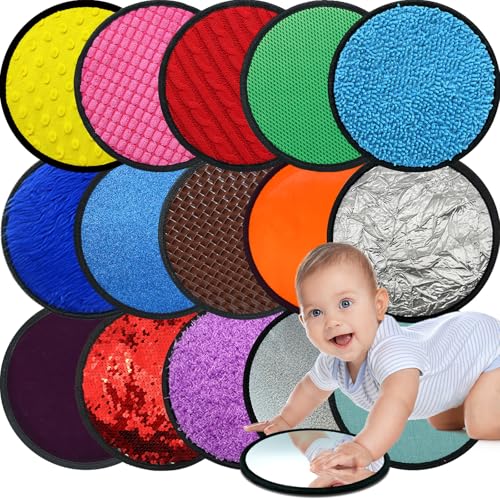
- Offers 16 colors and textures
- Washable and lightweight for classroom use
- Non-slip backing and hanging loops
Best For: Tactile activities, therapy sessions, and rotating classroom stations
Creative Sequin Board
ODOXIA Sequin Sensory Wall Frame
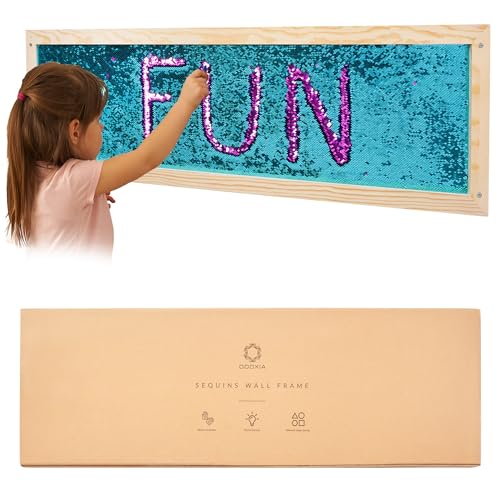
- Flip sequins create changing patterns
- Includes stencils for guided play
- Framed indoor wall-mount design
Best For: Single-panel creative sensory activities
Modular Texture Set
13-Piece Sensory Wall Panel Kit

- Includes varied soft, rough, and bumpy textures
- Adds six interchangeable sequin mats
- Customizable honeycomb pine-panel layout
Best For: Special education sensory rooms
Compact Tactile Squares

- Six squares offer varied tactile surfaces
- Works on walls or as a sensory rug
- Nano tape simplifies installation
Best For: Small classroom sensory corners
Best All-Around Activity Set – 9-Piece Hexagon Busy Board
For classrooms seeking sensory wall panels for classrooms that combine tactile play with early learning, this nine-piece wooden hexagon set offers a varied activity center in a space-saving wall-mounted format. Its activities support shape and color recognition, motor development, clock learning, and early musical awareness.
Best For: Preschools, daycare rooms, playrooms, and classrooms that want a colorful, screen-free group or individual activity.
Pros:
- Nine hexagonal panels provide multiple activities and learning opportunities.
- Supports hand-eye coordination, motor skills, logical thinking, and early musical awareness.
- Wood construction, smooth surfaces, and rounded edges are designed for comfortable use.
- Includes 20 screws for secure wall mounting.
Cons:
- The set is intended for indoor use.
- Installation requires mounting the panels to a wall.
This is a strong choice when you want one coordinated wall feature with several kinds of play. The colorful hexagon layout can also add a decorative element to a classroom while keeping activities off the floor.
Best for Tactile Variety – 12-Piece Labeled Sensory Mats
These sensory wall panels for classrooms are designed for tactile exploration, with 12 large textured mats that can be arranged on a wall, floor, or calming-area setup. Clear labels, non-slip backing, adhesive hooks, and a storage tote make the set practical for structured sensory activities and mobile classroom use.
Best For: Special education classrooms, autism and ADHD support spaces, therapy rooms, calming corners, and settings that need portable sensory materials.
Pros:
- Includes 12 distinct textures, including bumpy, smooth, ridged, and soft surfaces.
- Large 10-by-10-inch mats have clear text labels for guided identification.
- Hooks and a tote bag support wall installation, organization, and transport.
- Materials are described as non-toxic, wipe-clean, and machine-washable.
Cons:
- The fabric, plastic, rubber, and silicone construction differs from a solid wood wall panel.
- Adhesive hooks may require careful placement for secure classroom use.
Choose this set when tactile comparison and flexible placement matter more than a permanently installed activity board. The labeled textures are particularly useful for teacher-led sensory vocabulary and exploration.
Best Modular Design – 24-Piece Replaceable Texture Panels
For classrooms wanting sensory wall panels for classrooms that can change over time, this 24-piece wooden system uses interchangeable texture pads and modular hexagon panels. Children can explore seven fabric textures while practicing grasping, tracing, pressing, coordination, and other hands-on skills.
Best For: Classrooms, daycare centers, sensory rooms, homeschool spaces, and waiting areas where a customizable tactile display is useful.
Pros:
- Modular pieces can be arranged into different layouts.
- Interchangeable pads provide seven fabric textures for comparison and exploration.
- Encourages fine motor skills, hand-eye coordination, bilateral hand use, and focus.
- Rounded corners, reinforced stitching, and rear hanging loops support wall mounting.
Cons:
- Surface clean only; the panels are not machine washable.
- The modular design may require more planning during setup than a single board.
This set stands out for classrooms that want to refresh the arrangement or create a larger tactile display. Its replaceable-pad concept also gives educators more flexibility in how children interact with the wall.
Best Double-Sided Option – Montessori Reversible Sensory Board
This double-sided Montessori set offers a more comprehensive option among sensory wall panels for classrooms, combining six reversible boards with a mirror board. One side provides textured sensory mats, while the reverse supports fine-motor tracking, making it suitable for focused exploration and calm-down spaces.
Best For: Montessori classrooms, daycare sensory areas, special-needs classrooms, occupational-therapy activities, and calm corners.
Pros:
- Six reversible boards provide tactile activities on one side and tracking activities on the other.
- Includes a mirror board for visual stimulation and self-discovery.
- Wood construction offers a screen-free, space-saving wall-mounted learning setup.
- Includes a positioning board and portable felt storage bag.
Cons:
- The set has more pieces to organize than a single sensory board.
- The notes do not specify the individual textures or cleaning method for the sensory mats.
Consider this set when visual, tactile, and fine-motor activities are all priorities. Its reversible design can help educators vary the experience while the storage bag supports use beyond one classroom location.
Best Visual Stimulator – Bubble Mirror Set
If you want sensory wall panels for classrooms that emphasize visual discovery, this nine-piece acrylic bubble mirror set offers an engaging option. The convex mirrors create changing reflections while supporting interactive, hands-on exploration.
Best For: Classrooms, sensory rooms, nurseries, and play areas needing visual and tactile wall stimulation.
Pros:
- Nine colorful, wall-mounted convex mirrors encourage self-discovery and visual exploration.
- Acrylic construction is described as shatterproof, durable, and easy to clean.
- Supports visual-motor engagement, imaginative play, and calming sensory experiences.
Cons:
- Primarily provides visual and reflective stimulation rather than varied textures.
- The supplied details do not specify installation hardware.
This set is a strong choice when reflective play and room decor are priorities. Its compact 10-inch pieces can add visual interest to a sensory wall without taking up much space.
Best Customizable Option – Flip Sequin Sensory Wall Panel
For classrooms seeking sensory wall panels for classrooms that can be arranged around available space, this 16-piece kit offers a flexible setup. Its framed tactile pads and flip-sequin mats let children explore textures, colors, and cause-and-effect movement.
Best For: Sensory rooms, classrooms, home learning areas, and break spaces that need a configurable tactile activity.
Pros:
- Includes nine wooden frames, nine sensory pads, seven flip-sequin mats, and expansion screws.
- Modular pieces can be combined in different configurations or used on the floor.
- Flip sequins support color recognition, fine-motor practice, and tactile exploration.
- Included screwdriver and screws simplify wall installation.
Cons:
- Assembly is required before wall use.
- The 8.2-by-9.4-inch product dimensions may require multiple pieces for broader coverage.
This is the most adaptable option of the three, especially for educators who want to change the layout or combine wall and floor activities. The wooden frames also give the installation a more finished, decorative appearance.
Best Texture Variety – 16-Piece Sensory Mat Set
This 16-piece set is a practical pick for sensory wall panels for classrooms when variety, portability, and easy cleaning matter. Different colors and textures invite children to touch, grip, pull, or step on the mats during classroom or therapy activities.
Best For: Classrooms, therapy sessions, and home setups serving children age three and older who benefit from varied tactile exploration.
Pros:
- Provides 16 colors and textures for broad tactile and sensory exploration.
- Non-slip backing supports use on floors, while hanging loops allow storage or display.
- Lightweight, washable, and described as machine-cleanable for easier upkeep.
- Each mat measures approximately 8.34 inches square and can be handled individually.
Cons:
- The supplied details describe the play location as the floor, so wall mounting may require additional planning or hardware.
- The manufacturer age guidance is listed as 36 months to 3 years, so educators should verify suitability for their group.
Choose this set when a classroom needs many interchangeable tactile surfaces rather than a fixed framed panel. Its washable construction and compact individual mats make it convenient for rotating activities and shared use.
Creative Sequin Board – ODOXIA Sequin Sensory Wall Frame
The ODOXIA Sequin Sensory Wall Frame is a focused option for classrooms seeking sensory wall panels for classrooms that encourage tactile exploration and creative pattern-making. Its framed, landscape-oriented fabric panel mounts indoors and includes stencils for guided activities.
Best For: Classrooms, daycares, and children’s rooms that want a single wall-mounted sequin activity.
Pros:
- Flip sequins create changing colors and patterns with each touch.
- Includes stencils to support structured creative play.
- Framed wall-mount design can work in school or home settings.
- Designed for quick setup and indoor use.
Cons:
- Provides one primary sequin-based sensory surface rather than a variety of textures.
- The supplied notes do not specify dimensions or included mounting hardware.
This is a straightforward pick when visual feedback and sequin flipping are the main goals. Choose a multi-panel set instead if your classroom needs several distinct tactile textures.
Modular Texture Set – 13-Piece Sensory Wall Panel Kit
This 13-piece set is a versatile choice among sensory wall panels for classrooms, combining textured mats with interchangeable sequin flip mats. Its honeycomb-style pine panels can be arranged for interactive learning, sensory exploration, or a customizable classroom display.
Best For: Special education classrooms and sensory rooms serving children ages 3–12 who benefit from varied tactile activities.
Pros:
- Includes 13 mats with textures ranging from soft and rough to bumpy.
- Six interchangeable sequin flip mats add visual and tactile variety.
- Honeycomb design supports customization with photos or sticky notes.
- Rounded pine edges and Velcro attachments are designed for stability and safety.
Cons:
- The set may require more wall-planning than a single framed panel.
- Only the remaining mats—not the six sequin flip mats—are described as machine washable.
With its broader texture range and customizable layout, this set offers more activity variety than a standalone sequin board. It is especially practical where teachers want sensory exploration combined with interactive classroom organization.
Compact Tactile Squares – 6-Piece Sensory Wall Set
The six-piece Sensory Wall Panel Set is a compact way to add sensory wall panels for classrooms or a classroom cozy corner. Each square offers a different tactile experience, and the included nano tape is intended to simplify wall or floor setup.
Best For: Classrooms and home learning spaces needing a small, easy-to-install sensory activity for children ages 3 and up.
Pros:
- Six tactile squares provide soft, squishy, rough, and bumpy sensations.
- Can be used on a wall or arranged as an instant sensory rug.
- Provided nano tape supports simple installation without complicated instructions.
- Suitable for educational and at-home sensory spaces.
Cons:
- Offers fewer panels and less texture variety than the 13-piece alternative.
- The notes do not identify the specific texture or material of each square.
- Wall installation depends on the supplied adhesive and the mounting surface.
This set makes sense when space, setup time, or budget favors a smaller arrangement. For classrooms that need more extensive customization or multiple simultaneous activities, a larger panel kit may be more suitable.
How We Picked the Best Sensory Wall Panels for Classrooms
We focused on the features that matter most in active learning environments: tactile variety, age-appropriate design, construction quality, cleanability, mounting flexibility, and replacement options. We also considered whether each format works better as a permanent wall installation, a floor activity, or a movable sensory station.
Because classrooms serve children with different sensory preferences and support needs, variety was important. The selection includes tactile mats, wooden tiles, flip-sequin surfaces, mirrors, and multi-activity busy boards rather than relying on one type of stimulation.
Quick Comparison
| Panel Type | Best For | What to Check |
|---|---|---|
| Wooden activity boards | Fine-motor play and independent exploration | Rounded edges, secure hardware, and mounting strength |
| Textured sensory mats | Tactile stations and flexible layouts | Texture variety, backing, cleaning, and attachment method |
| Sequin panels | Visual-tactile engagement and calming repetition | Fabric durability and securely fastened sequins |
| Acrylic mirrors | Visual feedback and interactive wall displays | Shatter resistance, edge protection, and safe mounting |
| Replaceable-pad systems | Long-term classroom use | Availability and cost of replacement pieces |
Key Buying Factors for Sensory Wall Panels for Classrooms
Safety and Construction
Choose panels with smooth or rounded edges, securely attached components, and no exposed staples, sharp fasteners, or easily detachable small parts. Acrylic mirrors are generally preferable to glass in child-accessible spaces. Always follow the manufacturer’s age guidance and mounting instructions.
Texture and Sensory Variety
Look for a useful mix of soft, rough, ridged, smooth, and reversible surfaces. A broad range lets educators offer choices without forcing a particular sensory input. Flip sequins and activity hardware can add visual feedback and fine-motor work, while simple mats may be better for focused tactile exploration.
Installation and Flexibility
Confirm whether the product is designed for walls, floors, or both. Check dimensions, mounting hardware, wall compatibility, and the space needed around moving parts. Modular panels are useful when a classroom layout changes, while framed boards may provide a cleaner permanent installation.
Cleaning and Durability
Classroom equipment should tolerate frequent handling and routine cleaning. Favor wipeable surfaces, sturdy frames, and replaceable pads when possible. Avoid assuming that every fabric or textured surface can be disinfected with the same products; follow care instructions to prevent damage.
Who Should Buy Which Sensory Wall Panels for Classrooms?
Choose a wooden busy board when the priority is fine-motor practice, sequencing, and independent activity. Select mixed sensory mats for classrooms that need flexible stations or floor-and-wall use. Replaceable-texture panels are a strong choice for high-use programs that want to refresh worn or less-preferred surfaces without replacing the entire set.
Sequin panels suit children who enjoy repetitive visual-tactile movement, while acrylic mirror panels can add visual awareness and engagement to a calm corner. For a broad classroom setup, combine several formats rather than covering the room with identical panels. The best Sensory Wall Panels for Classrooms are the ones that fit your learners’ sensory preferences, supervision plan, available wall space, and cleaning routine.