The best sand and water sensory tables give children a hands-on way to explore pouring, scooping, building, and cause-and-effect play. The right model depends on where it will be used, how many children need access, and whether you prioritize portability, storage, or classroom durability.
Our selection includes outdoor water tables, wooden sensory stations, adjustable designs, and classroom-ready options. Use the guide below to compare important features before choosing a table for your home, preschool, or play space.
Best 10 Sand and Water Sensory Tables Picks for 2026
Rainfall STEM Play
Step2 Rain Showers Splash Pond
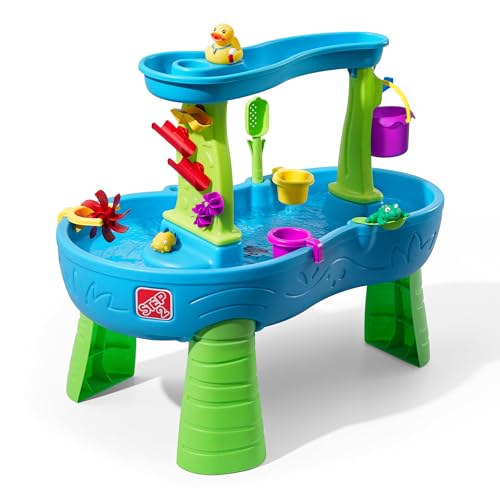
- Rainfall waterfall and pond play
- 13-piece accessory kit
- Rearrangeable STEM maze pieces
Best For: Outdoor water play and cause-and-effect exploration
Compact Ocean Discovery

- Ocean-themed sand sensory set
- Removable legs and compact design
- Includes molds, tools, and sea animals
Best For: Compact indoor or outdoor sensory activities
Creative STEM Station

- Integrated acrylic art panel
- 26 STEM and water-play accessories
- Wooden frame with adjustable height
Best For: Art-focused STEM and sensory play
Magical Dual-Bin Play
Unicorn & Axolotl Sensory Table

- Separate unicorn and axolotl bins
- 30+ themed accessories
- Color-changing sand experiment
Best For: Themed imaginative play with sand and water
Adjustable Two-Station Pick

- Two separate removable bins for shared or solo play
- Three height settings for ages 3 to 6
- Sturdy frame supports up to 66 pounds
Best For: Preschoolers and daycare spaces needing adjustable indoor/outdoor play
Compact Visual Learning Pick

- Clear tub highlights colors, textures, and movement
- Compact footprint suits apartments and classrooms
- Folding frame stores flat for convenient storage
Best For: Space-conscious homes and sensory activities focused on observation
Premium Activity-Center Pick
Guidecraft Sensory Table System

- Deep bin with drain supports wet and dry play
- Lid doubles as a shelf and chalkboard
- Arch expands gross-motor and imaginative activities
Best For: Playrooms and classrooms seeking a durable multi-activity center
Most Versatile
Adjustable 2-Bin Sensory Table

- Converts from sensory station to activity desk
- Two bins and 16-piece accessory set
- Adjustable height with sliding acrylic board
Best For: Growing children needing sensory play and a flexible activity surface
Best Classroom Pick
Birch Plywood Indoor Activity Table
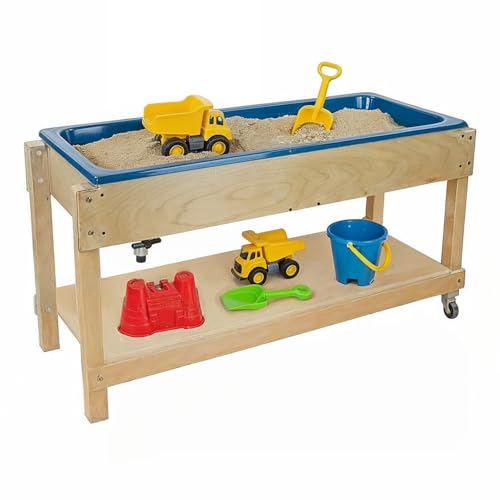
- 6-inch-deep tub for varied sensory materials
- Drain faucet and locking casters
- Lid converts to work surface or storage shelf
Best For: Indoor classrooms and playrooms needing a mobile sensory station
Best for Creative Play

- Supports water, sand, art, and dinosaur digging
- Includes basins, puzzle, toys, board, and cover
- Suitable for indoor or outdoor use
Best For: Children who enjoy varied imaginative and sensory activities
Rainfall STEM Play – Step2 Rain Showers Splash Pond
The Step2 Rain Showers Splash Pond is a strong option for families seeking sand and water sensory tables focused on outdoor water play. Its waterfall tray, rainfall effect, maze pieces, ramps, spinners, and included squirters create several hands-on cause-and-effect activities.
Best For: Toddlers and young children who enjoy outdoor water play, STEM-style experimentation, and rearrangeable activities.
Pros:
- 13-piece accessory kit includes cups, a bucket, squirters, a strainer, spinners, and maze pieces.
- Rearrangeable maze components let children create different water routes.
- Supports cause-and-effect and STEM play without batteries.
- Designed for outdoor use and can be cleaned with household cleaners or disinfectant wipes.
Cons:
- This is primarily a water table rather than a sand-and-water combination table.
- Its 39-by-24-by-32-inch footprint may require dedicated outdoor space.
Choose this model when active water features matter more than a covered sand bin. The rainfall and moving parts offer more replay value than a basic basin, while the 3-year limited warranty adds reassurance.
Compact Ocean Discovery – Carolart Ocean Sensory Table
The Carolart Ocean Sensory Table is a compact sand-and-water sensory table set with sensory sand, foam, sea molds, animals, and basic tools. Its removable legs and included themed pieces make it suitable for flexible indoor or outdoor sensory play.
Best For: Children ages 3 and up who want a compact ocean-themed sensory setup for sand, water, crafts, or tabletop activities.
Pros:
- Includes sensory sand, foam, sea molds, animals, gems, coins, and a treasure chest.
- Comes with practical tools including a scoop, roller, tongs, and sand sifter.
- Removable legs support different play arrangements.
- Can also be used for reading, drawing, crafts, and building blocks.
Cons:
- The listed table dimensions are relatively compact for larger group play.
- Designed for one player according to the supplied details.
This set favors portability and themed accessories over a large, permanent play station. It is a practical pick for families who want an ocean-inspired sensory bin that can support several types of quiet, hands-on activities.
Creative STEM Station – KiwiCo Water Activity Table
The KiwiCo Water Activity Table combines a wooden sand-and-water sensory table with a clear acrylic art panel. For families comparing sand and water sensory tables, its 26 accessories and paint-crayon art surface add both water-course building and creative activities to the setup.
Best For: Children ages 3 and up who enjoy open-ended STEM experiments, art, and sensory play in one station.
Pros:
- Two-in-one design combines deep sensory bins with an integrated acrylic art panel.
- Includes 26 accessories such as pipes, spinners, pitchers, sponges, and a water wheel.
- Mix-and-match water courses encourage hands-on cause-and-effect learning.
- Wooden frame and wipe-clean art panel are designed for repeated use.
Cons:
- At 22 pounds, it is heavier than compact plastic sensory sets.
- The recommended age range begins at 3 years, so it is not aimed at younger toddlers.
This is the most feature-rich choice of the group for combining art with sensory STEM play. Its adjustable-height design and included materials make it a substantial investment for families seeking a durable, multi-activity station.
Magical Dual-Bin Play – Unicorn & Axolotl Sensory Table
The Unicorn & Axolotl 2-in-1 table offers themed sand and water sensory play in two separate compartments. With color-changing sand, blue sensory sand, themed figures, molds, gems, and water-play tools, it gives children ages 3 to 8 multiple ways to build imaginative scenes.
Best For: Unicorn and axolotl fans who want organized dual-bin sensory play indoors or outdoors.
Pros:
- Two bins can hold sand and water separately or create distinct themed play areas.
- Includes more than 30 pieces, including figures, molds, gems, glow stones, and tools.
- Color-changing pink sand reacts to warm water and gradually returns to pink as it cools.
- Lid helps with storage and doubles as a flat activity surface.
Cons:
- The manufacturer warranty listed in the supplied details is only one month.
- The 16.9-by-11.5-by-3.5-inch dimensions indicate a relatively compact play surface.
This table stands out for imaginative, theme-driven play and the color-changing sand experiment. It is a good fit when children value fantasy accessories and separated materials more than a large basin or advanced water mechanisms.
Adjustable Two-Station Pick – VEVOR Sensory Table
For families or classrooms comparing sand and water sensory tables, the VEVOR model stands out for its two separate bins, adjustable height, and sturdy carbon steel frame. It is designed for children ages 3 to 6 and can support both solo and shared sensory play.
Best For: Preschoolers, daycare settings, and households wanting a height-adjustable table for indoor or outdoor play.
Pros:
- Two removable bins allow separate sand, water, or toy activities.
- Three height settings accommodate children ages 3 to 6.
- Carbon steel frame and PP bins support up to 66 pounds.
- Rounded corners, non-slip feet, and lift-out bins simplify use and cleanup.
Cons:
- At about 43 inches wide, it needs more floor space than compact sensory tables.
- Its bright red-and-blue color scheme may not suit every play area.
The VEVOR is a practical choice when flexibility matters. Its adjustable height and two-station layout give it room to grow with children, while the removable bins make cleanup and activity changes easier.
Compact Visual Learning Pick – See-Through Sensory Table
This compact option brings a clear tub to the sand and water sensory tables category, letting children watch colors, textures, and movement as they play. Its small footprint and folding frame make it especially practical for apartments, classrooms, and other space-conscious areas.
Best For: Toddlers who benefit from visible sensory exploration and families or educators with limited storage space.
Pros:
- Transparent tub makes water, glitter, rice, and other materials easy to observe.
- Compact 21-by-13-inch footprint fits smaller play areas.
- Rounded edges and a smooth plywood surface support safer, easier cleanup.
- Folding frame stores flat, and tools are included for assembly.
Cons:
- The single tub offers less separation than a two-station design.
- Its 19-inch height is not adjustable.
- The product is intended for indoor and outdoor use, but the notes do not specify weather-resistant construction.
The see-through tub is the main reason to choose this model. It turns pouring and scooping into a more observable learning activity, while the lightweight, fold-flat design keeps storage manageable.
Premium Activity-Center Pick – Guidecraft Sensory Table System
Among sand and water sensory tables, the Guidecraft Sensory Table System offers the most expansive activity setup. It combines a deep bin with a drain, a chalkboard lid, a shelf function, and a Pickler-inspired arch for sensory, pretend-play, STEM, and gross-motor activities.
Best For: Families, preschools, and playrooms wanting a multi-use activity center for children ages 18 months and up.
Pros:
- Deep play bin includes a drain for wet activities.
- Double-sided lid works as both a shelf and chalkboard.
- Birch construction is Greenguard Gold Certified and coated for water resistance.
- Arch encourages reaching, gross-motor movement, and expanded imaginative play.
Cons:
- At 44.4 pounds, it is heavier and less portable than the other options.
- Assembly is required.
- Accessories, tubes, and clips are sold separately.
- Wooden parts should be cleaned with a damp cloth and not submerged.
The Guidecraft system is a strong choice when a sensory table needs to do more than hold sand or water. Its larger, integrated design adds play possibilities, but the weight, assembly, and separate accessories make it a bigger commitment.
Most Versatile – Adjustable 2-Bin Sensory Table
For families wanting sand and water sensory tables that can serve more than one purpose, this adjustable wooden model combines two collapsible bins with a removable play frame and lid. It can shift from messy sensory play to an activity desk for snacks, blocks, or homework.
Best For: Growing children ages 3 to 8 who need a flexible table for sensory play, art, and everyday activities.
Pros:
- Dual bins support separate sand-and-water play or other sensory materials.
- Adjustable height and a sliding acrylic board allow more flexible positioning.
- Includes 16 accessories, rounded wood edges, and bottom-shelf storage.
Cons:
- The 24.3-by-17.2-inch footprint may feel compact for multiple children.
- The wooden construction and included features may make it more involved to assemble and maintain than a basic plastic table.
This is a strong all-around choice when longevity and multiple play modes matter. Its convertible desk design helps justify the larger furniture-style footprint beyond sensory activities.
Best Classroom Pick – Birch Plywood Indoor Activity Table
This classroom-oriented option is one of the more practical sand and water sensory tables for indoor learning spaces. It includes a 6-inch-deep plastic tub, a drain faucet, locking casters, and a lid that can become either a work surface or storage shelf.
Best For: Classrooms, playrooms, and Montessori environments that need a mobile, indoor sensory station.
Pros:
- Deep plastic tub accommodates sand, water, rice, cereal, and other materials.
- Built-in drainage and two locking casters support cleanup and repositioning.
- Birch plywood construction has rounded edges and a Tuff-Gloss UV finish.
Cons:
- Designed for indoor use only and should be kept out of direct sunlight.
- At 46 inches wide and 41 pounds, it requires substantial floor space.
- Leg attachment is required.
Choose this table when containment, mobility, and classroom practicality are higher priorities than portability. The convertible lid and storage shelf add useful function between sensory sessions.
Best for Creative Play – 4-in-1 Wooden Sensory Table
Families looking for sand and water sensory tables with added creative activities may prefer this pine-wood model. It supports water, sand, art, and dinosaur-digging play, while the two basins and movable acrylic board can be arranged for solo or shared activities.
Best For: Children ages 3 to 8 who enjoy imaginative, art-focused, and hands-on sensory play indoors or outdoors.
Pros:
- Four play modes include water, sand, drawing, and dinosaur digging.
- Includes two collapsible basins, water-track toys, dinosaur puzzle, acrylic board, and cover.
- Sealed pine wood, rounded edges, leg caps, and a UV/rain cover support outdoor use.
Cons:
- The listed 25.8-by-17.9-inch size may limit room for larger group play.
- Many components may require more storage and cleanup organization.
This table stands out for variety rather than simple sand-and-water use. The dinosaur puzzle and washable acrylic drawing surface make it especially appealing for children who like to alternate between sensory exploration and imaginative projects.
How We Picked the Best Sand and Water Sensory Tables
We focused on tables that support open-ended sensory play with sand, water, or both. Our comparison considers construction, bin design, height, stability, cleanup, included accessories, storage, and the intended age range. We also separated compact toddler-friendly tables from larger classroom and multi-child options, since the best choice depends heavily on space and supervision.
Products with adjustable features, removable tubs, lids, clear panels, or built-in storage received attention because these details can make sensory play easier to manage. For indoor and educational settings, material certifications and a sturdy finish are especially important.
Quick Comparison
| Best For | Look For | Typical Advantage |
|---|---|---|
| Outdoor water play | Drainage, accessories, weather-resistant plastic | Easy setup and cleanup |
| Indoor sensory play | Removable bins, lids, compact footprint | Better mess control |
| Growing toddlers | Adjustable height and stable legs | Longer usable life |
| Classrooms | Large play area, durable materials, storage | Supports group activities |
| Visual exploration | Clear tubs or acrylic panels | Shows water movement and materials |
Key Buying Factors for Sand and Water Sensory Tables
Size and Capacity
Measure the available area before buying, including room for children to stand on multiple sides. A compact table works well in a home or patio, while a wider two-station design is more practical for siblings, classrooms, or shared play.
Height and Stability
Choose a height that lets children play without excessive bending or reaching. Adjustable legs can extend the table’s useful life, but stability matters more than maximum height. Look for broad bases, locking joints, and non-slip feet.
Bins, Lids, and Cleanup
Removable tubs simplify emptying and washing. Lids help keep sand clean between sessions, while drainage plugs or channels make water play less cumbersome. For indoor use, prioritize designs that contain spills and store accessories neatly.
Materials and Safety
Check for smooth edges, secure hardware, non-toxic finishes, and age guidance that matches the child. Wood can offer a furniture-like appearance, while plastic is usually lighter and easier to rinse. Classroom buyers may also want recognized emissions or safety certifications.
Accessories and Versatility
Included scoops, funnels, tracks, bridges, and water wheels add immediate play value, but a simple table can be more flexible for rotating sensory materials. Confirm whether accessories are durable and whether the bins accommodate sand, water, rice, foam, or other fillers.
Who Should Buy Which Sand and Water Sensory Tables?
Choose a plastic outdoor water table if you want fast setup, easy rinsing, and engaging accessories for younger toddlers. A wooden table is a better fit when appearance, sturdiness, and indoor use matter more. Families with limited space should prioritize removable bins, compact dimensions, and a cover.
For siblings or group play, select a two-station or larger model with strong legs and separate activity areas. Adjustable tables suit growing children, while classroom buyers should favor durable construction, ample capacity, storage, and safety certifications. If observing water flow is part of the activity, a clear tub or acrylic feature can add meaningful visual exploration.