The best sensory tables for classrooms give children a hands-on way to explore textures, measure materials, practice cooperation, and build fine-motor skills. The right table also helps teachers manage spills, storage, and daily cleanup.
We selected 10 classroom-friendly options with different layouts, materials, capacities, and price considerations. Use the guide below to match a table to your students, teaching space, and activity plans.
Best 10 Sensory Tables for Classrooms Picks for 2026
Classroom-Ready Choice
Birch Sand and Water Activity Table
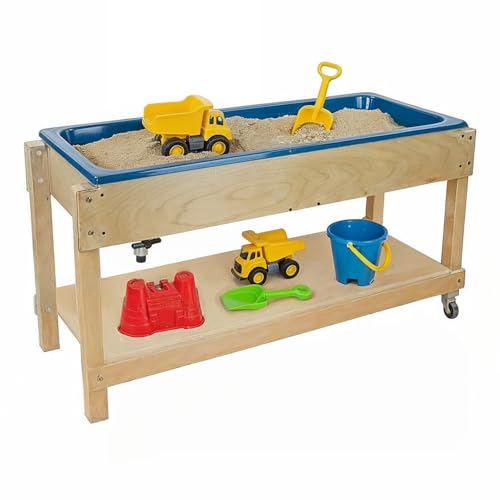
- 6-inch tub for sand, water, and tactile materials
- Drain faucet and locking casters aid cleanup and mobility
- Lid doubles as work surface or storage shelf
Best For: Indoor classrooms needing a durable, mobile sensory table
Storage-Focused Pick

- Three organizers keep play materials accessible
- Covers conceal activity areas between sessions
- Rounded corners and anti-slip feet support safer use
Best For: Toddler and preschool rooms needing storage and versatility
Heavy-Duty Versatility
Constructive Playthings Sand and Water Table

- 4.5-gallon capacity for sand and water play
- Dry-erase top converts the table for art activities
- Resin body, casters, trays, and drain plug aid classroom use
Best For: Indoor/outdoor sensory centers serving young children
Space-Saving Activity Pick
7 Days of Play Foldable Sensory Table

- Foldable design simplifies storage
- Lids become whiteboards and chalkboards
- Removable bins support tactile play and easy cleanup
Best For: Indoor classrooms with limited space and rotating activities
Compact Clear Explorer

- Transparent tub supports visible sensory exploration
- Compact, foldable design for smaller spaces
- Toddler-friendly height and easy-clean surface
Best For: Small classrooms, daycares, and Montessori-style tactile play
Creative Two-Bin Station

- Two bins hold sensory materials and supplies
- Reversible chalkboard and whiteboard top
- Combines sensory play, art, and storage
Best For: Multi-activity classrooms needing an all-in-one learning station
Group-Ready Rolling Tub
Children's Factory Water Table

- Large open tub supports group sensory play
- Locking casters make repositioning easier
- Includes lid for cleaner storage between uses
Best For: Preschools, daycares, and classrooms hosting shared activities
Best Flexible Starter Set
VEVOR Table & Chairs Sensory Station

- Includes two stools, storage bins, and a paper roll holder.
- Supports sensory play, drawing, and art activities.
- Indoor/outdoor design with a natural wood finish.
Best For: Small-group classrooms needing a versatile sensory and art station
Best Classroom Workhorse
Birch Plywood Sand & Water Activity Table
- Six-inch tub supports sand, water, rice, and other materials.
- Drain faucet and locking casters simplify classroom use.
- Lid converts to a work surface or storage shelf.
Best For: Indoor classrooms needing a spacious, contained sensory station
Best Adjustable Two-Station Option
VEVOR Adjustable Toddler Sensory Table

- Two detachable bins support shared sensory play.
- Three height settings suit children ages 3 to 6.
- Rounded corners and removable bins simplify everyday use.
Best For: Preschools and daycares needing adjustable two-child activities
Classroom-Ready Choice – Birch Sand and Water Activity Table
For classrooms seeking sensory tables for classrooms, this GREENGUARD Gold Certified birch plywood model combines a 6-inch-deep plastic tub with practical mobility and storage features. Its 46-inch width provides room for tactile activities with sand, water, rice, or cereal.
Best For: Indoor classrooms and playrooms serving children ages 3 to 10 that need a durable, movable sensory table.
Pros:
- Supports sand, water, rice, cereal, and other sensory materials.
- Built-in drain faucet simplifies emptying water or wet materials.
- Locking casters, rounded edges, and a storage lid add classroom practicality.
- The lid converts the tub into a flat work surface or lower storage shelf.
Cons:
- Designed for indoor use only.
- Leg attachment is required during assembly.
- At 41 pounds, it is heavier than some compact activity tables.
This is a strong option when durability, contained messy play, and flexible storage matter more than portability. The generous footprint suits shared activities, while the drain and casters make cleanup and repositioning easier.
Storage-Focused Pick – WINGYZ Toddler Sensory Table
This WINGYZ model is a compact choice among sensory tables for classrooms, combining a 30-inch tabletop with three organizers and removable covers. Its design supports sensory play, study, toys, dining, and art activities in toddler and preschool settings.
Best For: Indoor toddler, preschool, and kindergarten spaces that need a multifunctional table with built-in storage.
Pros:
- Includes three storage organizers for toys and learning materials.
- Two covers help conceal the activity areas when not in use.
- Rounded corners and anti-slip foot stickers support safer use.
- Can function as a study, play, dining, or sensory table.
Cons:
- Assembly is required and a screwdriver is recommended.
- The unfinished wood surface is listed for dry-cloth care.
- The 50-pound maximum weight recommendation limits heavier use.
With its modest footprint and storage components, the WINGYZ table is well suited to flexible early-learning rooms. It offers broad everyday utility, though buyers should plan for assembly and gentle surface care.
Heavy-Duty Versatility – Constructive Playthings Sand and Water Table
For sensory tables for classrooms that may also be used outdoors, this Constructive Playthings table offers a 4.5-gallon capacity, a deep liner, and a dry-erase top. Its moisture-resistant resin construction is designed for hands-on sand and water play with up to four children.
Best For: Classrooms and play areas needing a large indoor/outdoor sand-and-water table for children ages 1 to 3.
Pros:
- Supports indoor or outdoor use with sand and water.
- Dry-erase top adds an art and writing surface when the bins are covered.
- Two side trays provide convenient toy storage.
- Locking casters and a screw-in drain plug simplify movement and cleanup.
Cons:
- The manufacturer recommends it for a younger age range than several classroom tables.
- Its 46-inch width requires substantial floor space.
- The table weighs 33.1 pounds, so relocating it may take effort.
This is a practical choice for active sensory centers where durability, capacity, and easy cleaning are priorities. The convertible top also helps the table transition from messy play to drawing and writing activities.
Space-Saving Activity Pick – 7 Days of Play Foldable Sensory Table
This foldable 7 Days of Play table is a space-conscious option among sensory tables for classrooms. Its removable lids reveal bins for scooping and pouring, while the reverse sides provide whiteboard and chalkboard surfaces for drawing, writing, and learning.
Best For: Indoor classrooms and activity areas that need a compact, multifunctional table with convenient storage.
Pros:
- Foldable legs and bins make storage easier after playtime.
- Reversible lids provide both whiteboard and chalkboard surfaces.
- Bins support tactile exploration, pouring, scooping, and imaginative play.
- Smooth surfaces and rounded edges support easier cleanup and safer use.
Cons:
- Assembly requires a screwdriver and Allen key.
- Indoor use is specified.
- Seating capacity is listed as one.
This table fits rooms where storage efficiency and activity variety are more important than accommodating several children at once. Its foldable design and dual-purpose lids make it especially useful for rotating classroom centers.
Compact Clear Explorer – See-Through Sensory Table
For classrooms seeking sensory tables for classrooms in a compact footprint, this see-through model makes water, sand, rice, beads, and other materials easy to observe. Its toddler-friendly height and wipe-clean surface support hands-on exploration with straightforward setup and storage.
Best For: Small classrooms, Montessori spaces, daycares, and indoor or outdoor tactile play for children ages 3 to 6.
Pros:
- Transparent tub lets children watch colors, textures, and movement.
- Compact 21-by-13-by-19-inch design suits smaller play areas.
- Rounded plywood construction and smooth surfaces simplify cleanup.
- Frame folds flat, with tools included for quick assembly.
Cons:
- Designed for one to two players, so it may be limited for group activities.
- The 19-inch height is intended for younger children rather than older students.
This table is a practical choice when visibility, portability, and space efficiency matter most. The clear tub adds an engaging observation element, while the compact folding design helps classrooms store it between activities.
Creative Two-Bin Station – Ogears Two-Bin Sensory Table
This Ogears model combines sensory play, storage, and art activities in one station, making it a versatile option among sensory tables for classrooms. Two bins hold materials such as sand, water, or play dough, while the reversible drawing top adds chalkboard and whiteboard surfaces.
Best For: Classrooms and playrooms that need a multifunctional sensory, art, and storage table.
Pros:
- Two 16-by-11-inch bins provide dedicated storage for sensory materials.
- Bins support sand, water, play dough, and other activity materials.
- Double-sided chalkboard and whiteboard top expands learning options.
- Sand-sanded wood construction is described as free of toxic chemicals.
Cons:
- At 29 by 21 by 21 inches and 15 pounds, it takes more space than a compact table.
- Wood should be wiped dry and stored indoors after outdoor or water play.
Choose this table when a classroom needs more than a basic sand-and-water station. Its two bins and drawing surfaces make it useful for rotating sensory, creative, and early-learning activities, though it requires indoor storage and care after wet play.
Group-Ready Rolling Tub – Children's Factory Water Table
For classrooms that need a larger shared station, this 36-by-24-by-24-inch table offers an open tub for individual or group sensory play. The weather-proof plastic basin, included lid, and locking casters make it a practical option for indoor and outdoor classroom activities.
Best For: Preschools, daycares, homeschool settings, and classrooms needing a mobile group sand-and-water table.
Pros:
- Open-area tub accommodates cooperative play and group activities.
- Four casters, including two locking wheels, support mobility and stability.
- Weather-proof plastic tub and rust-resistant galvanized steel frame suit indoor or outdoor use.
- Included lid helps keep the table clean between activities.
Cons:
- Assembly is required.
- The 24-inch height may be less suitable for very young toddlers.
- Its larger footprint requires more classroom floor space.
This is the strongest fit for shared classroom play where capacity and portability outweigh compact storage. The lid and durable materials simplify routine use, while locking casters make it easier to reposition or secure the table.
Best Flexible Starter Set – VEVOR Table & Chairs Sensory Station
For classrooms seeking sensory tables for classrooms that also support drawing and seated activities, this VEVOR set combines a rectangular wooden table with two stools, two storage bins, and a paper roll holder. Its indoor/outdoor design gives teachers flexibility for sand, water, art, and other hands-on play.
Best For: Preschool classrooms and play areas that need a compact, multi-use sensory and art station with seating.
Pros:
- Includes two stools, two storage bins, and a paper roll holder.
- Supports sensory play, drawing, and other hands-on activities.
- Uses pine wood and engineered MDF in a natural wood finish.
- Suitable for indoor or outdoor use.
Cons:
- At 23.6 x 32.1 x 19.9 inches, the work surface may be limiting for larger groups.
- Care is limited to wiping with a damp cloth, so messy activities may require extra cleanup.
This is a practical choice when versatility and included seating matter most. It is especially useful for small-group centers, though classrooms needing a deeper basin or more workspace may prefer a larger dedicated activity table.
Best Classroom Workhorse – Birch Plywood Sand & Water Activity Table
This sand and water table is a strong option for classrooms looking for sensory tables for classrooms with dedicated containment and storage features. Its six-inch-deep plastic tub accommodates sand, water, rice, cereal, and other tactile materials, while the lid converts the station into a flat work surface.
Best For: Indoor classrooms and playrooms that need a spacious, durable sensory station for children ages 3 to 10.
Pros:
- Deep plastic tub supports varied sensory materials and mess-friendly play.
- Built-in drain faucet helps empty water after activities.
- Locking casters allow mobility and secure placement.
- Lid doubles as a work surface or storage shelf when positioned underneath.
Cons:
- Designed for indoor use only and should be kept out of direct sunlight.
- Weighing 41 pounds, it is less convenient to move than lighter tables.
- Some leg attachment is required.
With its large 46-inch width, drain, casters, and convertible lid, this table is built around classroom practicality. It takes up more space than compact toddler tables, but the added capacity can suit busy sensory centers.
Best Adjustable Two-Station Option – VEVOR Adjustable Toddler Sensory Table
For classrooms comparing sensory tables for classrooms used by growing preschoolers, this VEVOR model offers two separate bins and three height settings. The detachable bins support sand, water, or toy activities, while non-slip feet, rounded corners, and a carbon steel frame suit active indoor or outdoor play.
Best For: Preschools, kindergartens, and daycares serving children ages 3 to 6 who benefit from adjustable, cooperative sensory play.
Pros:
- Two stations allow solo or two-child play with separate materials.
- Three height settings adjust in three-inch increments.
- Detachable bins lift out for dumping and rinsing.
- Lightweight 16.5-pound frame supports indoor and outdoor relocation.
Cons:
- Its 15.1 x 42.9-inch footprint is long and may need dedicated floor space.
- Recommended age range is limited to approximately 3 to 6 years.
- Storage is not described beyond the removable activity bins.
This model stands out for adaptable height and two-child access, making it useful for collaborative centers. The removable bins also make cleanup straightforward, although classrooms wanting enclosed storage or a larger age range may need another design.
How We Picked the Best Sensory Tables for Classrooms
We focused on features that matter in real classroom use: sturdy construction, accessible table height, removable or covered bins, easy cleaning, storage capacity, and suitability for indoor or outdoor activities. We also considered whether each design supports group play, organized material changes, and convenient end-of-day cleanup.
Because classrooms vary widely, this list includes compact tables for smaller spaces, adjustable or two-station designs for shared play, and larger sets that include stools or additional storage. Safety-related details such as rounded edges, stable feet or casters, secure lids, and low-emission or certified materials are also worth checking before purchase.
Quick Comparison
- Best for a traditional classroom setup: Birch plywood tables with locking casters and storage lids offer a stable, polished solution that can be moved when needed.
- Best for flexible activities: Tables with removable bins, adjustable sections, or foldable legs make it easier to switch between sand, water, sensory fillers, and craft materials.
- Best for small groups: Two-station tables encourage side-by-side play while giving children their own working areas.
- Best for portability: Lightweight plastic tables and foldable models are easier to store, transport, or use outdoors.
- Best for an all-in-one center: Sets with stools, storage bins, or a paper roll holder can support several activities without additional furniture.
Key Buying Factors for Sensory Tables for Classrooms
Size and Student Access
Measure the available floor area, including room for children and teachers to move around the table. A low design may suit toddlers, while preschool and early-elementary students may need a taller surface. Check the usable basin dimensions rather than relying only on the overall footprint.
Materials and Durability
Wood can provide a sturdy, furniture-like finish, while molded plastic is often lighter and simpler to wipe clean. For frequent water use, inspect the tub material, drainage approach, hardware, and finish. Locking casters can improve mobility without sacrificing stability.
Storage, Lids, and Cleanup
Built-in bins help organize scoops, funnels, molds, and sensory fillers. A fitted lid protects materials between activities and can turn the surface into usable classroom space. Removable tubs are especially helpful when water must be emptied or the table needs a thorough cleaning.
Safety and Supervision
Look for stable bases, smooth edges, secure components, and age-appropriate height. Small accessories may present choking risks, so select materials based on the children’s ages and follow the manufacturer’s supervision guidance. Certifications or responsible-material claims can be useful, but verify the exact product listing.
Who Should Buy Which Sensory Tables for Classrooms?
Choose a sturdy birch plywood model if the table will remain in a dedicated classroom learning center and receive heavy daily use. Pick a plastic or foldable design when portability, quick cleanup, or occasional outdoor use matters most. A two-station table is a strong choice for paired activities, while a model with chairs or a paper-roll holder works well in classrooms that want one compact, multipurpose workstation.
Before ordering, confirm dimensions, bin capacity, assembly requirements, weight limits, included accessories, and the retailer’s current warranty and return policy. Those details often determine whether a sensory table remains convenient after the novelty wears off.