A strong homework routine works best when it is visual, simple, and easy to repeat. For many autistic learners, the right organization system can reduce stress, improve transitions, and make expectations clearer.
In this roundup, we focused on tools that support daily structure without adding complexity, from visual schedules and task boards to timers and checklist-style planners.
Best 10 Homework Organization System for Autism Picks for 2026
Large Visual Routine Board
Large Visual Schedule for Kids Chore Reward Chart

- Double-sided felt board with more room for custom schedules
- 109 picture-and-word cards for school, chores, and routines
- Can hang on a wall or stand on a table
Best For: Children who need a large, visual home-school and routine planner
Quiet Timer and Planner
Visual Timer with Planning Board

- Noiseless visual clock helps reduce distractions
- Includes a planning board for schoolwork and chores
- Supports autism, ADHD, and other special needs
Best For: Kids who need a quiet timer to support focus and routine management
Flexible Reward Schedule Board
Yoink Visual Schedule for Kids with Autism

- 174 waterproof cards for routines, blanks, and rewards
- Board can stand or hang in multiple orientations
- Storage bag and pocket help prevent card loss
Best For: Families wanting a large, motivating visual routine system
Compact Magnetic Checklist Board
Chore Chart for Kids ADHD Tools

- Magnetic board attaches to a fridge or sits on a stand
- Slider buttons make progress tracking interactive
- Includes dry-erase sheets, stickers, and marker
Best For: Kids who need a portable, visual checklist for chores and routines
All-in-One Routine Planner
Visual Timer and Schedule Planner

- Silent visual timer for study blocks and transitions
- 100+ schedule magnets with chore chart board
- Helps reduce questions during homework and routines
Best For: Kids who need one complete visual system for homework and daily structure
Portable Checklist Option

- Pocket-sized keychain design for easy carrying
- Detachable inserts for custom routines and homework
- Sliding markers make task checking quick and simple
Best For: People who need a portable visual checklist for everyday reminders
Large Visual Wall Board
Visual Schedule with 124 Cards

- Large 27" x 14.5" felt board for daily routines
- 124 cards include activities, titles, arrows, blanks, and stars
- Hangable, foldable, and includes a storage bag
Best For: Young children who need a large wall-mounted visual routine board
Sliding Routine Chart
Reusable checklist board for routines and homework

- 4 chart pieces plus blank cardstock for customization
- Sliding markers show progress clearly
- Useful for homework, chores, and daily routines
Best For: Families wanting a simple reusable visual checklist
Timer and Task Board Combo
2-in-1 visual timer with checklist and dry erase board
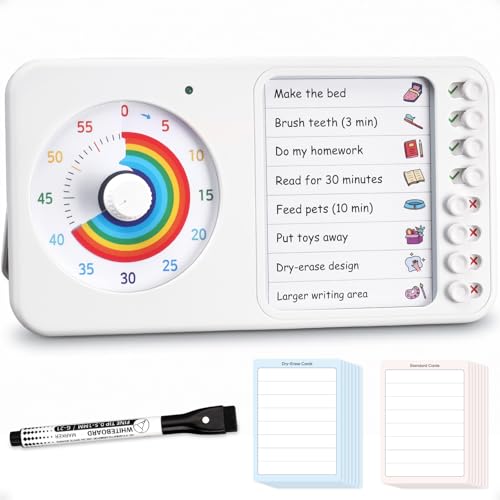
- Visual timer plus planning board in one tool
- Helps make homework and routines easier to follow
- Designed for ADHD, autism, home, school, and homeschool
Best For: Users who want one visual tool for timing and task tracking
3-in-1 Visual Timer
Visual timer, clock, and chore board for routine support

- Adds a digital clock to visual timing and task tracking
- Silent, vibration, and ringing modes for flexible use
- Built for homework, study, chores, and special needs support
Best For: Users who want more than a checklist, including timing and alerts
Large Visual Routine Board – Large Visual Schedule for Kids Chore Reward Chart
If you’re looking for a homework organization system for autism that also supports routines at home and in class, this large visual schedule board is built around picture-based planning. The double-sided felt board, weekly cards, and 109 included cards make it easier to map out school tasks, chores, and daily transitions in a simple, visual way.
Best For: Kids who need a larger visual routine board for homework, daily transitions, and home-school planning.
Pros:
- Double-sided felt board gives more room for custom daily planning.
- 109 cards include school, chores, outing, eating, and blank options.
- Picture-plus-word cards help support non-readers and visual learners.
- Can stand on a table or hang on the wall for flexible use.
Cons:
- Uses physical cards, so setup and sorting take some time.
- Best suited to visual routine systems rather than digital planning.
This is a practical pick if you want a broad, hands-on visual organizer that can cover more than just homework. The added weekly and pointer cards make it especially useful for children who benefit from seeing what comes next throughout the day.
Quiet Timer and Planner – Visual Timer with Planning Board
This visual timer with planning board is a useful homework organization system for autism when time awareness and task sequencing are the main challenges. Its noiseless design, circular visual clock, and built-in planning panel help students and families keep schoolwork, chores, and routines in one place.
Best For: Students who need a quiet visual timer to support focus, routines, and task completion.
Pros:
- Noiseless operation helps reduce distractions during learning time.
- Combines a visual timer with a planning board for task management.
- Useful for schoolwork, chores, and morning routine reminders.
- Designed as an assistive tool for autism, hearing impairments, and ADHD.
Cons:
- Provides task tracking in a compact format, so it may not suit longer checklists.
- Focused more on timing and planning than card-based routine customization.
For families who want a calm, visual way to manage time and responsibilities, this board does a solid job of keeping everything visible. It works best when the biggest need is helping a child understand time passing and stay on task.
Flexible Reward Schedule Board – Yoink Visual Schedule for Kids with Autism
If you want a homework organization system for autism that can grow with a child’s routine, this visual schedule set offers a large card library and flexible display options. The 174 waterproof cards, removable storage bag, and reward-style star cards make it easy to build a predictable daily plan for home, classroom, or travel.
Best For: Families and teachers who want a large, flexible visual schedule with built-in motivation.
Pros:
- 174 cards cover routines, headings, blank cards, and reward stars.
- Double-sided felt board can stand, hang vertically, or hang horizontally.
- Removable storage pocket helps keep unused cards organized.
- Bright illustrations and clear text support nonverbal and visual learners.
Cons:
- Larger setup may be more than some families need for simple daily tracking.
- Most useful when you want a full visual system rather than a single-purpose board.
This set stands out for its flexibility and card variety, making it a strong fit for children who benefit from seeing routines broken into clear steps. The reward cards also add an encouraging element for completing harder tasks.
Compact Magnetic Checklist Board – Chore Chart for Kids ADHD Tools
This magnetic chore board is a compact homework organization system for autism when you want a simple checklist-style setup that lives on the fridge or a desk. With slider buttons, dry-erase sheets, and customizable task stickers, it turns routines into a more interactive visual system for kids who respond well to concrete progress tracking.
Best For: Kids who do better with a compact magnetic checklist and visible task tracking.
Pros:
- Strong magnets let it attach firmly to a refrigerator or other metal surface.
- Slider buttons make task completion more interactive and easy to see.
- Includes dry-erase and disposable sheets for different planning styles.
- Compact size makes it easy to move between home, schoolbag, and desk use.
Cons:
- Smaller board size may not suit users who want a full-day schedule.
- Checklist format offers less pictorial structure than full visual card systems.
For families who want a portable, low-fuss way to track chores and routines, this board is straightforward and adaptable. It works especially well when you want kids to see what is done, what is left, and what reward they are working toward.
All-in-One Routine Planner – Visual Timer and Schedule Planner
If you’re looking for a homework organization system for autism that also supports the rest of the day, this 5-in-1 planner combines timing, schedules, and task tracking in one kit. It uses a silent visual timer, chore chart board, and 100+ visual schedule magnets to help kids understand what to do next during homework, routines, and transitions.
Best For: Kids who need a single, all-in-one visual routine system for homework, chores, and daily transitions.
Pros:
- Includes a silent visual timer to support focused study sessions and time limits.
- Comes with 100+ visual schedule magnets plus a dry-erase board for flexible routines.
- Designed to reduce repeated questions and stress during homework, mealtime, and morning routines.
- Useful at home, school, homeschool, or therapy sessions as a visual support tool.
Cons:
- Best suited to a table or wall setup rather than a truly portable option.
- Some families may want a simpler tool if they only need homework reminders.
Overall, this is the most comprehensive option in the group if you want structure, timing, and visual cues working together. It’s especially helpful for children who benefit from clear expectations and a predictable routine.
Portable Checklist Option – Visual Schedule Keychain
This portable visual schedule keychain is a simple homework organization system for autism when you want reminders that travel easily from room to room. Its detachable inserts and DIY stickers make it easy to build custom chore lists, morning steps, or homework reminders without reprinting a full chart.
Best For: Kids, teens, or adults who need a compact visual checklist they can carry anywhere.
Pros:
- Compact keychain format makes it easy to attach to backpacks, lockers, purses, or wall hooks.
- Replaceable paper inserts support custom routines, chore lists, and homework reminders.
- Sliding buttons offer a simple way to check off tasks and track completion.
- Reusable set includes three keychains plus stickers and DIY paper.
Cons:
- Smaller format may not be ideal for users who prefer a larger visual board.
- Works best for short checklists rather than detailed multi-step planning.
This is the most portable option here, so it’s a strong choice for families who need visual support outside the house. It’s practical for quick routines, but it’s not as expansive as a full wall-mounted planner.
Large Visual Wall Board – Visual Schedule with 124 Cards
For families building a homework organization system for autism around visual structure, this large felt schedule board gives kids a clear place to see the day’s tasks. The board includes 124 cards, a storage bag, and a foldable design that can hang on a wall, door, or stand on a desk for daily routine support.
Best For: Young kids who do best with a large, visual, at-a-glance routine board at home or in the classroom.
Pros:
- Large 27″ x 14.5″ board gives plenty of room for daily routines and chore sequencing.
- Includes 124 cards with activity, title, arrow, blank, and star options.
- Foldable and hangable for wall, door, or desktop use.
- Storage bag helps keep cards organized and reduces the chance of loss.
Cons:
- It takes more space than a compact planner or keychain-style reminder.
- Best suited to a fixed location rather than on-the-go use.
This is a strong pick if you want a large visual routine center that makes expectations easy to see. It’s especially useful for younger children who respond well to big, simple visual cues.
Sliding Routine Chart – Reusable checklist board for routines and homework
If you want a simple homework organization system for autism that also works for chores and daily routines, this sliding checklist board gives kids and adults a clear way to track what needs to get done. It uses movable markers and blank cardstock so you can build a custom visual schedule that fits homework, morning routines, or after-school tasks.
Best For: Families, students, and busy parents who want a reusable visual checklist for homework, chores, or routine planning.
Pros:
- Includes 4 chore chart pieces and 10 sheets of blank cardstock for custom setups
- Sliding markers make completed tasks easy to see at a glance
- Reusable and detachable design is useful for daily routine planning
- Versatile enough for study lists, RV checklists, travel planning, and housekeeping
Cons:
- Paper-based design may not suit users who want a fully digital system
- Best suited for simple task tracking rather than detailed lesson planning
Overall, this is a practical low-tech organizer for families who want a visual, hands-on way to map out responsibilities. Its strength is flexibility: you can adapt it to homework, chores, or any daily checklist that benefits from a clear, movable progress marker.
Timer and Task Board Combo – 2-in-1 visual timer with checklist and dry erase board
This 2-in-1 board is a strong pick if you need a homework organization system for autism that makes both time and tasks easy to understand. It combines a visual timer, dry erase planning space, and sliding checklist so kids and adults can see what to do next and how long they have left.
Best For: Kids, adults, teachers, and homeschool families who want one tool for visual scheduling, homework, and task tracking.
Pros:
- Combines a visual timer with a dry erase task board and sliding checklist
- Colorful countdown display helps show remaining time at a glance
- Designed to support ADHD, autism, special education, and routine management
- Works for homework, chores, classroom use, and homeschool schedules
Cons:
- Only one timer setting is listed in the product details
- May be more than needed if you only want a basic task board
For users who benefit from clear visual structure, this combo tool covers both planning and timing in one compact setup. It is especially useful when the biggest challenge is knowing what to do, how long to spend, and when a task is finished.
3-in-1 Visual Timer – Visual timer, clock, and chore board for routine support
For a homework organization system for autism that emphasizes structure, this 3-in-1 timer adds a visual timer, digital clock, and chore board in one device. It is built to support planning, time awareness, and daily task management, making it a practical choice for homework sessions, classroom routines, and home use.
Best For: Kids and adults who need a structured visual timer with task tracking and multiple alert modes.
Pros:
- Combines a visual timer, digital clock, and chore chart
- Offers silent, vibration, and ringing modes for different environments
- Supports homework, study, chores, and classroom scheduling
- Designed with ADHD, ASD, and special needs learners in mind
Cons:
- Larger desk-friendly design may take more space than a simple chart
- Has more features than a basic checklist user may need
This is the most feature-rich option in the group, and that can be a plus if you want both time visibility and task tracking in one place. It is a good fit for users who respond well to routine tools with clear cues and adjustable alert styles.
How We Picked the Best Homework Organization System for Autism
We chose products that support a practical Homework Organization System for Autism by making tasks easier to see, track, and complete. Priority went to visual clarity, flexible setup, durable materials, and features that help with transitions such as timers, sliders, and removable cards.
We also favored options that can work across different settings, including home, classroom, and therapy spaces, so families can keep routines consistent.
Quick Comparison
In general, the best options fall into three groups: visual schedule boards for step-by-step planning, timer-based systems for pacing work sessions, and portable checklist tools for on-the-go organization. Larger boards tend to work well for desk-based homework routines, while smaller or detachable formats suit travel, shared spaces, or quick daily reviews.
Key Buying Factors for a Homework Organization System for Autism
Visual Simplicity
Look for boards with clear icons, easy-to-read labels, and an uncluttered layout. Too much information can become overwhelming, especially for younger children or learners who rely on straightforward visual cues.
Routine Flexibility
The best systems allow you to change tasks, switch between school days and weekends, and adapt as your child’s routine changes. Dry-erase surfaces, movable cards, and detachable pieces are especially useful.
Time Awareness
Timers can make homework feel more manageable by turning open-ended work into short, predictable sessions. This is helpful for building independence and reducing resistance to starting tasks.
Durability and Portability
If the system will move between rooms, backpacks, or cars, choose a compact or reinforced design. Magnetic boards and portable keychain-style planners can be useful for families who need consistency outside the home.
Age and Support Level
Toddlers and early elementary learners often benefit from picture-heavy charts, while older kids, teens, and adults may prefer checklist-style tools with fewer visuals and more task control.
Who Should Buy Which Homework Organization System for Autism?
Choose a large visual schedule if you want a central homework station with clear daily structure. Pick a timer-and-board combo if your main challenge is getting started and staying on task. Portable planners work best for families that need a simple routine tool for multiple locations.
If your goal is to support independence, reduce reminders, and make homework expectations more predictable, a visual system is usually the best place to start.